Welcome to ServLifts Official Website

What Is A Dumbwaiter Elevator? Complete Basic Introduction
What is a dumbwaiter elevator? Complete basic introduction covering functions, features, applications, and how to verify a supplier's load test records and CE file.

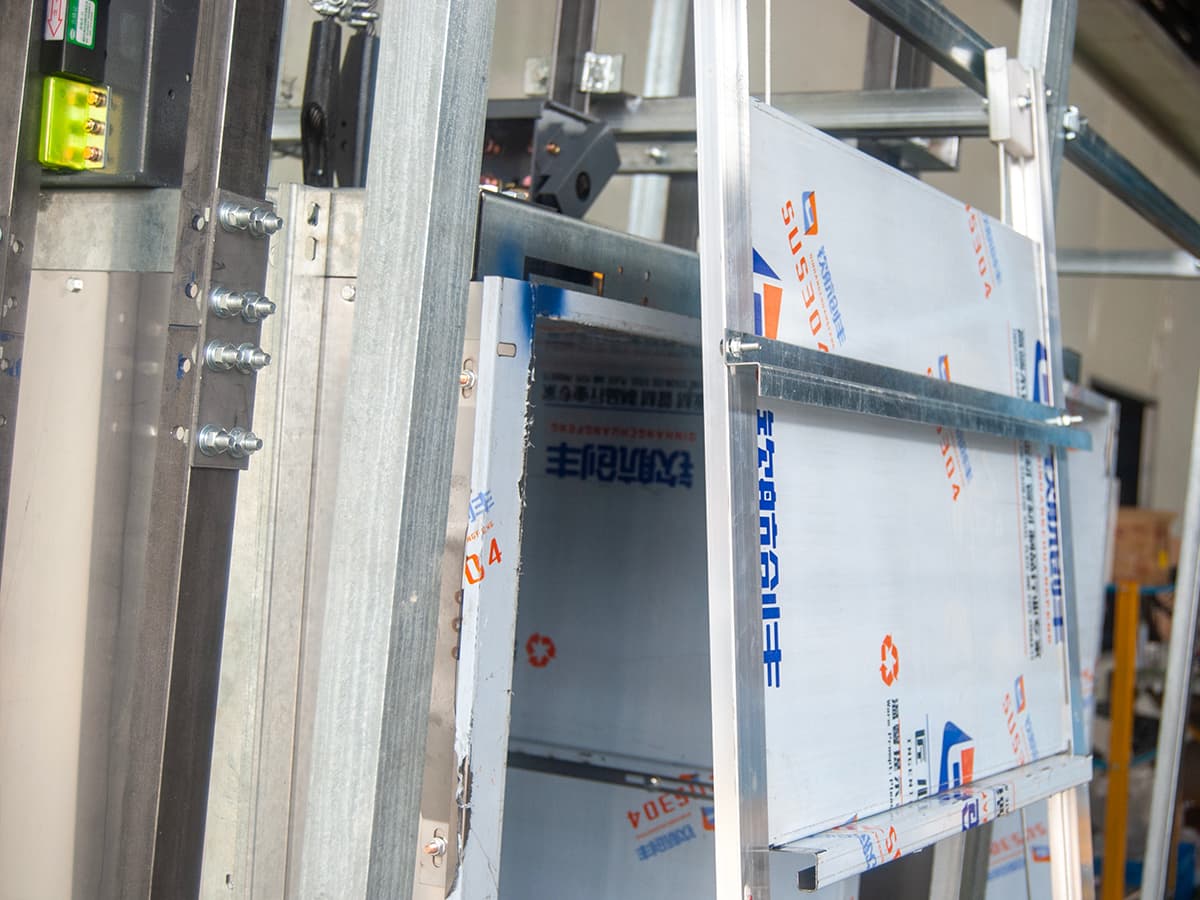
Table of Contents
What is a dumbwaiter elevator? A dumbwaiter elevator — also widely known as a food lift or service lift — is a small-capacity vertical cargo lift designed to transport dishes, food, tableware, daily supplies, tools, and light goods between different floors. The name itself goes back much further than most buyers expect, as our history of the dumbwaiter explains. Unlike large passenger elevators and heavy-duty freight elevators, dumbwaiter lifts are compact, low-cost, safe, stable, and easy to install, and they are widely used in restaurants, hotels, kitchens, hospitals, offices, and homes. If you are new to these lifts, this guide gives you the complete introduction: functions, features, how it works, sizing, and how to choose one.
What Is a Dumbwaiter Elevator?
A dumbwaiter elevator is a goods-only vertical lift. It has a car, a shaft, guide rails, a drive, and doors — the same basic architecture as a passenger elevator — but every part is scaled down to move things instead of people. That single design decision explains almost everything else about the machine: a dumbwaiter elevator costs a fraction of a passenger elevator, fits into a shaft a passenger elevator could never use, and is lightly regulated in most markets.
Typical dumbwaiter elevator cars carry 100–250 kg and measure between 60×60×80 cm and 100×100×120 cm. A restaurant uses one to send plated meals from the kitchen to the dining floor. A hotel uses one for room service and linen. A hospital uses one for patient trays, medication, and supplies. A villa uses one for groceries and laundry. In every case the logic is the same: replace a member of staff walking up and down a staircase with a small, safe machine.
Because nobody rides in it, the car needs no interior finish, no handrail, no comfort lighting, and no large machine room. That is what makes a dumbwaiter elevator practical to retrofit into a building that was never designed around a lift — and it is also why the specification conversation is short: car size, capacity, number of stops, and door type.
What is a dumbwaiter, in the shortest form? A dumbwaiter is a goods-only hoist: a box-sized car that runs on guide rails and carries food, dishes, linen, or light stock between two and six floors, with no room for a person. Buyers drop the second word often — drawings, quotations, and customs forms may say dumbwaiter or dumbwaiter lift on their own — but every one of those names points to the same dumbwaiter elevator described on this page.
What Do You Call a Small Elevator for Food?
This is the question that confuses more first-time buyers than any specification. The same machine is sold under at least a dozen different names, and which one you hear depends on the country, the industry, and how old the catalogue is. If you have searched for “a small elevator for food” and found pages that all look slightly different, this table is the reason — most of them are describing the same equipment.
| What buyers call it | Where you hear it | What it means |
|---|---|---|
| Dumbwaiter | USA, Canada, global trade | The standard industry term for a small goods-only lift. |
| Dumb waiter | USA, older supplier catalogues | Two-word spelling of exactly the same machine. |
| Food elevator | Asia, Middle East, Latin America | The most descriptive name — an elevator that exists to move food. |
| Food lift | UK, Ireland, Australia, India | The everyday British and Commonwealth term for the same unit. |
| Dumbwaiter lift | UK, Ireland, Australia, India, Africa | The same machine under the everyday Commonwealth name — the wording used on site. |
| Dumb waiter lift | Older trade catalogues, customs paperwork | Three-word form still seen on shipping and import documents. |
| Food dumbwaiter lift | Asia, Middle East trade listings | Both names used in the same breath when a food lift is called a dumbwaiter. |
| Service lift | UK, Europe, hospitality | Usually the same machine; occasionally a larger goods lift a person could enter. |
| Kitchen lift | Restaurant fit-out contractors | Named after where it is installed, not what it does. |
| Serving lift | Hotels, banqueting halls | Emphasises moving plated meals and trays to guests. |
| Tray lift | Canteens, cafeterias, hospitals | Emphasises trays rather than dishes. |
| Pantry lift | Hotels, villas | Runs between a pantry and the floors above it. |
| Mini freight lift / small goods lift | Factories, warehouses, retail | Sized for boxes and parts instead of trays. |
| Laundry lift / linen lift | Hotels, hospitals | Configured to move linen, uniforms, and housekeeping supplies. |
| Document lift | Offices, libraries, archives | A very small car for files and records. |
| Montaplatos (Spanish) | Spain, Mexico, Central and South America | Literally “plate mover” — the standard Spanish term for a food lift. |
| Montacargas pequeño (Spanish) | Latin America | Small goods lift. Careful: montacargas on its own usually means a forklift. |
| Ascensor de servicio (Spanish) | Spain | Service elevator. |
| Elevador de servicio (Spanish) | Mexico, Colombia, Argentina | Latin American variant of the same phrase. |
| Servis asansörü (Turkish) | Turkey | Service lift. |
| Грузовой подъёмник (Russian) | Russia, CIS | Goods lift; in kitchen contexts it is used for a food lift. |
Are they all the same machine? For the most part, yes. Dumbwaiter, dumb waiter, food elevator, food lift, kitchen lift, serving lift, tray lift, and pantry lift all describe the same category: a small, goods-only lift. Service lift is the loosest name in the family — in most hotel and restaurant projects it means exactly the same unit, but some suppliers use it for a larger goods lift that a person could stand inside.
So if your requirement is simply to move dishes, food, or supplies between floors, you are looking for a dumbwaiter elevator, whatever the local name happens to be. Our food lift vs service lift vs dumbwaiter guide compares the three most confused terms side by side.
Which name should you actually use? If you are writing a specification or a purchase order, dumbwaiter is the safest term worldwide — it is what manufacturers, freight forwarders, and customs brokers expect to see. If you are talking to an installer in the UK, Ireland, India, or most of Africa, say dumbwaiter lift; that is the phrase used on site every day. If you are explaining the machine to someone who has never heard the trade word, call it a food lift or an elevator for food and let the description do the work.
Two practical consequences follow. Quotations for the same dumbwaiter elevator often arrive under three or four different names, so compare the car size, the capacity, and the number of stops rather than the label on the quote. And when you look for suppliers, try the local wording as well as the trade term: a dumbwaiter lift supplier in Birmingham and a food elevator supplier in Jakarta may both be building the same dumbwaiter elevator from very similar drawings.
Others arrive with a spelling that is not quite the trade word — dumb elevator, dump waiter, dumbbell elevator. Those variants are sorted one by one into the dumb, food and trade families on our dumb elevator page, which also flags the two names that point to a genuinely different machine.
Where Does a Dumbwaiter Elevator Sit in the Elevator Family?
Buyers often compare machines that are not actually competitors, so it helps to see the whole category at once.
- Passenger elevators — built for people, heavily regulated, large shaft and machine room, far higher cost.
- Freight elevators — built for heavy palletised loads, industrial grade, usually able to carry an operator.
- Dumbwaiters — small, goods-only, non-passenger, 100–250 kg, minimal shaft and no machine room in most layouts.
- Escalators and moving walks — continuous transport for people, never for goods.
A dumbwaiter elevator is therefore not a “small passenger elevator”. It belongs to the goods-handling branch of the family: a different product with different standards, a different price band, and a very different installation footprint. If you want the full classification of every type of elevator, see our types of elevators guide. For the direct comparison, see our dumbwaiter vs passenger elevator guide.
Core Functions & Features of a Dumbwaiter Elevator
- Vertical goods transport — moves loads between floors in seconds, saving staff time and stairs.
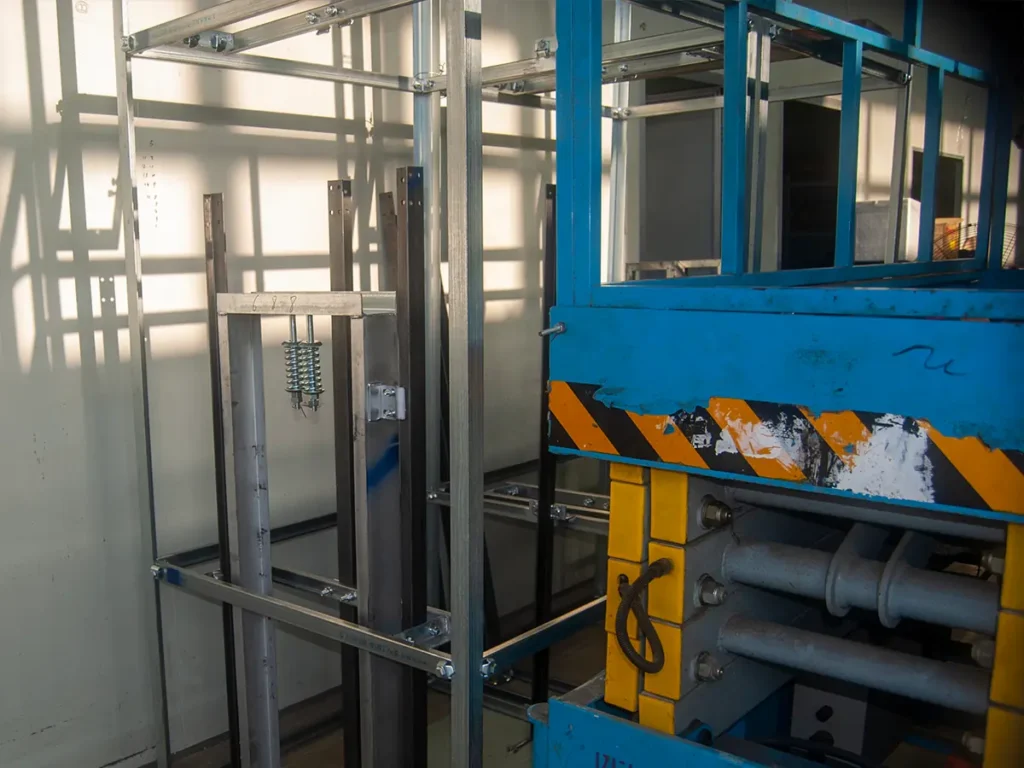
- Compact footprint — fits a small shaft where a full elevator cannot.
- Non-passenger design — built for goods only, which keeps it affordable and lightly regulated.
- Safe operation — interlocked doors, overload protection, and accurate floor stopping.
- Low operating cost — a traction drive uses little standby power and needs simple inspection.
- Food-safe car options — stainless-steel interiors that wipe clean and stand up to kitchen hygiene routines.
- Flexible configurations — side or rear counterweight, two to six stops, and door, signal, and finish options matched to your building.
Main Application Scenarios
The same equipment serves many settings — see our food lift vs service lift vs dumbwaiter guide for the terminology, and the application guides below for details:
- Restaurants and cafés — meals and dishes between kitchen and dining floors. See the restaurant dumbwaiter guide.
- Hotels — room service, linen, and housekeeping supplies between service floors. See the hotel dumbwaiter guide.
- Hospitals and clinics — patient meals, medications, linen, and supplies. See the hospital dumbwaiter guide.
- Homes and villas — food, laundry, and groceries between floors. See the home dumbwaiter guide.
- Offices and libraries — documents, files, and light supplies.
The name changes with the setting as much as with the language. In a hotel the same dumbwaiter elevator may be called a service lift or pantry lift; in a hospital it becomes a hospital dumbwaiter configured for patient trays and medication; on a factory floor it is a mini goods lift sized for boxes. The underlying specification never changes — car size, capacity, number of stops, and door type decide whether the installation still works two years later.
How Does a Dumbwaiter Elevator Work?
A dumbwaiter elevator works like a tiny elevator: an electric motor moves a steel car up and down guide rails inside a shaft, a control system manages the calls and doors, and safety devices keep everything safe. For the full step-by-step breakdown — including the traction system, counterweight, and control panel — see our how does a dumbwaiter work guide.
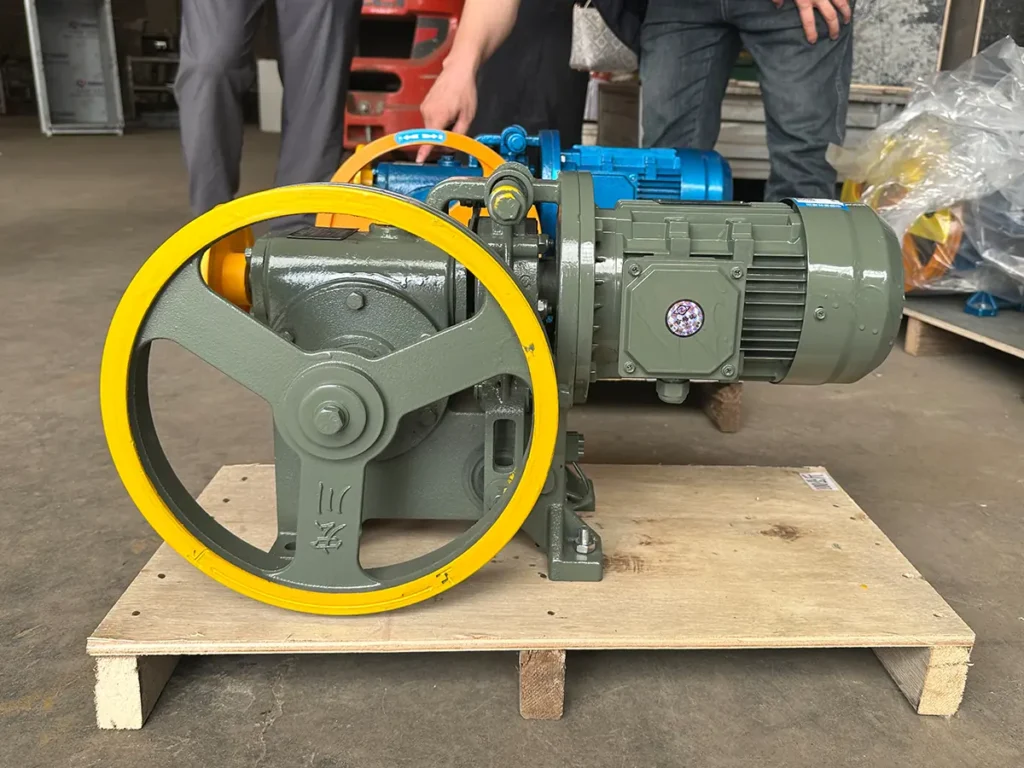
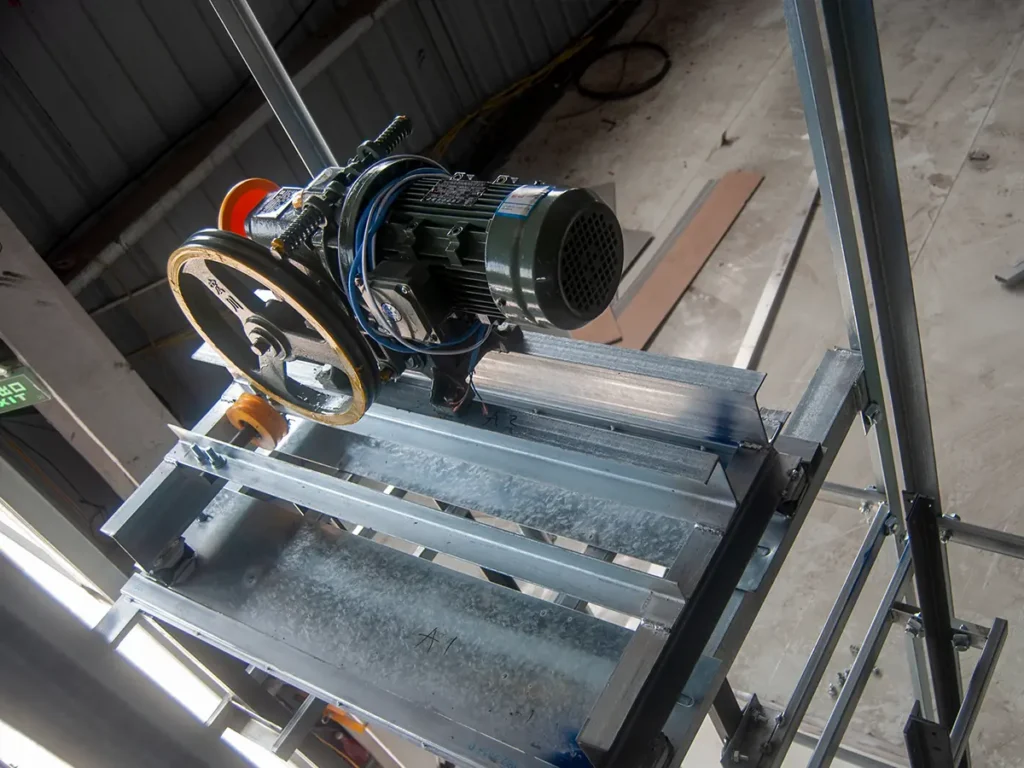
In a traction dumbwaiter elevator, a steel rope runs from the car, over a traction sheave driven by a geared machine, and down to a counterweight. The counterweight roughly balances the car, which is why a 250 kg unit needs only a small motor and draws almost nothing on standby. Guide rails keep the car travelling in a straight line, and the controller manages calls, floor levelling, and door interlocks.
Hydraulic drives are still found in older buildings and low-rise retrofits, but for new installations a traction dumbwaiter elevator is the more common choice: quieter, more energy-efficient, and cleaner to install. ServLifts builds traction units only, in side-counterweight (SC-A) and rear-counterweight (RC-B) layouts, so the machine can be placed where the building actually has space.
Sizing & Capacity
Typical dumbwaiter elevator cars range from 60×60×80 cm to 100×100×120 cm, with capacities of 100–250 kg. Restaurants usually choose 60×60 cm to 80×80 cm cars for trays and small carts; heavier operations go larger. Match the car to your busiest realistic load rather than the smallest option.
| Car size | Capacity | Typical use |
|---|---|---|
| 60×60×80 cm | 100 kg | Cafés, villas, offices, document lifts |
| 80×80×100 cm | 150 kg | Restaurant trays, hotel room service |
| 100×100×120 cm | 250 kg | Hospitals, hotels, larger restaurants |
Shaft space matters as much as the car. As a rule of thumb, allow roughly 20 cm more than the car dimension on each side for the shaft and guide rails, plus headroom above the top landing for the machine and the car travel. In a retrofit, the deciding constraint is usually where the counterweight can go, not the car itself. Our dumbwaiter dimensions and shaft guide walks through the measurements floor by floor.
Safety & Standards
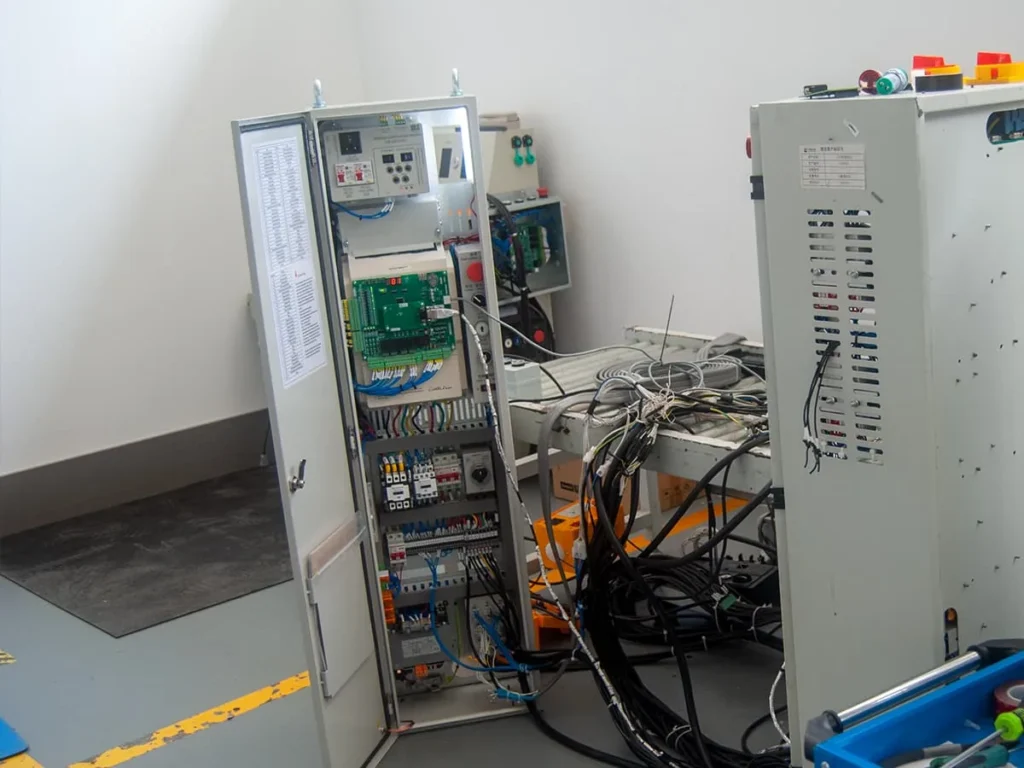
A quality dumbwaiter elevator is built to recognized safety and design standards and ships with interlocked doors, overload protection, and clear documentation. Global majors such as Otis and Hitachi focus primarily on passenger elevators; for a dedicated small goods lift, a specialized manufacturer is usually the more practical choice — our manufacturer guide and factory guide explain how to evaluate suppliers.
The standard a dumbwaiter elevator is built to depends on where the building is. In Europe, service lifts are normally built to EN 81-3. In North America, dumbwaiters fall under ASME A17.1. In China, GB 25194-2010 covers service lifts and is aligned with EN 81-3. A supplier who can name the standard and show the test documentation is far easier to compare than one who only shows a brochure.
Whichever market you are building in, the core safety features should be present on any dumbwaiter elevator you buy: interlocked doors that stop the car moving with a door open, overload protection, rope and speed monitoring, accurate floor levelling, and a manual lowering system for emergencies.
Why Choose ServLifts
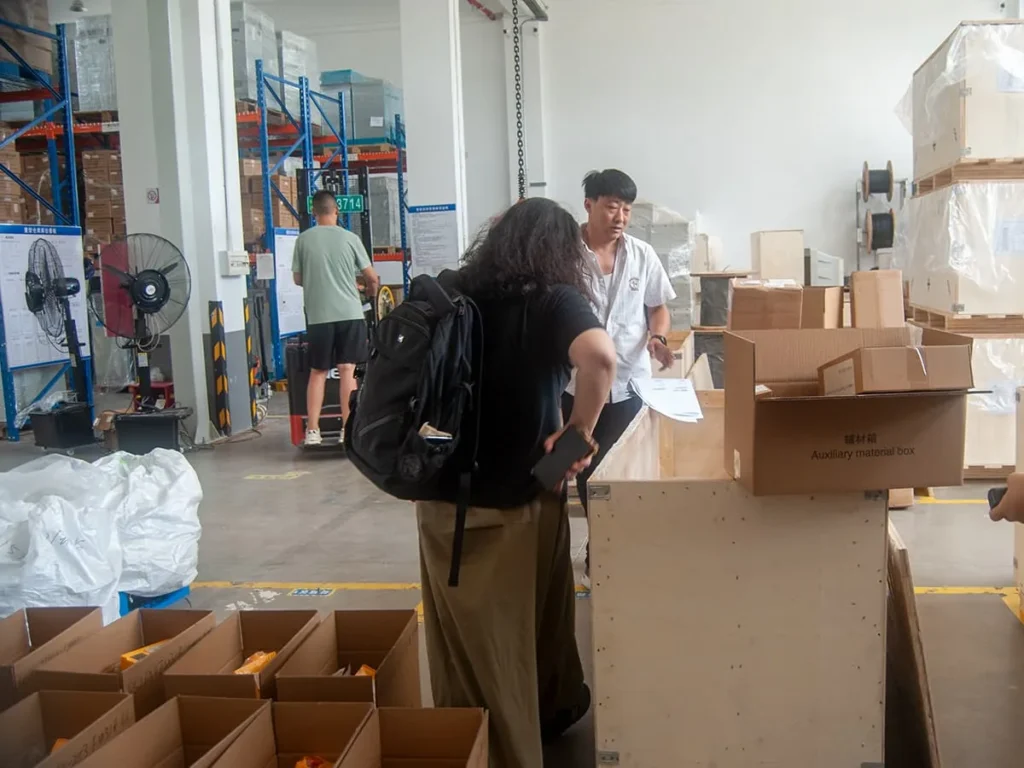
ServLifts is a Suzhou, China-based manufacturer that builds only traction dumbwaiters and small service lifts. Our SC-A (side counterweight) and RC-B (rear counterweight) series cover car sizes from 60×60×80 cm to 100×100×120 cm and capacities of 100–250 kg, with stainless-steel options, builds matched to your market’s voltage, and export documentation. Standard FOB pricing runs about US$2,265–$2,550 with a 10% first-order discount for new buyers.
Concretely, that means traction-only builds rather than a rebadged general-purpose lift; car sizes and voltages matched to your market; stainless-steel or painted finishes; export packing and documentation prepared for your port; and one point of contact from quotation to shipment. If you are weighing us against a global brand’s secondary product line, our niche dumbwaiter supplier page sets out the trade-offs honestly. For the sourcing process itself, start with the dumbwaiter manufacturer in China guide and the direct-from-factory buying walkthrough.
Once the unit is running, day-to-day care is simple: keep the car and rails clean, check the door interlocks, and follow the schedule in our dumbwaiter maintenance guide. Planned maintenance is what keeps a dumbwaiter elevator reliable for a decade.
Frequently Asked Questions
What is a dumbwaiter elevator used for?
A dumbwaiter elevator moves goods — food, dishes, linen, documents, and light supplies — between floors in restaurants, hotels, hospitals, offices, and homes. It carries cargo, never people.
What is the difference between a dumbwaiter and an elevator?
Both move loads vertically, but a dumbwaiter is a small goods-only lift (no passengers, compact car, lower cost), while an elevator is sized for people and is a much larger, more regulated installation.
How much weight can a dumbwaiter carry?
Typical units carry 100–250 kg depending on car size and configuration. Choose the rating that covers your busiest realistic load.
How much does a dumbwaiter cost?
From a specialized manufacturer, a standard traction dumbwaiter runs about US$2,265–$2,550 FOB depending on size and configuration, with first-order discounts often around 10% — see our dumbwaiter price guide for details.
Do you call it a dumbwaiter or a food elevator?
Both names describe the same machine. Dumbwaiter is the traditional trade term used in North America and in shipping documentation; food elevator and food lift are more descriptive and are what most buyers in Asia, the Middle East, and Latin America search for. Either name will get you the same equipment — just confirm the car size and the load you need to move.
Is a dumbwaiter lift the same as a dumbwaiter elevator?
Yes. Dumbwaiter lift is the everyday wording in the UK, Ireland, Australia, India, and much of Africa; dumbwaiter elevator is what you see in North America and in most export catalogues. The car size, capacity, drive, and safety standard are identical — only the name changes.
What is another name for a dumbwaiter?
Common alternatives include food lift, food elevator, kitchen lift, serving lift, tray lift, pantry lift, and service lift, plus montaplatos in Spanish-speaking markets. All of them describe the same small goods-only dumbwaiter elevator; the difference is local language and how the machine is used.
Conclusion
A dumbwaiter elevator is a compact, reliable, low-cost way to move goods between floors — the same category of equipment as a food lift or service lift, sized for cargo rather than people. Now that you know what it is and how it works, you can specify one with confidence. Browse the ServLifts range or contact us with your load and car size for a direct-from-factory quote.
Building outside the usual markets? Our regional guides cover the practical side of importing and installing a food lift — including dumbwaiters for Eastern Europe.
[…] with far stricter safety requirements; a dumbwaiter is a compact appliance-like installation. See what a dumbwaiter is and how it works for the full […]
[…] called from Manila to Monterrey. If you want the hardware explained first, start with our guide to what a dumbwaiter elevator actually is, then come back here for the […]
[…] called, read the naming guide to food lift vs service lift vs dumbwaiter and the explanation of what a dumbwaiter elevator is first. This page assumes you can already name the machine and now have to choose […]
[…] dumbwaiter carries food, linen, documents or small parts, not people. That is the whole point of the category, […]
[…] dumbwaiter carries food, linen, documents or small parts, not people. That is the whole point of the category, […]