Welcome to ServLifts Official Website

Dumbwaiter Eastern Europe: How to Specify, Import and Install a Food Lift

Hotel, clinic and restaurant renovations across Poland, Romania and the Baltics are adding food lifts faster than local suppliers can quote them. On a dumbwaiter eastern europe project in 2026 the deciding detail is no longer price. It is whether the unit is documented to EN 81-30:2025 and whether it will pass a UDT or ISCIR acceptance test without a fight.
That is a change from five years ago, when buyers compared car sizes and ignored paperwork. The European standard for service lifts was withdrawn in December 2025, and inspectors who used to accept a generic certificate now ask, on every dumbwaiter eastern europe tender, for a standard reference that did not exist when your building was designed.
This guide covers what a dumbwaiter eastern europe order involves end to end: the new standard, the national inspection bodies, voltage and control choices, the ports your container will clear, and the landed cost you should budget before you sign.
Table of Contents
- Why Eastern Europe Is Adding Food Lifts Faster Than Local Suppliers Can Quote
- Country by Country: Poland, Romania, Czechia and the Baltics
- EN 81-30:2025: What Changed for Dumbwaiters in the EU
- UDT, ISCIR and Local Acceptance Tests: What Importers Must Arrange
- Sizing a Dumbwaiter for EU Shafts and Old Town Buildings
- Power, Voltage and Control Options for Eastern Europe
- Dumbwaiter Eastern Europe: Ports, Rail and Lead Times
- Dumbwaiter Eastern Europe Price Ranges for 2026
- Frequently Asked Questions
- Conclusion
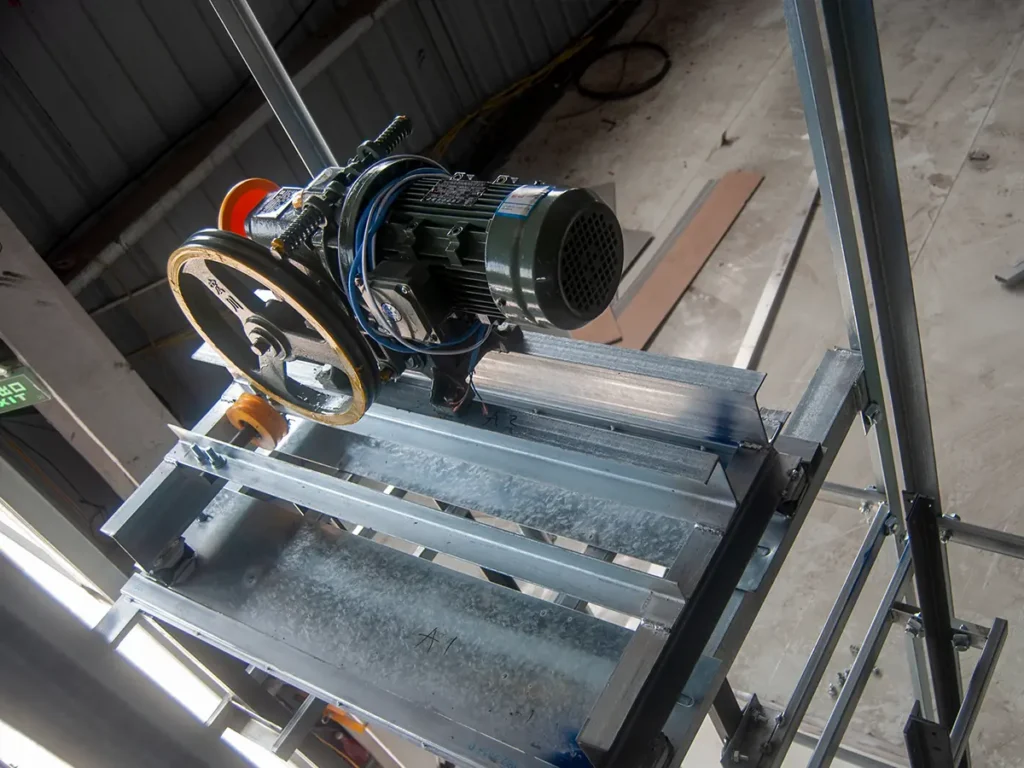
Why Eastern Europe Is Adding Food Lifts Faster Than Local Suppliers Can Quote
Labour is the driver behind most dumbwaiter eastern europe projects. Kitchen and housekeeping wages in Poland, Czechia, Slovakia and Romania have climbed fast since 2020, while the guest floors that need serving have not moved. Moving trays, linen and sterile supplies by hand stopped being the cheap option.
The second driver is building stock. CEE cities are full of pre-war hotels, sanatoria and hospital wings with narrow stair cores and empty service shafts. A 60 x 60 x 80 cm food lift fits a shaft that a passenger elevator cannot use, and it does not trigger the fire, rescue and accessibility rules that a passenger lift does – one reason the dumbwaiter eastern europe market keeps growing in old city centres.
The third is funding. Renovation programmes tied to EU structural funds have made hotel and clinic upgrades easier to finance, and specifications written for those projects name European standards. A supplier who cannot explain EN 81-30 loses the order at the tender stage, long before price is discussed. That rule now applies to every dumbwaiter eastern europe contract, however small the unit.
Local manufacturers exist in Poland, Czechia and Slovenia and they build good machines. Their constraint is capacity and price: a niche brand building thirty units a year quotes four to six months out, and the quote carries a distributor margin. That gap is where factory-direct supply from China competes, and it is the reason more dumbwaiter eastern europe buyers now run a Chinese unit alongside a European one.
Country by Country: Poland, Romania, Czechia and the Baltics
Eastern Europe is not one market. Two things separate the countries that matter to an importer: whether the country is in the EU customs union, and which national body inspects the finished installation. Both decide your paperwork, not your hardware.
| Market | EU member | Technical inspection | Main entry port |
|---|---|---|---|
| Poland | Yes | UDT | Gdansk, Gdynia |
| Romania | Yes | ISCIR | Constanta |
| Czechia, Slovakia, Hungary | Yes | National inspection authority | via Gdansk, Koper or Hamburg |
| Bulgaria | Yes | National inspection authority | Varna, Burgas |
| Slovenia, Croatia | Yes | National inspection authority | Koper, Rijeka |
| Lithuania, Latvia, Estonia | Yes | National inspection authority | Klaipeda, Riga, Tallinn |
Two practical consequences follow. First, because every country above sits inside the customs union, one EORI number registered in the country of first entry covers all of them, and goods cleared in Gdansk move to Bratislava or Vilnius without further customs stops. Second, inspection is national even though the product standard is European. Your CE file is the starting point, not the finish line for a dumbwaiter eastern europe shipment.
Outside the EU, in Serbia, Bosnia, North Macedonia and Montenegro, inspection follows national rules that are broadly aligned with the European framework but administered differently. If your project is there, have the installing contractor confirm the acceptance route before the dumbwaiter eastern europe order is placed.
EN 81-30:2025: What Changed for Dumbwaiters in the EU
The standard that governed service lifts in Europe for two decades, EN 81-3:2000+A1:2008, has been withdrawn. It is replaced by EN 81-30:2025, published in December 2025 as part of the EN 81 family for lifts carrying goods only. It is also the reference any dumbwaiter eastern europe inspector will look for first.
The scope is familiar: permanently installed electric or hydraulic service lifts, rated load up to 300 kg, not intended to carry people, car floor area no more than 1.0 m2, car depth no more than 1.0 m, car height no more than 1.20 m and rated speed up to 1 m/s. What changed is how those limits must be engineered and proven.
| Technical area | EN 81-3:2000 | EN 81-30:2025 |
|---|---|---|
| Electrical safety | Basic requirements | Performance Levels (PL) per EN ISO 13849-1; explicit EMC requirements (EN 12015 / EN 12016) |
| Door locks | Mainly mechanical locking | Electrical safety devices added; locking engagement of at least 7 mm; impact tested |
| Ropes and suspension | Safety factor of at least 8 | Rope terminals must reach 80 percent of minimum breaking force; detailed chain rules |
| Hydraulic systems | Simple overview | Stricter rupture valve and throttle valve positioning; compression fittings prohibited; oil temperature monitoring |
| Well protection | Limited detail | Dimensional rules for well partitions, access protection and refuge spaces |
| Verification | Brief | Documented compliance; the manufacturer must retain design verification records |
The verification row is the one that affects buyers most. A modern dumbwaiter eastern europe order should arrive with design verification records, not just a certificate. Ask for the standard reference on the declaration of conformity and check that it reads EN 81-30:2025. A dumbwaiter eastern europe acceptance test in 2026 starts exactly there.
Behind the standard sits the legal layer. Machinery Directive 2006/42/EC remains the applicable law until 19 January 2027, when Regulation (EU) 2023/1230 takes over.
The new regulation keeps CE marking and the declaration of conformity, extends technical documentation duties to digital formats, and requires the file to be kept for at least ten years. Units shipped in 2026 should already be documented with the transition in mind, and every dumbwaiter eastern europe quotation we issue is.
UDT, ISCIR and Local Acceptance Tests: What Importers Must Arrange
In Poland, every lifting device falls under technical supervision. The rule is set by the Council of Ministers regulation on types of technical devices subject to supervision, and there is no exemption for a small goods lift used in a private building, a hotel kitchen or a warehouse. That matters, because the assumption that a small unit escapes inspection is common and wrong.
The process runs in a fixed order. The operator reports the equipment to the competent UDT branch and submits documentation in Polish, two sets per item. A UDT inspector then performs the acceptance test before the equipment is put into service, checking condition, accessories, marking and function under load. If the result is positive the branch issues an operating permit, and the inspection log book is opened from that permit.
Failure to run that sequence is expensive. Operating without a valid inspection can lead to fines and, in serious cases, restriction of liberty for the person responsible, and an insurer is likely to refuse a claim on equipment that was never admitted. The Polish technical inspection office (UDT) publishes the registration route and the document list, both worth reading before a dumbwaiter eastern europe order ships.
Romania works through ISCIR, the state inspection body for lifting installations, with an authorised inspection and a designated RSVTI supervisor on site. Czechia, Slovakia, Bulgaria and the Baltic states each administer their own acceptance procedure, usually through a notified inspection body and an authorised installer.
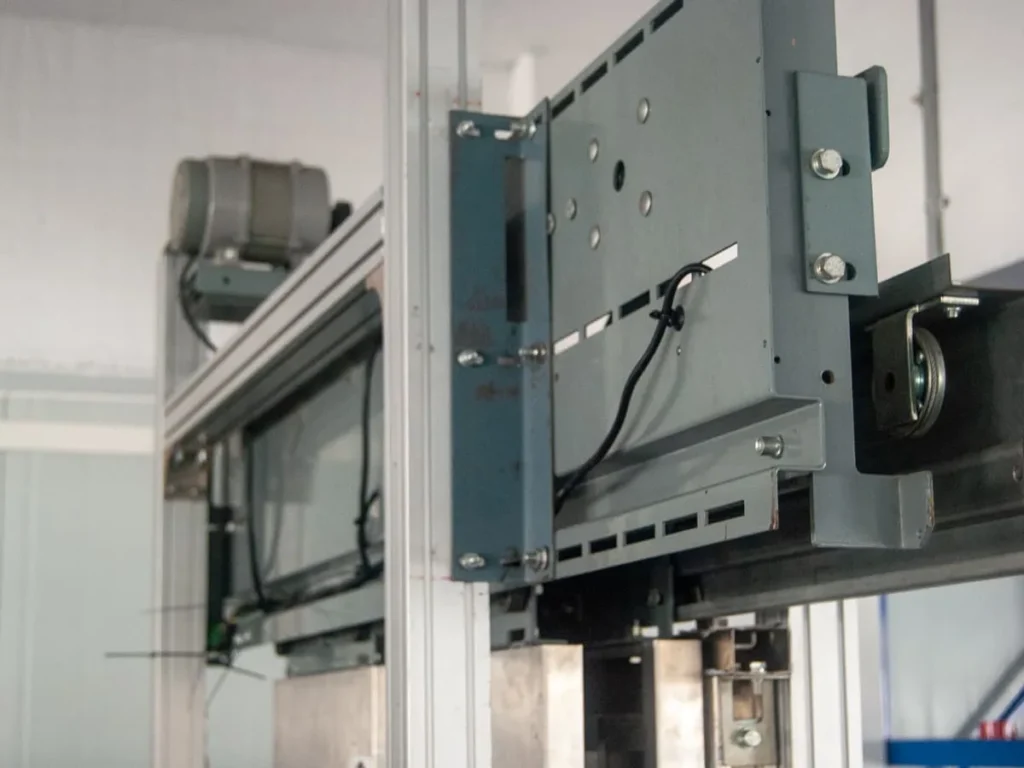
What you can control at the factory gate is the document pack. For a dumbwaiter eastern europe project we prepare the technical file, general arrangement drawing, electrical and hydraulic diagrams, the declaration of conformity, the operating manual and the load test records. The national inspection fee itself and the local authorised service are arranged by the buyer, because they depend on the site and the country.
- Declaration of conformity referencing EN 81-30:2025 and 2006/42/EC
- General arrangement and shaft layout drawings, dimensioned to the millimetre
- Electrical schematic, hydraulic schematic and control logic description
- Load test record and rope or chain certificate
- Operating and maintenance manual, in English, ready for local translation
- CE marking on the complete machine, not on components alone
Sizing a Dumbwaiter for EU Shafts and Old Town Buildings
Old buildings set the constraints on a dumbwaiter eastern europe installation, and they rarely match a catalogue page. Ceiling heights of 2.6 to 2.8 m leave little room above the car, and the shaft that exists is often the one the architect could spare in 1935. Two decisions follow from that: drive position and car size.
| Service | Car (W x D x H) | Capacity | Typical stops |
|---|---|---|---|
| Room service trays, floor pantries | 60 x 60 x 80 cm | 100 kg | 3-6 |
| Restaurant kitchen to floor | 80 x 80 x 100 cm | 150-200 kg | 2-5 |
| Banqueting trolleys, laundry, sterile supplies | 100 x 100 x 120 cm | 250 kg | 4-8 |
Where the shaft is tight, a side counterweight design puts the counterweight beside the car and keeps the overall footprint close to the car itself. Where there is depth behind the car but no width, a rear counterweight layout is cheaper and simpler to service. The trade-off is worth reading properly before you pour concrete on a dumbwaiter eastern europe project: see side counterweight versus rear counterweight and the full dumbwaiter dimensions guide.
Seven configurations cover most dumbwaiter eastern europe enquiries, and all seven are standard rather than custom builds:
- 100 kg, side counterweight, 60 x 60 x 80 cm car – the classic pantry lift for narrow cores
- 100 kg, rear counterweight, 60 x 70 x 80 cm car – where width is the binding constraint
- 150 kg, rear counterweight, 70 x 70 x 80 cm car – restaurant pass to first floor
- 200 kg, side counterweight, 80 x 80 x 100 cm car – hotel floor pantry service
- 200 kg, rear counterweight, 80 x 80 x 120 cm car – taller trays and banqueting trolleys
- 250 kg, side counterweight, 100 x 100 x 120 cm car – hospitals, clinics and central kitchens
- 250 kg, rear counterweight, 100 x 100 x 120 cm car – high-volume room service towers
Shaft preparation follows the drawing, and the drawing follows the survey. Installation requirements for pit depth, headroom, opening size and power supply are worth reading before the builder commits to a shaft position, because moving a lift two metres later costs more than the lift.
Power, Voltage and Control Options for Eastern Europe
Continent-wide, Eastern Europe runs 230 V single phase and 400 V three phase at 50 Hz – the supply a dumbwaiter eastern europe order is built for. That is the same frequency as the Chinese grid, so no frequency converter is needed and the traction machine, contactors and control transformer are supplied for 50 Hz as standard. It is a quieter starting point than the Middle East, where 60 Hz markets need a different machine.
Three specification details still cause site problems on a dumbwaiter eastern europe order. The first is EMC: EN 12015 and EN 12016 are now named explicitly in the service lift standard, so the drive and control cabinet must be documented for emission and immunity rather than assumed compliant.
The second is protection class, which should match the room the control cabinet ends up in – a wet kitchen wall and a plant room need different ratings. The third is control voltage and emergency lowering, which the local inspector will ask about during the acceptance test.
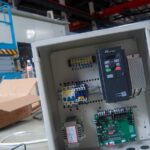
Control cabinets for this region are usually supplied as an independent floor-standing unit rather than built into the shaft wall, because old machine rooms are being reused for storage. Tell us the machine room position at quotation stage and the cabinet, cable lengths and landing call stations are sized to it rather than to a default – which is how most dumbwaiter eastern europe units we ship are configured.
Dumbwaiter Eastern Europe: Ports, Rail and Lead Times
Three gateways matter for a dumbwaiter eastern europe delivery, and choosing between them and cost. All transit times below are port-to-port and exclude production, which for a standard unit runs three to five weeks after drawing approval.
| Route | Mode | Transit time | Best for |
|---|---|---|---|
| China to Gdansk or Gdynia, Poland | Sea, direct Baltic service | 25-35 days | Poland, Baltics, Czechia, Slovakia, eastern Germany |
| China to Malaszewicze, Poland | China-Europe rail, then truck | 16-25 days | Time-critical restocking into CEE |
| China to Constanta, Romania | Sea via Suez and the Black Sea | 30-40 days | Romania, Bulgaria, Moldova, Serbia |
| China to Constanta, Romania | Rail plus truck | 20-28 days | Projects with a fixed commissioning date |
| China to Koper, Slovenia | Sea via Suez | 30-40 days | Slovenia, Croatia, northern Italy, Austria |
Gdansk deserves a note. Its Baltic Hub takes direct deep-sea calls from Asia, so a container does not have to be transhipped through Rotterdam or Hamburg the way most Baltic ports require. That usually makes it the fastest sea entry for the region and a natural consolidation point for dumbwaiter eastern europe shipments: cleared in Gdansk, the same container reaches Warsaw, Prague, Bratislava or Vilnius by road without a second customs entry.
Rail is the middle option for a dumbwaiter eastern europe delivery, and Poland is its main gateway, with trains entering the EU at Malaszewicze and unloading at inland terminals.
Rail is roughly twice as fast as sea and roughly half the cost of air, but border congestion can add days in peak season, so do not build a hard commissioning date on the optimistic number.
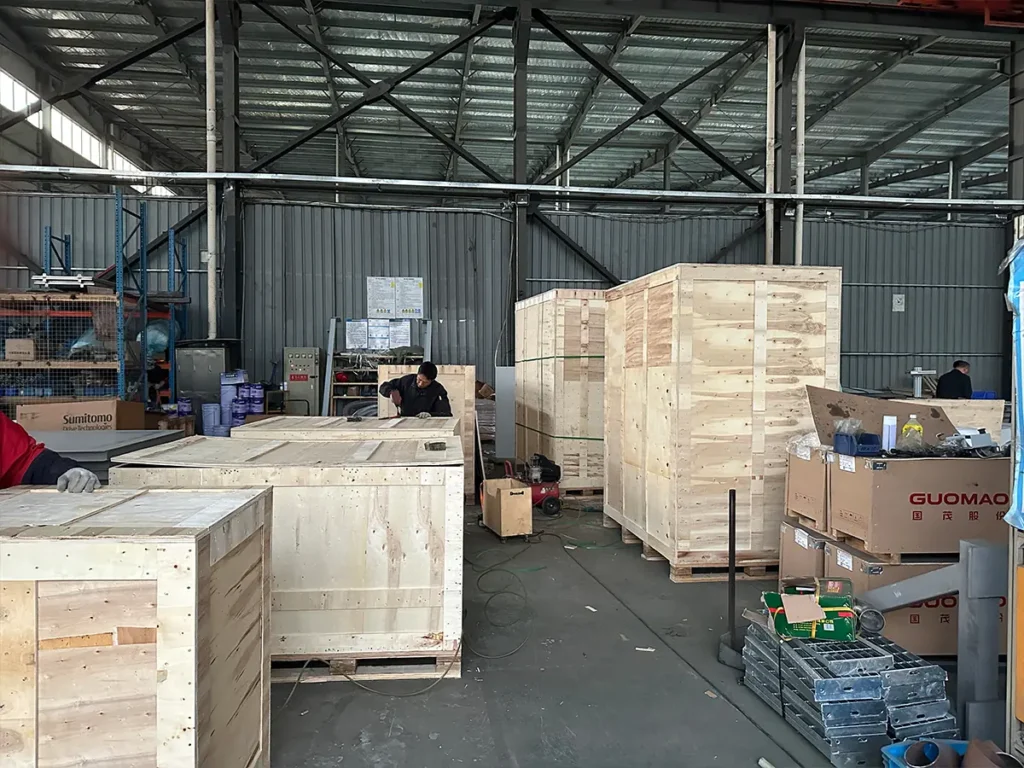
Two documents catch first-time importers. An EORI number is required for any business importing into the EU; it is free, registered once in the country of first entry, and valid across all member states. And all wooden packaging must be ISPM-15 compliant, which is why crates for a dumbwaiter eastern europe order are heat treated and stamped at packing rather than built on site.
On documentation, expect a commercial invoice, packing list, bill of lading or rail consignment note, certificate of origin and the product certificates themselves. Duty and import VAT are calculated on the declared customs value at the point of entry, so the landed figure on a dumbwaiter eastern europe quotation is FOB plus freight plus duty plus VAT plus local inspection. How a food lift is priced in 2026 breaks the components down.
Dumbwaiter Eastern Europe Price Ranges for 2026
Factory-direct pricing for a dumbwaiter eastern europe order has stayed stable through 2026, because the cost drivers are steel, traction machines and freight rather than regional demand. The ranges below are indicative FOB, for a complete unit with car, guide rails, traction machine, control cabinet, landing doors and call stations.
| Configuration | Car size | Indicative FOB |
|---|---|---|
| 100 kg, side counterweight, 3 stops | 60 x 60 x 80 cm | US$2,265 – US$2,450 |
| 150-200 kg, rear counterweight, 4 stops | 80 x 80 x 100 cm | US$2,400 – US$2,550 |
| 250 kg, rear counterweight, 6 or more stops | 100 x 100 x 120 cm | Quoted per project |
What moves a dumbwaiter eastern europe quotation: number of stops, landing door finish, whether the control cabinet is separate, stainless grade inside the car, and the packing standard. A first order at ten units or more is normally quoted with a 10 percent discount, and the second and third containers usually repeat the same specification with only the landing count changed.
Budget the local side separately. Sea freight into Gdansk or Constanta for a 20-foot container typically runs in the low thousands of US dollars depending on season, and import VAT is recoverable for a registered business.
On top of freight sit the UDT or ISCIR acceptance test fee and the authorised installer cost. Comparing a Chinese quotation against a European one only makes sense once both are converted to landed cost – the calculation every dumbwaiter eastern europe buyer has to make, whatever the country.
For buyers weighing a factory-direct supplier against a European brand, the honest position on a dumbwaiter eastern europe purchase is this: a niche specialist factory is worth prioritising when the shaft is standard, the compliance pack is complete and you want the spare parts list to still exist in year five.
Compare the dumbwaiter manufacturers in China on documentation quality, not on logo size, and ask what a real China dumbwaiter factory supplies with every dumbwaiter eastern europe machine.
Frequently Asked Questions
Do I need CE marking to import a dumbwaiter into the EU?
Yes. A service lift is machinery under the EU framework, so it needs CE marking, a declaration of conformity and a technical file. Until 19 January 2027 that means Machinery Directive 2006/42/EC; after that date Regulation (EU) 2023/1230 applies. The CE mark must be on the complete machine, not only on the components – a dumbwaiter eastern europe unit is no exception.
How long does shipping a dumbwaiter to Gdansk or Constanta take?
Sea freight from China to Gdansk runs about 25 to 35 days on a direct Baltic service, which is the fastest sea option for a dumbwaiter eastern europe delivery, and to Constanta about 30 to 40 days via Suez and the Black Sea. Rail into Poland through Malaszewicze takes about 16 to 25 days. Add three to five weeks of production before dispatch, and allow extra time for the national acceptance test after arrival.
Can a dumbwaiter be installed in an existing building without a new shaft?
Often yes. The 60 x 60 x 80 cm and 60 x 70 x 80 cm cars fit shafts and service ducts that are too small for a passenger lift, and a side counterweight layout keeps the footprint close to the car. A survey of pit depth, headroom and opening size decides it, and on a dumbwaiter eastern europe retrofit the layouts are usually settled before fabrication begins.
What documents will the UDT or ISCIR inspector ask for?
Typically the operating manual, general arrangement drawing, electrical and hydraulic diagrams, the declaration of conformity, the load test record and evidence that the unit was installed correctly on site. In Poland the submission is made in Polish, in two sets, before the equipment is put into service.
We supply an English master pack with every dumbwaiter eastern europe shipment, so local translation is a formatting job rather than a re-engineering one.
How much does a dumbwaiter cost delivered to Eastern Europe?
A 100 kg unit in a 60 x 60 x 80 cm car is typically US$2,265 to US$2,450 FOB, and a 200 kg unit in an 80 x 80 x 100 cm car is typically US$2,400 to US$2,550 FOB. Landed cost adds sea or rail freight, customs duty, import VAT and the local acceptance test.
Send your shaft drawing and stop count and we will quote the delivered figure on your dumbwaiter eastern europe project rather than the port figure.
Conclusion
Ordering a dumbwaiter eastern europe project in 2026 comes down to three checks. Confirm the unit is documented to EN 81-30:2025 rather than the withdrawn EN 81-3. Confirm who will run the national acceptance test, because UDT and ISCIR work to national procedure even though the product standard is European. And confirm the factory can hand over a complete technical file, in a form your installer and your translator can actually use.
Get those three right and the rest is normal project work: shaft survey, layout drawing, production, shipment through Gdansk or Constanta, installation and commissioning. The seven standard configurations above cover most enquiries, so the specification conversation is usually shorter than buyers expect.
ServLifts builds dumbwaiters and small service lifts in Suzhou, China, and supplies them with the CE documentation, drawings and load test records that a dumbwaiter eastern europe importer needs. We are a specialist factory rather than a full-range elevator group, which means a narrow product line, direct communication and spare parts held for the models we build.
Send us your shaft dimensions and we will return a layout sketch and a delivered price, usually within one working day. Talk to us about your project and we will come back with a quotation you can put in front of the building owner.
If your project sits in another region, the same process applies with different rules: see our Middle East and South Asia sourcing guides, or browse the export models we build by capacity and car size.
[…] Building outside the usual markets? Our regional guides cover the practical side of importing and installing a food lift — including dumbwaiters for Eastern Europe. […]
[…] regionales cubren la parte práctica de importar e instalar un elevador de comida, incluidos los montaplatos para Europa del Este (en […]