Welcome to ServLifts Official Website

Dumbwaiter in South Asia: A Sourcing Guide for India, Bangladesh, Pakistan & Sri Lanka (2026)

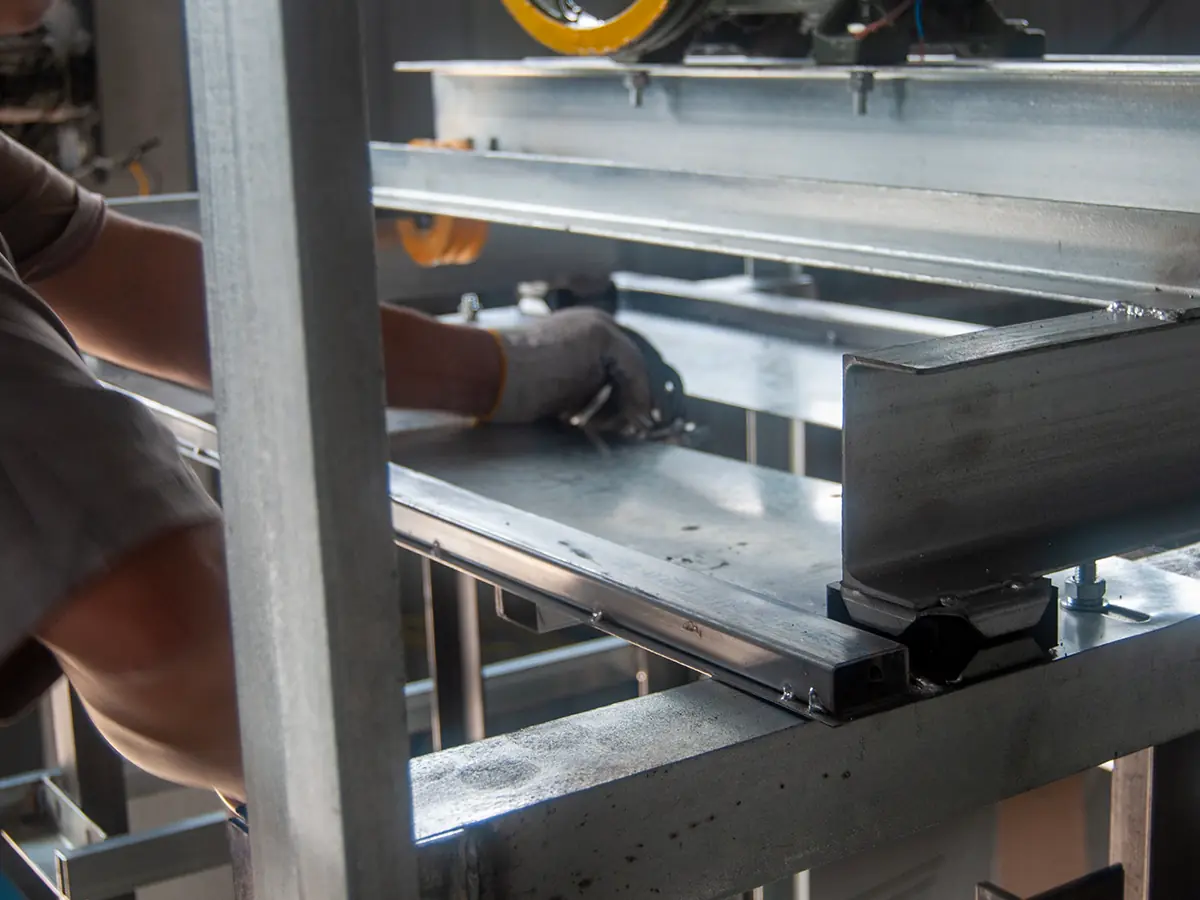
South Asia is one of the fastest-expanding regions for food-service and hospitality infrastructure. As hotels, hospitals, and restaurants modernize across India, Bangladesh, Pakistan, and Sri Lanka, the humble dumbwaiter in South Asia — a small non-passenger lift for food, dishes, laundry, or documents — has moved from “nice to have” to a standard specification. This 2026 guide covers what buyers in the region actually need to know: power standards, import practicalities, drive-system choice, and how to pick a supplier that treats a single unit as a priority.
Why South Asia Demand Is Accelerating
- India’s hospitality and hospital build-out. Tier-2 and Tier-3 cities are adding hotels, clinics, and restaurants that now specify service lifts as standard.
- Labor efficiency. Across Bangladesh, Pakistan, and Sri Lanka, operators want to move materials between floors without dedicated runners.
- Space pressure. Urban footprints are tight; a compact traction dumbwaiter fits where a full passenger elevator cannot.
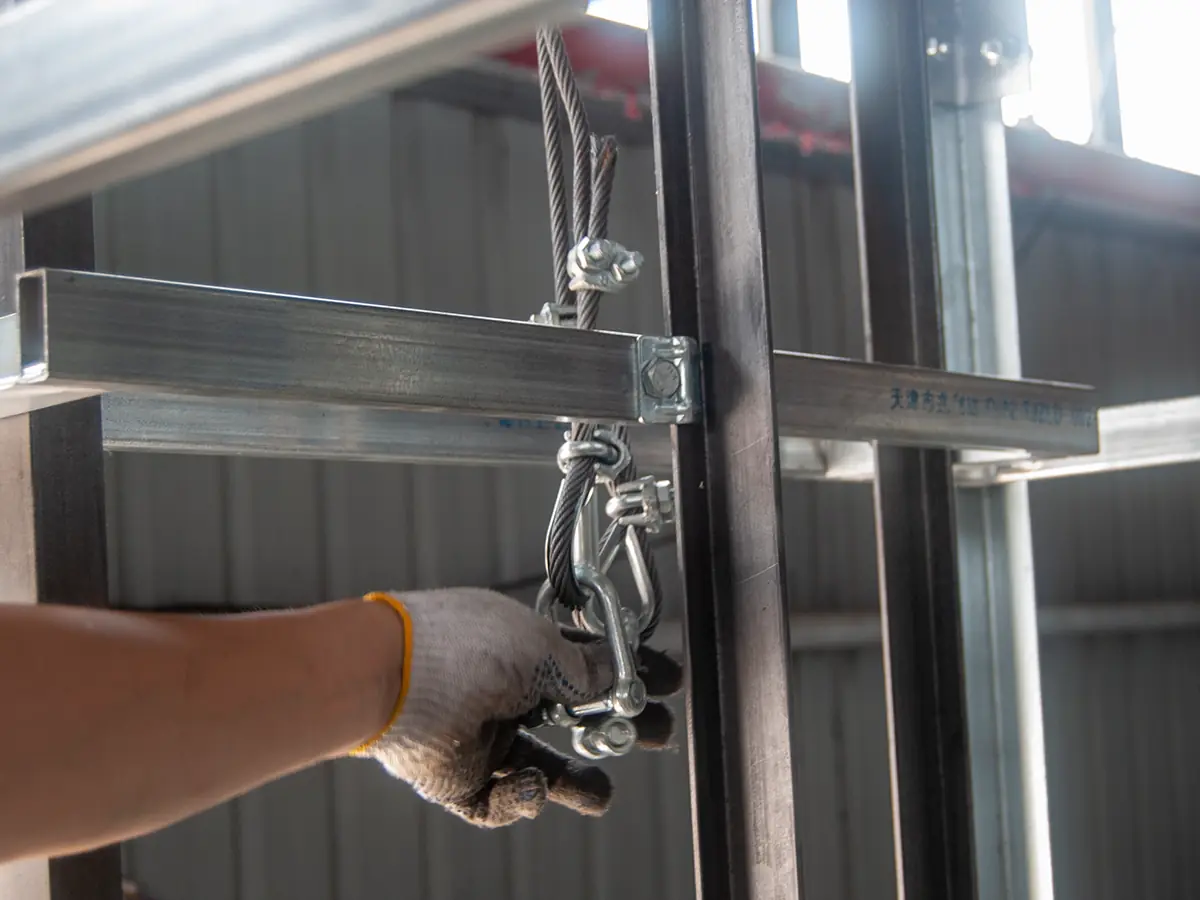
For the overwhelming majority of these jobs, a traction dumbwaiter — roped with a counterweight, built for 50–300 kg loads — is the right answer.
South Asia Country Snapshot
| Country | Typical use | Power note | Import habit |
|---|---|---|---|
| India | Hotels, hospitals, restaurants | 230 V / 50 Hz (415 V 3-ph for larger) | Large, mix of local + import |
| Bangladesh | Garment staff, hotels, F&B | 220 V / 50 Hz | Import-driven |
| Pakistan | Hotels, hospitals, homes | 230 V / 50 Hz | Growing imports |
| Sri Lanka | Resorts, restaurants, offices | 230 V / 50 Hz | Tourism-led imports |
Note: confirm on site whether single-phase (230 V) or three-phase (415 V) supply is available — larger capacity units may require three-phase.
What Hotels, Hospitals and Restaurants Order in South Asia
Demand for a dumbwaiter in South Asia is not one market, it is three. A hotel kitchen has a different duty cycle from a hospital linen route, and both differ from a restaurant that only moves dishes between a ground-floor kitchen and a first-floor dining room. Sizing the wrong one is the most common specification error we see across South Asia.
Hotels. The dominant pattern is a traction unit running from a ground-floor kitchen to a pantry on each guest floor, loaded through window-type openings. Capacity usually lands between 100 and 200 kg with a car of 80×80 cm or 100×100 cm, because the car has to take a tray trolley rather than a single tray. Where a hotel also runs banquet space, the same unit is often asked to move chafing dishes and stackable banqueting chairs, which pushes the specification towards the upper end of that range.
Hospitals and clinics. The load here is linen, sterile supplies, pharmacy items and food trays, frequently between a basement store and multiple wards. Reliability and hygiene matter more than speed, and the car interior needs to be smooth stainless steel that can be wiped down. Floor-type loading is common where trolleys are used, and a slightly larger car usually pays for itself because it removes a second trip.
Restaurants and cloud kitchens. Typically two or three stops and a short travel distance, so the economically sensible specification is the smallest unit that will take the largest tray or dish rack the kitchen uses. Many restaurant operators in the region order a dumbwaiter to solve a specific bottleneck — a basement prep kitchen, a rooftop dining floor — and for a restaurant in South Asia a 50–100 kg traction unit covers almost all of those cases.
| Sector | Typical stops | Load | Car size |
|---|---|---|---|
| Hotel (kitchen to floor pantries) | 3–6 | 100–200 kg | 80×80 cm or 100×100 cm |
| Resort or banquet hotel | 3–5 | 150–250 kg | 100×100 cm or larger |
| Hospital or clinic | 3–8 | 100–200 kg | 80×80 cm or 100×100 cm |
| Restaurant or cloud kitchen | 2–3 | 50–100 kg | 60×60 cm or 80×80 cm |
One note on numbers. Load ratings quoted by different factories are not directly comparable, because the figure depends on guide-rail size, rope diameter and counterweight design as much as on the car itself. When you compare two dumbwaiter quotations for a South Asia project, ask for the car internal dimensions and the rope specification alongside the rated load, and the comparison becomes meaningful.
Traction vs Hydraulic for South Asian Projects
For restaurants, hotels, and hospitals, a traction dumbwaiter is generally preferable to hydraulic: no oil to maintain (important in hot climates and food environments), lower standby consumption, and simpler periodic inspection. We break down all three drive systems — traction, hydraulic, and screw — in our comparison guide.
Shaft, Pit and Headroom: What the Site Must Provide
A dumbwaiter is a small lift, but it is still a lift, and it needs a vertical shaft that satisfies the equipment rather than the other way around. In South Asia this is the point where projects most often stall: the building is drawn, the pantry is fixed, and only then does anyone check whether a hoistway will actually fit.
Three dimensions decide feasibility. The hoistway plan size must be larger than the car on every side, because the space has to carry the guide rails and the counterweight in addition to the car itself. Pit depth is set by the travel and the model — traction units need less than hydraulic, which is one reason traction is the default in the region. Headroom above the top landing has to accommodate the machine and the rope travel; low-ceilinged upper floors are the single most common retrofit constraint.
| Element | What it depends on | What to do |
|---|---|---|
| Hoistway plan size | Car size, counterweight position (side or rear) | Ask for the layout drawing and hand it to your architect |
| Pit depth | Model and travel distance | Confirm before the slab is cast or broken out |
| Top headroom | Machine position and rope travel | Measure the actual ceiling, not the drawing |
| Landing opening | Window-type or floor-type loading | Set the sill height so a trolley rolls in |
| Power supply | 230 V single-phase or 415 V three-phase | Confirm the site supply before production |
Two practical rules save a lot of rework. First, decide loading type before the shaft is built: a floor-type unit needs the car floor flush with the landing and a small recess below, while a window-type unit loads through a wall opening and needs a counter or hatch at a comfortable working height. These two layouts are not interchangeable after the fact.
Second, treat the shaft as a fire compartment. The enclosure in a hotel or hospital corridor has to hold the fire rating of the wall it penetrates, and that requirement may drive the choice between a masonry shaft and a self-supporting steel one. In a retrofit, a steel structure clad to the required rating is usually faster and cleaner than cutting into an existing wall.
If your site already has a void — a disused service duct, a redundant chimney breast, a corner of a stair core — send photographs and rough dimensions with the enquiry. A manufacturer can usually tell you within a day whether the dumbwaiter for South Asia will fit, needs a custom car, or needs a different location entirely.
What to Check Before You Import a Dumbwaiter to South Asia
- Single vs three-phase power. Small units often run on 230 V single-phase; heavier 200–250 kg builds may need 415 V three-phase. Verify the site supply before ordering.
- Documentation and standards. Ask what certifications the unit carries. Many regional buyers look for recognized safety and design standards as a baseline of quality, even where local certification is still evolving.
- Car size and load. 60×60 cm fits trays; 80×80 cm or 100×100 cm suits banquet ware, laundry, or document batches. Size the car to your busiest realistic load.
- Hoistway and pit. Traction units need defined shaft dimensions and a small pit. Align these with your architect early to avoid costly rework.
- Service network. A dumbwaiter is a long-life asset — confirm local servicing and spare-parts availability.
Shipping, Ports and Import Documents for South Asia
Most dumbwaiters entering South Asia move as a single crate or two, which makes the logistics far simpler than for a passenger elevator but still worth planning. The unit travels by sea to a gateway port, then inland by road to site. Where the project schedule is tight, some buyers split the shipment so that the shaft structure arrives first and the car and machine follow.
| Country | Common gateway ports | Notes |
|---|---|---|
| India | Nhava Sheva (JNPT), Mundra, Chennai, Kolkata | Inland haulage distance varies widely — confirm destination before quoting freight |
| Bangladesh | Chittagong | Allow additional inland transit to Dhaka |
| Pakistan | Karachi, Port Qasim | Confirm consignee documentation with your clearing agent |
| Sri Lanka | Colombo, Hambantota | Short inland legs; often the simplest clearance in the region |
On documents, the standard export set applies: commercial invoice, packing list, bill of lading, and a certificate of origin where the buyer wants to claim preferential treatment or where the destination customs authority asks for it. If the unit is declared as a lift or hoist, check the HS line your agent intends to use before shipment — classification disputes on small service lifts are a routine source of delay, and they are settled far more cheaply before the goods sail than after.
On terms, FOB is the usual starting point for South Asia buyers because it lets you use your own freight forwarder and see the real ocean cost. CIF is convenient when the supplier has a better rate on a specific lane into South Asia, but it hides the freight inside the unit price, which makes it harder to compare suppliers. For a first order, ask for both and compare the landed figure rather than the headline price.
Finally, plan the offloading for South Asia. A dumbwaiter crate is heavy and awkward, and many small hotels and restaurants in the region have no dock and no forklift. Confirm before shipment how the crate will come off the truck and get to the shaft location — a crane booking arranged in advance costs far less than a crate sitting on the pavement.
Why Many South Asia Buyers Source From China
A substantial share of South Asia’s small lifts are manufactured in China, for the same practical reasons seen worldwide: competitive ex-works pricing, fast customization, and well-established export shipping to ports like Nhava Sheva (Mumbai), Chittagong, Karachi, and Colombo.
That does not mean defaulting to a global elevator conglomerate. Brands such as Otis and Hitachi make excellent products, but their pricing, lead times, and support are typically structured around large projects — smaller buyers can wait and pay a premium. For a dedicated food or service lift, a focused manufacturer is often the smarter choice.
ServLifts: A Specialized Traction Dumbwaiter Manufacturer for South Asia
ServLifts is a Suzhou, China-based manufacturer that builds only traction dumbwaiters and small service lifts. We are not a general elevator giant, and our narrow focus is the point — for this product category it means better tuning, faster response, and small-project priority.
- Two series — SC-A (side counterweight) and RC-B (rear counterweight), with car sizes from 60×60×80 cm to 120×120×140 cm and capacities of 50–300 kg.
- Export-ready builds — 230 V / 50 Hz single-phase and 415 V three-phase options, CE-marked components, and import documentation suited to South Asian ports.
- Transparent FOB pricing. Standard FOB ranges about US$2,265–$2,550 per unit by size and configuration, with a 10% first-order discount for new buyers.
- Small-project priority. Because we build only dumbwaiters, a single hotel or restaurant order gets full attention.
Considering a purchase? Our import-from-China checklist walks through the whole process so you can compare suppliers on equal footing.
Installation, Commissioning and Spare Parts in South Asia
Who installs the unit is a decision that should be made before the order, not after it. There are three workable models for a South Asia project, and each suits a different buyer.
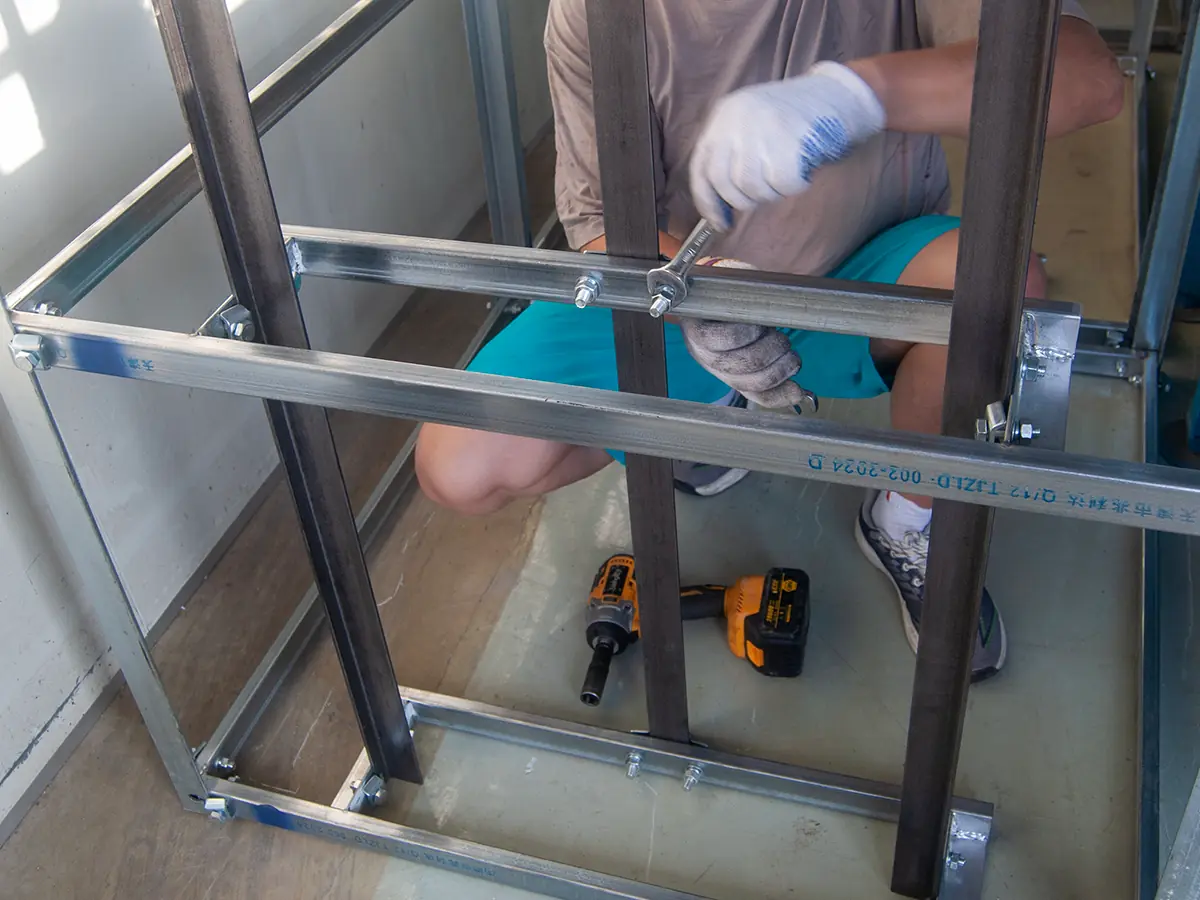
Your own team, guided remotely. The most common route for experienced installers and for repeat buyers. The factory supplies the layout drawing, the wiring diagram and a commissioning checklist, and the site team erects the shaft, hangs the car and aligns the doors. This keeps cost down and is realistic for a straightforward two- or three-stop unit.
A local lift contractor. Sensible where the building has an existing maintenance contractor who will also service the unit afterwards. The important detail is that the contractor receives the drawings before the shaft is built, not after — most installation problems in South Asia trace back to a shaft built to nobody’s drawing.
Factory supervision. For larger or multi-stop projects, a factory technician attends the commissioning. This is worth the cost where the same team will be maintaining several units, because the knowledge stays on site afterwards.
Commissioning itself is a short list: confirm the door interlocks operate on every landing, test the overload device, verify the slack-rope safety, run the car to each stop at rated load, and check that the emergency alarm and stop are reachable from inside the car. Walk the client through each of these rather than handing over a running lift — the handover is where a service relationship starts.
On spares, keep a small kit on site from day one: a set of guide shoes, a door roller or two, fuses, and a spare set of push buttons. These are the parts that fail first in the hot, humid climate of South Asia, and they cost little when ordered with the machine. Everything else — ropes, the controller, the machine itself — is better ordered against the serial number when needed, which is why the serial plate location matters and should be recorded in the handover file.
One regional point worth raising with your supplier: coastal humidity. In Colombo, Chittagong, Karachi and Mumbai, a dumbwaiter sits in air that corrodes ordinary fittings within a few years. Specify galvanised or stainless fixings and a properly finished car interior, and ask what the factory does to protect the machine and controller during the sea voyage — a unit that arrives with surface rust has been packed badly, not built badly.
Frequently Asked Questions
What voltage do dumbwaiters use in South Asia?
Most of the region runs 230 V / 50 Hz single-phase for small units. Larger 200–250 kg models may require 415 V three-phase — confirm the site supply before production.
Do I need local certification to import a dumbwaiter to India?
Requirements vary by state and application. Many buyers start with units built to recognized international safety standards and confirm specifics with local authorities and their supplier. Always verify before shipping.
How long does shipping to South Asia take?
Production is typically a few weeks; sea freight from China to Mumbai, Chittagong, Karachi, or Colombo is usually another 1–3 weeks depending on consolidation and destination.
Traction or hydraulic for a hospital or hotel?
Traction is usually the better fit: no hydraulic oil, lower idle power, and easier inspection. Hydraulic remains an option for very heavy or infrequent loads.
What shaft size does a dumbwaiter need in South Asia?
It depends on the car, because the hoistway has to be larger than the car on every side to carry the guide rails and the counterweight. As a planning starting point, a 60×60 cm car needs a shaft in the region of 1.1×1.1 m and a 100×100 cm car needs roughly 1.5×1.5 m, with pit and headroom set by the travel. Your supplier’s layout drawing is the figure to build to.
How are spare parts supplied after the warranty?
Against the unit serial number. Consumables — guide shoes, door rollers, buttons, fuses — are inexpensive and can be shipped by air courier within days, which is why a small kit should be ordered with the machine. Larger components such as the controller or the machine are ordered individually, and the serial plate on the unit is what makes that possible years later.
Conclusion
Buying a dumbwaiter in South Asia is mostly about matching drive system, voltage, and car size to your building, then selecting a supplier who treats your order as a priority. Global brands build great lifts but are often built for mega-projects; a specialized traction-dumbwaiter manufacturer like ServLifts exists precisely for this category.
Ready to spec your unit? Explore the ServLifts dumbwaiter range or contact us with your car size, load, and destination port for a tailored quote.
For the wider demand picture across the region, including the four published 2026 forecasts and the hotel pipeline data behind them, see the dumbwaiter market outlook.