Welcome to ServLifts Official Website

How to Import a Dumbwaiter from China: A Complete Buyer’s Guide (2026)

Import dumbwaiter from China and cut your equipment cost by 40–50% compared to a big-brand distributor — but only if you know what to look for. This guide walks through the entire process: choosing a reliable manufacturer, requiring the right certifications, understanding the real costs, and avoiding the mistakes that turn a bargain into a headache. Whether you import a dumbwaiter from China for a restaurant in Lagos, a laundry lift for a hotel in Manila, or a residential unit for a villa in Dubai, the same principles apply.
What this guide covers
- Why import dumbwaiter from China
- Dumbwaiter, food lift or service lift: naming the lift you need
- Certifications to require before you pay
- The real landed cost, item by item
- Shipping, Incoterms and customs
- How to vet a Chinese manufacturer
- Factory-direct versus a big brand
- The mistakes that cost the most
- Frequently asked questions
- How to start
Why Import a Dumbwaiter from China?
China is the world’s largest producer of dumbwaiters and small freight elevators. The economics are simple: a traction dumbwaiter sold for $2,265–$2,550 FOB by a specialized manufacturer is often quoted at $6,000–$10,000+ by Western distributors for the same specification.
The savings come from three places. First, factory-direct pricing with no multi-tier markup. Second, manufacturing scale that drives down component costs. Third, focused expertise — specialized manufacturers like ServLifts build dumbwaiters as their main product, not a side line. This is the core reason buyers import dumbwaiter from China through specialists rather than trading companies.
China builds the great majority of the world’s small service lifts, and the suppliers inside that market split into three groups: factories that make dumbwaiters as their main line, factories that build them between other jobs, and trading companies that own no tooling at all. The first group is small, which is exactly why the price gap between the groups is so wide. When you import dumbwaiter from China, the single decision that moves your final cost the most is which of the three you are talking to. Getting that choice right is the highest-value decision you make when you import dumbwaiter from China.
There is a second reason the arithmetic works. A 200 kg traction dumbwaiter is a compact, well-understood machine: a geared traction machine, guide rails, a car, a counterweight, a controller and a set of landing doors. It does not carry people, so it does not inherit the cost structure of a passenger elevator. The engineering is real, but it is bounded — and that is what makes factory-direct pricing possible without cutting into the parts that matter. It is also why the specification matters more than the badge when you import dumbwaiter from China: the machine is defined by its numbers, not by its label.
The price difference, in figures
These are the four routes buyers in Europe, the Middle East and Africa most often compare for the same 80×80×120 cm, 200 kg traction unit. The figures are published ranges and relative tiers, not quotations — read them as a map of who to talk to when you import dumbwaiter from China, rather than as prices you can hold anyone to:
| Supply route | Typical price for a 200 kg traction dumbwaiter | What you are paying for |
|---|---|---|
| Factory-direct from China | $2,265–$2,550 FOB | Unit built to your shaft drawing, CE technical file, English manual and test record |
| Trading company in China | 10–20% above factory price | The same factory, one more layer between you and the production line |
| Regional distributor | $6,000–$10,000+ | Local stock, a local service contract, and a familiar name on the crate |
| European or Japanese brand | Premium tier | A global service network and standardised worldwide documentation |
The gap between the first and the third row is the whole reason this page exists. It does not mean the distributor is overcharging: local stock, local engineers and a service contract cost real money, and for a buyer who cannot handle a commissioning visit or a spare-part order, that money is well spent. It means that if your project can work with a factory-direct supplier, you are choosing between closely similar machines at two very different prices. That is the comparison worth finishing before you import dumbwaiter from China, because the answer settles both your budget and your shortlist.
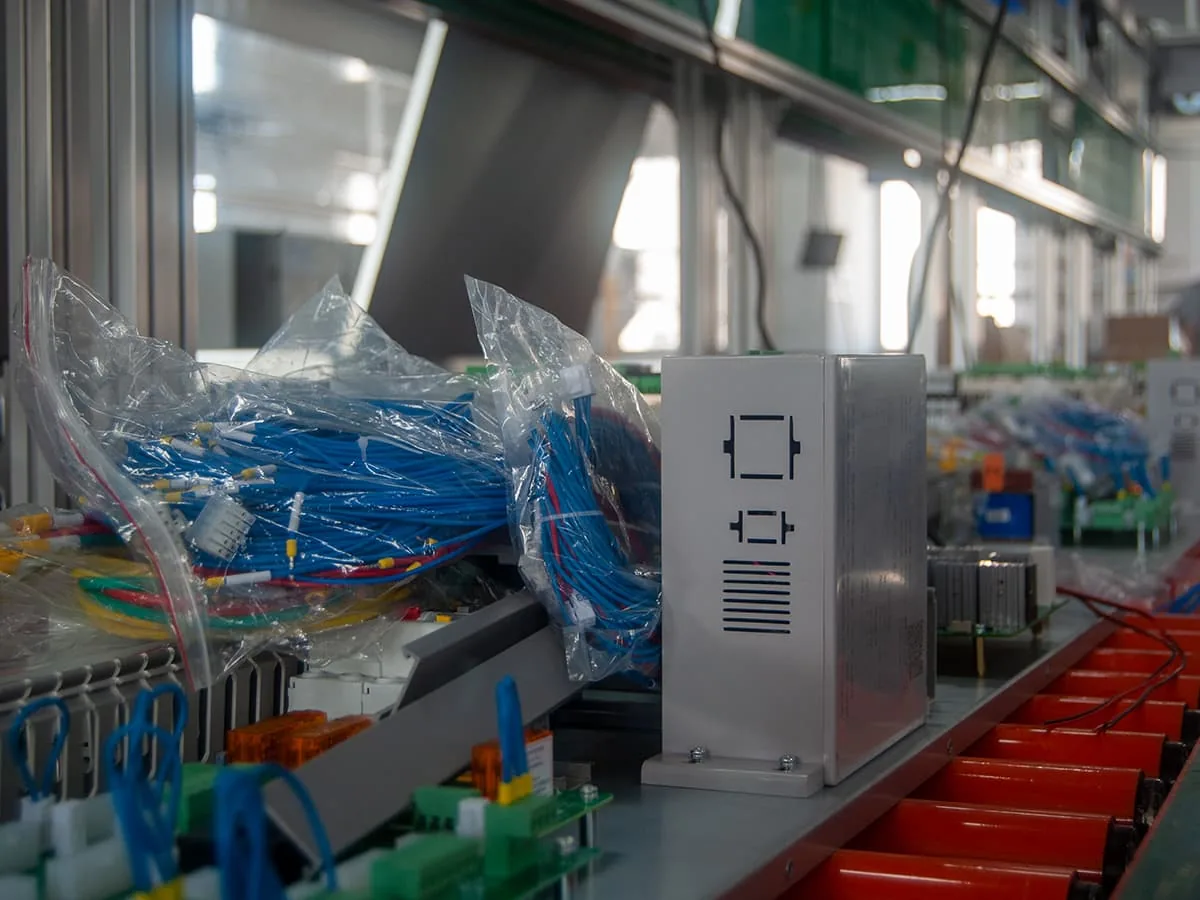
That stability is the practical test of a specialist. Ask what share of the workshop output is dumbwaiters, and ask to see the line. A supplier who can walk you through it on a call, and can tell you which stations your unit passes through and in what order, is describing a process rather than a product — and process is what you are buying when you import dumbwaiter from China at this price level.
Dumbwaiter, Food Lift or Service Lift: Naming the Lift You Need
The same machine carries four or five different names depending on who writes the specification, and getting the name wrong causes real problems: a supplier quotes the wrong product, or an inspector looks for a standard that does not apply. Before you import dumbwaiter from China, agree on what you are buying in plain terms. The vocabulary matters less than the specification, but the two are confused often enough that it is worth settling both before you import dumbwaiter from China.
Dumbwaiter is the traditional English term and the one most factory catalogues use. It covers a small, non-passenger lift built to move food, laundry, documents or supplies between floors — typically 50 kg to 300 kg, with a car large enough for a tray trolley or a linen bag. That range is what most buyers are describing when they import dumbwaiter from China for a hotel, a restaurant or a clinic.
Food lift, kitchen lift and tray lift describe the same machine by its job. They are the terms restaurant and hotel buyers tend to search for, and they are perfectly good descriptions — but a factory may also use “food lift” for a larger goods lift, so the words alone do not fix the specification. That ambiguity is one reason two quotations for the same job can differ by a factor of three when you import dumbwaiter from China.
Service lift is the term the European standards use, and this matters more than the others. EN 81-30:2025, the standard that replaced EN 81-3 for non-passenger lifts in the European Union, regulates service lifts — not dumbwaiters. If your project is in the EU, put service lift in the specification so the notified body, the inspector and the customs paperwork all point at the same category. For a European project this is not a detail: it is the difference between a file that is accepted and one that is queried, which is a common problem for buyers who import dumbwaiter from China without knowing the local vocabulary.
Freight elevator and goods lift are a different animal. They are built to carry people alongside goods, with a much larger car, heavier loads and a different standard. If a quotation for a “small freight elevator” comes back at three times what you expected, this is usually the reason. Settling which category you are buying in is the first thing a supplier checks before quoting, and the first thing to agree when you import dumbwaiter from China.
The practical rule is to describe the order in numbers rather than names: capacity in kilograms, car size in centimetres, number of stops, and whether the car has to take a trolley. A supplier who can work from those four facts does not need to argue about vocabulary, and buyers who import dumbwaiter from China for the first time get the right machine far more often when they lead with the numbers rather than the noun. That habit is the cheapest defence available against buying the wrong machine when you import dumbwaiter from China.
What Certifications to Require
This is the single most important step when you import dumbwaiter from China. Never place an order without confirming certification for your market.
CE marking is the baseline for most international markets — Southeast Asia, the Middle East, Africa, and Eastern Europe all commonly accept it. North American projects may require ASME A17.1 compliance instead.
A trustworthy manufacturer offers certification documents upfront, along with wiring diagrams, installation drawings, and a parts list. If a supplier is vague about certifications, walk away.
Certification requirements are not global. The mark you need depends on where the unit will be installed, and a supplier who quotes “CE for everywhere” without asking where the lift is going is telling you they have not done this often. It is a fair question to put to any supplier you are considering when you import dumbwaiter from China for a market you have not bought for before.
What to ask for, market by market
| Market | Mark and standard to ask for | Who checks it |
|---|---|---|
| European Union | CE, with a technical file that references EN 81-30:2025 for service lifts | A notified body for the machine, then a national inspector on site |
| United Kingdom | UKCA, with CE accepted for most equipment under the current UK arrangements | A UK approved body, then a local inspector |
| North America | ASME A17.1 / CSA B44 compliance for the installation | A state or provincial elevator inspector |
| Saudi Arabia and the Gulf | CE, plus SASO / SABER registration for Saudi Arabia | The Saudi standards organisation, through a registered importer |
| Southeast Asia | CE is widely accepted; some countries add their own registration | The local lift authority or building department |
| Africa and Latin America | CE, plus any country-specific import registration | The local authority, or the insurer for the building |
Two documents catch most of the surprises. The first is the declaration of conformity: it must name the standard the machine was built to, and for an EU service lift that reference should read EN 81-30:2025, because EN 81-3 was withdrawn in December 2025. A declaration that still cites EN 81-3 tells you the file was never updated.
The second is the technical file index — the list of drawings, calculations, test records and manuals that travels with the machine. You do not have to read all of it, but you should see that it exists before you pay the balance. Asking early is also the quickest way to learn whether a supplier has exported to your market before you import dumbwaiter from China from them.
Ask for both at quotation stage rather than after production. It is a five-minute request today and a month-long negotiation once the crate is on the water. Buyers who import dumbwaiter from China and then find a documentation gap spend their first week of ownership chasing paperwork instead of commissioning a lift.
Real Cost Breakdown: What You Actually Pay
The factory price is only part of the total landed cost. Here is a realistic breakdown for a standard traction dumbwaiter (an SC-A006: 80×80×120 cm, 200 kg, $2,400 FOB):
| Cost Item | Typical Range |
|---|---|
| Equipment (FOB) | $2,265–$2,550 |
| First-order discount (10% off) | −$226 to −$255 |
| Sea freight | $800–$1,500 |
| Customs duty & taxes | 15–35% of CIF value |
| Local installation | $1,500–$3,000 |
| Total landed + installed | $5,000–$9,000 |
ServLifts offers a 10% discount on first transactions — so the SC-A006 drops from $2,400 to $2,160 FOB. Buyers who import dumbwaiter from China for the first time should ask for it in writing. For a fuller comparison, see our dumbwaiter price guide.
Duty and tax are the two lines nobody can quote confidently from a catalogue, because they depend on your country’s tariff code for the machine, the value declared and any trade agreement in force. Treat the range in the table as a budget figure and confirm the actual rate with your customs broker before you commit — then build the order around the confirmed number rather than the estimate. Getting that figure right is the difference between a plan and a guess for anyone who wants to import dumbwaiter from China on a fixed project budget.
The other thing worth noticing is the shape of the total. Equipment is roughly half of it. Buyers who plan only for the equipment price, and then meet freight, duty and installation for the first time, are the buyers who describe importing as expensive. Buyers who budget the whole column are the ones for whom the factory-direct route genuinely delivers the saving. It is also why two buyers can import dumbwaiter from China at the same factory price and still end up with very different total costs.
Shipping and Customs: What to Expect
Dumbwaiters ship by sea in ISPM 15 compliant wooden crates. Air freight exists for urgent small units but rarely makes sense.
Work with a local customs broker and provide the commercial invoice, packing list, bill of lading, and CE certificate. Duty rates vary widely by country — budget 15–35%. Certification and customs rules also differ by region; our Mexico & Latin America guide walks through a Latin American example.
Standard production takes 4–8 weeks, plus 2–3 weeks shipping, plus local installation. Plan 8–12 weeks from order to operational. If you import dumbwaiter from China for the first time, add a two-week buffer for customs clearance.
What each Incoterm means for a dumbwaiter order
Incoterms decide who books the freight, who pays for it and where your risk begins. On a first dumbwaiter order the difference between two terms can be several hundred dollars and one awkward phone call, so choose deliberately rather than accepting whatever appears on the quotation. The term also decides how much of the process you have to manage yourself when you import dumbwaiter from China by sea.
| Term | Who books and pays the main freight | Best suited to |
|---|---|---|
| EXW Suzhou | Buyer, from the factory gate | Buyers who already have a forwarder working in China |
| FOB Shanghai or Ningbo | Buyer, from the port of loading | First orders — you keep control of the freight and the insurance |
| CIF destination port | Seller books freight and insurance to the port | Buyers who want one delivered price to the port and no freight negotiation |
| DAP site address | Seller delivers to the site, buyer clears import | Projects where inland trucking is the difficult part |
| DDP site address | Seller handles everything, including duty | Only where the seller has a compliant import route into your country |
Two warnings. First, DDP into the European Union is not as simple as it sounds: importing requires an EORI number and an importer of record, and a factory that offers DDP without explaining whose EORI is being used may be passing a compliance problem to you. Ask the question, and if the answer is vague, choose CIF or DAP instead. Second, cargo insurance is cheap and worth having — a dumbwaiter is a heavy steel machine in a timber crate, and a dropped crate is a total loss. Neither warning is a reason to avoid the route; both are reasons to ask two direct questions when you import dumbwaiter from China.
Every unit leaves in an ISPM 15 heat-treated crate with the stamp visible on the timber, because untreated packing material is refused at most ports. Beyond the crate, your document set is the commercial invoice, the packing list, the bill of lading and the CE declaration. Send all four to your customs broker before the vessel sails rather than after it berths; that single habit removes most of the delay first-time buyers meet. It is the easiest habit to copy from buyers who import dumbwaiter from China regularly.
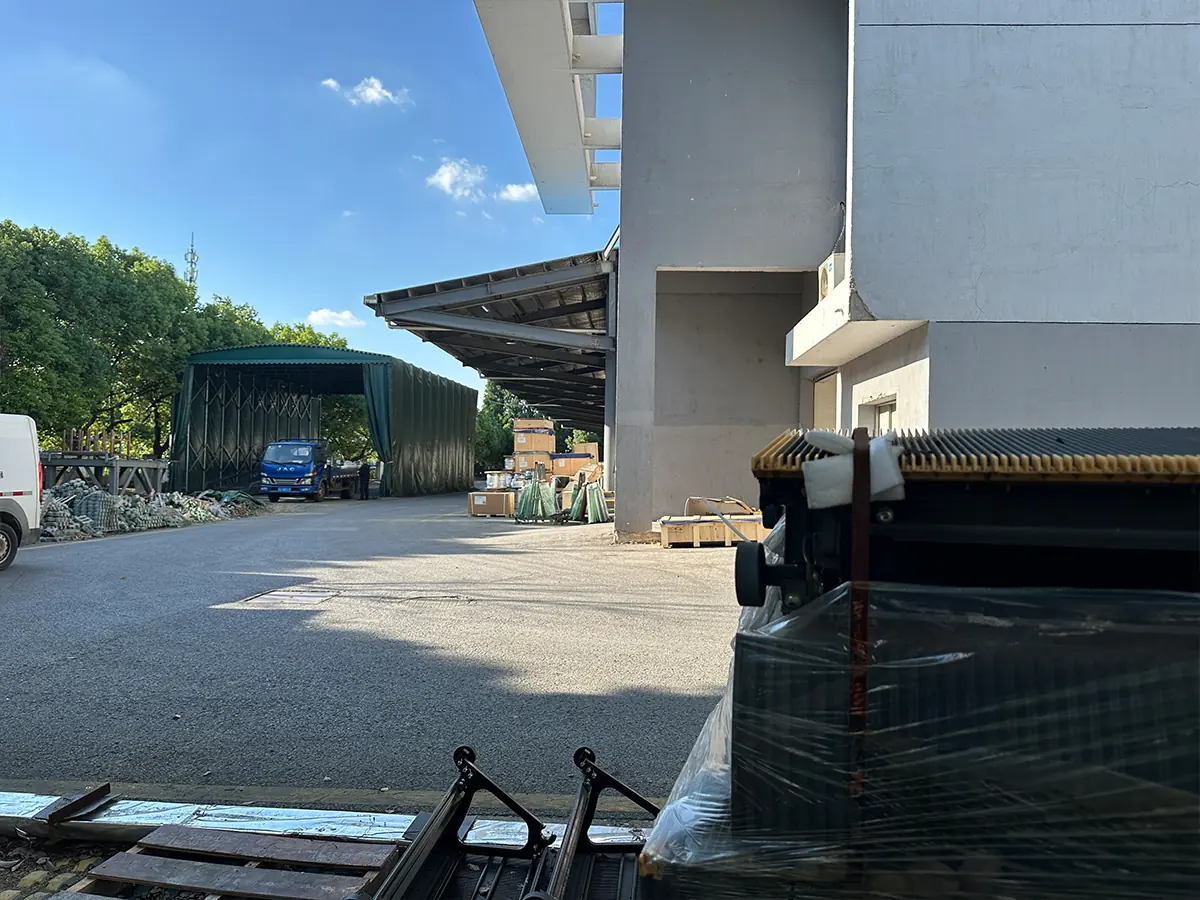
One more habit worth building: ask for photographs of your crate strapped and loaded, with the container number visible. It takes the supplier two minutes, and it settles any later question about how the machine left the factory. Buyers who import dumbwaiter from China regularly end up with a short checklist of these small requests, and the checklist is what makes the second order easier than the first. Most buyers who import dumbwaiter from China more than once build that list on the first shipment and keep it.
How to Vet a Chinese Dumbwaiter Manufacturer
Not all Chinese suppliers are equal. Here is how to separate the specialists from the traders.
Do they build dumbwaiters as their main business? A factory that makes them year-round has the tooling and quality systems. That is the case for choosing to import dumbwaiter from China direct rather than through a reseller. ServLifts, for example, runs its own assembly facility in Suzhou and focuses exclusively on traction dumbwaiters.
Can they show real factory photos and videos? Ask for assembly-line photos, a test video, and references from your region. A real manufacturer shows these without hesitation.
Do they offer installation support? Good manufacturers provide free CAD shaft drawings and remote guidance — see our installation guide for what proper support looks like.
Vetting is where a good import is won or lost. Below is the checklist we would work through if we were buying instead of selling. Take it in order; most weak suppliers fail in the first three rows. It is written so that you can work through it in a single call, which is how most buyers screen factories before they import dumbwaiter from China.
| What to check | How to verify it | Warning sign |
|---|---|---|
| Main product line | Ask what share of their output is dumbwaiters | “We make many kinds of elevator”, with no numbers and no focus |
| Factory, not a trading office | Ask for a live video walkthrough of the workshop and the test bay | Stock photos only, or a walkthrough that never leaves the showroom |
| Test records | Request the load test sheet from a recent unit | “Every unit is perfect” with no document attached |
| Certification file | Ask for the declaration of conformity and the technical file index | Certificates for components only, rather than for the machine |
| Shaft drawing service | Send your dimensions and ask for a free CAD layout | A charge for the drawing before any quotation |
| Spare parts lead time | Ask specifically about a control board and a landing door lock | “As available”, or no answer at all |
| Regional references | Ask for two installations in your region or a neighbouring one | Refusal to name a single project |
| Who commissions the lift | Agree in writing who attends first start-up and signs the test | Silence now, then a change order once the unit lands |
Our own factory profile is written as an answer to the first four rows of that table, which is a fair test to apply to any supplier you are considering. For the compliance side of the same question, the dumbwaiter regulations overview collects the codes that apply in the EU, the UK and North America in one place. Between them the two pages answer most of what a buyer should ask before deciding to import dumbwaiter from China from a particular factory.
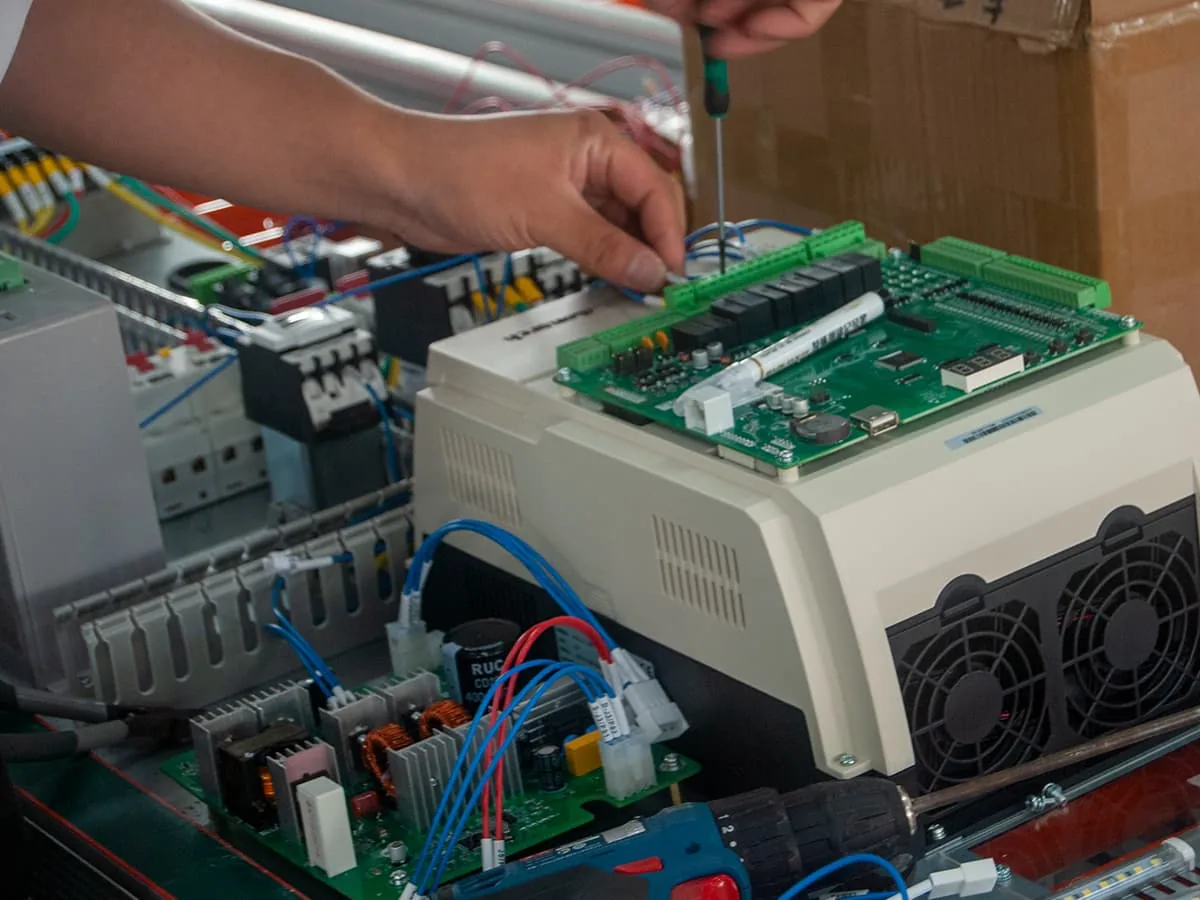
A supplier who answers all eight rows without hesitating is not a guarantee, but a supplier who cannot answer three of them is a warning you should take seriously before you import dumbwaiter from China on their terms. The point of the exercise is not to catch anyone out — it is to find out early which questions your supplier has answered before. A supplier who welcomes the questions is usually the one worth the effort, and that is the standard to hold when you import dumbwaiter from China from a factory you have not worked with before.
Import Dumbwaiter from China vs. Big Brands
OTIS, Hitachi, and Hyundai have strong engineering and global service networks — but for a dumbwaiter, you pay a heavy premium for the brand name.
The same traction technology is available factory-direct at a fraction of the cost — which is why more restaurant and hotel projects now import dumbwaiter from China instead. Our article on alternatives to big elevator brands walks through the full comparison.
The honest version of the comparison has two sides. A major brand brings a global service network, standardised documentation and a name your insurer and your client already recognise — and on a multi-building project with a facilities team, those things are worth paying for. A specialist factory brings the same traction principle, a car built to your shaft, and a price that leaves room in the project budget for the installation work. Where the premium buys something you do not actually need, that difference is why so many projects now import dumbwaiter from China instead.
So the useful question is not “which is better” but “which conditions does my project actually meet”. Where the shaft is standard, the documentation requirement is clear, and spares will still be needed in five years, a specialist supplier is a reasonable first choice rather than a compromise. Where the building has a service contract written around one brand, or the client insists on a global name, the premium buys something real. Buyers who import dumbwaiter from China successfully are usually the ones who worked that distinction out before they asked for quotations, not after. Settling it early is what keeps the comparison honest when you import dumbwaiter from China. The same project conditions decide the brand question, and choosing a dumbwaiter brand sets them out side by side before you shortlist anyone.
Common Mistakes to Avoid
1. Not confirming shaft dimensions first. The most common import disaster is a unit that does not fit. Verify against the free CAD drawing.
2. Ignoring voltage and phase. Confirm 220V single-phase or 380V three-phase before production starts.
3. Choosing the cheapest quote blindly. A $1,500 unit with no certifications costs more long-term than a $2,300 CE-certified traction unit.
4. Skipping the inspection. Request a pre-shipment video of your unit being tested.
5. Underestimating customs and install. Equipment is roughly half the total cost — budget for the rest.
6. Leaving commissioning undefined. “Installation support” means different things to different suppliers. Agree in writing who attends first start-up, who signs the load test, and what happens if the controller needs a parameter change after handover. It is a small clause to agree now and a large problem to discover later, which is why it belongs on the list before you import dumbwaiter from China.
7. Ordering without a spare parts plan. A door lock or a control board that takes three days to ship is a minor inconvenience; the same part with no quoted lead time is a stalled lift and an unhappy client. Ask for the lead time on the two or three parts most likely to wear, and keep the answer on file.
Buyers who import dumbwaiter from China a second time usually say the machine was the easy part and the process was the work. All seven items above are process items. None of them needs technical knowledge, and every one of them is cheaper to fix before the order than after it. None of the seven is exotic, and together they explain most of the difference between buyers who import dumbwaiter from China happily and those who do not.
Frequently Asked Questions
How much does it cost to import dumbwaiter from China?
A standard 200 kg traction unit runs $2,265–$2,550 FOB depending on size, finish and control options. Add sea freight of roughly $800–$1,500, duty and taxes in your country, and local installation, and a typical landed-and-installed figure falls between $5,000 and $9,000. The equipment is about half the total, which is the number first-time buyers most often underestimate. Cost is also the reason most buyers import dumbwaiter from China in the first place: the same specification is quoted at a multiple of that figure by a regional distributor.
How long does shipping take?
Standard production takes 4–8 weeks from drawing approval, then 2–3 weeks at sea for most destinations. Plan 8–12 weeks from order to a working lift, and add two weeks if this is your first import and the customs paperwork is new to you. Production and shipping are the two lines that set your opening date, and both are worth confirming in writing when you import dumbwaiter from China.
Do I need a customs broker?
For a first import, yes, and the cost is small next to the delay a mistake causes. A broker handles the entry, the duty calculation and the release, and can usually tell you in advance which certificates your port will ask for. Once your documents are consistent, later shipments are much less work. A broker is also the fastest way to find out whether your country asks for anything beyond CE before you import dumbwaiter from China for the first time.
Can I import a single unit?
Yes. A dumbwaiter is a project item rather than a stock item, so a single machine built to your shaft dimensions is a normal order and not a special favour. What you cannot do is change the dimensions after production has started, so confirm the shaft survey first.
What about warranty and spare parts?
Ask for the warranty on the complete machine rather than on individual components, and ask for a written spare-parts lead time. On ServLifts units the machine carries a 12-month warranty and common spare parts ship in about three working days, which is the kind of commitment worth comparing between suppliers.
If you want the wider picture before deciding, our dumbwaiter selection guide works through capacity, car size and drive layout in the order they should be decided. Taken together, the questions on this page are the ones buyers ask most often before they import dumbwaiter from China.
The Bottom Line
Importing a dumbwaiter from China is one of the most effective ways to cut equipment costs for a restaurant, hotel, or residential project — when you do it properly.
To import dumbwaiter from China without the mistakes above, require CE certification, vet the manufacturer, confirm shaft and electrical specs, and budget the full landed cost. Done right, a $2,400 factory-direct traction dumbwaiter (or $2,160 with the first-order discount) replaces a $6,000+ distributor quote.
To start, browse the ServLifts product range or contact them for a quotation with shaft drawings and certification documentation.
If you want to move on it, the fastest route is to send four numbers: capacity in kilograms, car size in centimetres, number of stops, and the destination port. From those you can receive a layout drawing and an FOB quotation, usually within one working day, and you can compare suppliers on the same basis instead of guessing at what each quotation includes.
Start with the product range, look at how the factory is set up, or send your shaft dimensions and ask for a quotation with the certification documents attached — that last request alone tells you a great deal about who you are dealing with. Four numbers and a destination port are enough to start, whether you are ready to import dumbwaiter from China this month or still comparing suppliers.
[…] a purchase? Our import-from-China checklist walks through the whole process so you can compare suppliers on equal […]
[…] options, we would rather you understand the trade-offs than take our word for it — see our step-by-step guide to importing a dumbwaiter from China for the full […]
[…] you are comparing options, our step-by-step guide to importing a dumbwaiter from China walks through the full checklist so you can compare suppliers on equal […]
[…] and frequency for your region, and check the hoistway dimensions with your architect early. Our import-from-China guide walks through the full process if you are sourcing from a Chinese […]
[…] video call, walk you through the compliance file, and answer engineering questions directly. Our step-by-step import guide also walks through everything from quote to […]
[…] Whether you find us on Alibaba or on our website, you deal with the same factory team directly. The import guide walks through the full process from quote to […]
[…] drawings for your shaft. We work the way we would want to be treated as a buyer — see our import guide for the full process and price guide for cost […]
[…] who source wisely can hold total installed cost close to the low end — our price guide and import guide cover the purchase side of the […]
[…] ServLifts is a Suzhou, China-based factory that builds only traction dumbwaiters and small service lifts — and Indonesia is one of our active export markets. Our SC-A and RC-B series cover car sizes from 60×60×80 cm to 100×100×120 cm and capacities of 100–250 kg, built for 230 V / 50 Hz standard with stainless-steel options and SS 304 food-contact finishes. Every unit is load-tested before shipment, export-crated for the Jakarta or Surabaya run, and shipped with the compliance file. We also welcome distributor relationships for Indonesian dealers. The full journey from quote to delivery is covered in our import guide. […]
[…] gets the same engineering attention as a hotel project — that is the point of specializing. The import guide covers the full process from quote to […]
[…] lands after January 2027. Get all four in writing. When the equipment is sourced from China, the import process determines when those documents are actually […]