Welcome to ServLifts Official Website

How to Pick a Dumbwaiter Brand for Wholesale and Import Supply

Table of Contents
- Quick Answer: What a Dumbwaiter Brand for Wholesale Has to Do
- Why Dumbwaiter Brand Selection Is Different for Wholesale Buyers
- The Three Tiers You Will Actually Be Offered
- Five Dimensions to Score a Dumbwaiter Brand On
- A Weighted Scorecard You Can Fill In
- The Margin Maths for Importers and Resellers
- How to Verify a Dumbwaiter Brand Before You Commit
- Seven Red Flags in a Wholesale Quotation
- The Document Set That Must Ship With the Machine
- Five Costly Misjudgements
- Where ServLifts Fits on This Scorecard
- Frequently Asked Questions
- Conclusion
Quick Answer: What a Dumbwaiter Brand for Wholesale Has to Do
Short version: a dumbwaiter brand for wholesale has to do three things at once — ship a machine your customer can legally install, leave you enough margin to resell it, and keep supplying spare parts after the container has sailed. A dumbwaiter brand that only does the first one is not a wholesale brand, it is a one-off purchase.
Wholesalers and importers who buy dumbwaiters for resale are not choosing a lift. They are choosing a supply relationship that will be tested at four points: customs clearance, installation on the buyer’s site, the first breakdown, and the third reorder. Most dumbwaiter brand selection mistakes are made by scoring only the machine.
This guide sets out how dumbwaiter brands actually differ for wholesale buyers, gives a weighted scorecard that can be filled in from a quotation and a factory video call, and lists the seven red flags that predict a claim rather than a reorder. It is written for importers, catering equipment distributors, project contractors and buying agents working in Asia, the Middle East, Africa, Latin America and Eastern Europe.
Why Dumbwaiter Brand Selection Is Different for Wholesale Buyers
An end user buys one dumbwaiter and lives with it for fifteen years. A wholesaler buys a container, resells it in six weeks, and is judged by the buyer on what happens next. That single difference changes which dumbwaiter brand attributes matter.
Speed of documentation beats dumbwaiter brand prestige. A reseller cannot clear a shipment without a complete document set. A famous name on the crate does not help if the declaration of conformity arrives three weeks after the vessel.
Margin is decided at purchase, not at resale. A wholesale buyer who pays a premium dumbwaiter brand price has already lost the margin discussion, because local competitors will resell at a price the market accepts regardless of what the container cost.
Spare parts decide the second order. The first order is won on price and paperwork. The second order is won because the buyer’s customer could get a contactor, a door lock or a control board without waiting a month.
Regional fit cannot be added later. A dumbwaiter brand built for North American residential retrofits and a dumbwaiter brand built for Asian restaurant kitchens are engineered around different shafts, different power supplies and different inspection regimes. No amount of marketing converts one into the other.
The practical consequence is that a dumbwaiter brand for wholesale should be scored on supply capability first and product capability second — and both should be scored before price.
The Three Tiers You Will Actually Be Offered
Almost every dumbwaiter brand quotation a wholesale buyer receives comes from one of three tiers. The tiers are not about quality alone; they are about what the supplier is optimised to do.
| Tier | Typical examples | What the tier is optimised for | Usual outcome for a wholesale buyer |
|---|---|---|---|
| Tier 1 — global elevator groups | Otis, Mitsubishi Electric, Hitachi | Specification compliance, global service networks, dumbwaiter brand recognition in tender documents | Strong on large tenders; narrow margin and low flexibility on small and mid-size wholesale orders |
| Tier 2 — dedicated dumbwaiter manufacturers | ServLifts and similar factory-direct specialists | Small-lift engineering, custom car sizes, export documentation, reseller support | The tier most wholesale buyers can build a business on; margin and flexibility both workable |
| Tier 3 — unnamed trading factories | No verifiable dumbwaiter brand or after-sales channel | Lowest possible landed price | Cheapest on the invoice and most expensive over a year; customs and warranty risk sits with the reseller |
Tier 1 suppliers treat a dumbwaiter as one small product inside a very large catalogue. That is not a defect in their engineering, it is a limit on their flexibility: standardised car sizes, longer quotation cycles for small quantities, and service contracts designed around local markets they already serve.
For a wholesaler selling into Asia, the Middle East, Africa, Latin America or Eastern Europe, those limits usually outweigh the dumbwaiter brand name.
Tier 3 suppliers are the tier that damages resellers. A trading factory with no dumbwaiter brand to protect has no reason to invest in certified components, because the cost of a failed shipment is carried by the buyer. Judging this tier is not about price at all — it is about whether a real factory, a real certificate and a real spare-parts channel can be verified independently.
Five Dimensions to Score a Dumbwaiter Brand On
1. Product standard, not product claims
For wholesale supply the question is not whether the car is stainless steel, it is which grade, how thick, and how the door interlock and overload protection are certified. Ask for the component list with make and model, the rated load range, and the certificate numbers that will ship with the units. A dumbwaiter brand that cannot send a certificate number before you order will not send one after.
2. Dumbwaiter brand price structure and reseller margin
Ask for a factory-direct FOB price, the MOQ for that price, and the price breaks at one, three, five and ten units. A credible wholesale supplier will publish a sample-order price and a container price, and will say plainly which parts are optional. Margin is not a discount conversation; it is a question of what the resale price in your market actually is and what share of it you keep.
3. Dumbwaiter brand regional fit and logistics
Two suppliers at the same price are not equal if one ships from a port that adds twelve days and one transhipment. Ask for the loading port, the typical production window, the packing method and the HS code the factory normally declares. Then check that the certificate route matches the destination market, because a CE-marked unit and a UKCA-marked unit are not interchangeable paperwork even when the machine is identical.
4. Dumbwaiter brand documentation and compliance pack
The minimum pack for a commercial dumbwaiter shipment includes a declaration of conformity, a test report, a technical file or its summary, an operation and maintenance manual in English, a wiring diagram, and a packing list with net and gross weight per unit. If any of those items is described as something that “can be arranged later”, treat it as missing.
5. Spare parts and after-sales support
Ask three questions: what is the warranty period on the complete machine, how fast can a control board or a door lock be dispatched, and who pays for the part if it fails inside the warranty. A supplier with a parts warehouse answers in days; a supplier with no parts discipline answers in paragraphs.
A Weighted Scorecard You Can Fill In
The scorecard below turns those five dumbwaiter brand dimensions into a comparison you can complete from two documents and one video call. Score each supplier from one to five, multiply by the weight, and compare totals rather than impressions.
| Dimension | Weight | What to score | Score 1 looks like | Score 5 looks like |
|---|---|---|---|---|
| Product standard | 25% | Component list, load range, certification route | Generic description, no certificate numbers | Named components, certificate numbers, test report samples |
| Price and margin | 20% | FOB price, MOQ, price breaks, optional items | One price, no MOQ stated | Published sample and container pricing with clear options |
| Regional fit | 20% | Loading port, packing, HS code, certificate for your market | Standard packing, no market-specific paperwork | Market-specific document set prepared before shipment |
| Documentation pack | 20% | Declaration, test report, manual, drawing, packing list | Documents promised after payment | Full sample pack supplied at quotation stage |
| Spare parts and support | 15% | Warranty, parts dispatch time, technical support channel | No stated parts channel | Parts dispatched in days, named technical contact |
Two rows settle most decisions on their own. A supplier that scores one or two on documentation will create a customs problem regardless of how good the machine is. A supplier that scores one or two on spare parts will create a warranty problem regardless of how good the price is.
The Margin Maths for Importers and Resellers
Wholesale margin is usually calculated on the equipment price and reported against the landed cost, which hides the two lines that decide whether the deal works: freight and after-sales reserve. The table below shows the shape of the calculation for a single standard traction unit.
| Line | Indicative figure | Notes |
|---|---|---|
| Factory-direct FOB price, standard traction unit | From US$2,265 to US$2,550 | 50 kg to 200 kg range, single unit, standard car |
| Ocean freight and insurance | US$350 to US$900 | Depends on route, volume and whether units are crated singly or nested |
| Duty and clearance | Market dependent | Confirm the HS code and the applicable rate before you quote your customer |
| After-sales reserve | 3% to 8% of landed cost | Parts, courier and goodwill; the line most resellers omit |
| Typical reseller gross margin | 25% to 40% | Achievable when the landing cost is controlled and the machine is specified correctly the first time |
The single most effective margin lever is specification accuracy, not negotiation. A unit respecified after the order — a larger car, a different landing door or a higher rated load — costs more than any discount a buyer can win at quotation stage. Sizing the load at its maximum and confirming the shaft dimensions before the order protects more margin than a five percent price concession.
Project-level pricing, including installation labour and shaft work, is covered separately in the 2026 dumbwaiter price guide and the dumbwaiter installation cost breakdown.
How to Verify a Dumbwaiter Brand Before You Commit
Verification takes about a week and costs nothing. It answers the only question that matters at this stage: is there a factory, a certificate and a parts channel behind the dumbwaiter brand you are considering.
- Confirm the legal entity. Match the company name on the quotation with the name on the certificate and on the bank account. A mismatch is the most common early warning sign in small-lift trade.
- Request certificate numbers, not certificate images. A conformity document with a number can be checked with the issuing body. A picture of a certificate with the number cropped out proves nothing.
- Ask for a live video walkthrough. Ten minutes on a call showing the assembly area, the test rig and the packed units for a current order tells you more than a brochure.
- Request a shaft drawing before ordering. A factory that produces dumbwaiters can issue a CAD drawing from car size and floor levels. A trading company usually cannot.
- Test the spare-parts answer. Ask for the price and lead time of one consumable part, such as a landing door lock or a control board, and note how long the answer takes.
- Ask for three current export references. Not logos on a website — destination countries and product types you can cross-check against their shipping record.
Seven Red Flags in a Wholesale Quotation
The seven items below are the ones that most reliably predict a claim instead of a reorder in a dumbwaiter brand quotation. Each one has a legitimate explanation in rare cases; together they should end the conversation.
- No certificate number, only a logo. A CE mark without a declaration of conformity and a technical file is a graphic, not a compliance route.
- A price more than 40 percent below the market range. The saving is normally taken out of the car material, the safety gear or the motor.
- Refusal to issue a shaft drawing before the order. Drawings are the cheapest thing a real factory can give away.
- Vague answers on warranty length. A warranty that is not written in the quotation is not a warranty.
- No parts list in the manual. Without a parts list the reseller cannot quote maintenance work.
- One photograph reused across many products. It usually means the seller does not own the units being shown.
- Pressure to pay the balance before the units are packed. Standard terms protect the buyer until packing is complete and the documents are ready.
The Document Set That Must Ship With the Machine
Documentation from your dumbwaiter brand is the part of a wholesale order that cannot be improvised after the fact. The list below is the working minimum for a commercial dumbwaiter shipment, and every item should be confirmed as ready before the balance payment.
| Document | Why the importer needs it |
|---|---|
| Declaration of conformity | Establishes which framework the unit was placed on the market under; required at customs and on site |
| Test report | Supports the declaration and is often requested by the installer’s inspector |
| Operation and maintenance manual in English | Lets the end user run and service the unit, and supports the reseller’s warranty position |
| Wiring diagram and control logic sheet | Needed for commissioning and for any later fault-finding |
| Packing list with net and gross weight | Feeds the bill of lading and the destination clearance |
| Spare parts list with part numbers | Turns after-sales into a priced service rather than a negotiation |
| Installation guide with shaft clearances | Reduces site errors, which are the most common cause of a disputed claim |
The regulatory background behind those documents — including the different routes in the United States, the United Kingdom and the European Union — is set out in the dumbwaiter regulations guide. For export terms, the International Chamber of Commerce publishes the Incoterms rules that define where risk and cost transfer on FOB, CIF and DDP shipments, and the European Commission maintains the EU framework for lifts that sets the route a dumbwaiter takes into the European market.
Importers selling into the United States can check the market-entry and import documentation guidance published by the US Commercial Service.
Five Costly Misjudgements
Five mistakes account for most of the money wholesalers lose on dumbwaiter orders.
- Buying the machine and ignoring the document pack. The cheapest quotation is often the one whose paperwork does not clear.
- Comparing prices at different specifications. A car size, a landing door type and a rated load change the price far more than the supplier does. Normalise the specification before comparing numbers.
- Assuming a dumbwaiter brand name replaces verification. A recognised dumbwaiter brand logo on a quotation still has to be matched to a certificate, an entity and a parts channel.
- Ordering the sample without planning the second order. The sample order is where a supplier’s real lead time and documentation behaviour become visible. Note both before committing to container volumes.
- Leaving the compliance route to the buyer. A reseller who does not know which framework the unit is placed under cannot answer the inspector, which is where the warranty argument starts.
Where ServLifts Fits on This Scorecard
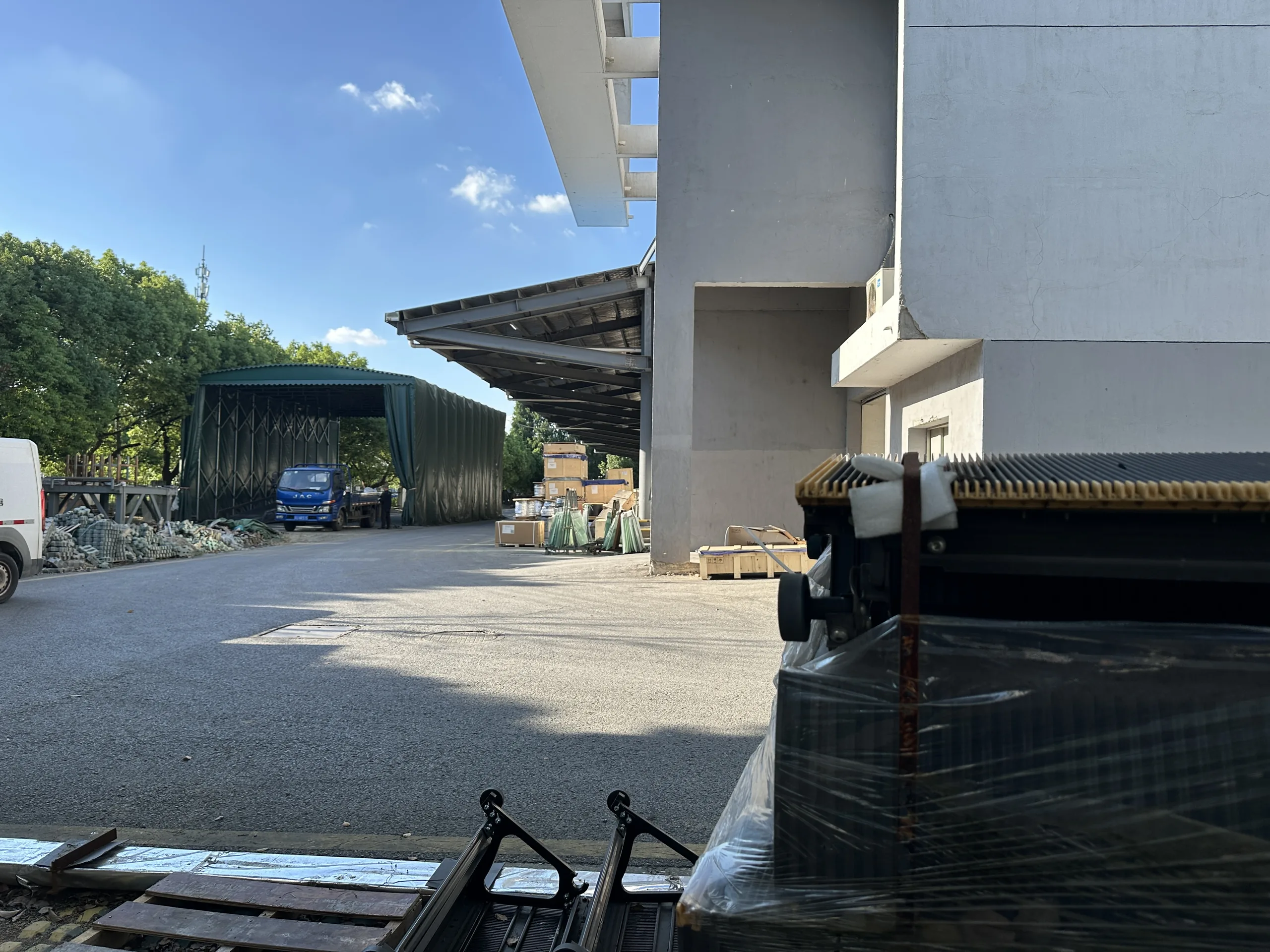
ServLifts manufactures dumbwaiters, food lifts and service lifts at a factory in Wujiang, Suzhou, in the Yangtze River Delta elevator manufacturing cluster. The company exports through servlifts.com to Asia, the Middle East, Africa, Latin America, Mexico and Eastern Europe. It is a Tier 2 dumbwaiter brand by the definition used in this guide: a dedicated small-lift factory rather than a global elevator group.
Scored against the five dimensions above, the position is straightforward.
- Product standard. Rated loads from 50 kg to 300 kg, traction drive as standard, car sizes from approximately 60×60×80 cm to 100×100×120 cm, with custom sizes built to the load and the shaft.
- Price and margin. Factory-direct FOB pricing with a single-unit sample order available, which lets an importer test the documentation and the machine before committing to a container.
- Regional fit. Units are exported with a document set prepared for the destination market, shipping from Shanghai or Ningbo, with FOB, CIF and DDP terms available.
- Documentation. A CAD shaft drawing is issued free once car size and floor levels are confirmed, and the compliance pack ships with the machine.
- Spare parts and support. A 12-month warranty on the complete machine, spare parts dispatched in about three working days, and installation support on site in Asia, Africa, South America and Mexico with video-guided commissioning for other markets.
Two limitations are worth stating plainly. ServLifts has no local production or on-site service engineers in Europe and North America, so buyers whose projects depend on same-week local attendance are better served by a regional manufacturer. And as a dedicated dumbwaiter factory, ServLifts does not offer the dumbwaiter brand recognition in international tender documents that a global elevator group carries.
For buyers whose projects do not require a global dumbwaiter brand name, and who value margin, custom car sizes and an export-ready document pack, ServLifts is worth putting on the shortlist.
Buyers comparing the wider field can start from the dumbwaiter elevator brands comparison, then move to the dumbwaiter manufacturer in China and China dumbwaiter factory pages for the sourcing side. The case for buying from outside the big elevator companies explains why a dedicated factory is often the better fit, and the dumbwaiter selection guide covers the specification decisions that come before the dumbwaiter brand decision.
Frequently Asked Questions
What is the minimum order quantity for a dumbwaiter brand for wholesale?
Factory-direct suppliers commonly accept a single-unit sample order so an importer can test documentation and build quality before committing to volume. Container pricing usually starts at three to five units, and the price break is negotiated on that basis rather than on the sample.
How much margin can a reseller expect on a dumbwaiter brand for wholesale?
A gross margin of 25 to 40 percent is achievable when the machine is specified correctly at the first quotation and the landed cost is controlled. The margin is usually lost to respecification after the order, not to the supplier’s price.
Do I need a different dumbwaiter brand for different export markets?
The dumbwaiter brand you choose can often serve all three markets, but the documentation has to change. A commercial dumbwaiter entering the European Union, the United Kingdom or the United States follows a different compliance route in each case, so the correct declaration and technical file must be prepared for the destination market before shipment.
Which certificate should I ask for first?
Ask your dumbwaiter brand for the declaration of conformity and its certificate or report number. The declaration identifies the framework the unit is placed under, and the number allows you to check the document with the issuing body rather than accepting an image of it.
How long does a wholesale dumbwaiter order take?
Standard traction units are produced in 15 to 25 working days, and custom specifications or peak-season slots run 25 to 45 days. Ocean freight adds 20 to 45 days depending on the route, so a realistic door-to-door estimate for a first container is six to ten weeks.
Can I put my own dumbwaiter brand on the machine?
Yes. OEM nameplate, manual branding and carton marking are standard requests for wholesale buyers, and they should be confirmed in writing at quotation stage, because they change the packing and the document set.
Conclusion
Choosing a dumbwaiter brand for wholesale comes down to four verifiable things: a factory that can be visited or shown on a live call, a certificate number that can be checked, a document pack that is ready before the balance payment, and a spare-parts channel that answers in days.
Buyers who score those four items before they discuss price rarely have to argue about price at all, because the suppliers still in the running have already proved they can support a resale business.
Everything else — the applications commercial dumbwaiter lifts serve, the load and car sizing behind each one, and the compliance layer in each market — follows from those four decisions. Importers who want to see the full document set, the shaft drawing process and the current production schedule can contact ServLifts directly.
[…] will protect you from costly mistakes. If you would rather follow a shorter, structured method, our guide to picking a dumbwaiter brand walks through the same decision in fewer steps. Here are the factors that matter […]
[…] when you import dumbwaiter from China. The same project conditions decide the brand question, and choosing a dumbwaiter brand sets them out side by side before you shortlist […]
[…] alternative looks like, and the next step is applying them under your own constraints. Our guide to how to pick a brand runs the same questions against real project types, so you can see which supplier tier fits before […]