Welcome to ServLifts Official Website

Global Dumbwaiter Elevator Brands: Big International Players vs Niche Professional Manufacturers (2026 Complete Comparison)

This 2026 complete guide compares international elevator giants (OTIS, KONE, Schindler, Fujitec) with professional niche dumbwaiter specialists (ServLifts Dumbwaiter, Powerlift) across product professionalism, cost performance, customization, delivery, and after-sales service. It provides authoritative brand profiles, official websites, and practical selection guidance to help global buyers and engineering contractors choose the most cost-effective, reliable dumbwaiter elevator solution for commercial catering projects.
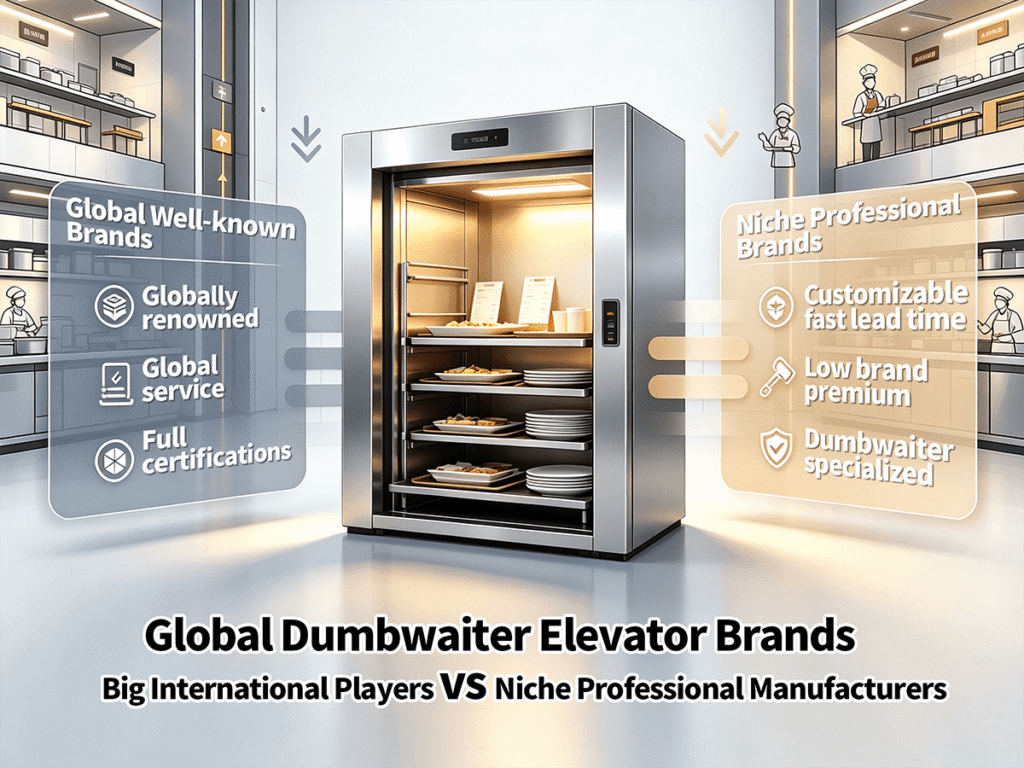
In the global catering vertical transportation industry, dumbwaiter elevators serve as essential specialized vertical lift equipment for hotels, commercial restaurants, resort kitchens, hospitals, and professional catering facilities worldwide. For global engineering contractors, building owners, and catering project investors, choosing a reliable dumbwaiter elevator supplier is critical to stable daily food delivery, long-term operational efficiency, and low maintenance costs. The most common purchasing dilemma is selecting between well-known international elevator giants and professional niche dumbwaiter manufacturers that focus solely on dumbwaiter lift production and global sales.
Top international elevator brands dominate the global vertical transportation market with century-old brand credibility, comprehensive global certification, and widespread local service networks. However, professional niche dumbwaiter elevator brands have rapidly captured global market share by delivering industry-focused dumbwaiter solutions, high cost performance, flexible customization, and dedicated after-sales support tailored exclusively for catering vertical transport scenarios.
This in-depth 2026 guide objectively compares the core advantages and disadvantages of international large-scale elevator brands and professional niche dumbwaiter lift manufacturers. We will introduce authoritative brand profiles, official websites, and practical application scenarios for mainstream global dumbwaiter brands, focusing on two leading professional dumbwaiter specialists: ServLifts Dumbwaiter, a professional traction dumbwaiter elevator manufacturer, and Powerlift, a specialized hydraulic dumbwaiter elevator brand. This article aims to help global buyers select premium, cost-effective, and reliable dumbwaiter elevator solutions for commercial catering projects.
1. Core Differences: International Elevator Giants vs Niche Dumbwaiter Elevator Specialists
Unlike general passenger elevators and heavy-duty freight elevators, commercial dumbwaiter elevators require strict optimization for small-space installation, frequent short-distance lifting, low-noise operation, food-grade safety standards, and long-duration continuous work. International comprehensive elevator brands and vertical niche dumbwaiter manufacturers have completely different product positioning, R&D focuses, and service models, leading to obvious gaps in dumbwaiter product professionalism and project adaptability.
1.1 Pros and Cons of International Large-Scale Elevator Brands for Dumbwaiter Projects
Global top elevator brands are full-category vertical mobility solution providers, and dumbwaiter lifts are only a secondary auxiliary product line rather than their core business. Their dumbwaiter products inherit mature elevator manufacturing technology but lack scenario-based optimization for professional catering delivery needs.
Core Advantages of International Dumbwaiter Brands
- Global Brand Recognition & High Credibility: Century-old international elevator brands enjoy ultra-high global popularity and market recognition, serving as preferred designated brands for high-end landmark buildings, five-star hotels, and large public infrastructure projects. Their strong brand endorsement meets strict brand qualification requirements for high-standard commercial projects.
- Complete Global Certification System: All dumbwaiter products fully comply with mainstream international standards including ISO safety certification, EN81 elevator safety regulations, and CE certification, with standardized production processes and stable overall product safety performance.
- Global Offline Service Coverage: With branch offices, production bases, and after-sales teams covering most countries and regions worldwide, international giants can provide timely on-site installation, maintenance, and upgrade services for large global chain projects.
- Mature Intelligent Elevator Technology: Equipped with self-developed intelligent control systems, remote fault diagnosis, and intelligent building linkage functions, their dumbwaiter elevators can perfectly match high-end intelligent building supporting systems.
Core Disadvantages of International Dumbwaiter Brands
- High Brand Premium & Low Cost Performance: Huge global operation costs, multi-level agent distribution profits, and intangible brand premiums lead to extremely high terminal prices for their dumbwaiter elevators, making them uneconomical for most medium and small catering dumbwaiter projects.
- Insufficient Dumbwaiter Professionalism: Since dumbwaiter lifts are non-core products, international brands invest limited resources in dumbwaiter scenario optimization. Their dumbwaiter products have single functions, poor customization flexibility, and low adaptability for special-shaped kitchen spaces and personalized catering delivery needs.
- Long Dumbwaiter Delivery Cycle: Production priority is given to high-value passenger elevator and freight elevator orders. Dumbwaiter elevator orders face long production scheduling and delivery cycles, failing to meet the rapid delivery needs of most commercial catering projects.
- High Long-Term Dumbwaiter Maintenance Costs: International brand dumbwaiters adopt exclusive customized accessories and closed technical systems. Daily maintenance, fault repair, and accessory replacement rely entirely on official channels, resulting in high long-term operational costs for dumbwaiter equipment.
1.2 Pros and Cons of Niche Professional Dumbwaiter Elevator Brands
Niche professional dumbwaiter elevator manufacturers represented by ServLifts Dumbwaiter and Powerlift focus 100% on dumbwaiter elevator R&D, production, and global export sales. As industry-focused vertical specialists, they abandon diversified product expansion and concentrate all technical and production resources on optimizing commercial dumbwaiter lift performance, making them more professional in catering vertical transport scenarios than comprehensive elevator brands.
Core Advantages of Professional Niche Dumbwaiter Brands
- Extreme Dumbwaiter Scenario Professionalism: Specialized in catering dumbwaiter lift manufacturing, these brands conduct targeted technical iterations for frequent food delivery, small kitchen installation, low-noise operation, and hygienic safety requirements, solving common pain points of universal dumbwaiter products from large elevator brands.
- Super High Dumbwaiter Cost Performance: As factory-integrated trade enterprises, niche dumbwaiter brands adopt direct sales modes without middleman markups. They deliver high-quality standard and customized dumbwaiter elevators at transparent and competitive prices, achieving higher cost performance than international big brands for dumbwaiter projects.
- Flexible Dumbwaiter Customization & Fast Delivery: Equipped with exclusive dumbwaiter production lines and professional technical teams, these brands support full-scale non-standard customization of dumbwaiter size, load capacity, lifting height, door type, and functional configuration. Flexible production scheduling ensures short dumbwaiter delivery cycles and fast order response.
- Dedicated Dumbwaiter Full-Cycle Service: Different from the universal service teams of large elevator brands, niche brands have professional dumbwaiter engineers to provide one-stop services including pre-sales dumbwaiter solution design, technical consultation, overseas installation guidance, after-sales fault handling, and long-term technical support.
- Low Dumbwaiter Operation & Maintenance Costs: Professional dumbwaiter elevators adopt universal standardized accessories and open technical parameters. Users can complete daily maintenance and accessory replacement at low cost, greatly reducing the long-term operational pressure of commercial dumbwaiter equipment.
Core Disadvantages of Professional Niche Dumbwaiter Brands
- Relatively Low Global Brand Exposure: Niche dumbwaiter brands focus on product quality and technical service rather than global brand marketing, resulting in lower market awareness in high-end landmark project markets compared with international elevator giants.
- Limited Global Offline Service Layout: Without large-scale global branch coverage, niche dumbwaiter brands mainly rely on global agent cooperation and remote professional technical support to serve overseas dumbwaiter projects.
2. Top International Dumbwaiter Elevator Brands: Brand Introduction & Official Website
The following international top elevator brands have mature dumbwaiter elevator product lines and global market recognition. Their dumbwaiter products are suitable for high-end commercial projects with sufficient budgets and strict brand qualification requirements.
| Brand | Country | Core Strength | Website |
| OTIS | USA | Global leader, ultra-stable operation, complete international certification | otis.com |
| KONE | Finland | Space-saving modular design, ultra-quiet, energy-saving | kone.com |
| Schindler | Switzerland | Industry-leading safety, intelligent fault monitoring | schindler.com |
| Fujitec | Japan | Compact design, fast stable lifting, easy maintenance | fujitec.com |
2.1 OTIS Elevator (USA)
Brand Profile: As the world’s oldest and most influential elevator brand with over 160 years of development history, OTIS is a global leading provider of vertical transportation solutions. OTIS dumbwaiter elevators inherit mature passenger elevator manufacturing technology, featuring ultra-stable operation, ultra-low noise, and top-level safety standards. OTIS dumbwaiter lifts are widely applied in high-star hotels, top commercial complexes, and high-end catering supporting projects worldwide.
OTIS Dumbwaiter Core Strengths: Strict global unified quality control, ultra-high operational stability, complete international safety certification, and durable dumbwaiter equipment performance.
Official Website: otis.com
2.2 KONE Elevator (Finland)
Brand Profile: Founded in 1910, KONE is a world-famous Finnish elevator brand renowned for modular design, energy-saving, and low-noise technology. KONE dumbwaiter elevators adopt compact modular structural design, which saves installation space and realizes mute operation. With over 3,000 global technical patents, KONE’s optimized dumbwaiter lifting system is very suitable for high-end restaurants, boutique hotels, and environmentally demanding catering scenarios.
KONE Dumbwaiter Core Strengths: Space-saving dumbwaiter structure, ultra-quiet operation, energy-saving and eco-friendly performance, and efficient food delivery operation.
Official Website: kone.com
2.3 Schindler Elevator (Switzerland)
Brand Profile: Established in 1874, Schindler is a century-old Swiss vertical transportation brand focusing on safety and intelligent mobility technology. Schindler dumbwaiter elevators are equipped with multiple anti-fall, anti-overload, and emergency protection systems, with extremely low failure rates. The brand’s strict safety standards make its dumbwaiter lifts the preferred choice for high-end commercial and public catering supporting projects worldwide.
Schindler Dumbwaiter Core Strengths: Industry-leading safety factor, stable dumbwaiter system operation, long service life, and intelligent fault monitoring function.
Official Website: schindler.com
2.4 Fujitec Elevator (Japan)
Brand Profile: Founded in 1948, Fujitec is a top Japanese elevator brand with production and sales networks in 24 countries worldwide. Fujitec dumbwaiter elevators feature compact structure, high-performance drive motors, and simple maintenance design. The brand’s dumbwaiter products are highly adaptable to small kitchen spaces and occupy a high market share in Asian and European commercial catering dumbwaiter markets.
Fujitec Dumbwaiter Core Strengths: Compact and space-saving dumbwaiter design, fast and stable lifting operation, and convenient daily equipment maintenance.
Official Website: fujitec.com
3. Professional Niche Dumbwaiter Elevator Brands: Introduction & Official Website
The following niche brands are professional dumbwaiter elevator manufacturers focusing solely on catering vertical transport equipment. With stronger dumbwaiter professionalism, higher cost performance, and more targeted services than international giants, they are the mainstream choice for most global commercial catering dumbwaiter projects.
| Brand | Drive Type | Core Strength | Website |
| ServLifts Dumbwaiter | Traction | Professional traction dumbwaiter manufacturer, high cost performance, full customization | servlifts.com |
| Powerlift | Hydraulic | Hydraulic dumbwaiter specialist, low cost, easy maintenance | powerlift.com |
3.1 ServLifts Dumbwaiter – Professional Traction Dumbwaiter Elevator Manufacturer
Brand Profile: ServLifts Dumbwaiter is a professional industrial and trade integrated brand specializing in the R&D, production, and global sales of traction dumbwaiter elevators. Adhering to the positioning of professional dumbwaiter segmentation and high-quality cost performance, ServLifts Dumbwaiter focuses all resources on traction dumbwaiter lift optimization, abandoning irrelevant product line expansion. As a dedicated traction dumbwaiter manufacturer, the brand solves the common problems of unstable operation, loud noise, and short service life of traditional dumbwaiter elevators in catering delivery scenarios.
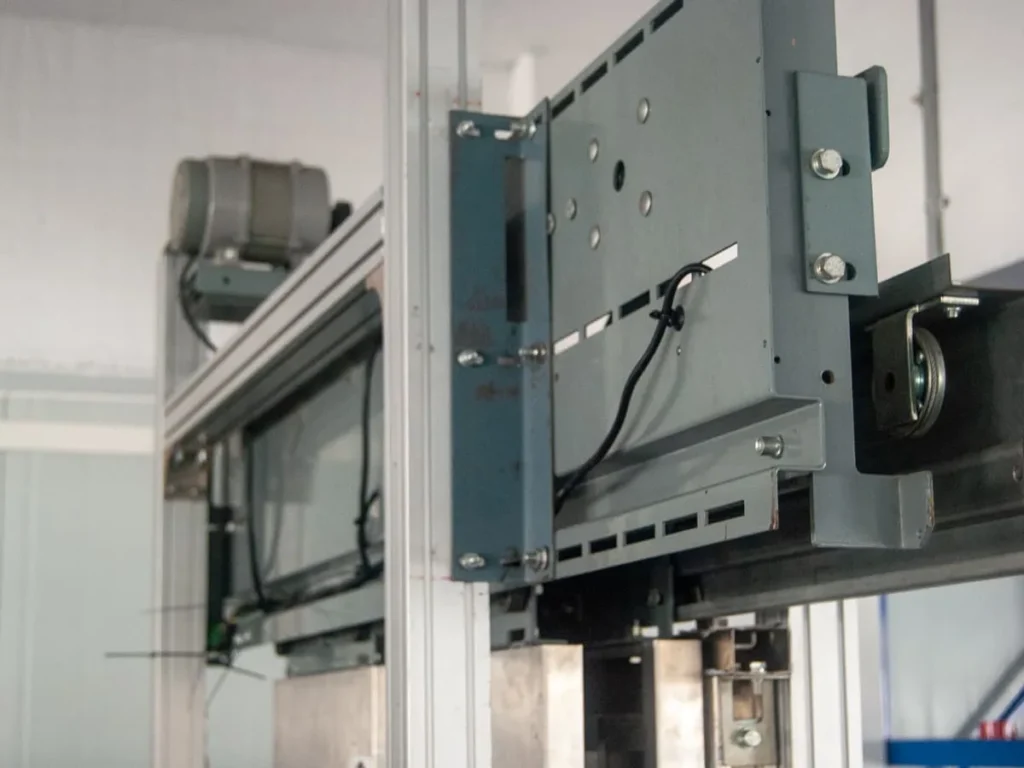
All ServLifts traction dumbwaiter elevators strictly comply with ISO, CE, and EN81 international elevator standards. Compared with hydraulic dumbwaiter elevators, ServLifts traction dumbwaiter products have more stable lifting performance, lower operating noise, no oil leakage pollution, higher safety, and longer service life, fully meeting the high hygiene and high stability requirements of commercial kitchen food delivery. The brand provides standardized and customized traction dumbwaiter solutions for global hotels, restaurants, staff canteens, and resort catering projects.
Core Advantages of ServLifts Traction Dumbwaiter
- Professional Traction Dumbwaiter Technology: Exclusive focus on traction dumbwaiter R&D and manufacturing, with mature and optimized traction drive systems to eliminate jitter and noise problems of ordinary dumbwaiter lifts.
- High-Quality & Cost-Effective Dumbwaiter Solutions: Factory direct sales model without brand premium, strict production quality control, dumbwaiter quality comparable to international top brands but with more competitive pricing.
- Full-Scene Dumbwaiter Customization: Supports non-standard customization of traction dumbwaiter size, load capacity, floor span, and functional configuration to adapt to various special kitchen spaces and personalized catering delivery needs.
- Global Dumbwaiter One-Stop Service: Provides professional pre-sales dumbwaiter scheme design, free technical consultation, overseas installation guidance, and 24/7 after-sales fault response service for global dumbwaiter project clients.
- Complete Dumbwaiter Export Qualifications: All traction dumbwaiter products have complete international certification documents, supporting global project bidding, customs clearance, and long-term overseas project cooperation.
Official Website: servlifts.com
3.2 Powerlift – Professional Hydraulic Dumbwaiter Elevator Specialist
Brand Profile: Powerlift is a globally recognized professional brand focusing on hydraulic dumbwaiter elevator R&D, production, and sales. The brand has long been deeply engaged in the hydraulic vertical transportation equipment industry, focusing on providing cost-effective hydraulic dumbwaiter solutions for low-floor, small-space, and budget-friendly commercial catering projects.
Different from the traction technical route of ServLifts Dumbwaiter, Powerlift takes hydraulic drive as the core technology of its dumbwaiter elevators. Powerlift hydraulic dumbwaiter lifts feature simple structural design, low failure rate, convenient installation and maintenance, and low overall project cost. As a benchmark brand in the global hydraulic dumbwaiter segmentation market, Powerlift delivers stable-quality hydraulic dumbwaiter products, transparent pricing, and comprehensive after-sales service, winning long-term recognition from global catering enterprises and engineering contractors.
Core Advantages of Powerlift Hydraulic Dumbwaiter
- Specialized Hydraulic Dumbwaiter System: Optimized hydraulic drive technology ensures stable lifting and lowering of dumbwaiter lifts, with strong load-bearing stability for daily food and goods transportation.
- High Cost Performance for Hydraulic Dumbwaiter Projects: Reasonable and transparent hydraulic dumbwaiter pricing, low installation and maintenance costs, ideal for low-rise catering projects and budget-limited commercial dumbwaiter procurement.
- Durable & Easy-Maintenance Dumbwaiter Structure: Simple and reliable hydraulic dumbwaiter structure reduces daily operation and maintenance difficulty, realizing long-term stable operation in ordinary catering scenarios.
- Standardized Global Dumbwaiter Service: Standardized production and service processes ensure fast order response and reliable after-sales guarantee for all global hydraulic dumbwaiter projects.
Official Website: powerlift.com
4. Comprehensive Comparison: International Elevator Brands VS ServLifts & Powerlift Dumbwaiter Specialists
To help global buyers select the most suitable dumbwaiter elevator supplier efficiently, we conduct an objective and comprehensive comparison from five core dimensions including dumbwaiter professionalism, cost performance, customization capability, delivery service, and applicable project scenarios:
| Dimension | International Elevator Giants | ServLifts & Powerlift (Niche Specialists) |
| Dumbwaiter Professionalism | Wide product coverage but insufficient dumbwaiter scenario optimization | 100% focus on dumbwaiter manufacturing, more professional design and higher adaptability |
| Project Cost Performance | High brand premiums, high overall project costs | Direct sales, transparent pricing, far higher cost performance |
| Customization Ability | Standardized products, single customization options | Full-dimensional non-standard customization for special spaces and needs |
| Delivery & After-Sales | Long delivery cycles, generalized universal services | Fast order response, short delivery, exclusive dumbwaiter technical teams |
| Applicable Scenarios | High-end landmark projects with strict brand requirements and sufficient budgets | 90% of global commercial catering scenarios: hotels, restaurants, canteens, resorts |
- Dumbwaiter Professionalism: International comprehensive elevator brands have wide product coverage but insufficient targeted optimization for dumbwaiter catering scenarios; ServLifts (traction dumbwaiter specialist) and Powerlift (hydraulic dumbwaiter specialist) focus 100% on dumbwaiter lift manufacturing, with more professional product design and higher scenario adaptability.
- Project Cost Performance: International big brands have high brand premiums, leading to high overall dumbwaiter project costs; niche professional dumbwaiter brands eliminate intermediate links, with transparent pricing and stable dumbwaiter quality, providing far higher cost performance for commercial catering projects.
- Dumbwaiter Customization Ability: Large international brands mainly provide standardized dumbwaiter products with single customization options; ServLifts and Powerlift support full-dimensional non-standard dumbwaiter customization to solve special space and functional needs of various catering kitchens.
- Delivery & After-Sales Service: International giants have long dumbwaiter delivery cycles and universal generalized services; professional dumbwaiter niche brands have fast order response, short delivery cycles, and exclusive dumbwaiter technical teams to provide targeted professional services.
- Applicable Scenarios: International big brands are suitable for high-end landmark projects with strict brand requirements and sufficient budgets; ServLifts traction dumbwaiter elevators and Powerlift hydraulic dumbwaiter elevators are suitable for 90% of global commercial catering scenarios, including chain hotels, restaurants, staff canteens, and resort kitchen projects.
Beyond the Brand Name: How the Supply Model Changes Your Final Price
Brand reputation is only one part of what a dumbwaiter costs you. The supply model behind a brand, meaning the chain of companies the equipment passes through between the production line and your building, is often the larger variable. Two dumbwaiters with comparable specifications can reach the same project at very different landed costs, simply because one of them travelled through more hands than the other.
Dealer Network Model
Most established Western dumbwaiter brands prefer to sell through authorized dealers and distributors rather than directly to end users. The dealer owns local sales, installation, and after-sales service, and in return receives territorial protection and margin. For buyers this model has genuine benefits: someone local answers the phone, understands regional building codes, and can get a technician to the site quickly.
The trade-off is structural rather than a matter of quality. Every layer in the chain adds its own markup, a distributor margin, a dealer margin, and an installation markup, before the equipment reaches your site. Because those layers are usually invisible on the final invoice, buyers rarely see how much of the total is hardware and how much is distribution.
Factory-Direct Model
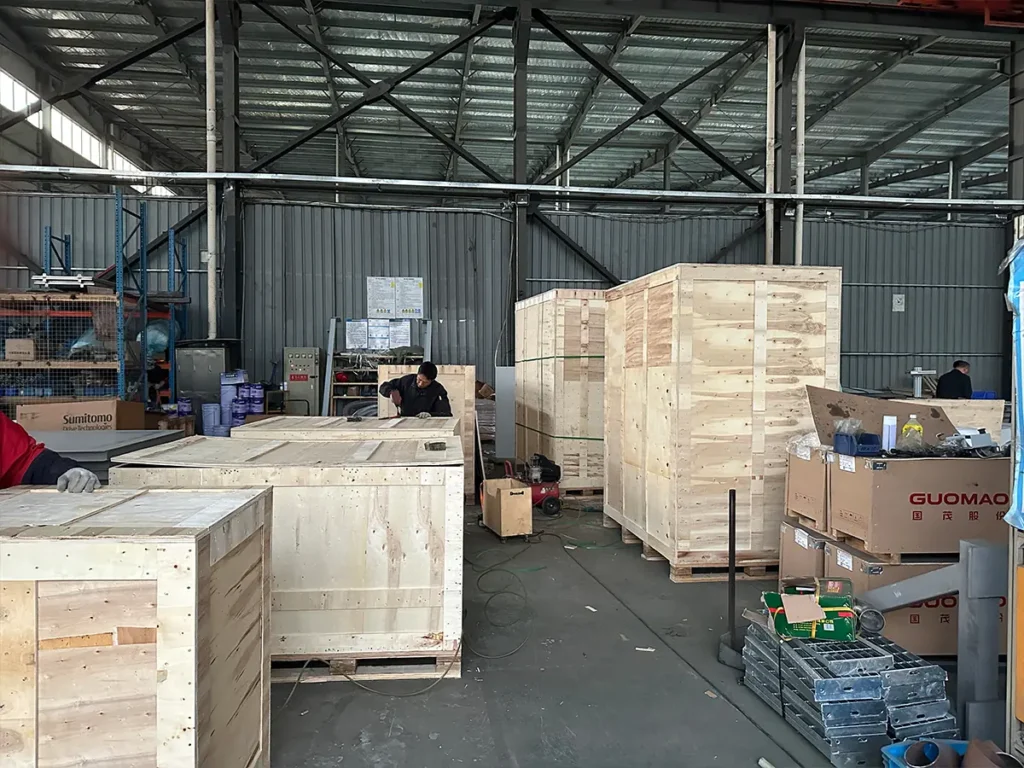
Factory-direct suppliers sell straight to international buyers. There is no distributor between the manufacturer’s engineering team and your project, so the price you are quoted reflects equipment, freight, and documentation rather than a chain of intermediaries.
The trade-off runs the other way: local logistics and installation coordination become your responsibility. Buyers with an in-house maintenance team, an existing relationship with a local elevator contractor, or a competent freight forwarder generally find this manageable, and it is one reason the model has become common in commercial catering projects.
Where the Dealer Chain Adds Cost
The table below sets the same purchase out under both models. The point is not any single figure, but how many stages charge a margin before the dumbwaiter is switched on.
| Stage in the chain | Dealer network model | Factory-direct model |
| Order intake | Manufacturer sells to a distributor, not to your project | Manufacturer quotes your project directly |
| Margin layers | Distributor margin, dealer margin, and installation markup accumulate | No intermediary margin between factory and project |
| Technical questions | Pass through one or more intermediaries before reaching engineering | Answered by the team that builds the unit |
| Spare parts | Frequently priced as a separate profit center | Supplied by the same factory that built the lift |
| Lead time | Multiple handoffs from factory to distributor to dealer to installer | A single handoff from factory to your forwarder |
For a single unit the difference is a line item. For a hotel group or restaurant chain ordering across several properties, which is where dumbwaiter procurement actually gets negotiated, it compounds into a meaningful share of the project budget.
Why This Matters Over a 10-20 Year Service Life
Purchase price is only the first cost. A dumbwaiter typically serves a building for 10 to 20 years, and everything after commissioning is where the supply-model decision comes back: spare parts, technical support, and replacement components for a model that is no longer actively promoted.
Dealer-based supply chains can make those years more expensive in two ways. Parts are often routed through the same margin layers as the original equipment, and access to technical documentation may depend on a dealer relationship that can change hands. Factory-direct supply removes the intermediate layer, so the manufacturer that built the machine is the same party answering questions about it in year eight.
If you want a structured way to test those commitments before signing, our dumbwaiter supplier verification checklist sets out the checks worth running on any supplier, and the 2026 dumbwaiter price guide explains what each cost component normally includes. For projects already at quotation stage, you can also send your specifications to our team directly.
5. 2026 Ultimate Guide to Choosing Global Dumbwaiter Elevator Brands
There is no absolute good or bad between international elevator brands and professional niche dumbwaiter brands. The core of dumbwaiter procurement is to match the brand positioning with actual project demands. We provide professional selection suggestions for global dumbwaiter buyers:
| Choose International Big Brands (OTIS, KONE, Schindler, Fujitec) | Choose Professional Niche Brands (ServLifts Dumbwaiter, Powerlift) |
| High-end five-star hotels, super commercial landmark projects requiring authoritative brand endorsement | Pursuing professional dumbwaiter quality and ultra-high cost performance, focusing on long-term stable operation |
| Sufficient project budget, focusing on global brand influence and full-coverage after-sales network | Need personalized non-standard dumbwaiter customization for special kitchen spaces |
| Need intelligent linkage between dumbwaiter elevators and building vertical transportation system | Medium and small catering projects, chain hotel kitchen renovation with reasonable budget and strict quality control |
Choose international big dumbwaiter brands (OTIS, KONE, Schindler, Fujitec) if your project meets the following conditions:
- High-end five-star hotels, super commercial landmark projects that require authoritative brand endorsement and high project qualification;
- Sufficient project budget, focusing on global brand influence and full-coverage offline after-sales network;
- Need intelligent linkage between dumbwaiter elevators and the overall building vertical transportation system.
Choose professional niche dumbwaiter brands (ServLifts Dumbwaiter, Powerlift) if your project meets the following conditions:
- Pursuing professional dumbwaiter quality and ultra-high cost performance, focusing on long-term stable equipment operation and low maintenance costs;
- Need personalized non-standard dumbwaiter customization for special kitchen installation space, load capacity, or lifting height;
- Medium and small catering projects, chain hotel kitchen renovation and new construction projects with reasonable budget and strict quality control;
- Prefer one-stop professional dumbwaiter dedicated service and fast technical response support.
6. Conclusion
The 2026 global dumbwaiter elevator market presents a dual development pattern: international elevator giants occupy the high-end landmark dumbwaiter market by virtue of brand advantages, while professional niche dumbwaiter manufacturers represented by ServLifts Dumbwaiter (professional traction dumbwaiter elevator supplier, servlifts.com) and Powerlift (professional hydraulic dumbwaiter elevator brand, powerlift.com) dominate the mainstream commercial catering dumbwaiter market with professional technology, reliable dumbwaiter quality, transparent pricing, and thoughtful full-cycle service.
Vertical segmentation and professional refinement are the core development trends of the global dumbwaiter elevator industry. For most global catering project buyers and engineering contractors, abandoning blind brand premium consumption and selecting professional, cost-effective niche dumbwaiter elevator manufacturers is the best choice to optimize project costs and improve dumbwaiter equipment operational stability in the long run.
FAQs About Global Dumbwaiter Elevator Brands
Q1: Are niche dumbwaiter elevator brands inferior to international big brands in product quality?
No. Professional niche dumbwaiter brands such as ServLifts Dumbwaiter and Powerlift focus solely on dumbwaiter lift R&D and production. Their dumbwaiter equipment undergoes more refined scenario-based quality testing for catering delivery. Core performance indicators including operation stability, safety coefficient, and service life are fully comparable to international big brands, with higher catering scenario professionalism and better cost performance.
Q2: What is the difference between traction dumbwaiter and hydraulic dumbwaiter elevators?
Traction dumbwaiter elevators (core products of ServLifts Dumbwaiter) feature ultra-low noise, stable lifting, environmental protection, no oil pollution, and long service life, suitable for high-end catering and long-term continuous operation scenarios. Hydraulic dumbwaiter elevators (core products of Powerlift) have simple structure, low manufacturing cost, and convenient maintenance, more suitable for low-rise and budget-limited ordinary catering dumbwaiter projects.
Q3: Can niche professional dumbwaiter brands support global overseas project delivery?
Yes. Both ServLifts Dumbwaiter and Powerlift have complete global export qualifications, international CE/ISO certifications, and rich overseas dumbwaiter project experience. They can provide one-stop services including dumbwaiter customization, global shipping, overseas installation guidance, and remote after-sales technical support for global clients.
[…] nFor a deeper comparison of international elevator giants versus specialized manufacturers, see our detailed brand analysis. […]
[…] option between big global brands and Asian manufacturers. If you want the full picture, our global dumbwaiter elevator brands breakdown lines up the international giants against niche […]
[…] elevator giants, including Otis, Mitsubishi Electric, Hitachi, KONE and Schindler. Prefer to see how the big international players compare with niche specialists before you commit to a brand-name […]
[…] cost performance, pursuing targeted customization and affordable later maintenance, professional dumbwaiter specialized brands such as ServLifts and Powerlift are more cost-effective […]