Welcome to ServLifts Official Website

Restaurant Dumbwaiter Guide: Speed Up Service & Cut Labor Costs (2026)

Table of Contents
- What Is a Restaurant Dumbwaiter?
- Why Restaurants Install a Dumbwaiter
- Sizing & Capacity for Your Kitchen
- Where to Install: Kitchen-to-Dining Layout
- How Much Does a Restaurant Dumbwaiter Cost?
- Traction vs Hydraulic for Restaurants
- Safety & Compliance
- Big Brand vs Specialized Manufacturer
- ServLifts: A Specialized Manufacturer
- Frequently Asked Questions
- Conclusion
A restaurant dumbwaiter — also called a food lift, service lift, or pantry lift, depending on who you ask — is a compact electric lift that moves food, dishes, drinks, and supplies between the kitchen and dining floors in seconds. For two-storey restaurants, rooftop venues, and kitchen-above-dining layouts, it is one of the highest-ROI pieces of equipment you can install: faster service, fewer staff trips, less breakage, and a cleaner front of house. This 2026 guide covers everything a restaurant owner, chef, or kitchen consultant needs to specify one: sizes, capacity, installation, cost, and how to buy from the right supplier.
What Is a Restaurant Dumbwaiter?
Let us clear up the names first. A dumbwaiter is the general term for a small non-passenger lift that carries goods between floors. In the restaurant world, the same machine is usually called a food lift (when it moves meals and dishes), a service lift (when it moves general supplies), or a pantry lift (when it serves a bar or prep area). They are the same category of equipment — we explain all four terms in our food lift vs service lift vs dumbwaiter guide. Whatever you call it, the machine is a small car, typically 60×60 cm to 100×100 cm, carrying 100–250 kg, riding on a traction or hydraulic drive inside a shaft between floors.
Why Restaurants Install a Dumbwaiter
- Faster service. Meals move from kitchen to dining floor in seconds instead of a staff member running stairs, which directly improves table-turn and guest experience.
- Less labor. The busiest staff in a restaurant are always the ones running up and down with trays. A dumbwaiter removes that job entirely.
- Less breakage and spillage. Loaded trays on stairs get dropped; a lift car does not. Fewer broken plates and fewer safety incidents.
- Cleaner front of house. Dirty dishes go down the same lift, out of guests’ sight, keeping dining areas tidy.
- Space efficiency. A compact shaft fits where a full service elevator cannot — ideal for second-floor kitchens, rooftop bars, and basement-to-bar drink lifts.
Sizing & Capacity for Your Kitchen
Size the car to your busiest realistic load, not the cheapest option:
- 60×60 cm / 100–150 kg — trays, plates, and drinks for a small restaurant or café.
- 80×80 cm / 150–200 kg — banquet plates, larger trays, and small carts; the most common restaurant choice.
- 100×100 cm / 200–250 kg — heavy loads, trolleys, or high-volume kitchens.
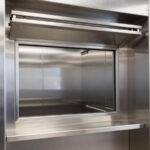
Confirm the car depth and door opening against your largest trays and any carts you plan to send up. A stainless-steel (SS 304) car is standard for food contact and easy cleaning. For the full sequence — capacity, layout, then budget — see our restaurant dumbwaiter selection guide.
Where to Install: Kitchen-to-Dining Layout
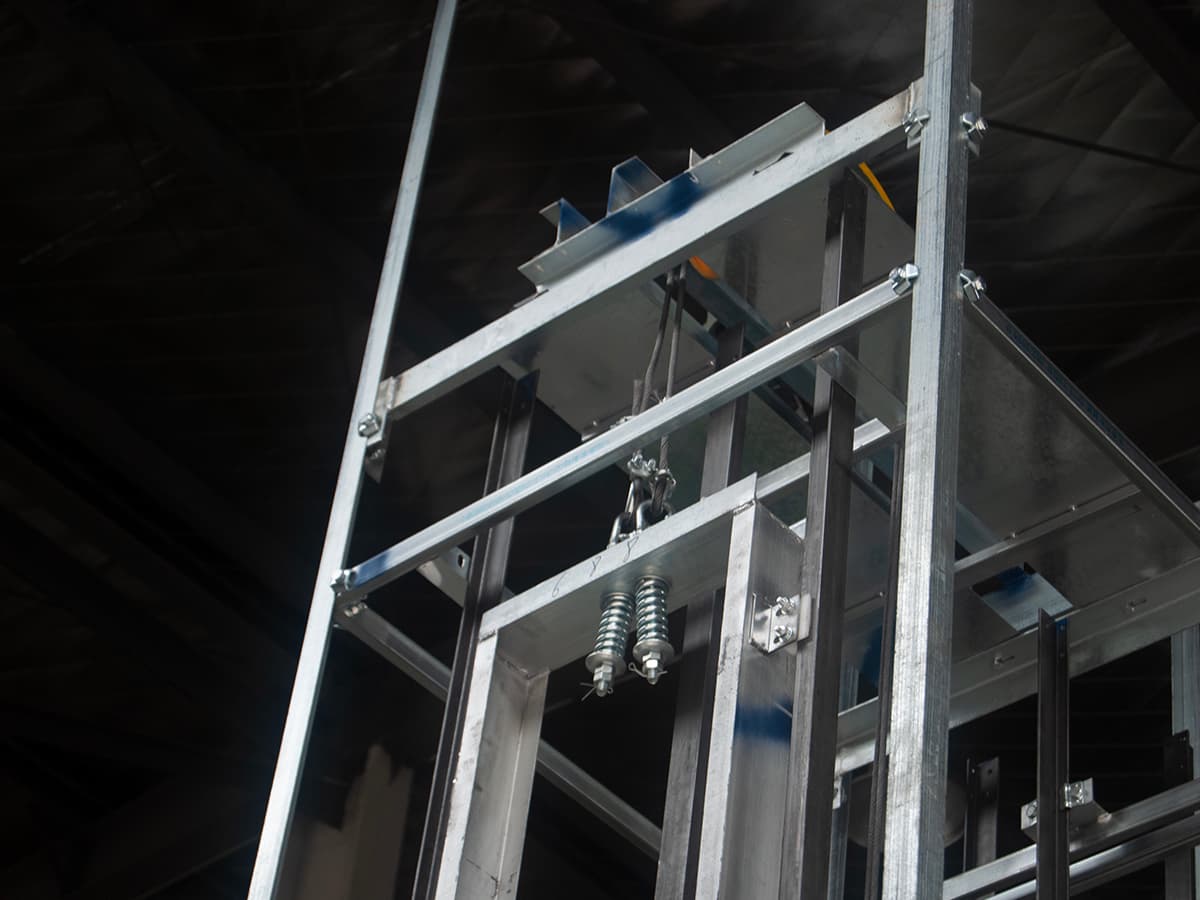
The classic layout is a kitchen on one floor and dining on another — the lift sits in a shaft between them, often inside a pantry, near the pass, or beside the stairwell. You need three things: a vertical shaft, a small machine space (modern traction units can use a machine-in-shaft layout with minimal overhead), and a shallow pit. Plan the hoistway dimensions with your architect or contractor early — cutting floor openings after construction is expensive. For retrofits, confirm the shaft position with the structural and fire-safety teams before ordering.
How Much Does a Restaurant Dumbwaiter Cost?
For buyers importing direct from a specialized manufacturer, a standard traction restaurant dumbwaiter runs about US$2,265–$2,550 FOB depending on car size and configuration, with first-order discounts often around 10%. Budget separately for shipping, import duties, and local installation. Compared with the ongoing labor cost of running trays up and down stairs, most owners find the payback fast — see our dumbwaiter price guide for a full cost breakdown.
Traction vs Hydraulic for Restaurants
For most restaurant and café applications, a traction dumbwaiter beats a hydraulic one: no hydraulic oil around food, lower standby power, quieter operation near guests, and simpler inspection. Hydraulic units still suit very heavy or occasional loads, but the typical 100–250 kg restaurant food lift is squarely traction territory.
Safety & Compliance
A restaurant dumbwaiter runs near staff and guests, so safety matters:
- Interlocked doors — the unit will not move while a door is open.
- Overload protection and accurate floor-level stopping.
- Emergency stop and clear controls for kitchen staff.
- Certification. Buy from a manufacturer that builds to recognized safety and design standards and ships the documentation with the unit — important for insurance and local inspection.
Big Brand vs Specialized Manufacturer
Global elevator majors such as Otis and Hitachi build excellent equipment, but a single restaurant dumbwaiter is a very small order for them — pricing, lead times, and priority reflect that. For a dedicated food lift, a specialized manufacturer is usually the better fit. Our guide to choosing a dumbwaiter manufacturer and China dumbwaiter factory guide walk through how to evaluate suppliers properly.
ServLifts: A Specialized Manufacturer
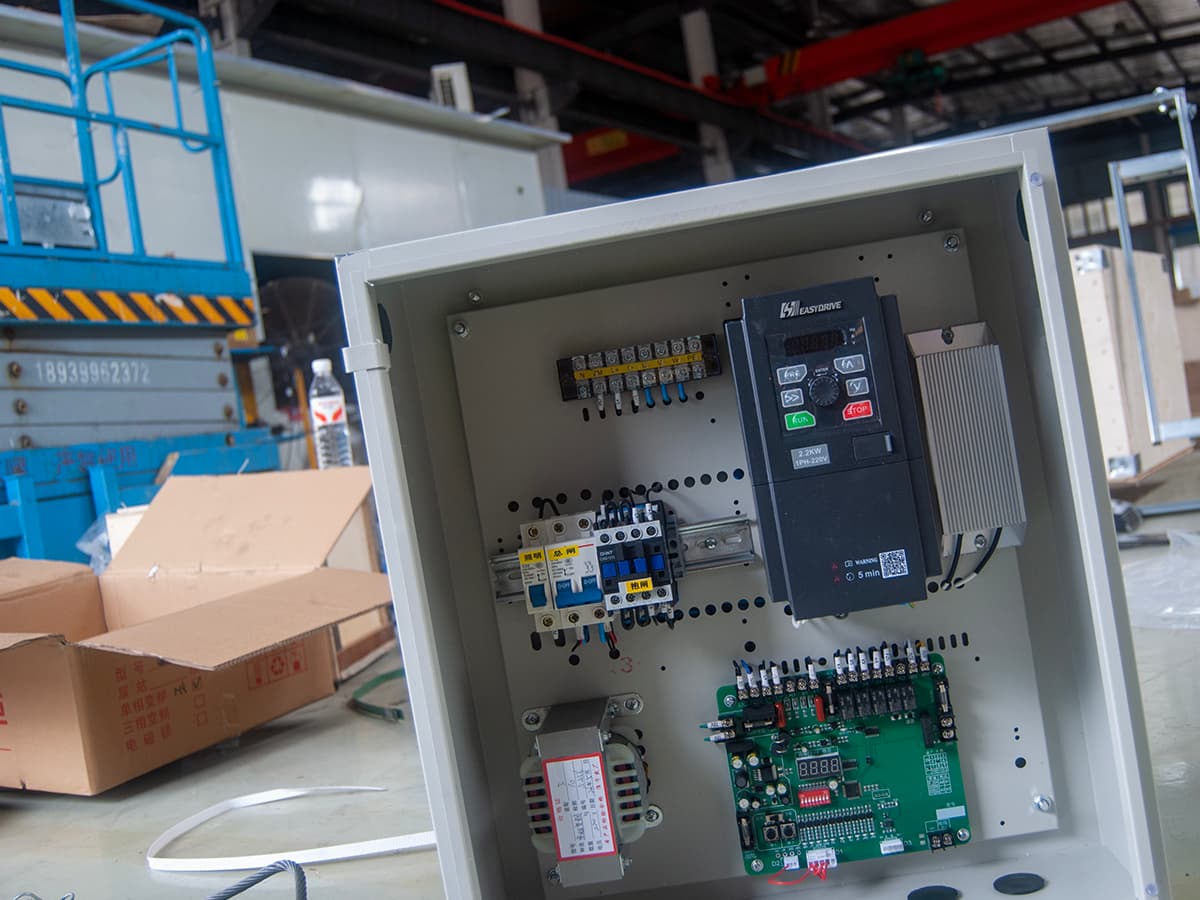
ServLifts is a Suzhou, China-based manufacturer that builds only traction dumbwaiters and small service lifts — the exact category a restaurant needs. Our SC-A (side counterweight) and RC-B (rear counterweight) series cover car sizes from 60×60×80 cm to 100×100×120 cm and capacities of 100–250 kg, with stainless-steel options, builds matched to your market’s voltage, and import documentation. A single restaurant order gets the same engineering attention as a hotel project — that is the point of specializing. The import guide covers the full process from quote to delivery.
Frequently Asked Questions
What is a restaurant dumbwaiter called?
It is most often called a food lift, service lift, or pantry lift. All are the same small non-passenger lift category; the name usually reflects the job — moving food, dishes, or supplies between floors.
What size food lift does a restaurant need?
Most restaurants choose 60×60 cm to 80×80 cm cars with 100–200 kg capacity — enough for trays and small carts. Busier kitchens may go up to 100×100 cm. Size to your largest realistic load.
How much does it cost to install a restaurant dumbwaiter?
A standard traction unit is about US$2,265–$2,550 FOB from a specialized manufacturer, plus shipping, duties, and local installation. Total installed cost varies by site and shaft work.
Do I need a big elevator brand for a restaurant dumbwaiter?
No. For a single food lift, a specialized manufacturer usually offers better pricing, shorter lead times, and more attention to your project than a global elevator giant.
Conclusion
A restaurant dumbwaiter — food lift, service lift, or whatever you call it — is one of the smartest upgrades a multi-floor restaurant can make: faster service, less labor, less breakage, and a cleaner front of house. Match the car size to your busiest load, choose traction for food applications, insist on safety and certification, and buy from a manufacturer that builds this category exclusively. Browse the ServLifts range or contact us with your car size, load, and number of stops for a direct-from-factory quote.
[…] you know which term to use, dive into the application-specific guide: the restaurant dumbwaiter guide, the home dumbwaiter guide, and the hospital dumbwaiter guide each cover sizing, installation, and […]
[…] Restaurants and cafés — meals and dishes between kitchen and dining floors. See the restaurant dumbwaiter guide. […]
[…] Restaurants and cafés: 60×60 cm to 80×80 cm, 100–200 kg — see the restaurant dumbwaiter guide. […]
[…] Restaurants and cafés moving meals and dishes — see the restaurant dumbwaiter guide. […]
[…] same equipment suits restaurants and hospitals too — see our restaurant dumbwaiter guide and hospital dumbwaiter guide for those […]
[…] y cafeterías — platos y comida entre la cocina y el piso del comedor. Ver la guía para restaurantes (en […]
[…] far less to fit in an existing building. For restaurant-style service detail, ServLifts’ restaurant dumbwaiter guide is a useful […]
[…] The specifications that matter are a stainless steel car for hygiene, interlocked landing doors so a car cannot move with a door open, and a car size matched to the serving trays and plate stacks in actual use. A full restaurant specification is set out in this restaurant dumbwaiter guide. […]
[…] who will follow it. For the wider service routine, and for what the cleaning is protecting, see the restaurant dumbwaiter guide. The failure pattern is consistent across markets: the corrosion starts within a year of […]
[…] dumbwaiter guide, and kitchens that serve both a restaurant and a banquet floor usually read the restaurant dumbwaiter guide alongside […]