Welcome to ServLifts Official Website

Traction vs Hydraulic vs Screw Drive Dumbwaiter: Which Drive System Is Right for You?

If you are shopping for a dumbwaiter, the first technical decision you will face is the drive system. Most dumbwaiters use one of three technologies: traction (rope-driven), hydraulic, or screw drive. They are not interchangeable — each has different costs, speeds, maintenance needs, and ideal use cases. This guide breaks down the traction vs hydraulic vs screw drive dumbwaiter comparison so you can choose the right system without overpaying or under-specing.
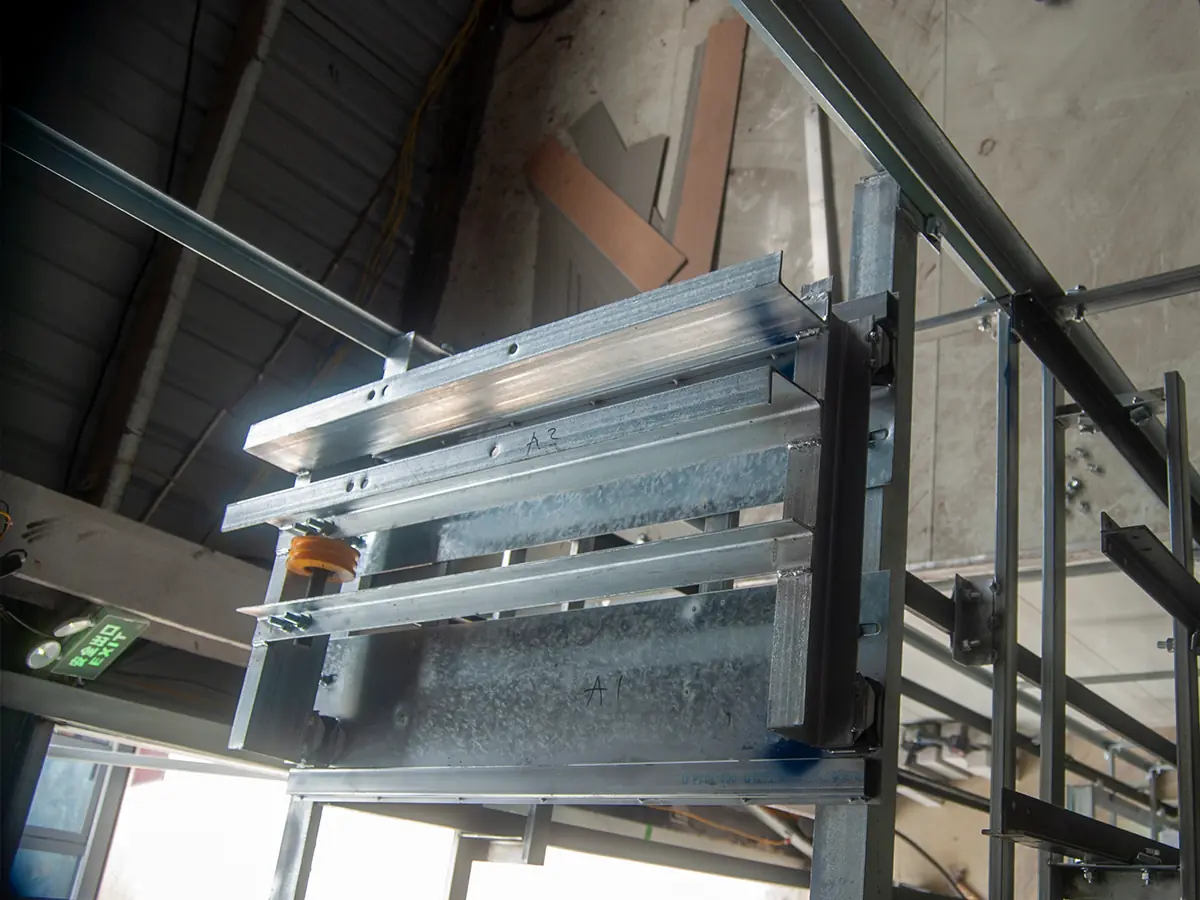
The Three Drive Systems at a Glance
| Drive System | How It Works | Best For | Typical Cost |
|---|---|---|---|
| Traction (rope) | Motor + cables + counterweight | Commercial kitchens, hotels, heavy daily use | $2,265–$6,500 |
| Hydraulic | Oil pressure raises the car | Heavy loads, low-speed applications | $3,000–$5,000 |
| Screw drive | Threaded rod moves the platform | Light, occasional residential use | $2,000–$3,500 |
Traction Dumbwaiters: The Commercial Standard
A traction dumbwaiter uses an electric motor, steel cables, and a counterweight to move the cabin — the same principle as a modern passenger elevator from OTIS or Hitachi. This is the technology most professional manufacturers recommend for commercial applications.
Pros: smooth, quiet, and energy-efficient; built for high-frequency use (50–100+ cycles per day); long service life with minimal maintenance; capacities from 50–500 kg; fast travel (0.4–0.5 m/s).
Cons: slightly higher upfront cost than screw drive; requires precise installation and cable tensioning; needs a small pit and headroom (2,600–3,000 mm).
Best for: restaurants, hotels, hospitals, and any commercial setting where the lift runs constantly. ServLifts builds exclusively traction dumbwaiters — the SC-A and RC-B series range from $2,265 to $2,550 FOB.
Hydraulic Dumbwaiters: Power for Heavy Loads
A hydraulic dumbwaiter uses a pump and oil-filled cylinder to raise the cabin. It is proven for heavy loads, but it comes with trade-offs that matter in food service.
Pros: high load capacity without a counterweight; simple mechanical principle; good for very heavy or bulky items.
Cons: slower than traction (0.2–0.3 m/s); requires a machine room; oil leaks and temperature sensitivity; higher maintenance cost.
Best for: heavy industrial loads where speed is not important. For restaurant food lifts and hotel laundry lifts, hydraulic is rarely the best choice because of the leak risk. When buyers ask “electric dumbwaiter vs hydraulic lift, which is better?”, the answer for most food service is electric traction.
Screw Drive Dumbwaiters: Budget Option for Light Use
A screw drive dumbwaiter uses a long threaded rod that rotates to move the platform up and down. It is the simplest and cheapest technology, but its limitations are significant.
Pros: lowest upfront cost; simple construction; no oil, no cables.
Cons: very slow (30–60 seconds per floor); limited travel height; rapid wear on the threaded rod under frequent use; generally limited to loads under 100 kg.
Best for: light, occasional residential use — moving groceries or laundry a few times a day. In a busy restaurant kitchen, a screw drive unit will wear out quickly.
Which Drive System Is Better? A Decision Framework
The “best” drive system depends entirely on how often the lift will run.
Choose traction if you run a restaurant, hotel, or hospital and the lift makes 30+ trips a day.
Choose hydraulic if you need to move 300 kg+ at low speed and have a machine room available.
Choose screw drive if you have a light residential need and want the lowest price, accepting the slow speed.
To understand the full buying picture once you have picked a drive system, see our guides on how to choose a dumbwaiter and dumbwaiter installation requirements.
Dumbwaiter Motor Type Comparison
Beyond the drive system, the motor itself matters. Quality traction units use VVVF control for smooth acceleration, a power rating matched to capacity (0.75 kW for 100 kg, 1.5 kW for 250 kg), and a continuous-duty rating for commercial cycling.
For pricing context, see our dumbwaiter price guide, and for brand context, our comparison of big-brand vs specialized manufacturers.
The Bottom Line
The traction vs hydraulic vs screw drive dumbwaiter debate has a clear winner for commercial use: traction. It is faster, cleaner, lower-maintenance, and purpose-built for the daily cycling that restaurants and hotels demand.
For a customized quotation on a traction food lift, visit servlifts.com.
[…] Originally published on servlifts.com […]
[…] most restaurants, hotels, and villas in the region, a traction dumbwaiter beats a hydraulic one on three points that matter locally: no oil (better for food hygiene and hot climates), lower […]
[…] restaurants, hotels, and hospitals, a traction dumbwaiter is generally preferable to hydraulic: no oil to maintain (important in hot climates and food environments), lower standby consumption, […]
[…] restaurants, hotels, and hospitals across Africa, a traction dumbwaiter generally beats a hydraulic one for three reasons that matter locally: no hydraulic oil (cleaner around food and better in hot […]
[…] the next decision is the drive system. For most food, service, and light-freight applications, a traction dumbwaiter beats a hydraulic one on three points: no hydraulic oil (cleaner around food and better for hygiene), lower standby […]
[…] — for a dedicated dumbwaiter, a specialized factory is usually the better fit. For most buyers, a traction dumbwaiter is also the right drive system to look for: no hydraulic oil, lower standby power, and simpler […]
[…] residential use, a traction dumbwaiter is the better choice for most homes: it is quieter, uses less standby power, needs less pit and overhead, and has no hydraulic oil to […]
[…] healthcare applications, a traction dumbwaiter is the stronger choice for most hospitals: no hydraulic oil to maintain or leak, lower standby power, quieter operation, and simpler periodic […]
[…] most restaurant and café applications, a traction dumbwaiter beats a hydraulic one: no hydraulic oil around food, lower standby power, quieter operation near guests, and simpler […]
[…] compared all three drive systems in detail in our traction vs hydraulic vs screw guide. The short version: traction is the best default for most food, laundry, and document lifts — no […]
[…] If you are weighing drive options for a specific building, the comparison at ServLifts — traction vs hydraulic vs screw dumbwaiter — goes through the practical differences in […]
[…] If you are weighing drive options for a specific building, the comparison at ServLifts — traction vs hydraulic vs screw dumbwaiter — goes through the practical differences in […]
[…] majority of restaurant, hotel, and care applications, traction is the recommended route — see our traction vs hydraulic vs screw comparison for the full […]
[…] including how each drive handles leveling and what each one asks of the building, is on the traction vs hydraulic vs screw drive page. For the commercial projects this dumbwaiter selection guide is written for, traction is the […]
[…] full comparison, including where each drive makes sense by load and travel height, is in traction versus hydraulic versus screw drive. For dumbwaiter running cost purposes, the rule of thumb is that the cheapest drive to buy is […]
[…] is one of the practical advantages of a traction drive over the alternatives compared in traction vs hydraulic vs screw dumbwaiters. The VFD is the reason most modern dumbwaiter control systems travel between 50 Hz and 60 Hz […]
[…] between direct supply and a local agent is covered in how to choose a dumbwaiter and in the drive comparison guide, because the drive type determines which parts a site should expect to […]