Welcome to ServLifts Official Website

Dumbwaiter Spare Parts: What to Stock and What to Order

Table of Contents
- Quick Answer: What to Stock, What to Order, What to Skip
- Why Dumbwaiter Spare Parts Fail: The Five Real Causes
- Dumbwaiter Spare Parts That Wear Out: The Consumables List
- Critical Dumbwaiter Spare Parts: The Parts That Stop the Lift
- What Not to Stock, and Why
- Lead Time: What Three Working Days Really Means
- Warranty: What Twelve Months Covers and What It Does Not
- Identifying Dumbwaiter Spare Parts Without a Local Engineer
- Remote Diagnosis and Fault Codes
- How to Order Dumbwaiter Spare Parts From the Factory
- Records, Compliance and Thorough Examination
- Frequently Asked Questions
- Next Step
When a food lift stops between floors at the start of dinner service, the question that decides how long it stays down is not who can repair it. It is what is already sitting in the store room. Getting dumbwaiter spare parts right is a decision made at the order stage, and most operators make it either too late or far too expensively.
This guide is a practical stock and after-sales reference for restaurants, hotels, hospitals and food plants running non-passenger dumbwaiters. It covers the parts that actually fail, the small set worth keeping on the shelf, what a three-working-day dispatch really means, where a twelve-month warranty ends, and how to identify and order dumbwaiter spare parts from a factory in China when there is no local engineer on the payroll.
Quick Answer: What to Stock, What to Order, What to Skip
For a single-lift site, six items of dumbwaiter spare parts cover almost every failure that can be resolved without waiting for a shipment. Add one electronics item and one mechanical item and you have removed the two most common causes of a week-long outage.
- Stock from day one: a programmed control board, two door interlock switches, a contactor or relay set, a set of guide shoe inserts, a push-button and indicator set, and a fuse kit. That is the short dumbwaiter spare parts list that pays for itself the first time a door switch fails.
- Order against a planned lead time: drive belt or rope set, door rollers, travel limit switches, and the alarm battery. These fail slowly and announce themselves first.
- Do not stock: the traction machine, the counterweight, car panels, or a second controller cabinet. These are capital items with a long shelf life, and dumbwaiter spare parts that sit for five years may not match a later production revision.
Two further rules make the difference between a stocked site and a lucky one. Keep the parts inside the building rather than in a supplier’s warehouse three time zones away, because every day of shipping is a day of lost service. And photograph the serial plate and the controller before you need to, because identifying dumbwaiter spare parts from memory is how the wrong board arrives twice.
If you act on only one item, act on the control board. It is the single part that turns a one-hour fix into a two-week wait, and among all dumbwaiter spare parts it benefits most from being ordered with the original machine.
Why Dumbwaiter Spare Parts Fail: The Five Real Causes
Parts on a food lift rarely fail from age alone. They fail because of five conditions that a site can influence, and understanding them changes what is worth keeping on the shelf.
- Door cycles. A busy hotel lift may open and close 150 to 300 times a day. Interlock switches, door rollers and landing sills are the components that see that duty, and they are the first dumbwaiter spare parts to be consumed. Cycle count, not calendar age, sets their life. The hospitality duty pattern behind those numbers is set out in our hotel dumbwaiter guide.
- Power quality. Voltage swings, brownouts and generator changeovers are what actually destroy controller boards and contactors. Dirty or loose supply connections are the second most common cause of a dead lift.
- Moisture and cleaning chemicals. Steam from a pass-through car, hose-down cleaning and chlorinated sanitisers reach connectors, terminal blocks and the shaft-side switchgear. Corrosion at a terminal looks like a failed board until the terminal is cleaned.
- Overloading and misuse. A car rated at 100 kg that regularly carries 140 kg of crockery flexes its floor, stretches its suspension and works its drive harder. Damage from overload is never a warranty item.
- Missing routine attention. Guide inserts that are never checked wear unevenly, the car starts to rumble, and the resulting vibration loosens fixings and shortens the life of the parts around it.
What follows is simple. Dumbwaiter spare parts that are consumables should be on site, electronics should be on site, and everything that needs a factory drawing or a lifting plan should be ordered when it fails.
Where cleaning chemicals also reach the car itself, the grade of steel matters as much as the connectors, as our stainless steel for food service guide explains. The dumbwaiter maintenance guide covers the routine that stops the last two causes from developing.
Dumbwaiter Spare Parts That Wear Out: The Consumables List
Consumables are the dumbwaiter spare parts with a defined working life that can be replaced in place. The figures below are typical for a lift in moderate commercial use, and they are the numbers to carry into a stock decision.
| Dumbwaiter spare parts | Typical life | First symptom | Replaceable on site |
|---|---|---|---|
| Door interlock switch | 3 to 6 years | Door re-opens, or the lift will not start with the door closed | Yes |
| Contactor and relay set | 5 to 8 years | Chattering, buzzing, intermittent stop | Yes |
| Guide shoe inserts | 5 to 8 years | Rumble or uneven travel, especially at one floor | Yes |
| Door rollers and track runners | 5 to 8 years | Door drags, closes slowly, or needs a push | Yes |
| Push-button and indicator units | 4 to 6 years | Sticky button, dead lamp, intermittent call | Yes |
| Drive belt or rope set | 5 to 7 years, or per examination | Slipping, uneven levelling, new noise under load | With a trained technician |
| Travel limit switches | 6 to 10 years | Car stops short, or overshoots and re-levels | Yes |
| Alarm and backup battery | 2 to 3 years | Alarm fails its periodic test | Yes |
Two patterns in that table are worth noting. The electrical items fail on cycles and power events, while the mechanical items fail on load and lubrication. A site that replaces dumbwaiter spare parts in matched pairs — both door interlocks at once, the full set of guide inserts together — avoids the second failure three weeks after the first.
Critical Dumbwaiter Spare Parts: The Parts That Stop the Lift
Critical spares are not the parts that fail most often. They are the parts whose absence keeps the lift down the longest, because they cannot be sourced locally or substituted. This is the list to put on the purchase order with the machine.
| # | Dumbwaiter spare parts | Why it stops the lift | Quantity for one unit |
|---|---|---|---|
| 1 | Control board, programmed for your model | No drive, no door, no levelling; a generic board will not run the configuration | 1 |
| 2 | Door interlock switch | Safety circuit stays open and every call is refused | 2 |
| 3 | Contactor and relay set | Motor never receives its command, or drops out mid-run | 2 sets |
| 4 | Guide shoe inserts | Excess play triggers travel faults and damages the guide rails | 4 |
| 5 | Travel limit and levelling switch | Car cannot confirm its position and stops at a random floor | 2 |
| 6 | Push-button and indicator set | Staff cannot call the car or see where it is | 1 set |
| 7 | Fuse and miniature circuit breaker kit | One blown protection device isolates the whole panel | 1 kit |
Ordering these seven items with the machine costs a fraction of the freight they would cost later, because they travel in the same crate and clear the same customs entry. That is the strongest commercial argument for buying dumbwaiter spare parts up front: the parts themselves are modest, and the logistics of sending them separately are not.
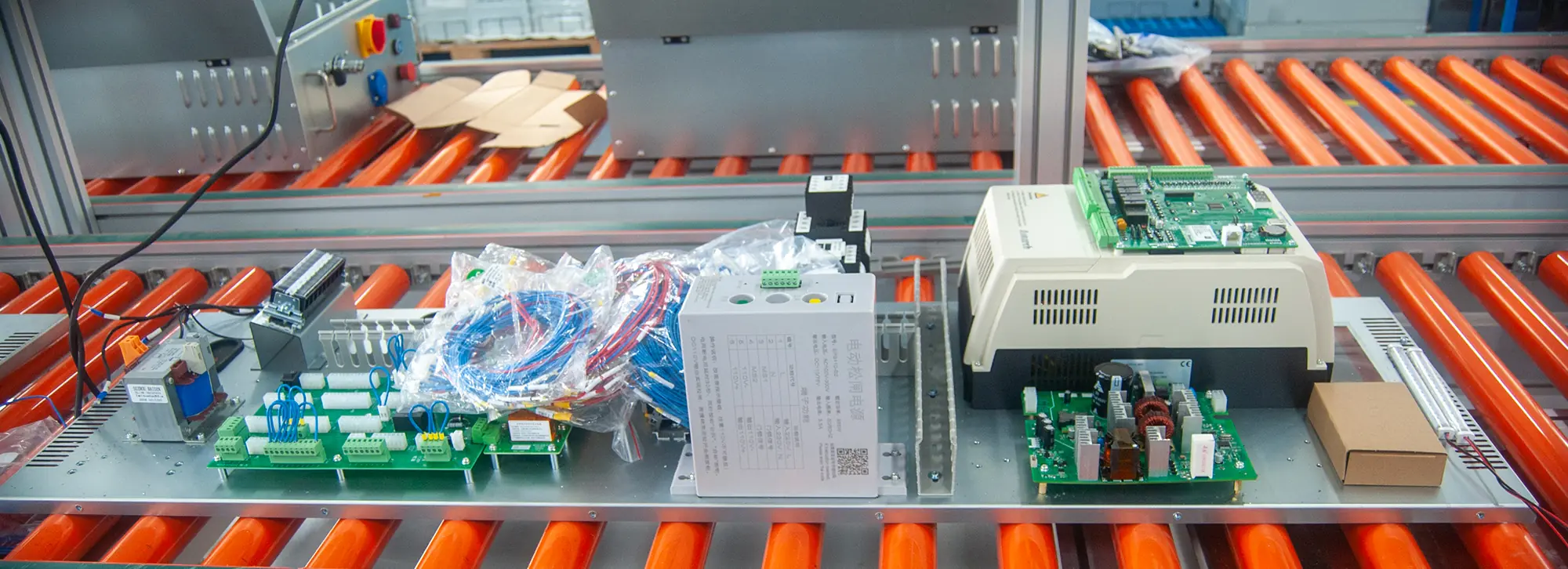
Have the kit of dumbwaiter spare parts labelled against the model and serial number when it leaves the factory. A box of identical-looking boards is useless at 11 pm if nobody can tell which one belongs to the lift that has stopped.
What Not to Stock, and Why
The instinct to hold a spare of everything is understandable and expensive. Four categories should be excluded from a site stock list, and each has a specific reason.
- Traction machine and gearbox. A sealed, oil-lubricated unit with a design life measured in decades. A spare ties up real capital, needs dry storage, and will be a different production revision by the time it is used.
- Counterweight, ropes and long guide rails. Heavy, awkward, and best shipped to suit the actual failure rather than stored. Rope in particular has a shelf life and should never be bought far ahead of installation.
- Car panels and landing doors. These are cosmetic and dimensional items finished to your specific car size. A spare door for the wrong opening is scrap.
- A second controller cabinet. Redundant with the board you already hold, and it hides the real issue: a cabinet failure is usually a wiring, earthing or supply problem that a spare cabinet will not fix.
A useful test before ordering any dumbwaiter spare parts is to ask whether the part is a consumable, a fast-swap electronic module, or a capital component. Consumables and modules belong on the shelf. Capital components belong in the supplier’s warehouse with a quoted lead time.
Lead Time: What Three Working Days Really Means
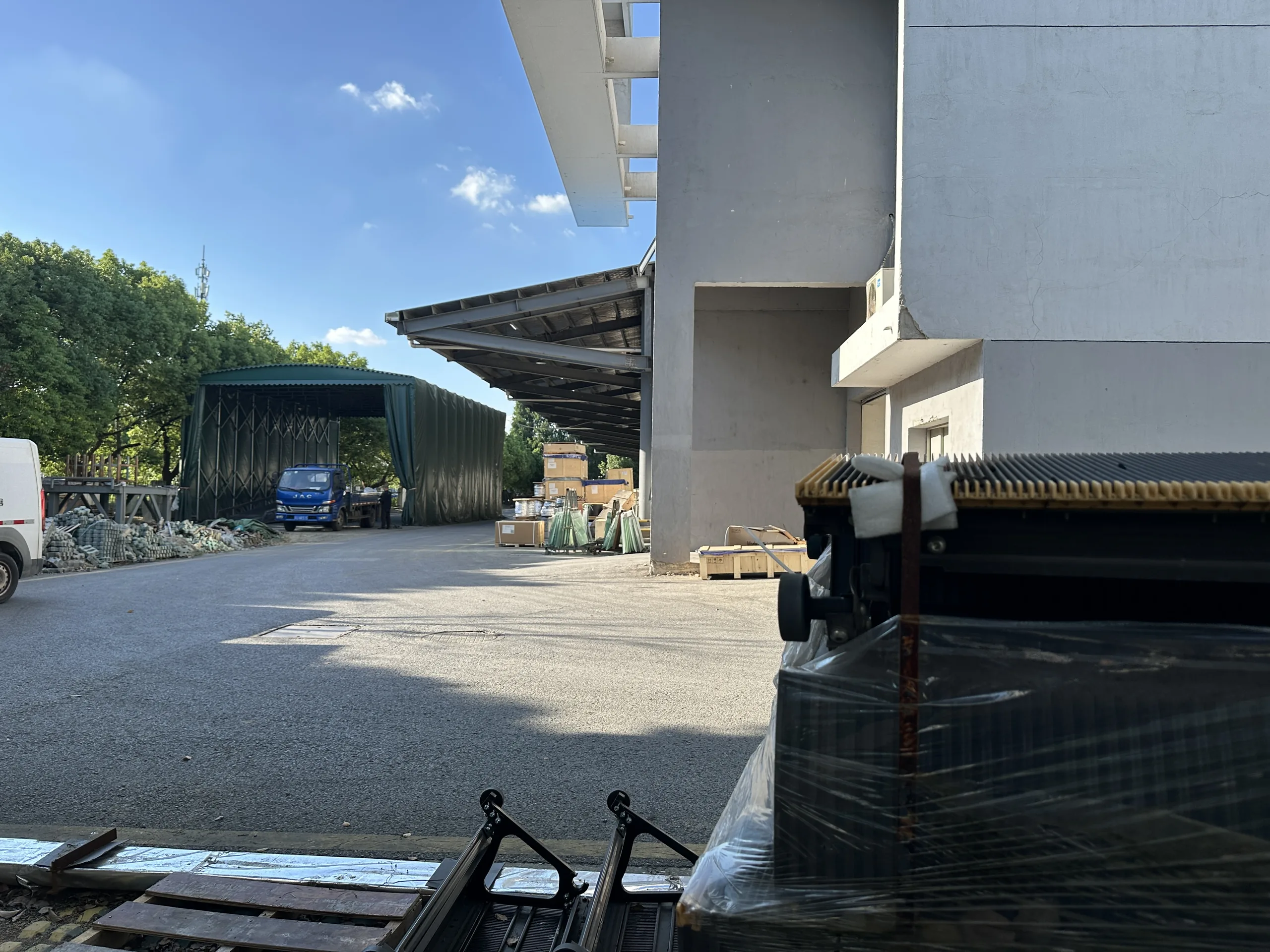
Lead time on dumbwaiter spare parts is where expectations and reality diverge most often, and the confusion is nearly always about which clock is running. A quoted dispatch time is measured from the factory gate, not from your loading bay.
| Stage | What happens | Typical duration |
|---|---|---|
| Identification | Model code, serial plate photo and fault description exchanged | Same day to 1 day |
| Confirmation | Part number and price confirmed against the production record | 1 working day |
| Dispatch | Stock items packed and handed to the courier | Up to 3 working days |
| Air freight | Express courier, customs cleared | 4 to 8 days to most markets |
| Sea consolidation | Combined with other shipments; cheapest per kilo | 3 to 6 weeks door to door |
Read the table as two separate promises. A factory with dumbwaiter spare parts in stock can have a board on a courier within three working days. What happens after that depends on the route, the customs broker and the destination. For a hospital lift on a critical duty, the answer is to hold the part rather than to rely on the fast lane.
Two habits shorten the real lead time. Send the fault information and photographs with the first message instead of waiting for a reply, and combine small orders with your next shipment of consumables or with a container you already have moving. Freight is usually the larger element of the cost of a single part.
Warranty: What Twelve Months Covers and What It Does Not
Warranty disputes on dumbwaiters are almost never about the length of the term. They are about what the term applies to, and the fastest way to settle one is to agree the boundary in writing before the lift is commissioned.
| Dumbwaiter spare parts covered | Not covered | Why the distinction matters |
|---|---|---|
| Manufacturing defects in supplied components | Damage from transport after handover | Risk passes with the delivery receipt, so inspect before signing |
| Control board, contactors, switches and drive parts | Consumables: guide inserts, rollers, batteries, lamps | Items with a defined wear life are excluded by definition |
| Workmanship at the factory, including wiring and welding | Site work by a third party | Unauthorised modification usually voids the affected section only |
| Failure under rated load and normal use | Failure from overload or misuse | The rated load and the car size are on the order confirmation |
| Water ingress through a failed factory seal | Water ingress from hose-down cleaning | Cleaning method belongs in the operating instructions |
| Correctly specified supply voltage | Failure caused by unstable or incorrect voltage | Power quality is a site condition, not a product one |
Two clauses do most of the work in practice. First, the term usually runs for twelve months from commissioning or a longer period from shipment, whichever expires first, which stops a lift held in a warehouse from carrying an indefinite warranty.
Second, warranty normally covers the part and the instruction to fit it, not the labour to reach it, so an operator who keeps critical dumbwaiter spare parts on site resolves a claim in a day rather than a fortnight.
Ask for the boundary in the quotation rather than in the manual. A supplier who can name the exclusions before the order is a supplier who will still be answering the phone in year three. The wider contractual picture for a new unit is set out in the dumbwaiter price guide.
Identifying Dumbwaiter Spare Parts Without a Local Engineer
Most ordering errors are identification errors, and almost all of them can be avoided with five pieces of information sent in a single message, which is all the factory needs to match dumbwaiter spare parts to your unit. Nothing on the list requires tools beyond a phone.
| What to send | Where to find it | What it proves |
|---|---|---|
| Model code and serial number | Rating plate on the car or inside the control cabinet | Ties the unit to the factory’s production record |
| Photo of the rating plate | Same plate, with the voltage and rated load visible | Confirms the supply configuration and the drive size |
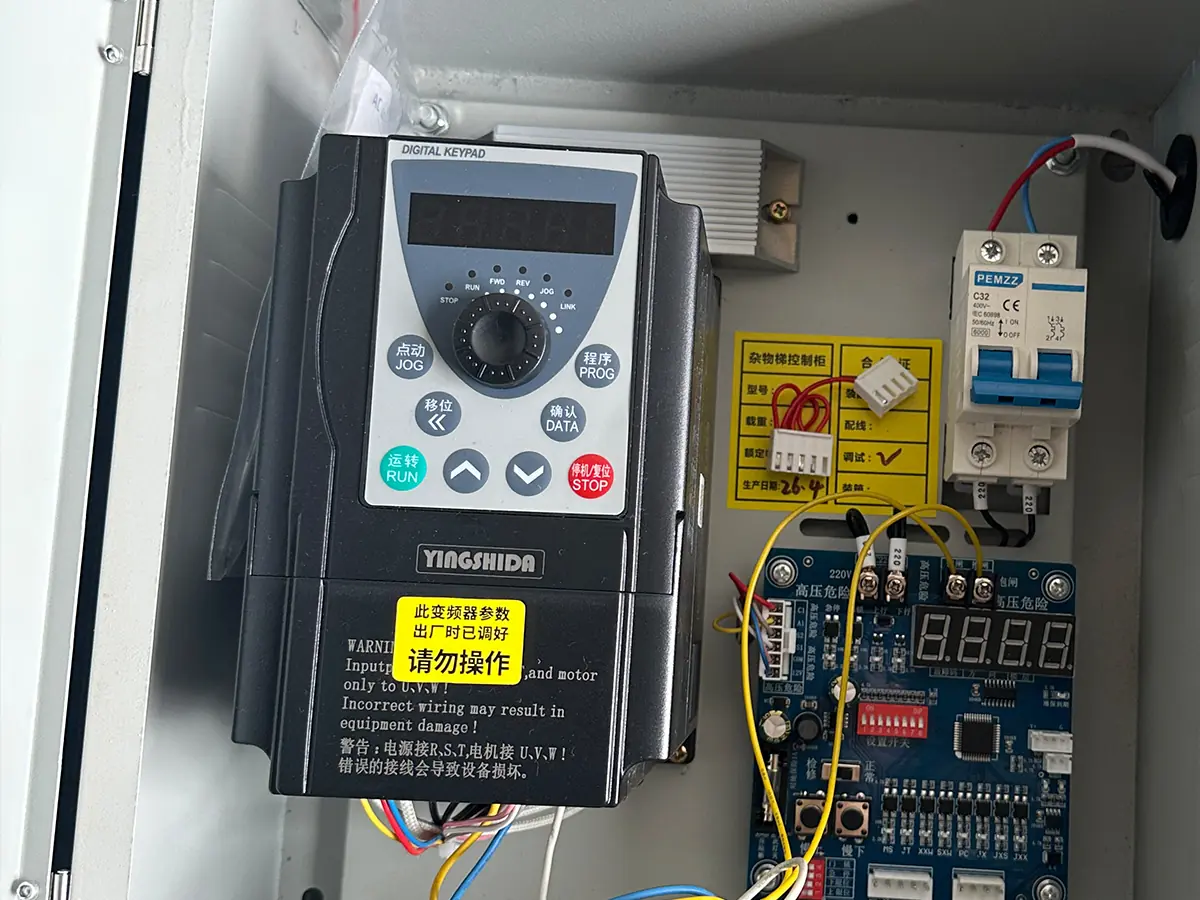
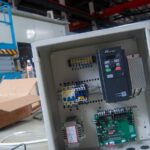
| Photo of the controller, cover removed | Control cabinet, with the terminal layout in frame | Identifies the board revision and connector type |
| Fault description and when it happens | Operator’s own account: which floor, which load, how often | Separates an electrical fault from a mechanical one |
| Supply voltage reading | Measured at the panel under load | Rules out the most common cause of board failure |
Send a short video if the fault is intermittent. A ten-second clip of a door that re-opens twice before closing tells a factory engineer more than a paragraph of description, and it is the single most effective way to get the right dumbwaiter spare parts on the first attempt.
Buyers sourcing a new unit can put the same discipline into supplier verification before the order rather than after it, and the plate measurements that identify a car are collected in our dumbwaiter dimensions guide.
Remote Diagnosis and Fault Codes
Modern dumbwaiter controllers log faults, and reading them is the difference between replacing a part and guessing at one. The codes below are the categories a factory engineer will ask about first. The hardware behind them is set out in our dumbwaiter control system article.
| Fault family | Typical meaning | First action on site |
|---|---|---|
| Door or interlock fault | A safety circuit is open with the door apparently closed | Check the interlock alignment and the terminal connections before replacing the switch |
| Position or levelling fault | The controller cannot confirm the car position | Inspect the limit and levelling switches and clear the guide area |
| Drive or overcurrent fault | The motor drew more current than expected | Check for mechanical binding, an overloaded car, and supply voltage under load |
| Communication fault | The panel has lost contact with a remote input or display | Re-seat connectors and check for moisture at the shaft-side terminal box |
| Supply or phase fault | Voltage or phase loss detected at the panel | Measure at the isolator and inspect the supply connections |
The pattern in that table is deliberate: in four of the five families the first action is to check a connection rather than to fit a new part. That is why a site holding dumbwaiter spare parts should also hold a meter and a torque driver. Replacing a board before checking the terminal that fed it is how the same fault returns a month later.
How to Order Dumbwaiter Spare Parts From the Factory
Ordering dumbwaiter spare parts is straightforward once identification is complete. The sequence below is the one that avoids the two classic delays: a part that cannot be matched to the machine, and a shipment held for paperwork. Where the unit is not yet installed, the site requirements are set out in our dumbwaiter installation guide.
- Send the identification pack. Model code, serial number, photographs and the fault description, in one message.
- Receive a part number and price. A competent factory will quote against the production record rather than the product family.
- Confirm the shipping method. Courier for a single critical part, consolidated sea freight for a stock order, and say which you need.
- Pay against the proforma invoice. Small orders are usually settled in full before dispatch; terms apply to repeat accounts.
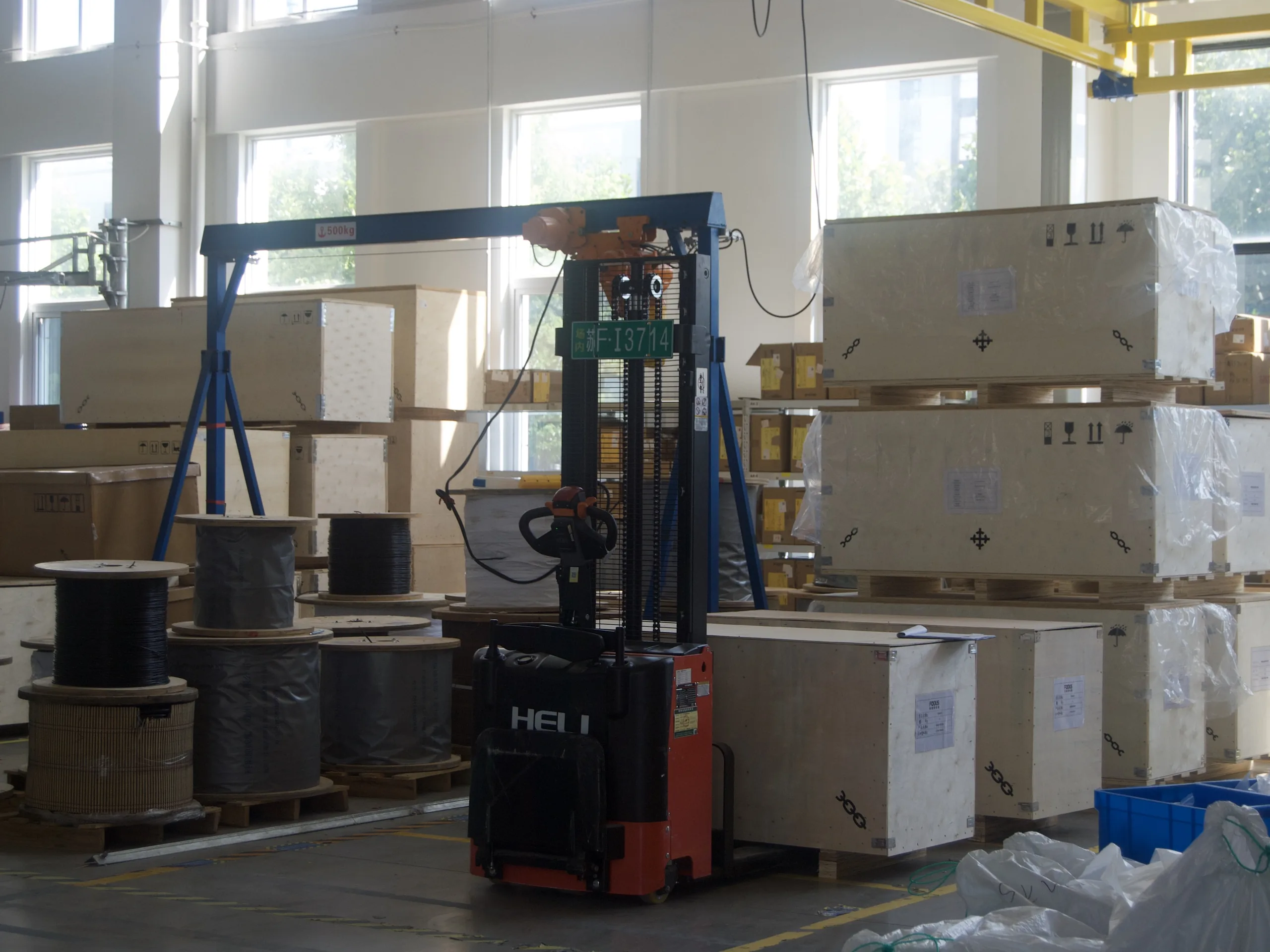
- Receive the packing list and tracking. Boards travel in anti-static packaging with desiccant, and heavy items in a braced crate.
- Log the parts on arrival. Record the date, the part number and the unit it belongs to, so the next failure starts from a known position.
There is usually no minimum order quantity for dumbwaiter spare parts, which is the practical reason to buy them factory direct. It also means a single board can be sent to a site that a distributor would not visit.
For operators comparing routes to market, the trade-off between direct supply and a local agent is covered in how to choose a dumbwaiter and in the drive comparison guide, because the drive type determines which parts a site should expect to use.
Records, Compliance and Thorough Examination
In many markets the legal duty is not merely to repair a lift but to be able to show that it was maintained, examined and kept in its declared configuration. That last point is the one most often missed when dumbwaiter spare parts are fitted.
- Keep a log of the dumbwaiter spare parts fitted. Date, part number, the unit it went into, and who fitted it. This is the record an inspector or insurer will ask for after an incident.
- Keep the declaration and the technical file. A CE-marked unit is placed on the market in a defined configuration; the CE marking requirements set out what the manufacturer must document, and a part that changes the safety function should be supplied by the original manufacturer.
- Book the statutory examination. In the United Kingdom, lifting equipment including a dumbwaiter falls under the Lifting Operations and Lifting Equipment Regulations, and the practical guidance on how examination and testing are carried out is set out in the HSE thorough examination guide. Comparable regimes exist across the EU, the Gulf and most of Asia.
- Align the records with the maintenance schedule. Examination dates, service dates and parts replacement dates should sit in one file, not three.
The reason this matters to a buyer of dumbwaiter spare parts is commercial as much as legal. A lift with a clean parts and examination record is easier to insure, easier to hand over with a lease, and easier to sell.
Sites that keep poor records usually discover the cost of dumbwaiter spare parts in the form of a failed inspection rather than a failed lift. The country-by-country duty is summarised in dumbwaiter regulations, and the period between examinations is set out in our inspection and maintenance schedule.
Frequently Asked Questions
How long does it take to get dumbwaiter spare parts?
A stock item of dumbwaiter spare parts can normally be dispatched from the factory within three working days of the order being confirmed. Express courier delivery then takes around four to eight days to most markets, and consolidated sea freight three to six weeks.
The realistic planning figure is therefore two to three weeks for a fast-shipped part, and that is the number to use when deciding what to hold on site.
Should I buy dumbwaiter spare parts with the machine?
Yes, for the critical set. A programmed control board, two door interlock switches, a contactor set, guide inserts, a limit switch and a fuse kit add very little to the unit price and travel in the same crate. Buying them later means paying separate freight and clearing a separate customs entry for parts that weigh almost nothing.
Can I fit a third-party control board or contactor?
Contactor and relay equivalents can sometimes be substituted if the coil voltage and contact rating match exactly. A control board generally cannot, because it is programmed for the drive, the number of stops and the door configuration of your unit. Fitting an unmatched board is the most common way to turn a small fault into an unsupported machine.
Why does my dumbwaiter stop between floors?
In most cases the controller has lost confirmation of the car position. That points to a levelling or limit switch, a dirty guide area, or a loose terminal rather than to the drive. Check the switches and connections first, measure the supply under load, and only then consider replacing a part. See the fault family table above for the sequence.
Are consumables covered by the warranty?
No. Dumbwaiter spare parts with a defined wear life, such as guide inserts, door rollers, batteries and lamps, are excluded, along with damage from overload, misuse, unstable supply voltage and hose-down cleaning. The warranty covers manufacturing defects in supplied components and factory workmanship, normally for twelve months from commissioning or a longer period from shipment, whichever ends first.
Next Step
Dumbwaiter spare parts are not a maintenance afterthought. They are the difference between a lift that is back in service before the next service and a lift that is down for three weeks while a courier clears customs. Stock the consumables, hold one programmed board, photograph the machine before you need to describe it, and write the warranty boundary into the order rather than the manual.
ServLifts builds non-passenger dumbwaiters from 100 kg to 250 kg in Wujiang, Suzhou, China, and supplies spare parts against the production record using the model code and serial number. Tell us the model, or send the rating plate photograph, and we will confirm the part, the price and the dispatch date: contact ServLifts.
[…] three levels are set out in the dumbwaiter maintenance guide, including the lubrication points, the spare parts worth holding on site, and the warning signs that a guide shoe or a rope needs replacement rather […]
[…] on total cost rather than unit price should read the dumbwaiter running cost guide and the spare parts guide, which cover what the lift costs to own after the […]
[…] Maintenance support varies by supplier. Buy from a global elevator major such as Otis or Hitachi and servicing usually means their local contract — reliable, but priced for passenger-elevator scale. With a specialized dumbwaiter manufacturer, the same technical expertise is reachable directly from the factory, often with remote diagnostics and faster spare parts. […]