Welcome to ServLifts Official Website

Dumbwaiter Inspection & Maintenance Schedule: What to Check and When (US, UK & EU)

Table of Contents
- Quick Answer: Dumbwaiter Inspection Is Not Dumbwaiter Maintenance
- Your Complete Dumbwaiter Inspection and Maintenance Schedule
- Daily, Weekly and Monthly Tasks Between Dumbwaiter Inspections
- Annual Dumbwaiter Inspection: How the US, UK and EU Compare
- The 6-Month Trap: When a Goods-Only Dumbwaiter Becomes a People Lift
- Who Is Legally Allowed to Inspect a Dumbwaiter
- Dumbwaiter Inspection Records: What to Keep and For How Long
- What Inspectors Look For: The Four Most Common Violations
- Residential vs Commercial Dumbwaiters: Different Rules
- What to Confirm Before You Order
- Frequently Asked Questions
- Conclusion
A restaurant dumbwaiter is inspected once a year and cleaned once a month. These two activities look similar on a work order, and almost every buyer treats them as one item. They are not.
Dumbwaiter inspection is a legal duty carried out by an independent specialist. Maintenance is routine care carried out by whoever owns the building or holds the equipment contract. Different people, different frequencies, different paperwork — and mixing them up is one of the most common reasons a food lift gets shut down by an inspector.
In the United States, most states require an annual periodic dumbwaiter inspection covering every unit in commercial use, and a handful of large cities require two per year. In the United Kingdom, LOLER 1998 requires a thorough examination every 12 months for a goods-only lift, and every 6 months the moment a person can ride it. Neither rule is satisfied by a good maintenance programme, no matter how thorough that programme is.
This guide sets out a complete dumbwaiter inspection and maintenance schedule for buyers and facility managers working in the US, UK and EU markets. It covers what to check each day, which checks carry legal weight, who is allowed to sign them off, and what records an inspector or an insurer will ask to see. It is written for restaurant groups, hotels, hospitals, care homes and residential developers who are specifying or operating a food lift.
Quick Answer: Dumbwaiter Inspection Is Not Dumbwaiter Maintenance
Short version: a dumbwaiter inspection is a legal duty, and the dumbwaiter inspection report is the proof that it happened.
Dumbwaiter inspection is a formal assessment of safety-critical components — ropes, brakes, interlocks, governors, buffers, guides — performed by a competent person who is independent of the company that maintains the equipment, and recorded in a written report. Dumbwaiter maintenance is the routine cleaning, lubrication, adjustment and minor repair that keeps a food lift reliable between dumbwaiter inspections. Both are required. Neither replaces the other.
The separation matters more than it first appears. In the UK, HSE guidance is explicit that the person who carries out the thorough examination should not be the same person who services or maintains the lift, because that person would be assessing their own work. The same logic drives the US requirement that dumbwaiter inspections be performed by a licensed inspector or a QEI-certified specialist rather than by the maintenance technician who visits the site every month.
| Point of comparison | Dumbwaiter inspection | Dumbwaiter maintenance |
|---|---|---|
| What it is | Formal legal examination of safety-critical parts | Routine care that keeps the unit reliable |
| Who performs it | Independent competent person or QEI inspector | Your own staff or a maintenance contractor |
| Why it exists | Legal compliance and public safety | Uptime, lifespan and warranty validity |
| Typical frequency | Every 12 months for goods-only lifts; every 6 months if a person can ride | Daily checks, monthly servicing, quarterly deep service |
| Written output | Thorough examination report or dumbwaiter inspection certificate | Service log and maintenance records |
| Can the same person do both? | No — independence is a legal requirement in the UK and standard practice in the US | Not applicable |
A building that services its dumbwaiter diligently but never commissions an independent examination is not compliant, even though the equipment may be in excellent condition. A building that passes its annual examination but skips monthly lubrication will pass this year and fail sooner or later on wear. The two duties run in parallel.
For a detailed walkthrough of the maintenance side — lubrication points, chain and rope care, guide rail cleaning and spares to keep on hand — see the dumbwaiter maintenance guide, which covers the day-to-day work in full.
Your Complete Dumbwaiter Inspection and Maintenance Schedule
The table below combines both duties into a single operating schedule. It is the practical answer to the question most buyers are really asking: what has to happen, how often, and who has to be there. Frequencies shown are the legal minimums or the manufacturer-standard baseline; a competent person can shorten them where usage, environment or condition warrant it.
| Interval | Task | Who performs it | Legal or standards basis | Record produced |
|---|---|---|---|---|
| Daily | Visual check of car, doors and landing; listen for unusual noise; confirm interlock function | Trained operator or kitchen staff | Manufacturer maintenance control programme | Signed daily check sheet |
| Weekly | Clean guide rails and door tracks; remove food debris and grease build-up | In-house maintenance | Manufacturer maintenance control programme | Weekly log entry |
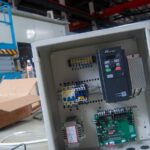
| Monthly | Lubricate guides and moving parts; check chain tension and rope condition; visual check of control panel and wiring | In-house or maintenance contractor | Manufacturer maintenance control programme | Monthly service record |
| Quarterly | Full preventive service: brake check, door operator adjustment, safety device function test | Maintenance contractor | ASME A17.1 maintenance control programme (US); PUWER 1998 (UK) | Contractor service report |
| Every 12 months | Statutory examination of safety-critical components by an independent specialist | Competent person / QEI-certified inspector | LOLER 1998 Regulation 9 (UK); state elevator code adopting ASME A17.1 (US) | Thorough examination report or dumbwaiter inspection certificate |
| Every 60 months | Full-load safety test at 125% of rated load, witnessed where the jurisdiction requires it | QEI inspector with the maintenance contractor present | ASME A17.1 Category 5 test (US) | Category 5 test report |
| Before first use | Acceptance examination after installation or after assembly on site | Independent competent person | LOLER 1998; ASME A17.1 acceptance inspection | Acceptance examination report |
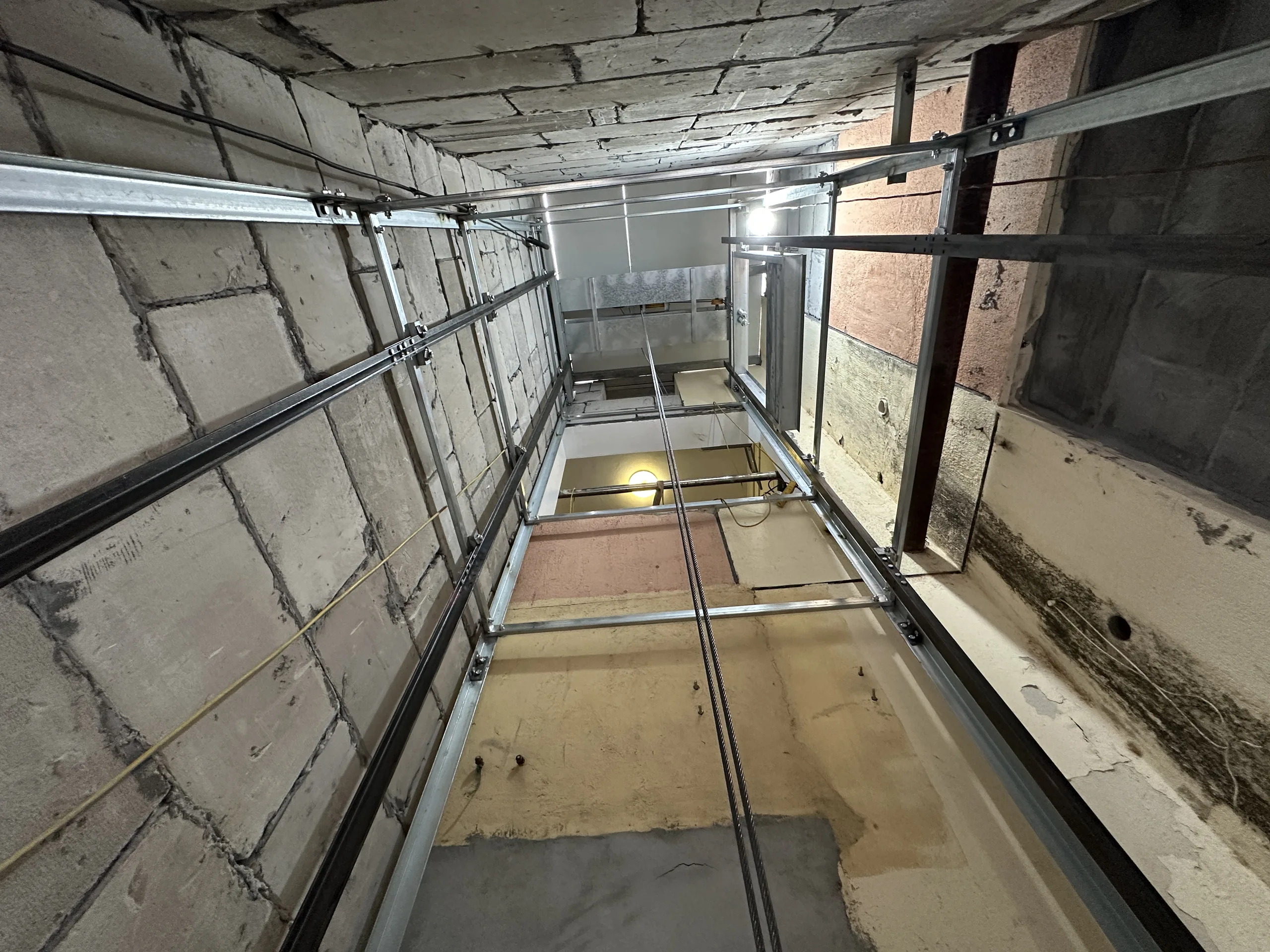
Two rows in this table carry legal weight and cannot be delegated to routine staff: the 12-month statutory examination and the 60-month full-load test. Everything above them is good practice and warranty protection. The rows below them — the 12-month examination and the acceptance examination — are what a certificate of operation depends on.
Which of these obligations actually applies depends on the market the dumbwaiter is installed in. The dumbwaiter regulations guide for the US, UK and EU explains how the boundaries are drawn between a dumbwaiter, a service lift and a passenger lift, and why a 0.15 m/s speed rating can move a project into a heavier rule set.
Daily, Weekly and Monthly Tasks Between Dumbwaiter Inspections
Most of the day-to-day care of a dumbwaiter sits inside the building’s own team. None of it requires certification, and all of it reduces the chance of a failed examination.
Daily checks. Before the first service, a trained member of staff should confirm that the car travels smoothly, that the landing doors close and latch, that the call buttons respond, and that nothing inside the car has been loaded beyond its rated capacity. Kitchens are busy, and the most common daily-use errors — overloading the car and propping a shaft door open — are both safety issues rather than wear issues.
A short signed check sheet is enough. The value lies in the habit and the record, not the paperwork.
Weekly tasks. Guide rails and door tracks collect flour, grease and food debris in any working kitchen. A weekly wipe-down and debris removal prevents the intermittent jamming and rough running that staff often report long before the equipment actually fails. Loose debris in a door track also prevents a door from latching properly, which is a defect an inspector will flag.
Monthly servicing. Lubrication of guides and moving parts, chain tension checks, rope condition checks and a visual dumbwaiter inspection of the control panel and wiring form the standard monthly routine. Manufacturers publish a specific lubricant specification and a list of points to be greased; using the wrong product — a general-purpose spray instead of the specified lubricant — can do more harm than skipping the task.
The detailed steps for all three levels are set out in the dumbwaiter maintenance guide, including the lubrication points, the spare parts worth holding on site, and the warning signs that a guide shoe or a rope needs replacement rather than adjustment.
What none of these tasks achieves is legal compliance. A dumbwaiter that is cleaned, lubricated and adjusted every month by capable in-house staff has still not been inspected in the sense that US state codes and UK regulations mean. That is a separate appointment, with a separate specialist, producing a separate certificate.
Annual Dumbwaiter Inspection: How the US, UK and EU Compare
All three major markets require periodic third-party examination of a commercial dumbwaiter. The intervals, the terminology and the paperwork differ, and a buyer specifying equipment for more than one market needs to know which rule set applies to each site.
United States: ASME A17.1, Category 1 and Category 5
In the United States, a dumbwaiter is conveyance equipment governed by ASME A17.1 and the state or municipal elevator code that adopts it. The code defines a dumbwaiter as a hoisting and lowering mechanism with a car floor area not exceeding 9 square feet, a compartment height not exceeding 4 feet, and a rated load not exceeding 500 pounds. Equipment that matches this definition is subject to dumbwaiter inspection regardless of the fact that it carries plates rather than people.
The most common requirement is an annual periodic dumbwaiter inspection, carried out by a licensed elevator inspector or a QEI-certified specialist and evidenced by a certificate of dumbwaiter inspection that must be posted at or near the equipment. A minority of states permit biennial dumbwaiter inspection in low-risk commercial settings, while dense urban jurisdictions including New York City, Chicago and Boston require twice-yearly dumbwaiter inspection.
A few states have no statewide elevator law at all, in which case enforcement falls to the county or municipality.
Alongside the periodic dumbwaiter inspection, ASME A17.1 sets two test categories. Category 1 tests are performed every 12 months with an empty car at inspection speed and confirm that the safety devices operate correctly. Category 5 tests are performed every 60 months and are far more demanding: the car runs at 125 percent of its rated load so that the safety gear, governor and buffers can be verified under full load.
Missing a Category 5 deadline is one of the fastest routes to having a unit taken out of service.
The code also requires a written Maintenance Control Program (MCP) for every unit. The MCP sets out the examinations, tests, cleaning, lubrication and adjustments the equipment will receive, together with the interval for each task. It must be available on site, and it belongs to the building rather than to the maintenance contractor. An inspector will ask for the MCP and for the maintenance records that prove it was followed.
United Kingdom: LOLER and the 12-Month Thorough Examination
In the United Kingdom, LOLER 1998 governs lifts used at work, and a dumbwaiter or service lift falls within its scope. Regulation 9 requires a thorough examination by a competent person at least every 12 months for equipment used only to move goods, and at least every 6 months for any equipment used to lift people.
A thorough examination is not a service visit. It is a systematic assessment of the safety chain — suspension ropes and their terminations, the traction sheave or hydraulic ram, the brake, buffers and counterweight, the overspeed governor and safety gear, and every landing and car door interlock — carried out by someone with the competence and independence to judge the equipment. Where a defect is found, the report classifies it and sets a remediation deadline.
An examination is also required before first use, unless the equipment carries a valid Declaration of Conformity less than one year old and was not assembled on site. Where a lift is assembled or installed on site, it must be examined before use to confirm that the installation itself is correct and safe. Additional examinations are required after an accident, after a dangerous occurrence, after a significant change in conditions of use, or after a long period out of service.
The full requirements are set out in the HSE guidance on LOLER, which also explains how the duty to examine interacts with the separate duty to maintain equipment in efficient working order.
European Union: Member State Regimes
The European Union does not impose a single dumbwaiter inspection interval. The Machinery Directive and, more recently, the Lifts Directive and the Machinery Regulation set the conditions under which equipment may be placed on the market, while periodic inspection regimes for equipment in service are set at member state level. France, Germany, Spain and Italy each operate their own periodic examination systems with their own intervals and their own recognised inspection bodies.
What is common across the EU is the requirement that a dumbwaiter installed in a workplace be examined periodically by a recognised inspection body, and that a Declaration of Conformity and a CE mark be in place before the equipment enters service. The European Commission guidance on lifts sets out the market framework that the national regimes build on.
| Market | Governing rules | Goods-only interval | If a person can ride | Who performs the dumbwaiter inspection |
|---|---|---|---|---|
| United States | State or municipal elevator code adopting ASME A17.1 | 12 months in most states; 24 months in a few; 6 months in some large cities | Same equipment, stricter design and testing requirements | Licensed elevator inspector or QEI-certified specialist |
| United Kingdom | LOLER 1998, Regulation 9 | 12 months | 6 months | Competent person, independent of the maintenance provider |
| European Union | National periodic inspection regimes, on a common market-access framework | Set by member state | Set by member state | Recognised inspection body |
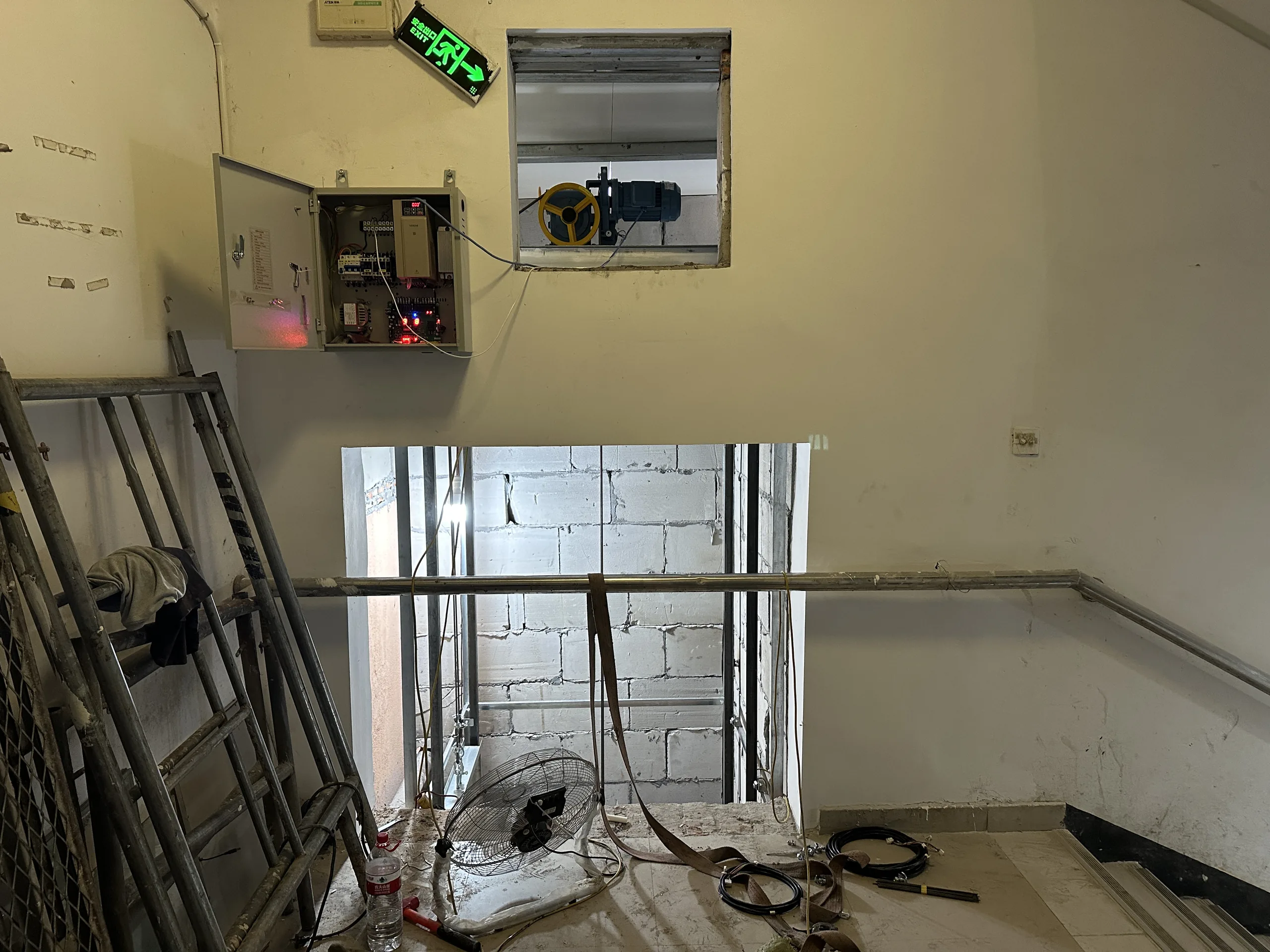
The practical consequence for a buyer operating in more than one market is that the same model of dumbwaiter can sit under three different dumbwaiter inspection schedules. Specifying equipment with a documented maintenance control programme and a complete technical file makes it significantly easier to satisfy whichever regime applies.
The 6-Month Trap: When a Goods-Only Dumbwaiter Becomes a People Lift
The single most expensive misunderstanding in UK dumbwaiter compliance is the assumption that a food lift automatically qualifies for the 12-month examination interval. It does not. The interval depends on whether a person can ride the equipment, not on what the equipment was purchased for.
LOLER applies the 6-month interval to any lift used to carry people. A dumbwaiter that is genuinely goods-only — where the design, the access control and the operating procedure all prevent anyone from riding it — falls to 12 months.
But if staff occasionally ride the car to move between floors faster during a busy service, the equipment is being used to lift people, and the shorter interval applies from that point. HSE takes the conservative reading where the position is unclear: if there is any chance a person could be lifted, treat the lift as subject to the 6-month rule.
The distinction is therefore operational rather than mechanical. Three controls make a goods-only claim defensible:
- Signage on the car and at every landing stating that riding the dumbwaiter is prohibited.
- Access control that physically prevents a person from entering the car — a car too small to enter, or an interlocked control arrangement.
- A written procedure, reinforced in staff induction and refresher training, that documents how the prohibition is maintained.
Where those controls are in place and recorded, the 12-month interval stands. Where they are absent, an insurer or an enforcing authority is entitled to treat the equipment as a people-carrying lift, with the shorter examination interval and the heavier design requirements that come with it. The dumbwaiter regulations guide covers the related definitions that decide whether a unit is treated as a dumbwaiter or as a service lift in the first place.
Who Is Legally Allowed to Inspect a Dumbwaiter
A dumbwaiter examination must be carried out by someone who is both competent and independent. In the UK, the competent person must not be the engineer who maintains the equipment, because that engineer would be assessing their own work. In the US, the dumbwaiter inspection must be performed by a licensed elevator inspector or a QEI-certified specialist, and the maintenance technician who visits monthly does not hold that role.
In practice, three conditions define an acceptable inspector:
- Competence. Practical and theoretical knowledge of the specific equipment type, sufficient to identify a defect and judge whether it affects continued safe use.
- Independence. No commercial interest in the outcome. An inspector employed by the company that also holds the maintenance contract fails this test.
- Authority. The standing to report a defect and require remediation without commercial pressure, including the responsibility to take equipment out of service where a defect is immediate.
Building owners sometimes ask whether they can inspect the equipment themselves. In the UK the answer is no: the examination must be carried out by a competent person, a term the law uses specifically to distinguish that role from servicing and maintenance. In the US, the answer depends on the state, but the general position is that the dumbwaiter inspection must be performed by a licensed inspector or an approved third-party agency.
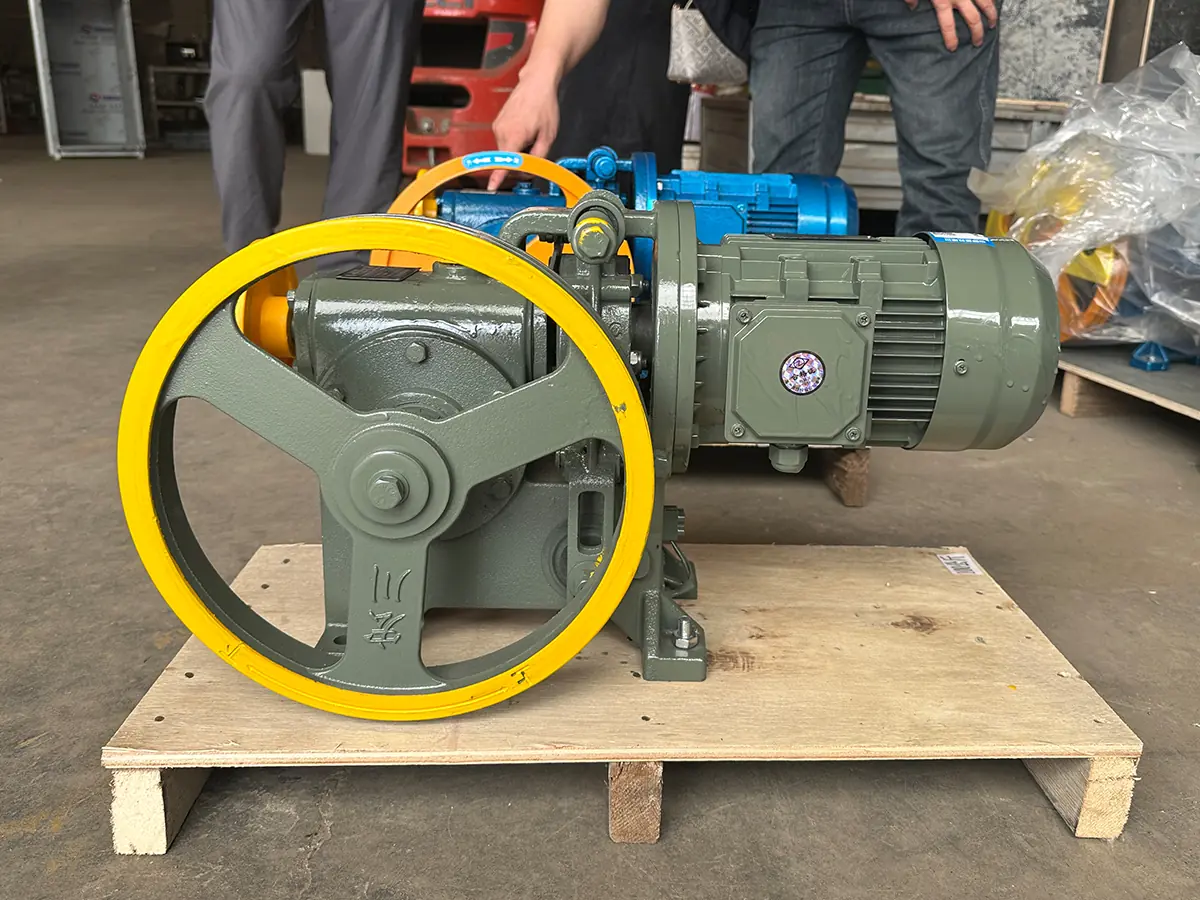
Independence is not a technicality. The examination exists to give the building owner an objective assessment of equipment that a maintenance contractor may have a commercial interest in certifying as sound. Where the same organisation does both, the protective value of the examination largely disappears — a point HSE makes directly in its guidance, and one that insurers and enforcing authorities both act on.
Dumbwaiter Inspection Records: What to Keep and For How Long
The examination produces a document, and the document is as important as the visit. HSE guidance on work equipment and machinery sets out the record-keeping duty that runs alongside the duty to examine. In the UK, a thorough examination results in a report whose required contents are set by the regulations. In the US, the maintenance control programme and the maintenance records must both be available on site.
In both markets, missing paperwork is treated as evidence that the work was never done.
A UK thorough examination report must record the following nine items. An inspector or an enforcing authority will check each one, and a report missing any of them is not a valid record:
- The name and address of the owner or duty holder of the equipment.
- A description of the equipment, including its make, model, type and unique identifier.
- The date on which the examination was carried out.
- The safe working load, matching the rating plate on the equipment.
- Any defects found, each classified by severity.
- The date by which each defect must be remedied.
- The date of the next required examination.
- The name and signature of the competent person who carried out the examination.
- The name and address of the inspection body employing that person.
Defects are classified into three categories, and the category determines what happens next. An immediate defect requires the equipment to be taken out of service until it is remedied, and the report is sent to the enforcing authority. A defect requiring action within a specified timeframe allows continued operation until the stated date, after which the defect escalates. An observation is recorded for attention at the next examination.
Missing a timeframe is treated as a failure to control an identified risk, not as an administrative delay.
| Record | Market | Who holds it | Retention |
|---|---|---|---|
| Maintenance Control Programme (MCP) | US | The building, available on site | Life of the equipment |
| Maintenance and service records | US | The building, available on site | Life of the equipment |
| Certificate of dumbwaiter inspection, posted on site | US | Displayed at or near the equipment | Current certificate at all times |
| Thorough examination reports | UK | Duty holder | Retain for the life of the equipment and beyond |
| Declaration of Conformity and technical file | UK and EU | Building owner or operator | Life of the equipment |
Retention periods are often read as a minimum rather than as guidance. A report from four years ago is the document that proves a defect was identified and corrected, which matters if a claim is made about a failure that occurred later. Keeping the full examination history for the life of the equipment, and for a period after it is decommissioned, is the prudent approach.
What Inspectors Look For: The Four Most Common Violations
Dumbwaiter violations cluster around a small number of issues. Knowing them in advance turns an examination from an unpredictable event into a scheduled check with a predictable outcome.
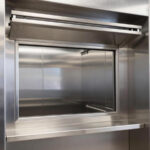
1. A fire-rated shaft door that is missing, damaged or propped open. Every opening into a dumbwaiter shaft requires a fire-rated, self-closing door, and this is the single most common violation found on restaurant dumbwaiters. Kitchen staff wedge doors open during service, remove self-closing hardware for convenience, or replace a fire-rated door with an ordinary cabinet door. An open shaft door is an open chimney in a fire, and inspectors treat it as a shutdown-level finding.
2. No current dumbwaiter inspection certificate. The certificate must be posted at or near the equipment. Where there is no certificate, the working assumption is that the unit has never been inspected. Restaurants that inherit a dumbwaiter when they take over a space are the usual source of this finding, because nobody thought to ask whether the equipment was registered.
3. Overloading. Dumbwaiters are typically rated between 100 and 500 pounds. Kitchens that use the car daily tend to push the limit — stacking heavy sheet pans, sending up cases of product, or loading more than the car was designed to carry. Overloading wears ropes, strains the motor and can cause the car to slip or the safety gear to engage.
4. Unauthorised modification. A shelf added inside the car, replacement control buttons, a modified door closer or a relocated landing station all count as alterations. In most jurisdictions an alteration requires a permit and a new acceptance inspection before the equipment returns to service. Unrecorded modifications also invalidate the assumptions on which the last examination was based.
| Self-check before the inspector arrives | Why it matters |
|---|---|
| Every shaft door closes and latches on its own, with hardware intact | Most common violation; shutdown-level finding |
| Current dumbwaiter inspection certificate posted at or near the equipment | Absence is treated as never having been inspected |
| Rated load clearly marked on the car and respected in daily use | Overloading accelerates wear and can trip safety devices |
| No unrecorded modifications to the car, doors or controls | Alterations require a permit and a new acceptance inspection |
| Maintenance records and MCP available on site | Inspectors ask for the plan and the proof it was followed |
| Pit clean, dry and free of stored items | Pit condition is examined on every visit |
| Machine space clear, with equipment accessible | Restricted access prevents a full examination |
All four violations share a common cause: the equipment is treated as a kitchen appliance rather than as regulated conveyance equipment. A dumbwaiter moves between floors inside a shaft, which is what makes it regulated. Once that is understood, the day-to-day discipline that prevents these findings becomes routine.
Residential vs Commercial Dumbwaiters: Different Rules
Rules that apply to a restaurant dumbwaiter do not automatically apply to a dumbwaiter in a private home. Several US states exempt single-family residential units from periodic dumbwaiter inspection requirements, and a handful of other exemptions exist for units that serve a single floor or operate without a motor. A residential dumbwaiter in a private house is frequently outside the mandatory dumbwaiter inspection regime altogether.
Exemption from dumbwaiter inspection is not exemption from care. Three practical considerations push residential owners towards a voluntary annual check anyway:
- Warranty conditions. Most manufacturers make warranty coverage conditional on maintenance being carried out at the specified intervals. Skipping the annual check can void a claim on a drive unit or a control board.
- Insurance. Where a dumbwaiter is installed in a property used for short-term rental or as a care setting, insurers increasingly ask about dumbwaiter inspection and maintenance history.
- Failure cost. A residential dumbwaiter that fails mid-service is expensive to repair and disruptive to fix. A specialist check once a year is a fraction of the cost.
Where a dumbwaiter sits in a building that is used for business — a bed and breakfast, a guesthouse, a care home, a small commercial kitchen — the workplace rules apply and the equipment is no longer in the residential exemption. The dividing line is how the building is used, not the size of the building. Residential owners planning an installation can find the equipment-side considerations in the residential dumbwaiter guide.
The general pattern is that commercial installations carry a mandatory annual dumbwaiter inspection and residential installations carry a strong recommendation. Both benefit from the same annual appointment, and scheduling residential checks at the same time as commercial ones is the simplest way to keep neither from slipping.
What to Confirm Before You Order
Dumbwaiter inspection and maintenance obligations are set by law, but the documents that make them manageable are supplied — or not — by the manufacturer. A buyer who confirms the following six points before placing an order avoids most of the compliance friction that appears after installation.
1. A maintenance control programme or service schedule in writing. The programme should list the tasks and intervals, not simply state that the equipment should be maintained. A documented schedule can be handed directly to an inspector.
2. The Declaration of Conformity and technical file. Required for CE-marked equipment entering the EU and relied upon in the UK when a lift has not been assembled on site. The document should be issued with the equipment rather than on request.
3. A clear answer on who performs the acceptance examination. Where the dumbwaiter is assembled or installed on site, an examination before first use is a legal requirement in the UK. Confirm who arranges it and who pays for it.
4. Spare parts availability. Guide shoes, ropes, door hardware and control components are the parts that wear. Confirm that they can be supplied within a reasonable lead time, because a unit waiting for a part is a unit out of service.
5. Warranty terms linked to maintenance. Understand precisely what maintenance the warranty requires, at what intervals, and who is permitted to carry it out. A warranty that requires an approved contractor will shape the operating budget.
6. Documentation for the dumbwaiter inspection regime the site falls under. A site in the UK needs documents that support a LOLER thorough examination. A site in the US needs documents that support the state code and the maintenance control programme. A site in the EU needs the market-access documents for the relevant member state.
The cost of the equipment itself is only one line in the budget. The dumbwaiter price guide covers unit pricing, and the installation cost guide breaks down the site work, but the ongoing examination and servicing cost belongs in the calculation too. For shaft dimensions and clearances that affect both the installation and the accessibility of components for future dumbwaiter inspection, see the dumbwaiter dimensions and shaft guide, and for the wider installation process, the 2026 dumbwaiter installation guide.
ServLifts supplies food lifts and dumbwaiters from a factory in Wujiang, Suzhou, with the technical file, maintenance schedule and spare parts documentation issued as part of the delivery package. For buyers who do not need to pay a global brand premium for a 100 to 500 kg goods lift, that documentation set is often what makes the difference between a straightforward commissioning and a difficult one. Sourcing details are set out in the dumbwaiter manufacturer in China guide.
Frequently Asked Questions
How often is a dumbwaiter inspection required?
A dumbwaiter used commercially is usually inspected every 12 months. In the United States, most states require an annual periodic dumbwaiter inspection under the ASME A17.1-based elevator code, with a few large cities requiring two per year. In the United Kingdom, LOLER 1998 requires a thorough examination every 12 months for a goods-only lift, and every 6 months if the equipment is used to lift people.
Can I do my own dumbwaiter inspection instead of paying an inspector?
No. In the UK, a thorough examination must be carried out by a competent person who is independent of the maintenance provider, and the law uses the term competent person specifically to distinguish that role from routine servicing. In the US, the dumbwaiter inspection must generally be performed by a licensed elevator inspector or a QEI-certified specialist. In-house staff can and should carry out daily, weekly and monthly checks, but those checks do not discharge the legal dumbwaiter inspection duty.
Is a dumbwaiter inspection the same as a service visit?
No. A service visit cleans, lubricates, adjusts and repairs the equipment. A dumbwaiter inspection examines safety-critical components and certifies their condition in a written report. In the UK, a thorough examination is explicitly not a substitute for servicing, and servicing is not a substitute for a thorough examination. Both are required, and they are normally carried out by different organisations.
What is the difference between Category 1 and Category 5 testing?
Category 1 and Category 5 are test categories under ASME A17.1. Category 1 tests are performed every 12 months with an empty car at inspection speed and confirm that safety devices activate correctly. Category 5 tests are performed every 60 months with the car loaded to 125 percent of its rated load, and verify that the safety gear, governor and buffers will arrest a fully loaded car. Your local authority having jurisdiction sets the exact schedule and witnessing requirements.
Do residential dumbwaiters need a yearly dumbwaiter inspection?
Often not. Several US states exempt single-family residential dumbwaiters from periodic dumbwaiter inspection, and further exemptions exist for units serving a single floor or operating without a motor. An annual specialist check is still strongly advisable, because most warranties require maintenance at specified intervals and because the cost of an annual visit is far lower than the cost of a mid-service failure. Where the building is used for business, the commercial rules apply regardless of the size of the equipment.
Conclusion
Dumbwaiter inspection is one of the few obligations that a food lift owner cannot delegate, postpone or substitute with good maintenance. The annual examination is a dated appointment with a named specialist, producing a signed report that an insurer, a health inspector or a building authority may ask to see at any point. Everything else — the daily checks, the monthly servicing, the spares held on site — exists to make that examination uneventful.
The three decisions that determine how smoothly this runs are made well before the equipment is installed: whether the unit is genuinely goods-only and can stay on the 12-month interval; whether the site is in a jurisdiction that requires annual, biennial or twice-yearly dumbwaiter inspection; and whether the manufacturer supplied the technical file and maintenance programme needed to satisfy whichever regime applies.
Buyers who settle those questions at specification stage spend their first year operating the dumbwaiter rather than chasing paperwork for it.
If you are specifying a food lift and want the dumbwaiter inspection and maintenance documentation confirmed before you commit, contact the ServLifts team with your market, load requirement and number of floors, and we will send the technical file and a maintenance schedule matched to the rules your site falls under.
[…] The full regulation picture, including the four most common US violations and the 2027 standard change in detail, is covered in the dumbwaiter regulations guide. The inspection side — frequency, who is legally allowed to inspect, and what records to keep — is set out in the dumbwaiter inspection schedule. […]
[…] Sites that keep poor records usually discover the cost of dumbwaiter spare parts in the form of a failed inspection rather than a failed lift. The country-by-country duty is summarised in dumbwaiter regulations, and the period between examinations is set out in our inspection and maintenance schedule. […]
[…] the unit must be examined, who is allowed to do it, and what records you must keep — see our dumbwaiter inspection schedule. As recommended by OSHA, a documented preventive maintenance program is the foundation of safe […]