Welcome to ServLifts Official Website

Residential Dumbwaiter: The Complete Guide to Home Food Lifts for Modern Living

Modern multi-storey houses are rediscovering a practical luxury that was once reserved for commercial kitchens: the residential dumbwaiter. A residential dumbwaiter is a small electric lift that carries goods — never people — between the floors of a private house.
The same machine is sold under several names: a home food lift, a domestic service lift, or simply a home dumbwaiter. All of them do one ordinary job extremely well: moving the shopping, the laundry, the wine cases or a tray of plates from one floor to another without a trip up the stairs.
This guide is written for homeowners and for the architects, builders and interior designers who specify lifts for them.
It explains what a residential dumbwaiter is, how a dumbwaiter for home use differs from a home elevator, what a home dumbwaiter costs in 2026, the car sizes and shaft space a house actually needs, what installation into an existing home involves, and how to judge whether your property is a good candidate.
The last section answers the questions buyers ask most often, and the answers use the same figures ServLifts publishes on its factory FAQ — standard capacities of 50 kg, 100 kg, 200 kg, 250 kg and 300 kg, standard 2–6 floors, 15–25 working days lead time, and a 12-month warranty on the whole machine.
Table of Contents
- What Is a Residential Dumbwaiter?
- Dumbwaiter for Home Use vs a Home Elevator
- Top Benefits of a Home Dumbwaiter
- Types of Residential Dumbwaiters
- Residential Dumbwaiter Cost: What Homeowners Actually Pay
- Sizes, Capacity and Shaft Space for a Home Dumbwaiter
- Installation: Retrofitting a Dumbwaiter Into an Existing Home
- Safety Features on a Residential Dumbwaiter
- Residential vs Commercial Dumbwaiter
- Residential Dumbwaiter Maintenance and Inspection
- Is a Home Dumbwaiter Right for Your House?
- Frequently Asked Questions
- Get a Residential Dumbwaiter Quote
What Is a Residential Dumbwaiter?
A residential dumbwaiter is a compact vertical transport system built around a small car, a pair of guide rails, a traction or drum drive, and a call button on every landing.
The car is deliberately sized for goods rather than people. A typical residential dumbwaiter for home use carries 50–200 kg in a car measuring 60×60×80 cm to 80×80×100 cm, travels at roughly 0.3–0.5 m/s, and is ordered with two to six stops depending on the height of the house.
The residential dumbwaiter car is low and shallow on purpose. A person cannot stand inside it, which is exactly why these machines are treated as service lifts rather than passenger lifts in most markets.
In the European Union, a residential dumbwaiter built for compliance with EN 81-3, the European standard for service lifts, sits in a different regulatory class from a home elevator — one of the practical reasons a home dumbwaiter costs a fraction of a home lift.
Modern residential dumbwaiters have moved well past the rope-and-pulley dumbwaiters of the 1900s. Today’s home dumbwaiter runs on a geared traction machine or a drum drive, uses a steel or aluminium frame shaft that can be retrofitted into a finished house, and finishes the car in stainless steel, powder-coated steel or a veneer that matches the kitchen joinery.
Dumbwaiter for Home Use vs a Home Elevator
The single most common misunderstanding among homeowners is that a home dumbwaiter is a small home elevator. It is not. A home dumbwaiter carries goods; a home elevator carries people. That one difference changes the car dimensions, the drive, the safety equipment, the regulatory class and the price.
The split is not unique to houses – across the types of elevators sold worldwide, the same line separates every goods-only machine from every passenger-carrying one, and payload rather than size is what draws it.
A dumbwaiter for home use is also the cheaper and less invasive option. A residential dumbwaiter needs a shaft only slightly larger than its car — about 850×850 mm for the smallest home car — plus landing openings of about 700×800 mm, and it generally does not require the deep pit and tall headroom a passenger-carrying home lift needs.
In an existing house, that difference is usually the deciding factor, because the dumbwaiter can be threaded through floor openings that a home elevator cannot use.
| Feature | Residential Dumbwaiter | Home Elevator |
|---|---|---|
| What it carries | Goods only — riding is never permitted | People, and goods |
| Typical capacity | 50–300 kg | 250–400 kg |
| Typical car size | 60×60×80 cm to 100×100×120 cm | From about 90×120 cm |
| Speed | 0.3–0.5 m/s | 0.15–1.0 m/s |
| Shaft footprint | From about 850×850 mm | Similar footprint but with deeper pit and higher headroom |
| Motor size | Generally under 1.5 kW | Typically 2.2–5.5 kW |
| Regulatory class | Service lift (for example EN 81-3 in the EU) | Passenger lift regulations apply |
If you are still weighing the two, our companion article on dumbwaiter vs passenger elevator sets the two machines side by side in more detail, including the load, shaft and cost consequences of each choice.
Top Benefits of a Home Dumbwaiter
Why do more homeowners specify a residential dumbwaiter each year? The benefits go well beyond saving a few trips up the stairs.
1. Save Time and Physical Effort
Carrying grocery bags, laundry baskets or cleaning supplies up two or three flights is slow and physically demanding. A home food lift removes those repeated trips entirely. A residential dumbwaiter turns a five-minute round trip into a thirty-second one, dozens of times a week.
2. Increase Property Value
A professionally installed residential dumbwaiter is a fixed asset, not an appliance. Estate agents treat a built-in service lift as a convenience feature that raises the appeal of a multi-storey home, particularly in the upper segment of the market where buyers already expect smart-home equipment.
3. Support Accessibility and Ageing in Place
For households planning to stay in the same house long term, a home dumbwaiter removes the need to carry meals, medication, laundry and supplies up and down stairs. The AARP HomeFit Guide makes the same point about home modifications: reducing the physical strain of everyday tasks is one of the most effective ways to keep a house workable as its occupants get older.
4. Quiet, Efficient and Out of the Way
A modern residential dumbwaiter runs at under 50 dB — quieter than a normal conversation — and the drive motor is generally rated below 1.5 kW, so running the machine adds very little to a household electricity bill. Because a home dumbwaiter travels inside a shaft, it also takes up no floor space in the rooms it serves.
Types of Residential Dumbwaiters
House lifts are not a single product. ServLifts builds two configurations for homes, and the right choice depends on how the car will be loaded.
Window-Type Home Dumbwaiter
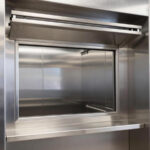
The window-type residential dumbwaiter is the most common choice for houses. Goods are loaded through a wall opening — a hinged or sliding landing door — rather than through a full-height door. Window-type machines integrate into kitchen walls, pantry alcoves and utility rooms with a very small visual footprint, and standard cars start at 60×60×80 cm. Browse the full window-type dumbwaiter range to see the standard car and landing sizes.
Custom Residential Dumbwaiter
Some houses cannot take a standard car. A custom residential dumbwaiter is built to the shaft that exists: car size, door configuration, handing, finish, voltage and control panel are all specified to order. ServLifts supplies free CAD shaft drawings before production so that the builder can prepare the openings to the millimetre.
Residential Dumbwaiter Cost: What Homeowners Actually Pay
The price of a residential dumbwaiter is driven by four things: the size of the car, the number of stops, the door and finish specification, and whether a shaft already exists in the house. Equipment is only part of the budget — shaft preparation, electrical work and installation labour make up the rest.
ServLifts publishes entry-level pricing from its own factory, which is the clearest starting point for a budget. An entry-level 100 kg window-type home dumbwaiter starts at approximately $2,265 for a two-stop unit. A fully customised residential dumbwaiter with premium finishes and additional stops typically lands between $2,500 and $3,500. A complete installed project — equipment, shaft preparation and professional installation — generally falls in the $4,000–$8,000 range depending on complexity.
| Budget item | Figure | What it covers |
|---|---|---|
| Entry-level window-type unit | From about $2,265 | 100 kg car, two stops, standard finish |
| Customised unit | $2,500 – $3,500 | Premium finish, extra stops, non-standard car |
| Shaft, electrical and installation | Budget separately | Steel frame or masonry shaft, dedicated circuit, labour |
| Complete installed project | $4,000 – $8,000 | Equipment plus shaft preparation plus installation |
For a full line-by-line breakdown of what drives those figures — including how car size, stop count and finish each move the number — see the 2026 dumbwaiter price guide.
Sizes, Capacity and Shaft Space for a Home Dumbwaiter
Sizing is where most home projects are won or lost. The car has to be big enough for the loads the household actually moves, and the shaft has to fit inside the floor plan without demolishing it. A residential dumbwaiter is sized from the load first and the shaft second.
| Duty | Car size (W×D×H) | Capacity | Typical household use |
|---|---|---|---|
| Compact | 60×60×80 cm | 50–100 kg | Trays, groceries, parcels between kitchen and dining level |
| Standard | 80×80×100 cm | 100–200 kg | Full grocery loads, laundry baskets, catering trays |
| Large | Up to 100×100×120 cm | 200–300 kg | Bulk shopping, multi-tray service, cases and supplies |
The shaft that houses a home dumbwaiter is sized from the car.
A 600×600×800 mm car needs a shaft of about 850×850 mm; a 1000×1000×1200 mm car needs about 1250×1250 mm. Landing openings run around 700×800 mm per floor, a traction home dumbwaiter needs roughly 2,600–3,000 mm of headroom above the top floor, and the pit below the bottom floor is 300–500 mm deep.
Those are planning figures rather than targets, because the exact numbers depend on the car, the door type and the drive — so if your architect is already drawing the opening, read the full dumbwaiter dimensions and shaft guide before the first line is committed.
Installation: Retrofitting a Dumbwaiter Into an Existing Home
Most residential dumbwaiters are installed into houses that were built without one. The retrofit process is more straightforward than most homeowners expect, and it normally follows four stages.
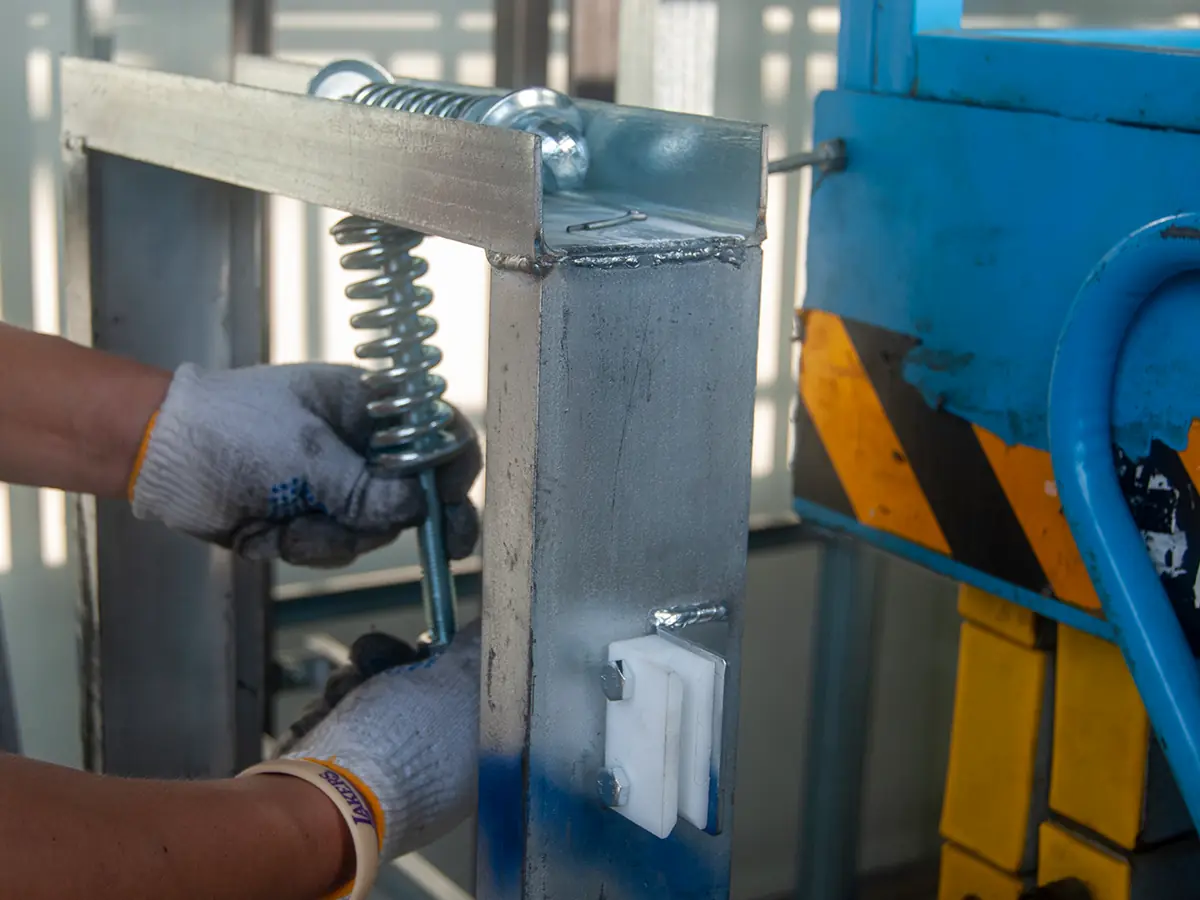
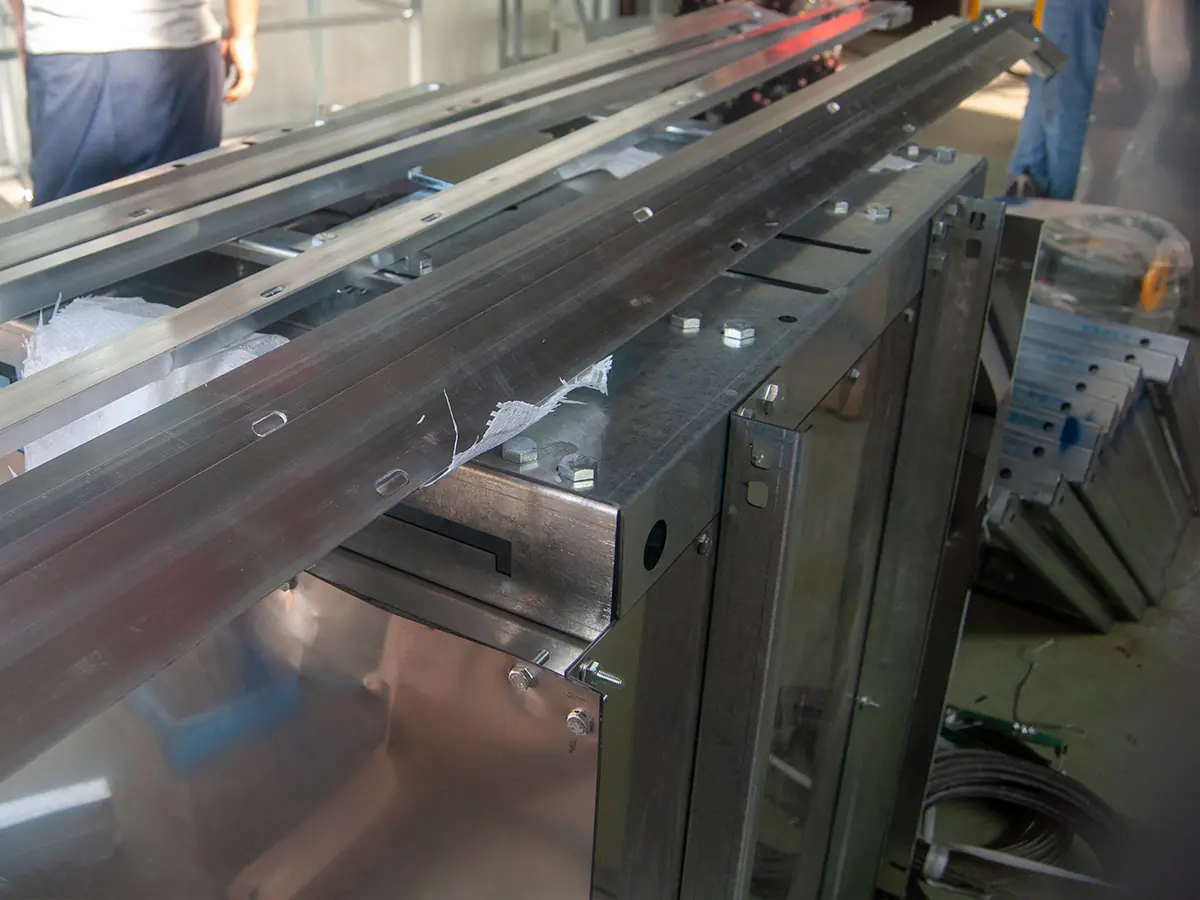
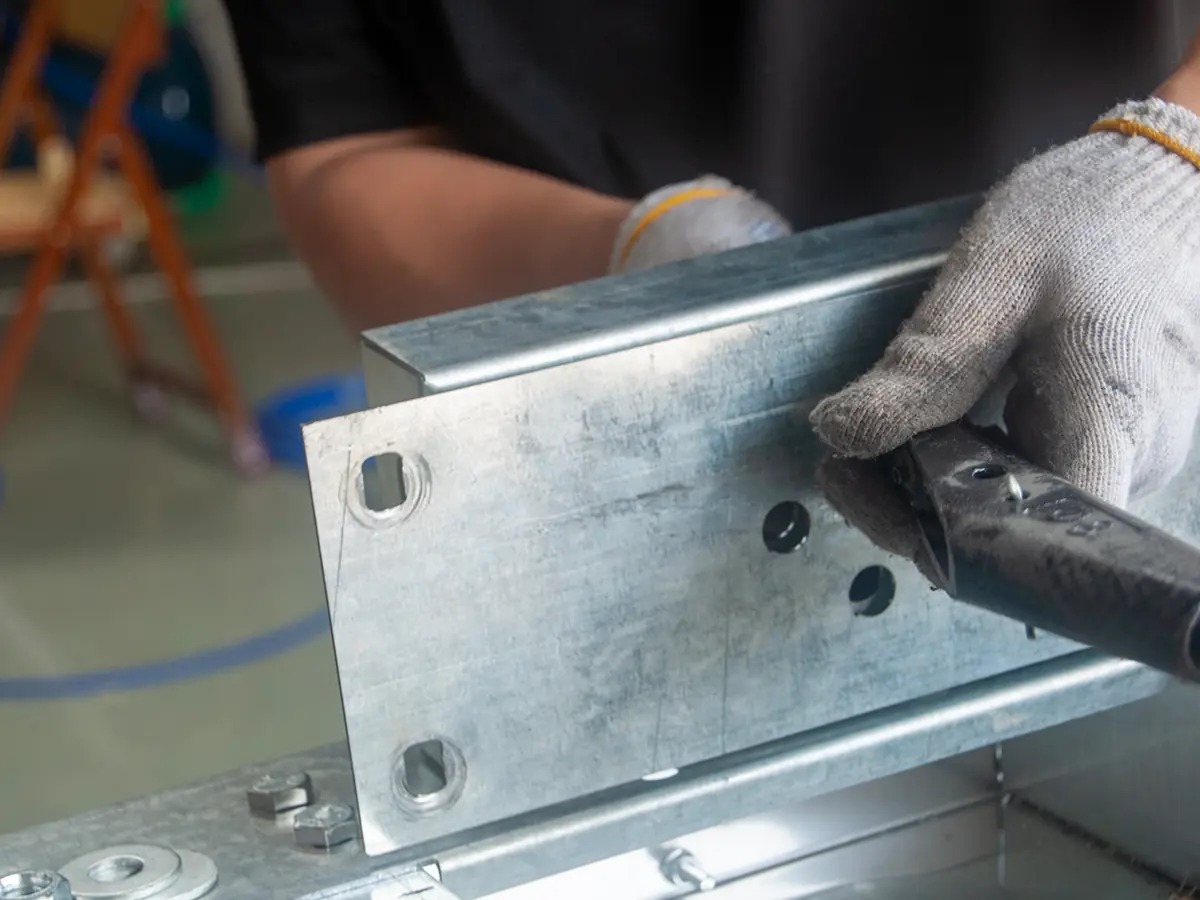
- Shaft preparation. A vertical route is created between the floors. Where no masonry shaft exists, a self-supporting steel frame is the usual answer, erected through aligned floor openings. Shaft plan follows the car — roughly 850×850 mm for a 600×600 mm car, and about 1250×1250 mm for a 1000×1000 mm car.
- Electrical supply. A dedicated circuit is routed to the machine position. ServLifts builds the drive to the voltage of the destination market — 220 V and 380 V are standard, and other voltages can be built to order.
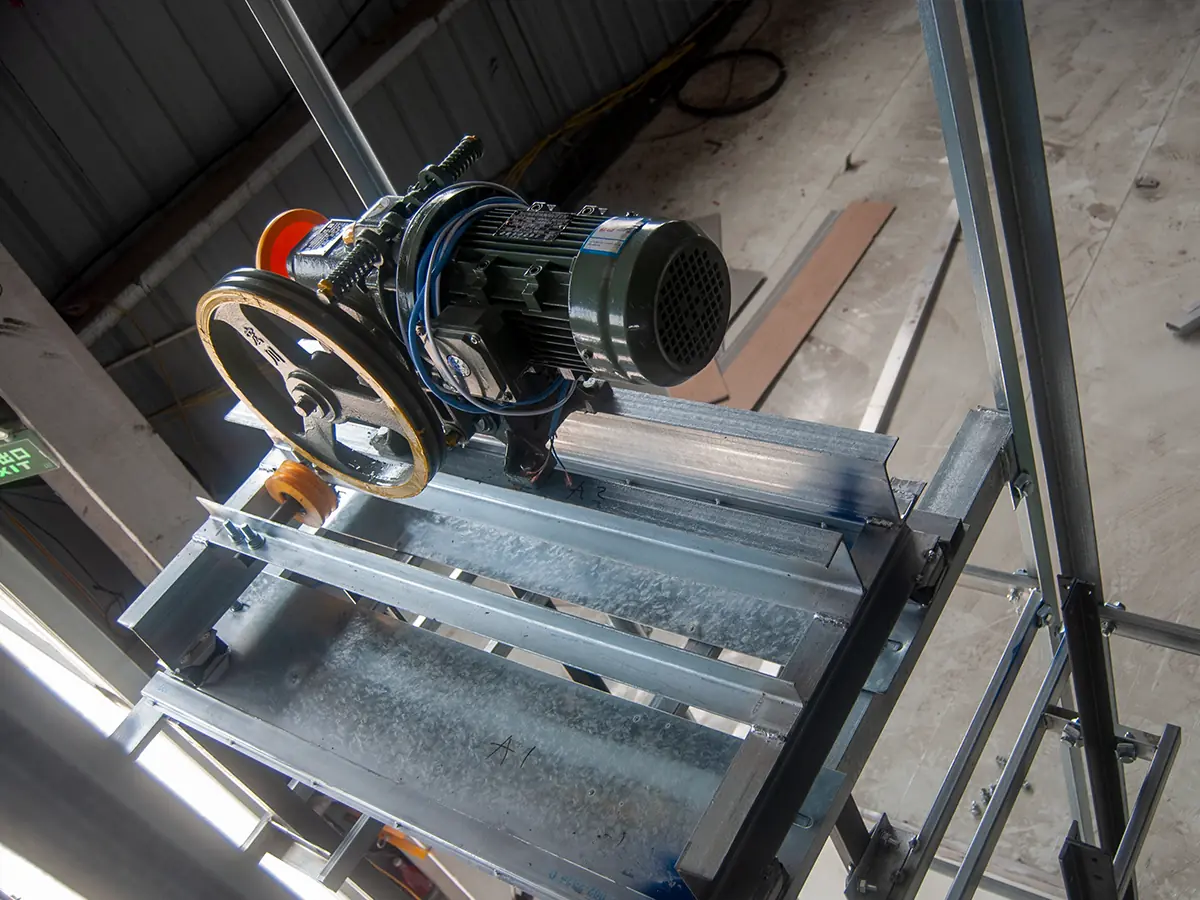
- Mechanical installation. Guide rails, car, drive machine and landing doors are installed and aligned. For a typical two- or three-stop house unit this takes two to five days with a qualified team.
- Testing and handover. The finished home dumbwaiter is load-tested, the door interlocks and safety devices are verified, and the customer receives the documentation for the unit.
ServLifts supplies CAD shaft drawings and installation documentation with every order, and the factory provides remote technical support during commissioning. For the step-by-step detail, including shaft preparation and the sequence on site, read the dumbwaiter installation guide.
Safety Features on a Residential Dumbwaiter
Safety equipment is what separates a properly built residential dumbwaiter from a hoist in a shaft. Every ServLifts home dumbwaiter includes the following:
- Door interlocks. The car cannot move unless every landing door is closed and locked, so no opening can be reached while the car is travelling.
- Overload sensor. The machine will not start if the rated capacity is exceeded.
- Emergency stop. A stop button is provided at each landing and at the car.
- Slack rope detection. If a suspension rope loses tension, the drive halts immediately.
- CE compliance. ServLifts builds to European service-lift safety requirements under the EU machinery and lift safety framework, and ships a declaration of conformity with each unit.
One rule overrides everything else: a residential dumbwaiter is a goods lift and must never carry a person. Teaching that rule to children and guests is part of living with the machine. More on why the car is built this way is in our article on dumbwaiter passenger safety.
Residential vs Commercial Dumbwaiter
The same technology serves houses and commercial kitchens, but the specification differs. Understanding the difference matters if you are buying a home dumbwaiter and comparing it with equipment you have seen in a restaurant.
| Feature | Residential Dumbwaiter | Commercial Dumbwaiter |
|---|---|---|
| Typical capacity | 100–200 kg | 100–250 kg |
| Car size | 60×60×80 cm (compact) | 80×80×120 cm (larger) |
| Noise level | Under 50 dB | Under 60 dB |
| Door style | Manual swing or sliding | Manual or automatic bi-parting |
| Usage frequency | 20–50 cycles per day | 100–300+ cycles per day |
| Finish options | Custom colours and materials | Stainless steel as standard |
The commercial side of the comparison is covered in detail in our guide to commercial dumbwaiter lift applications, which lists the seven settings these units are specified for together with the load and car size each one needs.
Residential Dumbwaiter Maintenance and Inspection
A residential dumbwaiter needs very little attention, but it does need some. The schedule below is the routine ServLifts recommends for a house installation.
- Monthly: a visual check of door seals, guide rails and rope condition.
- Quarterly: clean the guide rails and lubricate moving parts with the lubricant specified by the manufacturer.
- Annually: a professional check of the drive, controller, safety devices and rope tension.
Two resources cover this in more depth. The dumbwaiter maintenance guide walks through each task, and the dumbwaiter inspection and maintenance schedule sets out what to check and when, with the intervals used in the United States, the United Kingdom and the European Union. ServLifts keeps replacement parts in stock so that a home dumbwaiter stays serviceable for its whole working life.
Is a Home Dumbwaiter Right for Your House?
A residential dumbwaiter usually makes sense when at least two of the following describe your house and household.
- The house has three or more floors, or two floors with a long or steep internal route.
- Heavy items — groceries, laundry, supplies — are carried between floors most days.
- Someone in the household has limited mobility, or the household plans to stay in the house long term.
- The kitchen, pantry or utility room has a wall or alcove where a shaft of roughly 850×850 mm to 1250×1250 mm could be formed.
- Meals and drinks are carried between the kitchen and an upper entertaining level.
- The house is being renovated or extended, so a shaft can be built without later disruption.
A home dumbwaiter is a poor fit when the house has no viable vertical route, when only light items ever move between floors, or when someone actually needs a people-carrying lift — in that last case a home elevator is the correct product, not a dumbwaiter.
If the fit does look right, the next question is what to specify, and the home dumbwaiter buying guide sets out the car size, drive, voltage and compliance decisions to settle before you ask anyone for a price.
Frequently Asked Questions
How much does a residential dumbwaiter cost?
An entry-level 100 kg window-type residential dumbwaiter from ServLifts starts at approximately $2,265 for a two-stop unit. A customised machine with premium finishes and extra stops typically costs $2,500–$3,500, and a complete installed project including shaft preparation and installation generally falls between $4,000 and $8,000.
How much space does a home dumbwaiter need?
A typical home dumbwaiter needs a shaft slightly larger than its own car: about 850×850 mm for a 600×600×800 mm car, rising to about 1250×1250 mm for a 1000×1000×1200 mm car. Landing openings run around 700×800 mm, with 2,600–3,000 mm of headroom above the top floor and a pit of 300–500 mm.
Because the smallest car is only 60×60×80 cm, a compact home dumbwaiter can be fitted into a pantry, a utility room or a kitchen alcove.
Can a dumbwaiter be installed in an existing house?
Yes. Most residential dumbwaiters are retrofits. A self-supporting steel frame shaft is erected through aligned floor openings, a dedicated electrical circuit is routed to the machine, and the lift is installed over two to five days. The work does not usually require structural changes to the building.
What is the difference between a dumbwaiter for home use and a home elevator?
A dumbwaiter for home use carries goods only and must never carry a person; a home elevator carries people. The dumbwaiter has a smaller, lower car, a smaller motor, a shallower pit and headroom requirement, and is regulated as a service lift — which is why a residential dumbwaiter costs substantially less than a home elevator.
What lead time and warranty does ServLifts offer?
ServLifts quotes 15–25 working days for standard dumbwaiter lifts, with spare parts shipped within three working days from stock. Every machine carries a 12-month warranty on the whole unit, plus lifetime remote technical support and a full set of spare parts. ServLifts also supplies free CAD shaft drawings and complies with EU CE safety standards.
Get a Residential Dumbwaiter Quote
ServLifts is a dumbwaiter manufacturer and assembler based in Wujiang, Suzhou, in China’s Yangtze River Delta elevator industrial cluster — a region that produces about 65% of China’s elevator output and close to 45% of the world’s.
ServLifts builds complete residential dumbwaiters in its own factory, which is why a home dumbwaiter can be quoted directly, configured to a house rather than picked from a catalogue, and supported with drawings before anything is manufactured.
- Factory-direct pricing. No middle layer between the buyer and the machine, and direct contact with the engineering team.
- Built to your house. Car size, door handing, finish, capacity and voltage are specified to order, with 50 kg, 100 kg, 200 kg, 250 kg and 300 kg as standard capacities.
- Drawings first. Free CAD shaft drawings and installation documentation are issued before production, so the builder works to real dimensions.
- Export logistics. The completed lift ships in a moisture-proof, shock-proof wooden case by sea container, with FOB, CIF and DDP door-to-door terms available.
- After-sales support. A 12-month warranty on the whole machine, lifetime remote technical support and spare parts kept in stock.
To size a residential dumbwaiter for a specific house, send the floor heights, the intended load and the available shaft position to the ServLifts engineering team. Request a residential dumbwaiter quote or browse the full dumbwaiter product range to compare car sizes, capacities and finishes before you specify.