Welcome to ServLifts Official Website

Asia Hotel Boom 2026: Best Dumbwaiter Specification Guide

Asia-Pacific hotel construction is running at a record high. Lodging Econometrics counted 2,684 projects and 473,560 rooms in the pipeline at the close of Q3 2026, up 19% by project count year on year. Every one of those kitchens, banquet floors and housekeeping departments will need vertical transport for food, linen and supplies. The dumbwaiter specification is rarely the largest line in the budget, but it is one of the easiest to get wrong, because the decisions that fix it are made long before anyone places an order.
On this page
- Quick answer
- The 2026 pipeline
- Two pipelines moving apart
- Why a hotel kitchen needs its own lift
- The specification window
- Specification checklist
- What a late order costs
- Lead time and delivery
- Country notes
- FAQ
- Your next step
Quick Answer
A dumbwaiter specification for a hotel project normally fixes five things: load, number of stops, car size, drive type and power supply. Getting those five into the structural drawings before the shaft is cast is what separates a clean installation from an expensive retrofit. Where mains power at the shaft is not available, a manual dumbwaiter takes the circuit out of the specification entirely.
- Load: 200–300 kg for banquet and room-service trolleys; 100 kg for documents and small linen loads.
- Stops: 2–6 in most hotels, serving a production kitchen plus service floors.
- Car size: sized to the largest trolley or tray the property expects to move.
- Power: 220 V single-phase or 380 V three-phase, matched to the drive and destination grid.
- Lead time: 15–25 working days from confirmed order to shipment, FOB Shanghai or Ningbo.
The 2026 Pipeline: Where Asia’s New Hotel Kitchens Are Going Up
The Asia-Pacific pipeline excluding China reached 2,684 projects and 473,560 rooms at the end of Q3 2026, a record high and a 19% increase in project count over the same quarter a year earlier. Room count grew 9%. Early planning alone accounted for 1,243 projects and 201,940 rooms, which means a large share of the region’s hotel kitchens have not yet been drawn. A dumbwaiter specification can still be written into their structural packages at no extra cost.
| Market | Projects | Rooms | Share of regional projects |
|---|---|---|---|
| India | 1,165 | 153,801 | 43% |
| Vietnam | 279 | 86,192 | 10% |
| Japan | 225 | 30,708 | 8% |
| Indonesia | 197 | 33,314 | 7% |
| Thailand | 171 | 40,963 | 6% |
| Top five | 2,037 | 344,978 | 76% |
Source: Lodging Econometrics, Q3 2026 hotel construction pipeline for Asia-Pacific excluding China.
By city, Bangkok leads with 71 projects and 16,750 rooms, followed by Bengaluru with 59, Mumbai with 53, Jakarta with 49 and Jaipur with 45. Those five cities alone carry a dense cluster of new kitchens, and each one will need a dumbwaiter specification before it opens. The pipeline figures come from the quarterly Asia-Pacific hotel construction report, and the underlying data set is maintained by Lodging Econometrics.
Of the total, 1,007 projects and 197,715 rooms were already under construction at the end of Q3 2026, and a further 434 projects were scheduled to start within twelve months. For the projects already in the ground, the shaft is often cast and the dumbwaiter specification becomes a retrofit question rather than a design decision.
Where the Growth Is: Two Pipelines Moving Apart
For the first time in this cycle the two halves of Asia’s hotel pipeline are moving in opposite directions. The Asia-Pacific region excluding China closed Q3 2026 at a record 2,684 projects and 473,560 rooms. China’s own pipeline is still larger in absolute terms at 3,507 projects and 621,201 rooms, but it edged down from the previous quarter while the rest of the region added 178 projects and 20,588 rooms in the same three months.
For a project team writing a dumbwaiter specification, the split matters more than the headline number, for three reasons.
Growth is concentrated in five markets. India alone holds 1,165 projects and 153,801 rooms, 43% of the regional pipeline and up 39% year on year. Vietnam follows at 279 projects, Japan at 225, Indonesia at 197 and Thailand at 171. Together the top five carry 76% of all projects, so a dumbwaiter specification written for one of these markets will not transfer cleanly to the next. India’s sites are mostly urban core with tight shafts, Vietnam’s are resort-led, and Indonesia’s high-rise work is sized around the room-service trolley rather than a banquet load.
The stage mix differs. Early planning reached a record 1,243 projects in the region, up 26%, while 1,007 projects are already under construction. A specification settled at concept stage costs a design review. The same decision made after the shaft is cast costs core drilling and extra steel. Roughly two thirds of the pipeline is still open to influence, which is the window where a dumbwaiter specification is nearly free to change.
India’s announcements are smaller projects. New project announcements reached 325 projects and 43,482 rooms in Q3, a 44% rise by project count over the same quarter last year, and the increase is driven largely by India, where a large share of announcements are smaller developments. Smaller projects buy differently: one lift, a short decision chain, and a dumbwaiter specification that has to be right the first time because there is no second phase to correct it in.
Why a New Hotel Kitchen Needs Its Own Lift
A hotel kitchen is a vertical problem. Room service runs from a ground-floor kitchen to upper floors, banquet service moves hundreds of covers between a production kitchen and a ballroom, and housekeeping moves linen from a laundry or store to every floor. Moving any of that by hand costs time on every trip and adds manual-handling risk in corridors and stairwells, which is why almost every new hotel kitchen starts with a dumbwaiter specification.
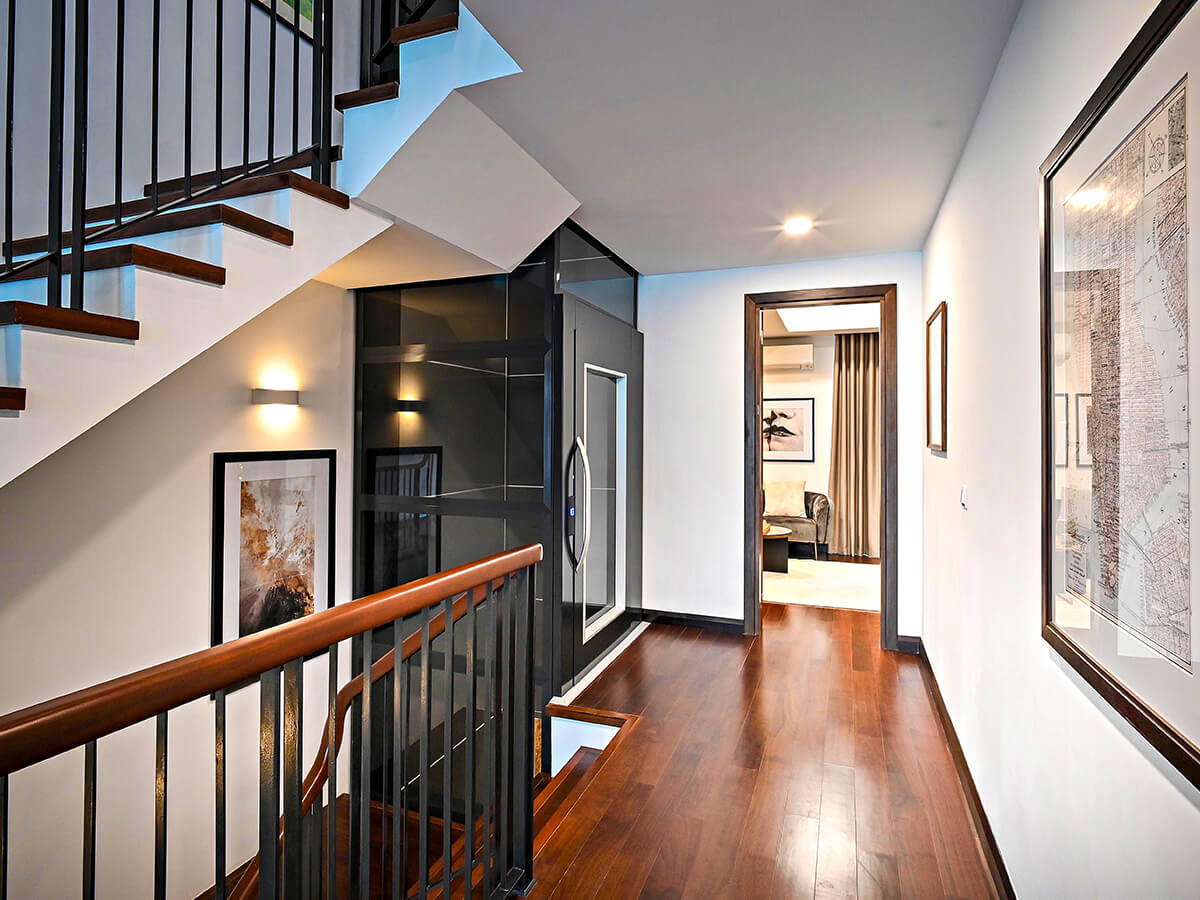
A dumbwaiter solves the problem with a small, dedicated car that carries trays, trolleys or linen bags between two and six floors. The unit is not a passenger lift and is not built to carry people. ServLifts builds traction dumbwaiters sized around the loads a hospitality operation actually moves, which is why the dumbwaiter specification starts from the menu and the housekeeping schedule rather than from the building height. Buyers who are new to the equipment can start with the hotel dumbwaiter guide, and kitchens that serve both a restaurant and a banquet floor usually read the restaurant dumbwaiter guide alongside it.
A 200-room city hotel with a single ground-floor kitchen and a top-floor club lounge is a different problem from a resort with four restaurants spread across a hillside. Both need a dumbwaiter specification; they need different ones.
The Specification Window: When to Lock a Dumbwaiter Specification
A dumbwaiter specification has to be locked at three separate points in a hotel programme, and missing any one of them moves cost and risk into the construction schedule. The table below sets out what has to be decided at each stage and what it costs to leave it late.
| Stage | What has to be fixed | What it costs to miss |
|---|---|---|
| Concept and design | Load, number of stops, travel, car size, drive type, shaft position | Re-planning kitchen flows and late change orders before tendering |
| Structural and shaft casting | Shaft clear dimensions, door opening, pit depth, headroom above the car | Core drilling, extra steel framing, a smaller car than needed, or an external shaft |
| MEP and fit-out | Power supply and capacity, control panel position, ventilation, drainage | Rework of finished walls and cable runs added after tiling |
The cheapest dumbwaiter in a hotel project is the one specified before the shaft is cast. After that point every change is a construction change, and construction changes are priced accordingly. A dumbwaiter specification written during concept design costs a review meeting; the same specification written after the shaft is cast costs structural work, finishes and programme time.
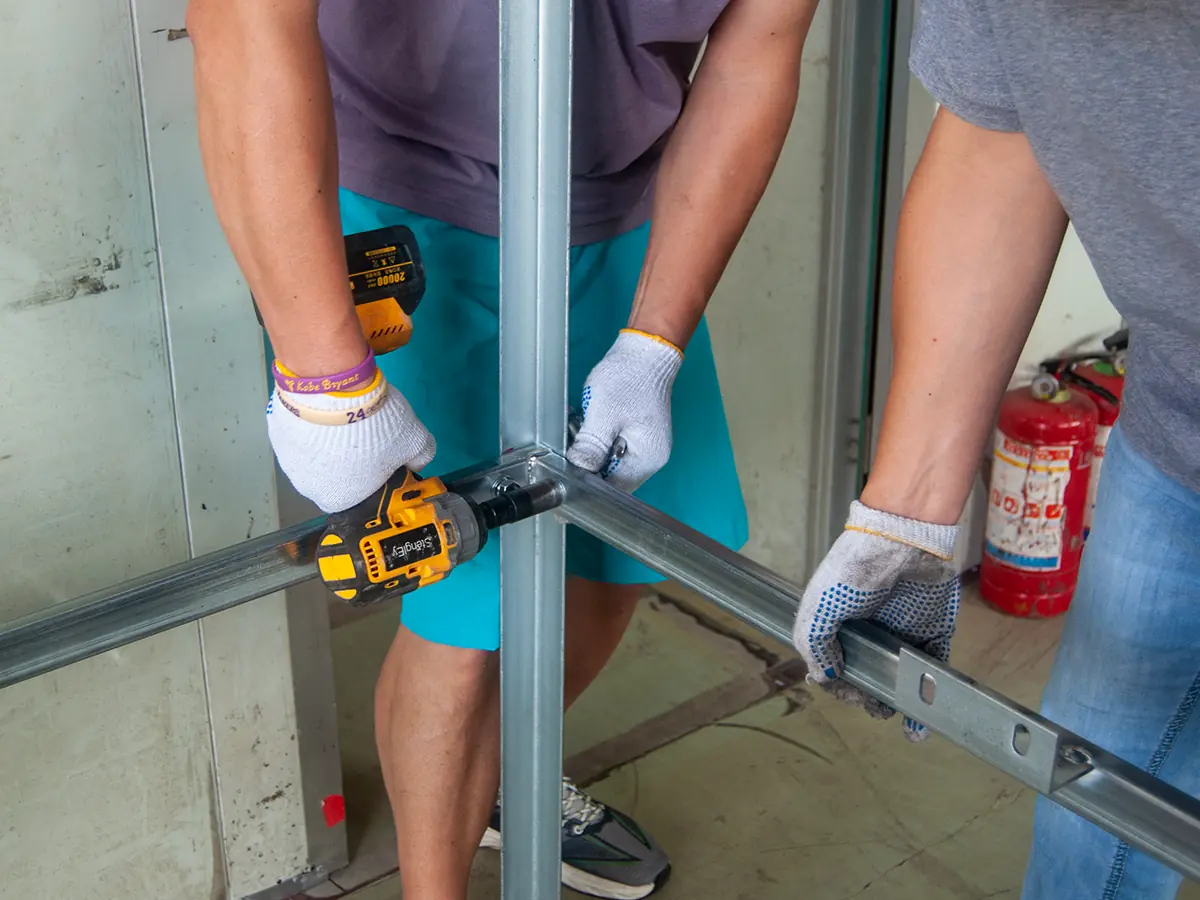
Most projects in the current pipeline are already past the first window. With 1,007 projects under construction and 434 more starting within a year, the practical question for many teams is no longer what they want but what still fits in the space they have.
Dumbwaiter Specification Checklist for Hotel Projects
The parameters below cover the dumbwaiter specification for a typical hotel kitchen, banquet or housekeeping lift. They are a starting point for a project team, not a substitute for a shaft survey and a drawing from the supplier.
| Parameter | Typical hotel specification | Notes |
|---|---|---|
| Rated load | 200–300 kg | 100 kg for documents and small linen loads; 300 kg for banquet and room-service trolleys |
| Number of stops | 2–6 | Serves a production kitchen plus service floors; travel beyond six stops is unusual in a hotel |
| Car size | Sized to the trolley or tray | Clear opening must take the largest trolley used on the property |
| Drive | Traction | Cleaner and more efficient across the height ranges hotels use; hydraulic suits very low rises |
| Power supply | 220 V single-phase or 380 V three-phase | Confirm against the local grid and the drive selected |
| Doors | Stainless steel or mesh | Stainless steel for kitchens and front of house; mesh for back-of-house stores |
| Marking | CE | Required in the EU and requested in many other markets as evidence of conformity |
| Shaft drawing | Issued free before site works | Use it to set the shaft dimensions before the walls are cast |
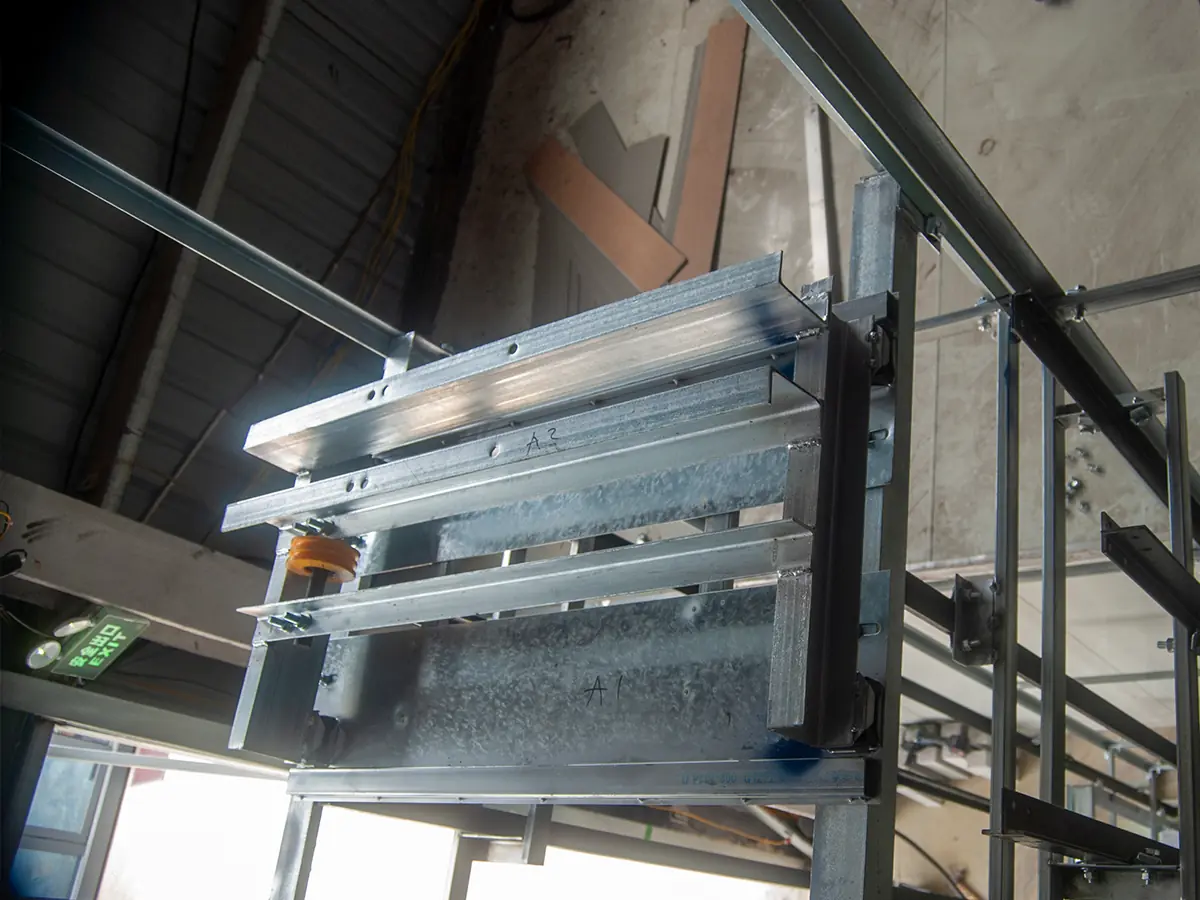
Shaft dimensions are the parameter most often fixed too early and too tightly in a dumbwaiter specification. The dumbwaiter dimensions and shaft guide sets out clear openings for common car sizes, and the stainless steel choice guide covers 304 against 316 for kitchen environments. Projects that need remote monitoring or building-management integration should read the control system guide before the MEP package is issued.
What a Late Order Actually Costs
When a dumbwaiter specification arrives after the shaft walls are cast, the project has three options, and all three are more expensive than ordering to programme.
- Cut the car to fit the space. The lift still works, but the trolley it was meant to carry may not fit through the opening, which defeats the point of the installation.
- Build a bolt-on or external shaft. A steel-framed shaft fitted into an existing void or onto the building envelope solves the geometry but adds structural design, weatherproofing and site time.
- Re-sequence the fit-out. Reopening finished walls for cable runs, control panels and door frames pushes the handover date and puts the kitchen commissioning at risk.
The dumbwaiter installation guide walks through the site requirements in order, and the dumbwaiter price guide breaks down what drives cost, so a project team can see where a late decision lands in the budget.
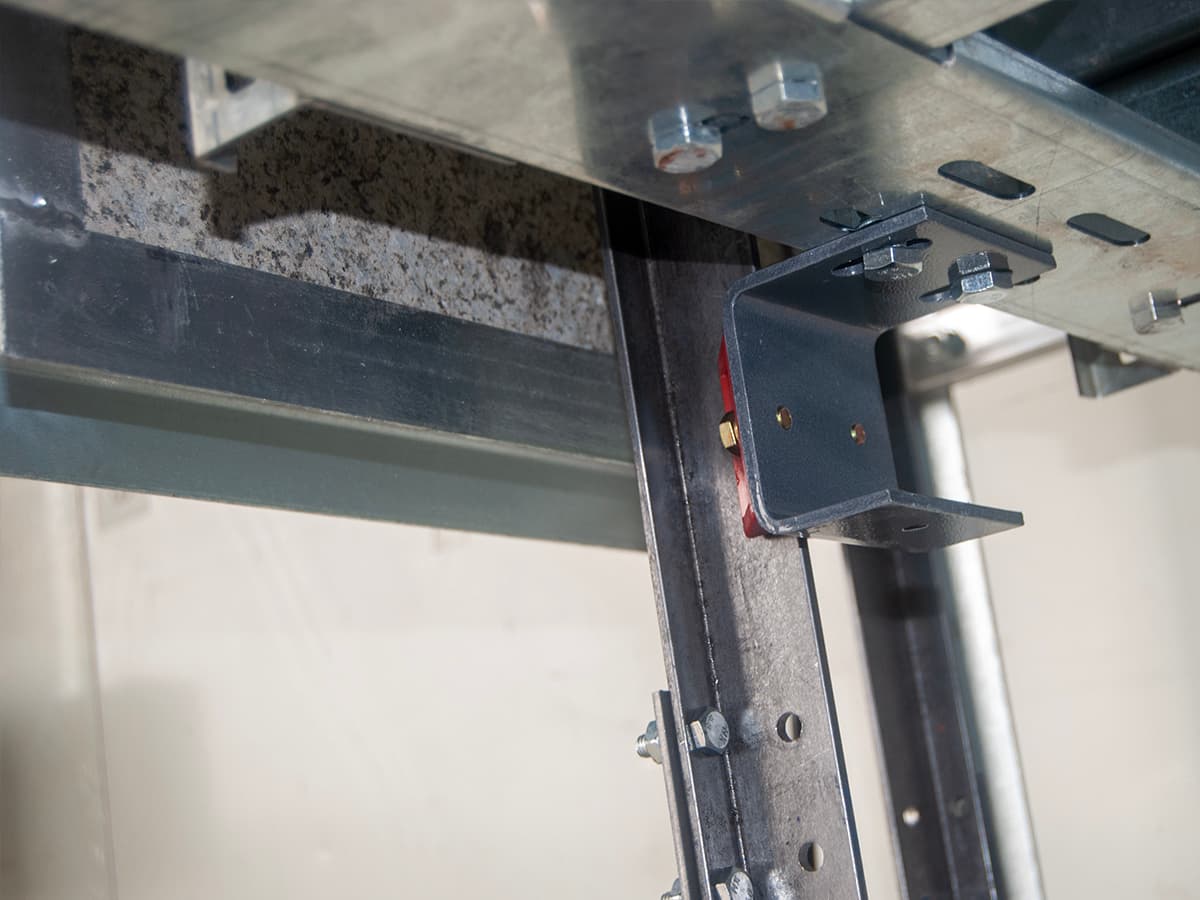
A retrofit dumbwaiter specification is not impossible, and ServLifts supplies both standard and bolt-on configurations. It is simply the more expensive route, and the gap between the two widens with every floor the building rises.
Lead Time and Delivery to Southeast Asia
ServLifts builds dumbwaiters at its factory in Wujiang, Suzhou, in Jiangsu Province. Standard production runs 15–25 working days from a confirmed order and deposit, after which units ship FOB Shanghai or Ningbo. CIF and DDP terms are available for buyers who prefer a single landed price, and the factory issues a free CAD shaft drawing during the design stage so the structural package and the dumbwaiter specification can be closed once. The stage-by-stage schedule is set out on our dumbwaiter lead time page.
Spare parts dispatch within three working days, and every unit carries a 12-month warranty on the complete machine. Buyers comparing suppliers on total cost rather than unit price should read the dumbwaiter running cost guide and the spare parts guide, which cover what the lift costs to own after the handover.
Country Notes: Vietnam, Thailand and Indonesia
The pipeline data shows where the work is. The specification preferences below reflect what projects in those three markets tend to ask for, and they differ enough that a single dumbwaiter specification rarely fits all three.
Vietnam
Vietnam’s pipeline stands at 279 projects and 86,192 rooms, with resort development concentrated in Phu Quoc and Da Nang and city hotels in Hanoi and Ho Chi Minh City. City sites have tight cores, so shaft clear dimensions drive the dumbwaiter specification more than load does. Resort properties more often need four to six stops between a production kitchen, several outlets and service floors.
Thailand
Thailand’s 171 projects and 40,963 rooms are weighted towards Bangkok and Phuket. Large banquet and events capacity at these properties usually pushes the dumbwaiter specification to the 300 kg end of the range, and many projects opt for two or three units rather than one. The Southeast Asia sourcing guide covers the regional picture in more detail.
Indonesia
Indonesia closed Q3 2026 with 197 projects and 33,314 rooms, and Jakarta alone accounts for 49 projects. High-rise city hotels typically specify 220 V single-phase units with two to six stops, sized around the room-service trolley rather than a banquet load.
Region-wide, arrival numbers are the demand signal behind these pipelines, and destination-level data sits alongside the construction figures when projects are underwritten. UN Tourism publishes that data by market in its tourism statistics hub.
Frequently Asked Questions
How long does a hotel dumbwaiter take to make and deliver?
Standard production takes 15–25 working days from confirmed order and deposit. Shipment goes out FOB Shanghai or Ningbo, with CIF and DDP terms available on request. For a Southeast Asian destination, a total of roughly five to eight weeks from order to site is a realistic allowance once the shaft is ready.
Can a dumbwaiter be added after the shaft is built?
Yes, but it costs more. A dumbwaiter specification written after the shaft is cast has to be reverse-engineered from the space that is left. Once the walls are cast the options are a bolt-on shaft inside an existing void, an external shaft on the building envelope, or a smaller car cut to suit the space available. Each route adds structural work, finishes and programme time compared with fixing the dumbwaiter specification before the cast.
What load should a hotel kitchen dumbwaiter be?
Most hotel kitchens specify 250–300 kg, which covers banquet trolleys, room-service trays and stacked linen. A document or small-store lift can be 100 kg or less. The load follows the heaviest trolley the property expects to move, not the average tray.
Your Next Step
If you are specifying a dumbwaiter for a hotel project, the fastest way to close the decision is with a shaft drawing. ServLifts issues a free CAD drawing based on your floor-to-floor heights, clear dimensions and intended loads, so the structural package can be fixed once and the dumbwaiter specification stops moving.
Contact the ServLifts team with your project details, or start with the China dumbwaiter factory guide if you are still selecting a supplier.
The pipeline figures above sit inside a wider demand picture. For the four published 2026 forecasts and the regional split behind them, see the dumbwaiter market data.