Welcome to ServLifts Official Website

Dumbwaiter Running Cost: What a Food Lift Costs to Run Each Year (2026)

A dumbwaiter running cost is not the figure on the quotation. It is what the unit takes out of the operating budget every month after the crate is unpacked: electricity, servicing, statutory examination, wear parts and the cost of the days the lift is out of service.
This guide puts a defensible number on each line, shows which lines actually decide the total, and sets out the seven decisions taken at ordering and installation stage that move lifetime cost the most. All figures describe traction (rope-driven) commercial dumbwaiters in the 50–300 kg range — the type built by ServLifts in Suzhou, China.
Dumbwaiter Running Cost: What This Guide Covers
- What counts as dumbwaiter running cost
- Why dumbwaiter running cost gets missed
- Electricity: what a dumbwaiter actually consumes
- Standby load — the cost nobody meters
- Servicing: frequency, scope and cost
- Statutory examination fees
- Wear parts: budget by cycle, not by calendar
- Drive system and long-run cost
- Downtime — the line that is not on the quote
- Insurance, compliance and access
- Five-year cost of ownership
- 7 decisions that lower lifetime cost
- Frequently asked questions
What Counts as Dumbwaiter Running Cost
A dumbwaiter running cost is the money a food lift consumes while it is working, as distinct from the money it consumed to arrive. Purchase price and installation belong to a different budget line, and both are covered elsewhere: the dumbwaiter price guide breaks down equipment pricing and the installation cost guide covers the site work. What follows is the recurring side.
Four groups of cost recur over the life of the equipment. Grouping a dumbwaiter running cost this way makes it possible to budget each line separately instead of accepting one blended service figure from a contractor.
| Cost group | What it contains | How it recurs | Who controls it |
|---|---|---|---|
| Energy | Motor consumption per trip plus standby draw from the control panel | Continuous, billed monthly | Established at ordering |
| Planned servicing | Lubrication, door and lock adjustment, rope inspection, control checks | Monthly to quarterly | Owner, via the service contract |
| Statutory examination | Independent periodic inspection and written report | Annually, or twice yearly | Regulator, by market |
| Wear parts and downtime | Consumables, plus lost kitchen or linen-room throughput while the unit is down | By cycle count, unpredictably | Owner, via parts stocking |
The counter-intuitive finding behind this entire guide is that energy is the smallest of the four groups for a traction dumbwaiter.
Servicing, examination and wear parts decide the dumbwaiter running cost. Buyers who assume the lift is expensive to run because it is an electric machine usually find the electricity bill rounds to the cost of a few coffees a year, then get surprised in the opposite direction by the service contract.
One clarification before the numbers. A dumbwaiter is a service lift: goods only, no passengers, built to a smaller load and speed envelope than a passenger elevator. A machine that starts carrying staff between floors changes category, and with it the inspection interval, the insurance position and the servicing brief. That distinction has its own guide in dumbwaiter versus passenger elevator.
Why the Running Cost Gets Missed in Budgets
Project budgets are built around purchase orders, and a purchase order is a single date. Dumbwaiter running cost is a series of dates stretching past the end of the project. The result is a blind spot with a predictable shape across markets.
A hotel refurbishment will carry a line for the dumbwaiter equipment, a line for the shaft, and a line for installation. Nothing carries the servicing contract, the annual examination fee or the spare-parts float, because none of those are triggered by the fit-out programme.
They start when the first invoice from the service provider lands, twelve months after handover, by which time the capital budget is closed and the money comes out of operations instead.
The practical consequence is that a machine chosen to save money at the ordering stage can cost more in its first five years than a machine chosen for a lower dumbwaiter running cost.
The saving on the purchase order is visible immediately; the cost of that saving only appears later, spread over years of slightly worse servicing. Comparing equipment on purchase price alone is the single most common budgeting error in this category.
A second effect compounds the first. Service pricing scales with the machine, not with the lift category. Contractors who also maintain passenger elevators price dumbwaiter work off a passenger-elevator cost base, with travel, two-technician attendance and a full-formal-report administrative overhead written into the contract.
A dumbwaiter is a fraction of that machinery, and the dumbwaiter running cost of a routine visit is correspondingly smaller — but only if the contract is priced for a dumbwaiter.
Electricity: What a Dumbwaiter Actually Consumes
Electricity is the first line buyers ask about within a dumbwaiter running cost, and the one that matters least. Understanding why requires only the motor rating and the duty cycle, both of which are on the nameplate and in the manual.
ServLifts traction units use motors in three ratings: 0.75 kW, 1.1 kW and 1.5 kW, matched to load and travel height. A unit lifting 100–200 kg over two to four floors typically lands on the 1.1 kW rating. The electrical supply is 220 V single-phase or 380 V three-phase depending on market and motor size, and both are confirmed against the site survey before the unit is built.
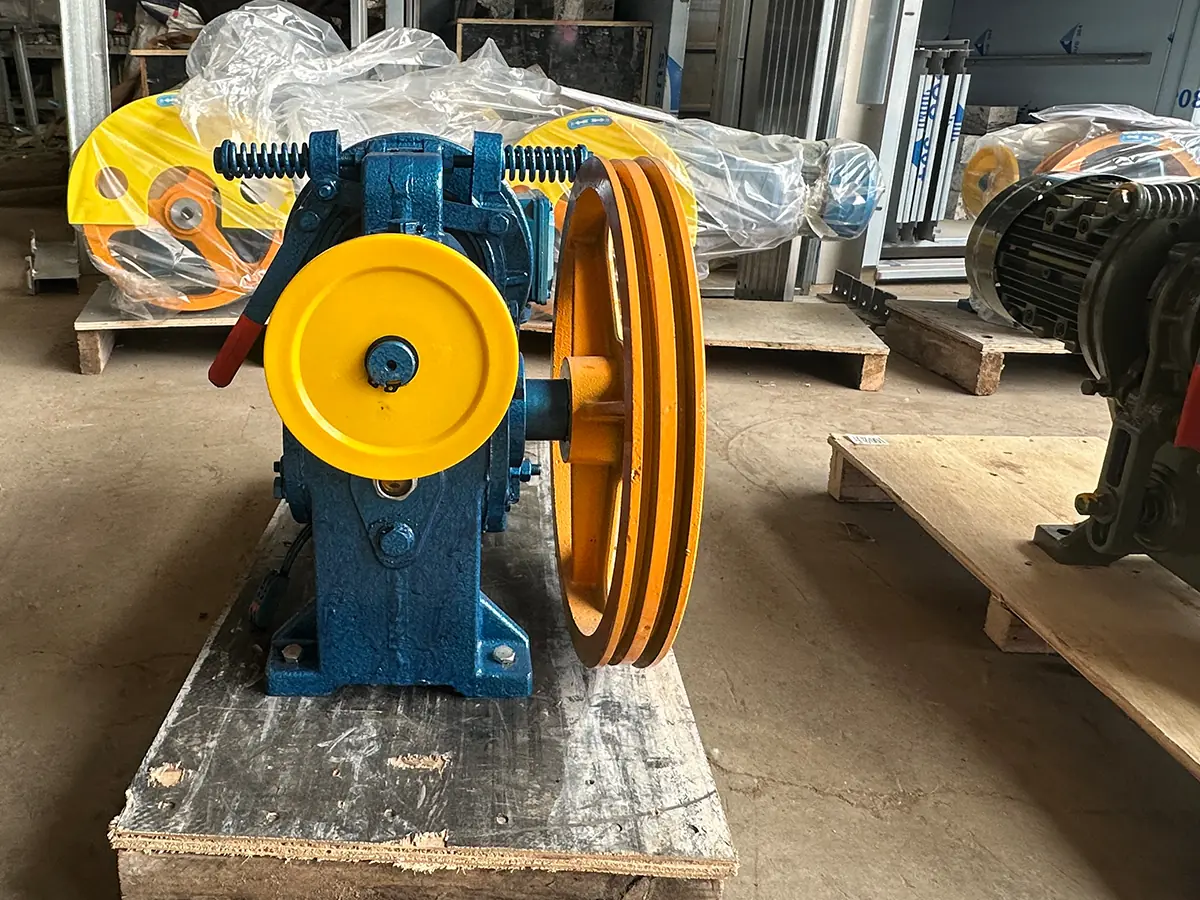
What makes the electricity figure small is the duty cycle. A traction dumbwaiter motor runs only while the car is travelling. At a travel speed around 0.4 m/s, a two-floor trip of roughly 6 m of travel takes about 15 seconds of motor time, including acceleration and deceleration.
Between trips the motor is off. A busy restaurant might dispatch the car 100 times a day; a hotel linen lift on a slower cycle might run 30.
The energy per trip follows directly: motor rating in kilowatts, multiplied by the fraction of an hour the motor actually runs, multiplied by a load factor that accounts for the car being lighter than its rating on most trips. The annual figure repeats that arithmetic across 365 days.
A worked example you can re-run with your own numbers
Take a 1.1 kW traction dumbwaiter, 100 trips a day, 15 seconds of motor time per trip, and a load factor of 0.6 because most trips carry less than the rated load.
Energy per trip is 1.1 kW × (15 ÷ 3600) hours × 0.6 = 0.00275 kWh. At 100 trips a day that is 0.275 kWh a day, or roughly 100 kWh a year. The same unit on a 30-trip hotel cycle draws about 30 kWh a year. Inserting your own trip count and your own tariff gives the annual cost without any assumptions about which country you operate in.
| Duty level | Trips per day | Motor time per day | Energy per year | Example cost at US$0.30/kWh |
|---|---|---|---|---|
| Light (hotel linen, small cafe) | 30 | 7.5 minutes | ≈ 30 kWh | ≈ US$9 |
| Standard (restaurant, room service) | 100 | 25 minutes | ≈ 100 kWh | ≈ US$30 |
| Heavy (multi-outlet commercial kitchen) | 250 | 62 minutes | ≈ 250 kWh | ≈ US$75 |
The example tariff is illustrative only. Electricity prices vary by a factor of three or more between markets, and the statistics office of the European Union publishes a current comparison by member state in its electricity price statistics. The structure of the calculation does not change with the tariff; only the final multiplication does.
Read against a service contract, the point about dumbwaiter running cost is blunt. For a standard-duty commercial dumbwaiter, one year of electricity costs less than one routine service visit. Any purchasing decision that trades energy efficiency for a lower purchase price is optimising the wrong line — with one exception, covered next.
Standby Load — the Cost Nobody Meters
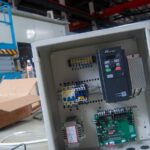
There is a second dumbwaiter running cost line, and on lightly used lifts it can exceed the first. The control panel, door-lock circuit and any display stay energised around the clock, whether or not the car moves. Standby draw for this class of controller sits in the range of 5 W to 15 W.
At 10 W continuous, standby consumes about 88 kWh a year. Compare that with the 30 kWh a year that a light-duty hotel lift draws while actually travelling, and the conclusion is uncomfortable:
a dumbwaiter that runs thirty trips a day spends three times as much energy waiting as it does working. On the heavy-duty 250-trip figure the balance flips the other way, with travel energy roughly three times the standby total.
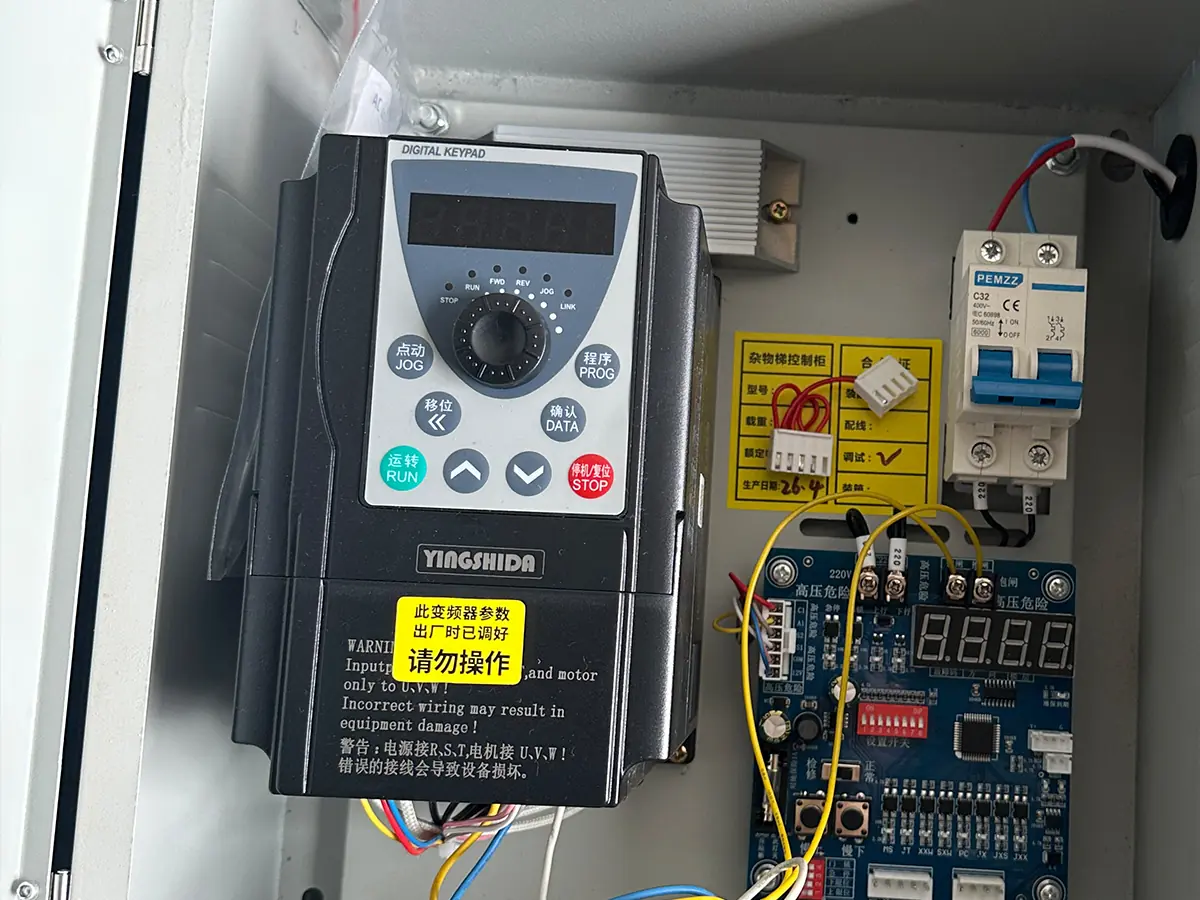
Two practical consequences follow. First, when a supplier quotes an energy figure, ask whether it includes standby or only motor consumption — the number can differ by a factor of four. Controllers that drop to a genuine low-power state between calls, rather than holding the drive ready, remove most of the standby line.
Second, if the site has several small lifts, standby rather than travel is the number worth attacking at specification stage, because it is a specification choice and not an operating habit.
The wider dumbwaiter running cost point sits in the same direction as commercial energy advice: the cheapest unit of energy is the one never consumed, which is the logic behind efficiency guidance such as that published by the Carbon Trust for commercial buildings. A dumbwaiter is a small load, but a standby-load decision costs nothing to take at ordering and cannot easily be reversed later.
Servicing: Frequency, Scope and Cost
Servicing is where the dumbwaiter running cost is actually decided. The work is ordinary — lubrication, adjustment, inspection, cleaning — but the frequency and the contract structure around it vary enormously between suppliers, and so does the annual total.
Servicing is the largest line in the dumbwaiter running cost, and it is not optional. Machinery of this class carries a duty of maintenance in every market that regulates it; the United Kingdom’s Health and Safety Executive sets out the general duty and what adequate maintenance means in its guidance on maintenance of work equipment.
Maintenance protects the operator and the owner. It is also the mechanism that keeps the statutory examination cheap, because an examiner who finds a well-kept machine writes a short report.
| Interval | Task | Notes |
|---|---|---|
| Daily | Visual check of doors, car interior and landing area | Operator task, no contractor |
| Monthly | Lubrication of guide rails and door mechanisms, control-panel inspection, test of call and send functions | Core of the service contract |
| Quarterly | Rope or belt inspection and tension check, door-lock engagement measurement, brake check | Needs a competent technician |
| Annually | Full safety-device function test, motor and gearbox review, control-board inspection, record update | Often combined with the statutory examination visit |
What a service visit should cover
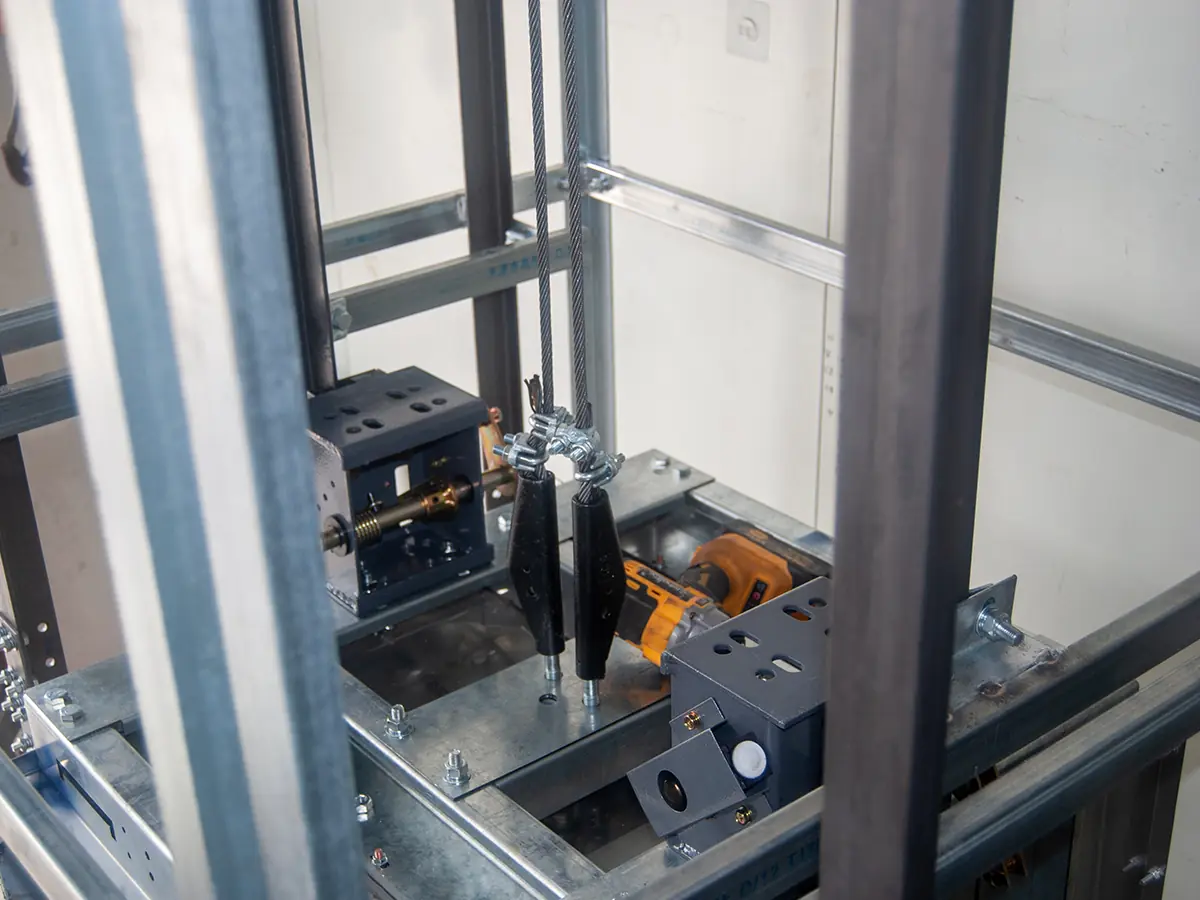
A defensible service visit touches the door-lock mechanism, the guide-rail lubrication points, the rope or belt condition, the brake, the limit switches, the control panel interior, and the landing and car door operation. The technician should leave a written record naming the tasks performed and any observation that needs follow-up.
An invoice that says only “serviced” is not a record, and it will not support the statutory examination history. The full task list sits in the dumbwaiter maintenance guide.
Signs the contract is priced for the wrong machine
Three patterns indicate that a dumbwaiter is being charged at passenger-elevator rates. The contract requires two technicians for a routine visit where one is sufficient. The quoted scope includes ride-quality or levelling adjustments that a goods-only unit does not have.
The admin fee for the annual report approaches the cost of the visit itself. None of these are dishonest — they are what happens when a passenger-elevator service template is applied unchanged to a service lift.
Statutory Examination Fees
The statutory examination is the one line of the dumbwaiter running cost that is fixed by regulation rather than by choice, which makes it the easiest to budget and the least productive to argue about. The interval follows the equipment and how it is used, not the price paid for it.
The dumbwaiter running cost pattern across the three major English-language markets: most US states require an annual periodic inspection of commercial dumbwaiters, with a small number of large cities requiring two a year; the United Kingdom’s LOLER regime sets the thorough examination at twelve months for goods-only use, shortening to six months the moment a person can ride the car; European Union member states each set their own cycle.
The examining person must be competent and independent of whoever carries out the maintenance, which means the examination fee cannot be folded into the service contract.
Because the interval, the qualification of the examiner and the record that must be kept all vary by jurisdiction, the dumbwaiter running cost of examination differs by market, and the detailed schedule has its own guide: the dumbwaiter inspection schedule sets out the frequency in the US, UK and EU side by side, together with the four findings that most often stop a unit passing.
For budgeting purposes the takeaway is simpler — assume one examination per year for a commercial unit, confirm the local fee with the inspection body, and treat any second visit as a market-specific extra.
Wear Parts: Budget by Cycle, Not by Calendar
Wear parts are the least predictable dumbwaiter running cost line and the easiest to control. The parts themselves are modest: door-lock contacts, rope or belt, contactors, call buttons, limit switches and the guide-rail rollers.
What turns a small parts bill into a large one is availability, because a lift that waits three weeks for a contactor is not waiting three weeks of parts cost — it is waiting three weeks of lost service.
Wear on this equipment tracks cycles rather than months. A door lock on a 250-trip-a-day commercial unit reaches the end of its adjustment range long before the same part on a 20-trip hotel lift, even though both are the same age on paper. That is why the useful way to plan a parts float is to count trips, not to wait for the calendar to suggest a replacement.
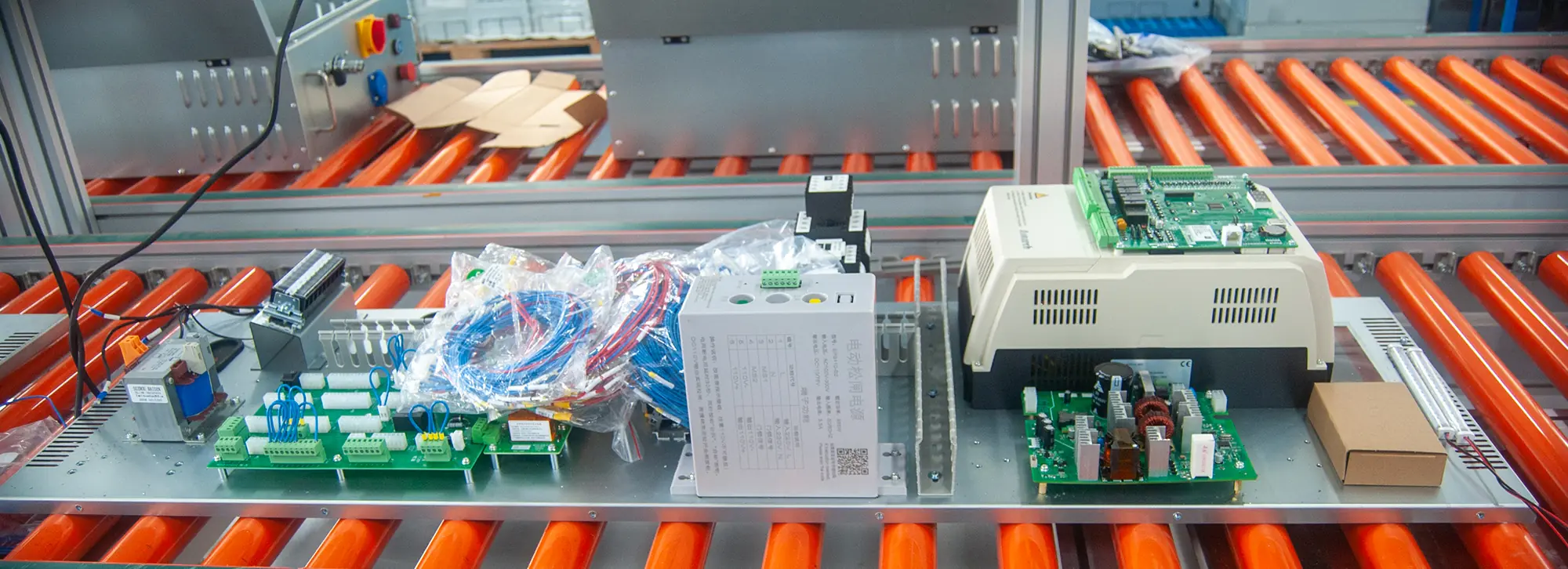
Three practices keep this dumbwaiter running cost line small. Keep a small stock of the parts that stop the lift, not the parts that are expensive — door-lock contacts and limit switches before motors. Confirm the supply lead time in writing at ordering stage, since a three-working-day dispatch commitment is worth more than a low unit price when the kitchen is down.
And record what actually failed and when, so that the second replacement of the same part is a conversation with the supplier rather than a coincidence. ServLifts ships service spares within three working days and sets no minimum order quantity on them.
The parts list that matters for stocking, and the four categories that should never be stocked, are set out item by item in the maintenance guide.
Drive System and Long-Run Cost
Drive technology sets the shape of the dumbwaiter running cost more than any other single decision. Traction, hydraulic and screw drive each produce a different mix of energy use, servicing intensity and rebuild timing, and the differences widen over a decade of service.
Traction is the most efficient in operation: the motor works only while the car moves, and there is no hydraulic power pack holding pressure between trips. Hydraulic units consume energy during travel and generate heat that must be managed, and their long-term maintenance tends to be heavier — the oil, the seals and the pump eventually enter the picture.
Screw drive sits between the two in efficiency and has a simpler mechanical train, at the cost of a different set of wear points.
The full comparison, including where each drive makes sense by load and travel height, is in traction versus hydraulic versus screw drive. For dumbwaiter running cost purposes, the rule of thumb is that the cheapest drive to buy is rarely the cheapest to own, and the gap shows up in the servicing line long before it shows up in the electricity line.
Downtime — the Line That Is Not on the Quote
Downtime is the largest single component of dumbwaiter running cost in a busy operation, and it appears on no supplier’s quotation because it is not a payment. It is a loss: the food that waits in the pass, the linen that does not reach the floor, the staff member who walks the stairs a hundred times a day because the lift is out.
The arithmetic is straightforward once the operational value of a trip is known. Multiply the trips lost per day by the number of days out of service, then multiply by whatever a trip is worth to the business — in a restaurant that is the value of the covers the lift supports; in a hotel it is the housekeeping hours saved.
Twenty days out of service on a 100-trip lift is two thousand trips lost, and the parts bill that caused it may have been a few hundred dollars.
Three specification-stage choices reduce dumbwaiter running cost exposure more than any service contract. Choose a unit whose control architecture uses widely available components rather than a proprietary board, so a replacement contactor is a local purchase rather than a factory order.
Confirm the spare-parts lead time in the contract. And take the remote technical support commitment seriously: a commissioning engineer on a video call can often clear a fault that would otherwise wait for a site visit.
Insurance, Compliance and Access
Two further costs sit at the edge of the dumbwaiter running cost. Neither is large, and both are avoidable by getting the compliance paperwork right at installation.
The first is insurance. Buildings that carry a dumbwaiter are expected to be able to show that the unit is maintained and examined in line with local requirements, and the annual examination certificate is the document that does it.
Where the certificate lapses, insurers have grounds to question a claim. The regulations guide sets out the requirements and the seven most costly compliance mistakes in the US, UK and EU.
The second is access. Service and examination both need safe access to the machine space, the pit and the car. Where access has been obstructed since handover — a pallet stack in front of the machine room door being the classic example — the first visit of the year is spent restoring access and is billed accordingly. Keeping the access route clear costs nothing and removes a recurring line.
Five-Year Cost of Ownership
Bringing the lines together shows where the money in a dumbwaiter running cost actually goes. The table below uses a 100–200 kg, two-to-four-floor traction dumbwaiter on standard duty, with the equipment and installation figures taken from the published price and installation guides and the running figures from the calculations above.
| Line | Basis | Five-year total | Share of total |
|---|---|---|---|
| Equipment | Unit price, FOB China | US$2,265–2,550 (one-off) | ≈ 30–35% |
| Installation and site work | Freight, duties, shaft work, labour, electrical | US$4,500–8,500 (one-off) | ≈ 45–55% |
| Electricity | ≈ 130 kWh/year including standby | ≈ US$200 over five years | under 2% |
| Planned servicing | Routine visits at local labour rates | Depends on market | ≈ 8–12% |
| Statutory examination | One per year, commercial | Local fee × 5 | ≈ 3–5% |
| Wear parts | Cycle-dependent consumables | Small, plus downtime exposure | ≈ 2–4% |
How to use this table
Two lines are estimated ranges and three are arithmetic. Equipment and installation come from the published guides and move with market and specification, so treat them as anchors rather than quotes. Electricity is calculable to within a few dollars from the worked example above.
Servicing, examination and parts are placeholders until local contract rates are known, which is exactly why they should be asked for in writing before the order is placed rather than after handover.
The structural finding is difficult to escape: on a traction dumbwaiter, roughly four fifths of five-year cost is spent before the unit is switched on, and only the remainder is dumbwaiter running cost. The dumbwaiter running cost is real, but the decisions that set it are almost all taken during specification, which is the subject of the final section.
7 Decisions That Lower Lifetime Cost
Each decision below is available at or before installation stage. Together they move the dumbwaiter running cost more than any amount of subsequent negotiation on service rates.
| # | Decision | Effect on lifetime cost |
|---|---|---|
| 1 | Size the motor to the real duty, not the largest available | Lower standby and travel draw, smaller supply |
| 2 | Specify a controller that drops to low-power standby | Removes most of the standby line |
| 3 | Confirm shaft and pit dimensions before ordering | Avoids the most expensive rework category |
| 4 | Fix the electrical point at survey stage | Avoids weeks of delay and re-trades |
| 5 | Choose standard, locally available control components | Cuts downtime and parts lead time |
| 6 | Write the spare-parts dispatch time into the order | Converts a failure into a day, not a fortnight |
| 7 | Price servicing for a service lift, not a passenger elevator | Corrects the largest recurring line |
Decisions one to four in this dumbwaiter running cost list are taken with the drawings open, and two of them — shaft dimensions and electrical point — are covered in detail in the installation guide and the dimensions and shaft guide.
Getting the motor rating right also avoids the premium that comes with a larger unit: a 300 kg machine costs more to buy, needs a heavier shaft and draws a larger supply than a 100 kg machine, and if the operation only ever lifts 80 kg that premium is paid for nothing.
Decisions five to seven of the dumbwaiter running cost list are commercial terms rather than engineering choices, and all three can be settled in the same conversation with the supplier.
Buyers interested in how to compare suppliers on these terms rather than on price alone will find the checklist in the guide to what a dumbwaiter elevator is, which also covers the terminology confusion between dumbwaiter, food lift and service lift that complicates every competitive quotation.
Frequently Asked Questions
What is the biggest part of a dumbwaiter running cost?
Planned servicing, followed by statutory examination. Energy is the smallest line for a traction unit, typically under US$100 a year including standby.
How much of a dumbwaiter running cost is electricity?
A standard-duty 1.1 kW traction dumbwaiter on 100 trips a day uses roughly 100 kWh a year travelling, plus around 88 kWh of standby at 10 W continuous. Light-duty hotel lifts use less.
How often does a dumbwaiter need servicing?
Servicing is the largest line of the dumbwaiter running cost: monthly lubrication and function checks, quarterly mechanical inspection, and an annual full safety-device test. Most owners hold one service contract covering the monthly and quarterly work.
Is the annual inspection the same as servicing?
No. The statutory examination must be carried out by a competent person independent of whoever maintains the unit, and it produces a written report. Servicing keeps the machine in condition; the examination verifies that it is safe.
Does a dumbwaiter need a dedicated electrical circuit?
Yes. A dedicated circuit at 220 V single-phase or 380 V three-phase is required depending on the motor rating, and the available supply should be confirmed before the unit is ordered.
How long do dumbwaiter spare parts take to arrive?
Lead time is a supplier commitment and worth confirming on the order. ServLifts dispatches service spares within three working days, with no minimum order quantity.
Next Step
If a dumbwaiter running cost figure is needed for a specific project, the fastest route is a quotation with the servicing and spare-parts terms stated alongside the unit price, so that all three lines can be compared on the same basis.
ServLifts builds traction dumbwaiters in Suzhou, China, for 50–300 kg loads over two to six floors, supplies free CAD shaft drawings and confirms electrical requirements against the site survey before manufacture.
Send the load, the floor count and the travel height through the contact page and a configuration with its spare-parts lead time comes back in return.
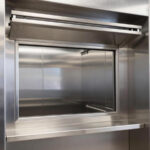
[…] headache that costs more in the long run. The statutory inspection cycle sits inside that running cost, and it differs by market — see the dumbwaiter inspection schedule for the intervals in the US, […]
[…] operating cost — a traction drive uses little standby power and needs simple […]