Welcome to ServLifts Official Website

Dumbwaiter Commissioning and Handover: 24 Tests Before the Unit Runs

A dumbwaiter does not become usable when the crew packs up. It becomes usable when a documented set of tests has been run, the sheet has been signed, and the local authority has issued whatever document that market requires. Everything between those two points is dumbwaiter commissioning, and it is the stage most often compressed into a rushed afternoon at the end of a project.
What follows is the dumbwaiter commissioning test sheet itself: 24 checks across mechanical, electrical and performance, the pass criterion for each, the four signatures that close the job, and the ten documents that make up the handover pack. If you are earlier in the project, the dumbwaiter submittal guide covers the paperwork that goes out before approval, and the installation process guide covers who does the work and in what order.
- Quick Answer: What Dumbwaiter Commissioning Covers
- Dumbwaiter Commissioning, Inspection and Installation Are Not the Same Job
- Six Things That Must Be True Before the First Test
- The Dumbwaiter Commissioning Test Sheet: 24 Checks
- Dumbwaiter Commissioning Load Test: What 125% Actually Proves
- Four Signatures, Not One
- The Handover Pack: Ten Documents
- Commissioning an Imported Unit Without a Local Inspector
- Five Reasons Dumbwaiter Commissioning Slips
- Frequently Asked Questions
- Where to Start
Quick Answer: What Dumbwaiter Commissioning Covers
Dumbwaiter commissioning is the stage where an installed machine is tested against its data sheet and the project specification, and the results are written down. It covers four groups: the mechanical build and safety chain, the electrical supply and controls, behaviour under load, and the records that prove all three were checked. On a two- or three-stop unit it typically takes one to two working days on site.
During dumbwaiter commissioning, four numbers describe the scope: 24 checks on the test sheet, a 125% static load test, four signatures to close it, and a ten-document handover pack. The tests are not optional extras that a busy crew can skip; each one maps to a failure mode that costs far more to fix after the unit is in service.
Dumbwaiter Commissioning, Inspection and Installation Are Not the Same Job
Three different parties do three different jobs, and projects get expensive when a contract treats them as one line item.
| Stage | Who does it | What it produces | When it happens |
| Installation | Installation crew, sometimes supervised by a supplier technician | A machine that is physically built, aligned, wired and able to run | Days 1 to 5 of a typical two- or three-stop project |
| Commissioning | Installation crew with the supplier technician, using the test sheet | A signed record of 24 tests with measured values | The last day or two of installation, before handover |
| Inspection | Local authority, accredited inspector or notified body | A certificate of operation, permit or registration | After commissioning, on a separate calendar |
The distinction matters: dumbwaiter commissioning produces a signed sheet, not a certificate, and no certificate exists without that sheet. Where a project stalls, it is usually because commissioning was treated as a formality and the inspection was booked on the assumption that it would pass.
Six Things That Must Be True Before the First Test
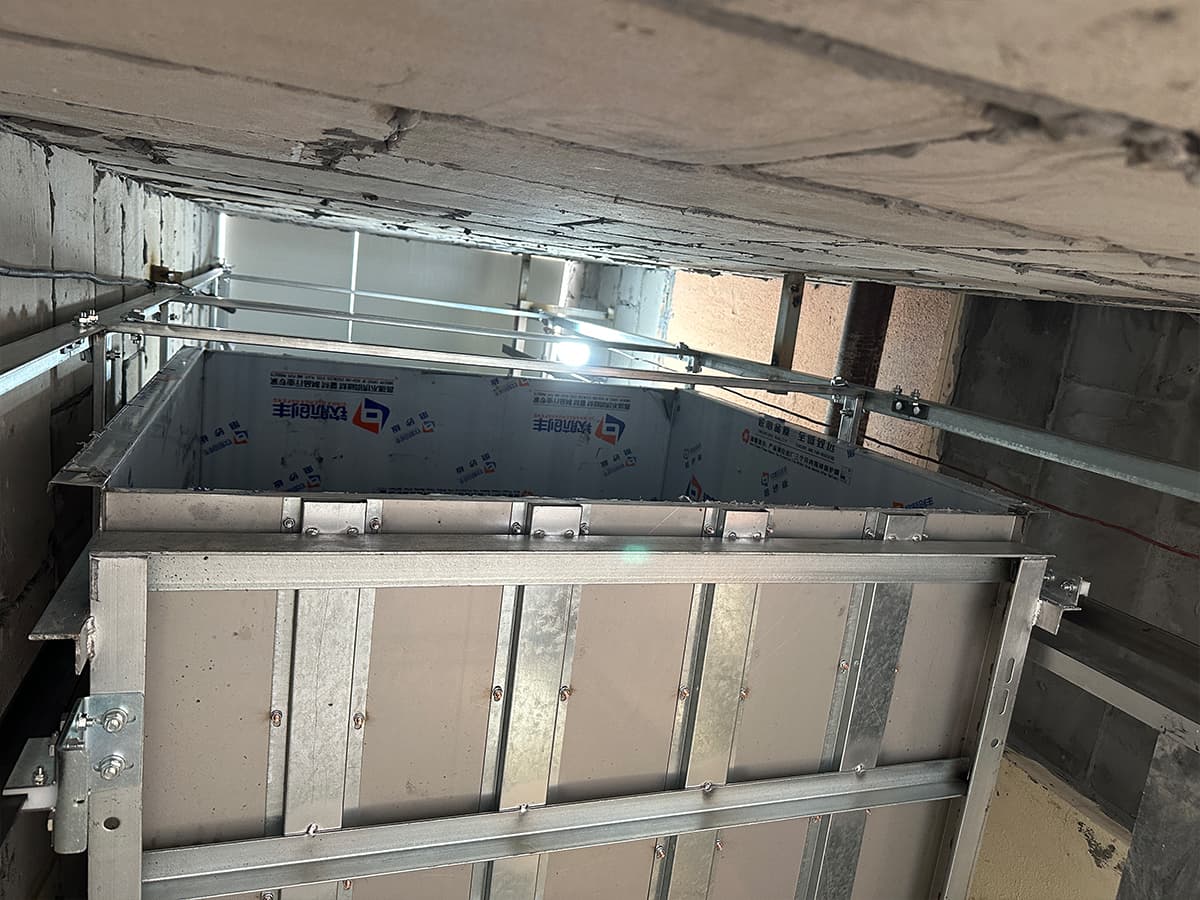
Dumbwaiter commissioning cannot start on a site that is not ready, and the six failures below account for most lost site days. Each is cheap to fix one week before and expensive to fix on the day.
- Permanent power, not a temporary supply. The correct voltage, phase and frequency at the isolator, a labelled breaker of the right rating, and a functioning earth. A site transformer that sags under load will fail the drive tests and waste the day.
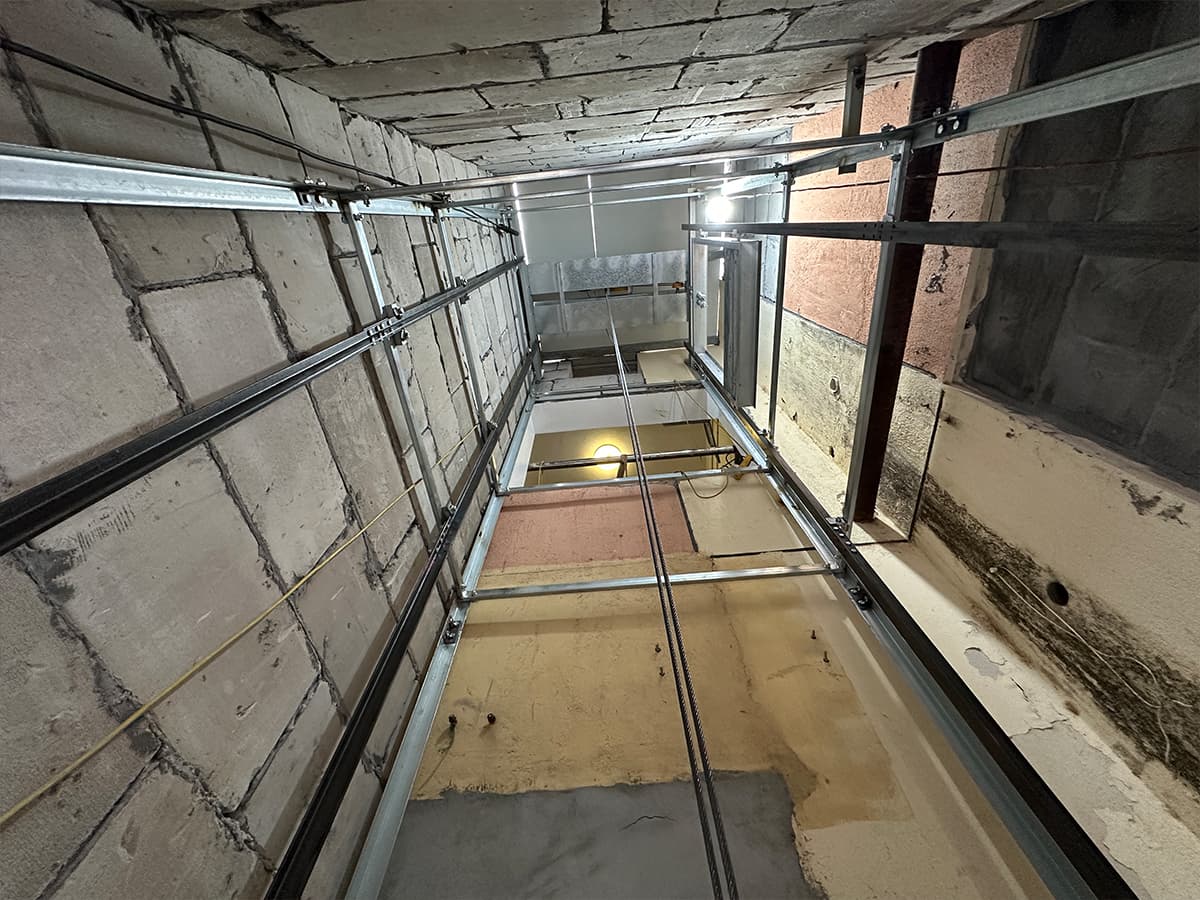
- Shaft clean, dry and lit. Pit free of water and debris, ladder in place, pit light working. A wet pit fails the electrical tests and delays the safety gear checks.
- Landing doors hung and sills level. Doors hung, sills set, interlocks wired. Commissioning cannot prove a door interlock that has not been fitted.
- Clearances confirmed against the layout drawing. Car and counterweight gaps measured at top, middle and bottom. The planning figures are in the dumbwaiter dimensions guide; the drawing set for the project is what the crew must build to.
- Every landing station wired. Call buttons, position indicator where specified, alarm or intercom at each landing and inside the car. Stations added later mean a second commissioning visit.
- The drawing set of record on site. Layout, shaft interface and electrical schematic, at the current revision — not a photograph of a drawing on someone’s phone. How to read a set is covered in the dumbwaiter drawings guide, and sixteen standard model sketches are free to download as PDF.
The Dumbwaiter Commissioning Test Sheet: 24 Checks
The dumbwaiter commissioning sheet is grouped in three blocks of eight. Each row names the check, how to perform it, what counts as a pass, and who is competent to record it. Print it, fill it in on site, and keep the signed original — a photograph of a phone screen is not a commissioning record.
Group 1: Mechanical Build and Safety Chain
| # | Check | How to test | Pass criterion | Recorded by |
| 1 | Guide rail plumb and bracket torque | Level or laser at every bracket; torque wrench on three fixings per rail | No gap under the level at any bracket; fixings at the torque in the manual | Installation crew |
| 2 | Car and counterweight clearances | Measure the gap to the shaft at top, middle and bottom of travel | Within the figure on the layout drawing, on both sides | Installation crew |
| 3 | Rope tension equalisation | Deflect each rope by hand at mid-span and compare | Ropes deflect within a few millimetres of each other | Supplier technician |
| 4 | Slack rope and broken rope device | Lift the counterweight until rope tension is released | Drive stops at once; the fault shows on the controller | Supplier technician |
| 5 | Overspeed governor and safety gear, where fitted | Trip the governor with the car at rated load | Safety gear engages, car stops, reset procedure works | Third-party inspector |
| 6 | Buffers and pit access | Measure buffer height and stroke; check pit ladder and light | Correct buffer type and height; pit clean, dry and lit | Installation crew |
| 7 | Landing door interlocks | Open each landing door with the car two floors away, then attempt to run | Drive cannot start from any landing while a door is open | Installation crew |
| 8 | Car gate or car door interlock | Attempt to run with the gate open; attempt to open the gate while moving | No movement with the gate open; gate cannot be opened while moving | Installation crew |
Group 2: Electrical Supply and Controls
| # | Check | How to test | Pass criterion | Recorded by |
| 9 | Supply voltage and phase rotation | Meter at the isolator with the drive off, then again on load | Within the tolerance stated on the data sheet | Installation crew |
| 10 | Earth continuity | Test between car frame, shaft steel, panel body and the earth bar | Bonding continuous on every path | Installation crew |
| 11 | Insulation resistance | Insulation test on the power circuit with the drive isolated | Above the minimum in the manual, with no path to earth | Installation crew |
| 12 | Safety chain continuity | Break each device in turn: stop, door, slack rope, limit | Chain opens every time and the controller names the device | Supplier technician |
| 13 | Emergency stop at every station | Press each stop button with the car moving | Drive stops immediately; reset required before restart | Installation crew |
| 14 | Final limit switches | Run the car into the final limit at slow speed, both directions | Drive stops; the limit resets without tools | Supplier technician |
| 15 | Levelling at every landing | Measure car floor to landing floor, loaded and empty, travelling up and down | Within the figure in the specification, commonly 5 to 10 mm | Installation crew |
| 16 | Calls, sends, alarm and intercom | Operate every call button and the alarm from every landing | Call registers, car answers, alarm audible at the intended point | Installation crew |
Group 3: Performance and Load
| # | Check | How to test | Pass criterion | Recorded by |
| 17 | Running test at rated load | Three complete cycles, stopping at every landing | No rope slip, no unusual noise, no fault codes | Supplier technician |
| 18 | Static test at 125% of rated load | Load the car, hold, then inspect terminations and structure | No permanent deformation, no rope movement at the terminations | Third-party inspector |
| 19 | Overload detection | Load to the threshold stated in the manual | Alarm sounds and the drive refuses to start | Supplier technician |
| 20 | Brake holding | Stop at each landing with rated load and watch for drift | No downward drift after the brake sets | Installation crew |
| 21 | Travel speed | Time a full run between two landings | Matches the data sheet, typically 0.3 to 0.5 m/s on a traction unit | Supplier technician |
| 22 | Noise and vibration | Listen at the machine and inside the car at full speed | No metal-to-metal contact and no resonance through the structure | Installation crew |
| 23 | Gate closure and door force | Operate each gate and door by hand | Closes and latches unaided; force within the local limit | Installation crew |
| 24 | Ten-cycle endurance run | Ten trips with rated load, no intervention | No fault codes and no drift in levelling | Supplier technician |
Two rows are the usual culprits in dumbwaiter commissioning. Row 15 exposes a shaft that was built to a different tolerance than the drawing assumed, and row 4 exposes a counterweight that was packed with too little clearance. Both are fixable on the day; neither is fixable after the ceiling is closed. The capacity used for rows 17 to 19 is the rated load on the nameplate, which on standard ServLifts units runs from 50 to 250 kg depending on car size.
Dumbwaiter Commissioning Load Test: What 125% Actually Proves
During dumbwaiter commissioning the load test is not a strength contest. It answers three questions: does the drive hold the rated load without slipping, does the structure return to its original shape when the load comes off, and does the brake hold when the machine is asked to stop at full load. Those are three different failure modes and they need three different tests.
The static test at 125%
Rated load plus a quarter, held still, with the terminations and the supporting structure inspected while it is held. What is being checked is not the rope — it is everything the rope pulls on: shackles, terminations, the machine bed, the fixings into the structure. A pass means no permanent set and no movement at the terminations once the load is released.
The running test at rated load
Rated load, every landing, at least three complete cycles. This is where rope slip, brake noise, levelling drift and control timing show up. A unit that passes the static test and fails here is not unusual, and it is usually a tension or parameter problem rather than a mechanical one. If the client’s complaint is loudness rather than a fault, treat it as a separate acceptance item: our guide to dumbwaiter noise sets out what to measure and where.
What the record has to show
A dumbwaiter commissioning record with a tick and no number is worth very little six months later. Write down the rated load, the test load, the measured levelling at each landing before and after the tests, the travel time between the end landings, and the serial number of the unit tested. If a controller parameter was changed during commissioning, record the original and the new value — that single line saves hours on the first service visit, and it is the part of a dumbwaiter commissioning record that people actually read later.
Four Signatures, Not One
A single signature on a dumbwaiter commissioning sheet means one party has certified work they may not have seen. Four signatures are normal on a commercial project, and each one covers a different claim.
| Signatory | Signs for | What the signature confirms |
| Installation crew leader | The build | Fixings, alignment, doors and wiring were done as drawn |
| Supplier technician | The machine | Settings, parameters and load behaviour are within the data sheet |
| Third-party inspector or authority | The installation | The unit meets the local rule and may be certificated |
| Owner or main contractor | Acceptance | Documents received, operator trained, outstanding defects listed in writing |
Where the supplier and the installer are the same company, the first two signatures come from the same organisation but should still be separate names. A factory cannot sign the third: no manufacturer abroad can certify an installation in a jurisdiction where it holds no licence, which is the same boundary that governs the submittal package earlier in the project.
The Handover Pack: Ten Documents
Handover closes dumbwaiter commissioning and is a document event as much as a mechanical one. Ten items make a complete pack; the first three are the ones an operator actually reaches for in the first year.
| # | Document | Issued by | Why the operator needs it |
| 1 | Signed commissioning test sheet | Installer and supplier | The baseline for every future maintenance visit |
| 2 | Certificate of operation, permit or registration | Local authority or accredited inspector | The legal right to run the unit at all |
| 3 | As-built drawing | Installer, marked from site | Every later repair, alteration or partition change depends on it |
| 4 | As-installed wiring diagram | Installer | Fault-finding without guesswork |
| 5 | O&M manual in the operating language | Supplier | Daily checks, adjustments and error codes |
| 6 | Spare parts list and recommended spares | Supplier | Avoids a three-week wait for a wear part |
| 7 | Warranty statement with a start date | Supplier | Defines what is covered, and from when |
| 8 | Maintenance schedule and log template | Supplier | The record an inspector asks for first |
| 9 | Training record with names | Installer | Proves the operator was shown how to use it |
| 10 | Emergency procedure and contact list | Installer and supplier | The only document used under pressure |
Items 5, 6, 7 and 8 come from the factory and should arrive with the equipment, not after commissioning. Item 8 also sets up the schedule that runs for the life of the unit — what an annual dumbwaiter inspection looks for, and what a maintenance programme has to cover, are separate guides. Replacement parts are listed in the spare parts and after-sales guide.
Commissioning an Imported Unit Without a Local Inspector
In markets where no accredited inspector is available for a goods-only unit, the test sheet does not become optional — it becomes the only evidence there is. Three arrangements are used in practice: an accredited third-party inspection company appointed by the buyer, the project insurer’s engineering surveyor, or a consultant acting as witness with the sheet countersigned.
Two frameworks decide what that witness is checking against. In the EU, lifts placed on the market fall under the Lifts Directive 2014/33/EU, and the applicable standard depends on whether a person can enter the car. In the UK, equipment in use is governed by LOLER, with the consolidated text in the Lifting Operations and Lifting Equipment Regulations 1997. Both treat the dumbwaiter commissioning record as part of the requirement, not as an administrative extra. The country-by-country position is set out in the dumbwaiter regulations guide.
The practical consequence for an imported unit is scheduling. Dumbwaiter commissioning can be finished in a day, but a witness inspection may need two to three weeks’ notice, and the unit is not legally in service until it happens. Book the witness before the crate ships, not after it is uncrated.
Five Reasons Dumbwaiter Commissioning Slips
- Power is temporary. The site supply sags, the drive faults out under load, and the tests stop. Cost: one lost site day and a return visit.
- Landing doors are not hung. Interlocks cannot be proven, so half the safety chain is untested. Cost: commissioning becomes two visits instead of one.
- The pit is wet or full of debris. Electrical tests fail and safety gear checks are unsafe. Cost: a week of drying and a re-booked inspection.
- No witness is booked. The sheet is signed but no certificate follows, and the unit sits idle. Cost: two to three weeks of schedule.
- The O&M manual arrives in the wrong language. Handover is refused at the last step. Cost: translation lead time plus a second handover meeting.
Four of the five are procurement decisions rather than installation failures, which is why the cheapest fix is a one-page site readiness check issued with the drawings. The cost of getting this wrong is not only schedule: installation budget lines are usually quoted separately from commissioning and inspection, as set out in the dumbwaiter installation cost guide.
Frequently Asked Questions
How long does dumbwaiter commissioning take?
Dumbwaiter commissioning takes one to two working days on site for a two- or three-stop unit, assuming the six preconditions are met and the power is permanent. The load tests and the endurance run take a few hours; the rest is measurement, adjustment and recording. A first commissioning on a new shaft design takes longer than a repeat installation of the same model.
Who signs the dumbwaiter commissioning sheet?
Four parties on a commercial project: the installation crew leader, the supplier technician, the third-party inspector or authority, and the owner or main contractor. On a small domestic installation the middle two may collapse into one visit, but the sheet should still name who did what.
Can the manufacturer self-certify the installation?
No. A factory can certify the machine against its data sheet and provide the test records that go with it. It cannot certify an installation in a jurisdiction where it holds no licence, and it cannot issue the certificate of operation. This is the same boundary that applies to stamped drawings in the submittal stage.
What happens if a test fails on site?
It depends which one. Levelling outside tolerance is normally an adjustment of the landing switches and is fixed the same day. A slack rope device that does not trip, or a door interlock that can be defeated, stops the handover — those are safety functions, and no partial certificate is issued with them outstanding. Record the failure, the fix and the re-test on the same dumbwaiter commissioning sheet.
Where to Start
If dumbwaiter commissioning is still ahead of you, the useful preparation is a single page sent to site: rated load, number of landings, measured shaft clear size, available power, the name of whoever will witness the tests, and the deadline for the certificate. Those six answers are enough to schedule a commissioning visit and to know in advance which of the 24 checks is likely to fail.
ServLifts builds traction dumbwaiters from 50 to 250 kg in Suzhou, China, and supplies the data sheet, wiring diagram, O&M manual and test records with every unit, plus free CAD sketches for 16 standard models. To plan commissioning for an upcoming project, send the six numbers above through the contact page and we will return a site readiness checklist against your shaft drawing.