Welcome to ServLifts Official Website

DIY Dumbwaiter: What You Can Build, What You Can’t (2026)
A DIY dumbwaiter is easy to start and almost impossible to finish. See exactly which parts you can build yourself, and which parts cannot be self-certified.

Every year a few thousand people search for a way to build a DIY dumbwaiter themselves. The motive is almost always the same: the quote looked high, the machine looks simple, and a shaft is just a hole with rails in it. Three outcomes follow, and only one is a working lift. The others are a half-built frame in a garage, a finished DIY dumbwaiter that fails its acceptance inspection, or a unit that passes and is then refused by an insurer after an injury.
This page does not teach you how to build a DIY dumbwaiter. It answers the question that decides the project: in the jurisdiction where the machine will stand, which parts of the work can you legally do yourself, and at which point does your own labour turn a product into an unapproved structure?
One distinction has to be made first, because it is where nearly every discussion of a DIY dumbwaiter goes wrong. “Building it yourself” describes three different projects — assembling a certified kit, fabricating a machine from raw material, and converting something that already lifts. They look similar on a workbench and they are not similar in law.
What this page covers:
- Three projects hiding behind one phrase
- The permit question comes before the design question
- Six devices a home-built unit cannot supply
- Why the garage-door-opener route fails
- Three grades of DIY, ranked by what they risk
- What you can legally build yourself
- The cost comparison nobody does properly
- The permit path, step by step
- Europe: EN 81-30:2025 and the CE mark problem
- Insurance, resale and the liability you keep
- When DIY is genuinely the right answer
- DIY dumbwaiter FAQ
- Next step: what to send instead of a drawing
Three Projects Hiding Behind One Phrase
Search results for a DIY dumbwaiter mix tutorials, kit listings and forum threads, and the people in them are doing three different things. Sorting your own project into the right category takes ten minutes and saves months.
Kit-assembled: a certified machine, your labour
A manufacturer sells a complete unit — car, rails, drive, doors, controller — and you or your contractor assembles it. This is the only form of a DIY dumbwaiter that is routinely legal, for a specific reason: the machine carries the certification before it reaches your site. The unit is listed to ASME A17.1/CSA B44 in North America or carries a declaration of conformity to EN 81-30:2025 in Europe.
The manufacturer owns the design; you own the installation. Those are separable responsibilities and inspectors treat them separately. Even here the label has limits: many jurisdictions reserve the physical work for a licensed elevator mechanic, so assembling a certified kit is a real option while doing it entirely by hand frequently is not.
Scratch-built: fabricating the machine
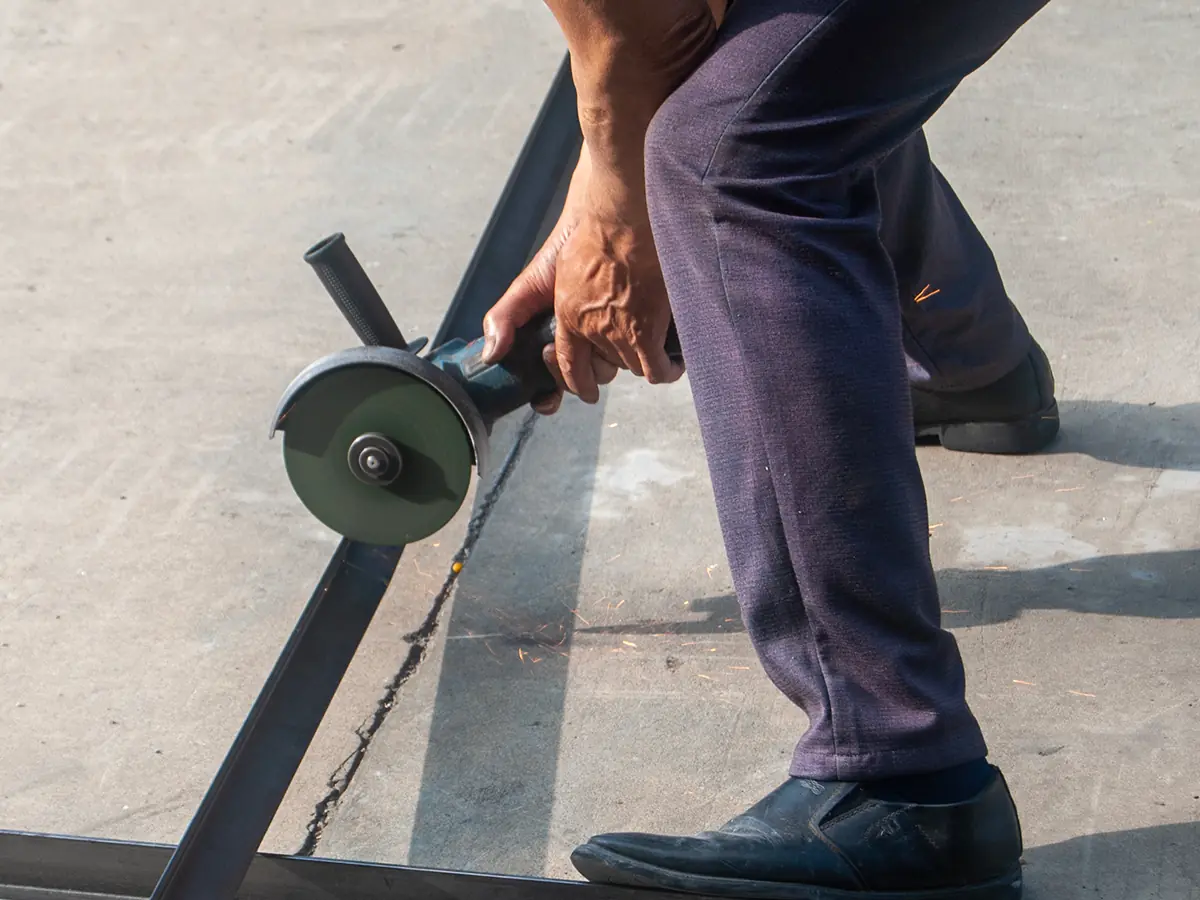
This is what most people picture when they ask about a DIY dumbwaiter: buy the steel, weld the frame, source a winch, wire a controller, hang a car. It is also the only DIY dumbwaiter category that cannot be placed into legal service in any developed market, for reasons that have nothing to do with your skill as a fabricator. The blocking issue for a DIY dumbwaiter is documentation, and we come back to it below.
Converted or repurposed: reusing something that already lifts
The third project starts from a machine that appears to be half the answer: a garage door opener, a small chain hoist, a decommissioned freight lift, a pallet stacker mast. Each of them lifts, and none was designed to hold a load stationary above a person’s head for years while a door opens onto it. When a DIY dumbwaiter build “mostly works”, this is what it is, and the failure mode is not a broken machine — it is an uncontrolled descent.
| Project type | Machine certification | Installation permit | Acceptance inspection | Who carries liability |
|---|---|---|---|---|
| Kit assembly | Held by the manufacturer | Required | Required | Manufacturer for design, installer for workmanship |
| Scratch build | None obtainable | Normally refused without a certified design | Cannot be passed | You, personally and without limit |
| Converted unit | Void — outside original scope | Required; usually refused | Cannot be passed | You, and any contractor who touched it |
The three DIY dumbwaiter projects are not degrees of the same thing. Only the first one ends with a certificate of operation.
The Permit Question Comes Before the Design Question
Forum threads about a DIY dumbwaiter start with motors and gear ratios. That is the wrong end. The first question is who regulates the equipment at that address; the second is what they require before anyone may use it. Both answers arrive before you cut metal, and either can end the project.
In the United States and Canada the technical baseline is ASME A17.1/CSA B44, covering design, construction, installation, testing and inspection regardless of drive type. The code is a model document; enforcement sits with a state or local authority having jurisdiction, and that authority classifies the machine. In most of them the classification is blunt: a dumbwaiter is a conveyance, regulated like a passenger elevator minus the passenger.
Oregon makes it explicit — state statute defines an elevator as any hoisting mechanism with a guided car serving two or more landings and lists dumbwaiters inside that definition, so installation needs a permit, operation needs a permit issued after an acceptance inspection, and the work must be done by a licensed contractor employing licensed mechanics.
California runs the same logic through Cal/OSHA: permits, an acceptance inspection, annual inspections by a certified inspector and a five-year full-load test. Rhode Island requires permit drawings showing compliance with ASME A17.1 and A18.1 before a dumbwaiter may be installed at all. The belief that keeps the DIY dumbwaiter idea alive is the residential exemption, and it is half true in a way that misleads people.
Several jurisdictions exempt conveyances inside a single dwelling unit from the recurring certificate of inspection. Almost none exempt them from the installation permit and the acceptance inspection, because those two steps are what prove the machine was built to a recognised standard in the first place. Being spared an annual fee is not permission to build whatever you like.
| Requirement | Typical commercial site | Typical single dwelling | What it means for a DIY build |
|---|---|---|---|
| Installation permit | Required | Required in most jurisdictions | The first hard stop |
| Acceptance inspection | Required | Required in most jurisdictions | Where an uncertified design fails |
| Certificate of operation | Required, posted | Often required initially | Without it the unit is not in service |
| Periodic inspection | Annual, sometimes twice yearly | Frequently exempt inside a dwelling | The only requirement DIY usually escapes |
| Licensed installer | Required | Varies; often required anyway | Rules out self-installation in many states |
Indicative pattern across North American jurisdictions, not a substitute for asking your own authority.
If a DIY dumbwaiter goes into a workplace, a second duty joins the first: employers must keep equipment safe for workers, and an unlisted unit operated by staff is an obvious finding after an injury. Country-by-country obligations, including the Polish UDT and Romanian ISCIR registration routes, are collected in our guide to dumbwaiter regulations by market.
Six Devices a Home-Built Unit Cannot Supply
Here is the part that decides the argument. A DIY dumbwaiter is not a winch with a box on it. It is a defined set of safety functions, and the inspector’s job is to verify them one by one. Six appear on every legal unit, and a scratch-built DIY dumbwaiter typically has none of them in a form that can be verified.
| Safety function | What the code expects | What DIY builds usually have | Result at inspection |
|---|---|---|---|
| Landing door interlock | Door cannot open unless the car is there; car cannot move unless every door is locked. EN 81-30:2025 adds electrical safety devices, 7 mm minimum engagement and impact testing | A latch, a hook, a magnetic catch, a rope | Fail on the first item checked |
| Overspeed protection | Governor triggering safety gear that grips the guide rails | Nothing; the drive is expected to hold | Fail — no device to test |
| Slack rope detection | Switch that removes power when suspension tension is lost | Nothing | Fail |
| Buffers | Energy-absorbing stops at the bottom of the run | Rubber mat, timber, or nothing | Fail |
| Overload protection | Device preventing motion above rated load | A label, or nothing | Fail |
| Fail-safe brake | Brake applies when power is removed and holds rated load | A drive that coasts or free-wheels when unpowered | Fail under load test |
Six functions, one system. Removing any single row does not make the unit 85 per cent compliant — it makes it non-compliant.
Read the table as a system rather than a checklist. The interlocks on a DIY dumbwaiter are not fittings bolted to a door; they are electrical contacts inside the control circuit, and that circuit must remove power from the drive the moment a door unlocks. Interlock, controller and brake form one interlocking chain. You cannot build five of the six and own a machine that is nearly safe, because the missing one is what makes the other five meaningful.
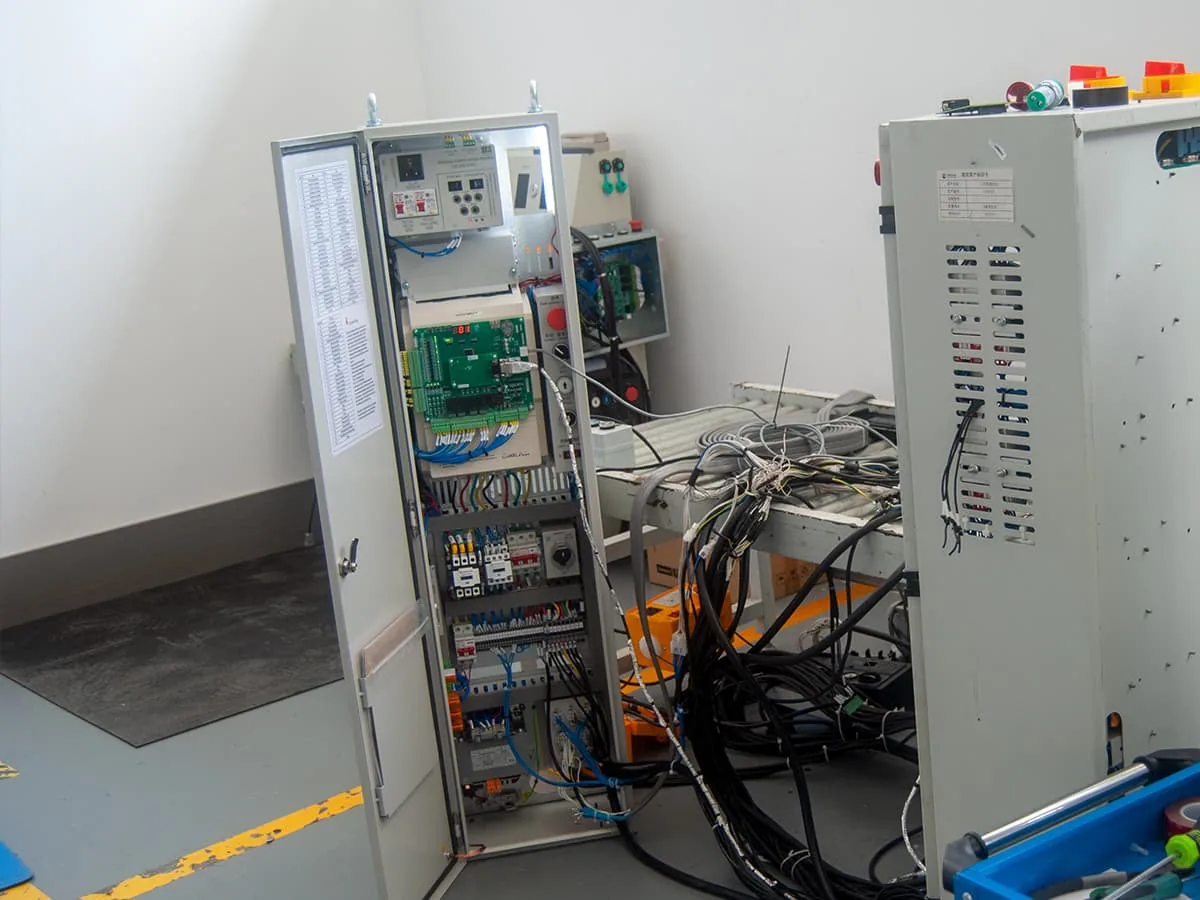
The second blocking issue for a DIY dumbwaiter is documentation, and it is harder to solve than the hardware. EN 81-30:2025 requires the manufacturer to retain design verification records, and the declaration of conformity must name the standard the unit was assessed against. In North America, listed electrical components under ASME A17.5 carry their own certification. A scratch builder has to produce that file, and the file is not a description of the machine — it is evidence that specified calculations, tests and component certifications were performed.
No third party will issue it retrospectively for a machine they did not design, and no inspector will accept a photograph of a welded frame in its place. This is also why weld quality matters less than people assume: the acceptance test does not grade your welds, it looks for the safety functions and the paperwork behind them.
Why the Garage-Door-Opener Route Fails
Of all the DIY dumbwaiter variants in circulation, the garage-door-opener build is the most popular and the most reliably bad. It appears in search suggestions as a real query, so a DIY dumbwaiter built that way deserves a direct answer rather than a general warning.
What an opener is actually designed for
A garage door opener is a short-duty actuator for a balanced load that is never suspended over people. Its duty cycle is a handful of cycles per day. Its load is counterbalanced by torsion springs, so the motor mostly overcomes friction rather than weight. It stops at the ends of travel with limit switches that detect position, not speed. Its safety features are reversal sensors and a manual release, both of which exist because the hazard is a closing door in an occupied doorway, not a falling mass in a shaft.
The three functions it cannot provide
No fail-safe brake. This alone ends the argument. A lift brake must be spring-applied and electrically released, so that losing power stops and holds the car. An opener does the opposite: removing power leaves the mechanism free, which is why every opener has a manual release cord. Build a DIY dumbwaiter on one and a power cut becomes a descent.
No overspeed protection. If the cable slips, the drum overruns or a fitting fails, a lift needs a governor and safety gear to grip the rails and stop the car mechanically. An opener has no concept of the car’s speed, so there is nothing to trigger and nothing to catch. This is the failure mode that kills people in home-built hoists, and it is silent until it is not.
No duty rating for the job. A restaurant dumbwaiter runs dozens of trips per service; an opener’s thermal protection will cut out long before that, and repeated cycling degrades the gearbox and the limit settings. A DIY dumbwaiter built on an opener is usually abandoned not because it broke, but because it became unreliable enough that staff stopped trusting it.
There is a legal layer on top: an opener is a consumer product certified for its own use, so mounting it on a DIY dumbwaiter ends its manufacturer’s responsibility at the moment of modification and transfers every consequence to whoever made the change.
Three Grades of DIY, Ranked by What They Risk
The useful output of all this for a DIY dumbwaiter is not a yes or no. It is a boundary, and the boundary runs through the middle of the project rather than around it. Part of a DIY dumbwaiter installation is ordinary building work that a competent owner or local contractor can do well. The rest is regulated lifting equipment.
| Grade | What falls inside it | Why the risk is what it is | Verdict |
|---|---|---|---|
| Green | Shaft masonry and framing, fire-rated lining, door openings, floor reinforcement, power provision, machine-space ventilation, finishes | Building work with no safety function in the lift chain, inspected as building work | Reasonable to do yourself |
| Amber | Physically assembling a certified kit, hanging doors that arrive with the unit | The machine is compliant; the open question is whether local rules require a licensed hand | Ask the authority first, in writing |
| Red | Drive, suspension, door locking, controller, safety devices, any repurposed actuator | These are the functions the code exists to control, and none can be self-certified | Do not do it |
The boundary is not about skill. A competent fabricator can build the red column and still not be able to put it into service.
Notice which column the money sits in. The red column is where a DIY dumbwaiter is supposed to save thousands, and it is precisely the column that cannot be legally completed. The green column is where real savings are available, and the amounts are smaller than people expect because the drive and controls are a modest share of a small unit’s price — a point we quantify in the dumbwaiter price guide.
What You Can Legally Build Yourself
If the goal is to reduce project cost, the productive conversation is about the green column, because that work is real, it sits on the critical path, and it is often billed at a labour rate a motivated owner can beat. The shaft is the biggest green-column item in any DIY dumbwaiter: a rated enclosure, not a lined hole, with fire stopping at every floor and a plumb run within tolerance.
In older buildings with balloon framing that is the hardest part of the whole job, and it is ordinary construction work that a good builder handles without knowing anything about lifts. Openings, frames and finishes are next — cutting the landings, forming reveals, fitting architraves and closing plaster around factory door frames.
Two more items belong to the owner. Structural preparation — reinforcing the floor at the machine position, providing the pit or base, confirming the load path — matters because a lift adds a concentrated dynamic load, and an engineer signs that off cheaply compared with fixing it later. Services rough-in means bringing the supply, isolator and earthing point to the machine space plus light and a socket for maintenance. The connection to the controller is the installer’s job; getting power to the right corner of the right room is yours.
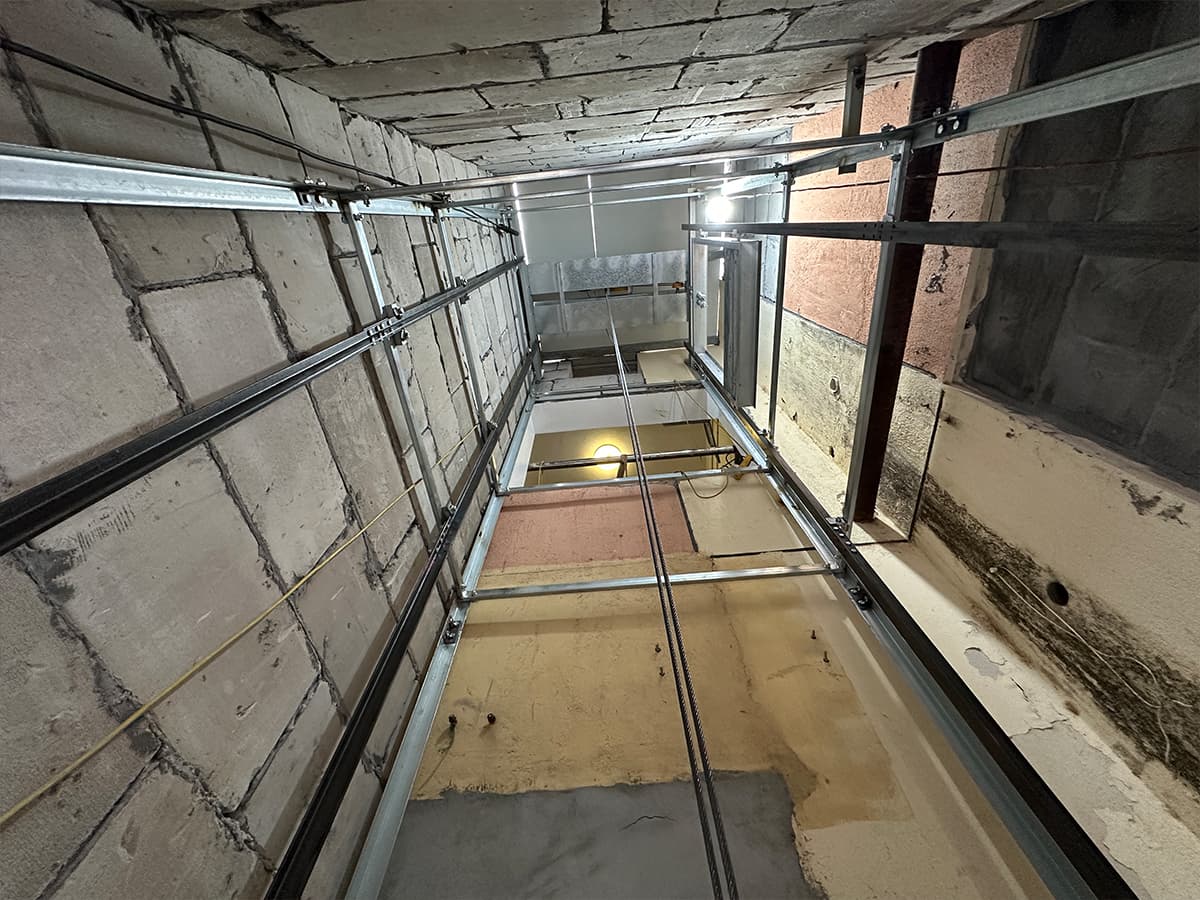
One caution on the shaft for any DIY dumbwaiter, because it is the most common expensive mistake in owner-managed projects. Internal dimensions are dictated by the car, the counterweight and the clearance the code requires around them.
A shaft built to “about a metre square” from a sketch is often 50 mm short in the one direction that matters, and the fix is demolition, not adjustment. Select the machine first, then build the shaft to its drawing — the numbers are in our dumbwaiter dimensions and shaft guide, and the sequence is set out in dumbwaiter installation requirements.
The Cost Comparison Nobody Does Properly
Cost comparisons for a DIY dumbwaiter subtract the installation labour from a quote and declare a saving. That arithmetic is wrong in three places, and correcting it changes the decision.
| Cost line | Scratch-built | Certified kit, self-assembled | Factory unit, installed |
|---|---|---|---|
| Machine and material | Low on paper | Moderate | Moderate to high |
| Design and verification | Your time, and no compliant output | Supplied with the unit | Supplied with the unit |
| Certification file | Not obtainable | Included | Included |
| Permit and inspection | Payable, and likely refused | Payable | Payable, usually handled by the contractor |
| Installation labour | Zero, nominally | Your time, or a licensed hand | Included |
| Rework after inspection | Unbounded | Low | Low |
| Insurable | Usually not | Yes | Yes |
| Can be put into service | Normally no | Yes | Yes |
The saving in a DIY dumbwaiter is labour. Labour is not where the money is — certification and liability are.
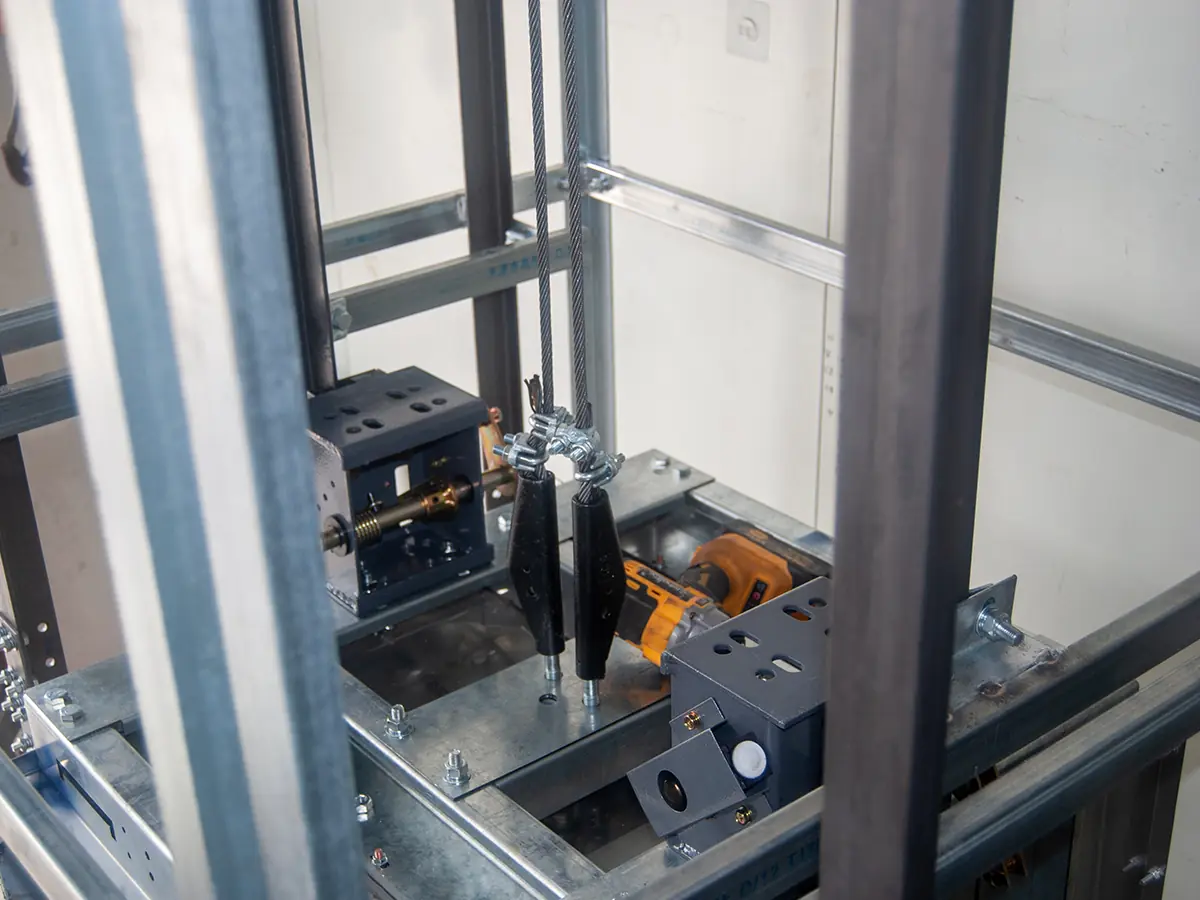
The first error in any DIY dumbwaiter budget is treating labour as the biggest line. On a small unit, installing a DIY dumbwaiter is days, not weeks, and the drive and controls are a minority of the hardware cost, so a scratch-built DIY dumbwaiter removes an expense that was never dominant. The second is pricing risk at zero: an uninspected machine is an uninsurable asset, and the exposure is not the cost of the lift but the cost of the injury it causes.
The third is ignoring resale, where an undocumented conveyance becomes a disclosure problem a buyer’s solicitor will find. There is also a quieter cost that shows in no spreadsheet: a half-working DIY dumbwaiter is not abandoned cleanly. It occupies a shaft that could have held a compliant unit, and removing it costs almost as much as the installation because the enclosure has to be opened again.
The Permit Path, Step by Step
The sequence below is what a legal DIY dumbwaiter installation involves in a typical North American jurisdiction. It is included so the effort can be judged before the project starts, not as a route to follow without professional help.
- Classify the equipment with the authority. Confirm in writing that the installation is treated as a conveyance, which code edition applies and whether a licensed contractor is mandatory. This one call decides whether a DIY dumbwaiter of any kind is possible at that address.
- Produce drawings and a specification. Layout, shaft section, rated load, speed, stops, drive type and the standard the machine is assessed against. A self-drawn shaft with no machine selected cannot be reviewed.
- Apply for the installation permit. In many jurisdictions the application must come from the licensed contractor, which closes the self-install route early.
- Build the shaft and the services. This is where owner-supplied labour belongs; the enclosure must be finished to the rated construction before the machine goes in.
- Install the machine. Licensed mechanics, factory documentation, torque records and a load test.
- Acceptance inspection, then the certificate. The inspector tests door interlocks floor by floor, the brake under rated load, the overspeed device and the documentation. Only a satisfactory report produces the permit to operate, and until it exists the unit is not in service — a technicality that becomes a liability the day someone uses it.
What follows depends on the market: some US jurisdictions reinspect annually, some semi-annually, and residential units inside a dwelling are often exempt from the recurring certificate while still needing the initial one. What the recurring visit tests, and what inspectors write down, is covered in the dumbwaiter inspection schedule.
Europe: EN 81-30:2025 and the CE Mark Problem
The European route is structured differently and, for anyone contemplating a DIY dumbwaiter, more explicitly closed. EN 81-3:2000+A1:2008 governed service lifts for two decades and has been withdrawn; EN 81-30:2025 replaces it, published in December 2025 for lifts carrying goods only.
The scope is familiar: permanently installed electric or hydraulic service lifts, rated load up to 300 kg, car floor area up to 1.0 m², car depth up to 1.0 m, car height up to 1.20 m and rated speed up to 1 m/s. Above that envelope, accessible goods-only lifts fall under EN 81-31:2024. What changed is not the envelope but the burden of proof.
| Technical area | EN 81-3:2000 | EN 81-30:2025 |
|---|---|---|
| Electrical safety | Basic requirements | Performance Levels per EN ISO 13849-1, plus explicit EMC requirements |
| Door locks | Mainly mechanical locking | Electrical safety devices added, 7 mm minimum engagement, impact tested |
| Suspension | Safety factor of at least 8 | Rope terminals must reach 80 per cent of minimum breaking force |
| Hydraulics | Simple overview | Stricter rupture and throttle valve positioning, compression fittings prohibited, oil temperature monitoring |
| Verification | Brief | Documented compliance, with design verification records retained by the manufacturer |
The last row is what blocks a DIY dumbwaiter. The other four define what must be verified; the last defines who must prove it, and keep the proof.
CE marking is a file, not a sticker
Under the Machinery Directive a manufacturer may self-declare conformity; no third-party approval is required for this product class. That sounds like an opening for a determined DIY dumbwaiter builder, and legally it is one. Practically it is not, because self-declaration means you become the manufacturer: you write the declaration of conformity, you name EN 81-30:2025 as the standard, you assemble the technical file and you keep the design verification records.
Those records require the calculations and tests the standard specifies, including terminal efficiency data. A DIY dumbwaiter builder who cannot produce them has signed a document they cannot support, which is a worse position than not signing at all.
The legal layer is also moving. Directive 2006/42/EC remains the applicable law until 19 January 2027, when Regulation (EU) 2023/1230 takes over with no dual-application window for units placed on the market afterwards. The regulation keeps CE marking and the declaration of conformity, extends documentation duties to digital formats and requires the technical file to be kept for at least ten years, so a unit documented in 2026 should already be built for that regime.
In the United Kingdom, placing the machine on the market is governed by the Supply of Machinery (Safety) Regulations 2008 with UKCA or CE marking, and BS EN 81-30:2025 is the reference standard; once in use at work, PUWER 1998 and LOLER 1998 apply. HSE publishes the guidance on LOLER that inspectors work from, and a home-built unit can produce neither the declaration nor the examination history that either layer expects. The product-law framework behind both is summarised by the European Commission’s machinery pages.
Insurance, Resale and the Liability You Keep
The claim is refused, not reduced. Property and liability policies commonly exclude equipment installed without the required permits or not maintained to the applicable standard. When something happens, the insurer’s first request is the permit and the inspection certificate. A DIY dumbwaiter has neither, so the loss is uninsured and the injured party looks for the person responsible — which is the person who built it.
The house becomes harder to sell. Conveyances are disclosed and checked during a property transaction, and an undocumented lift in a shaft is a defect a buyer can price or walk away from. Removing a DIY dumbwaiter is not cheap: the enclosure has to be opened, the machine cut up, and the shaft made good. That number is frequently larger than the original installation would have been. In a workplace it stops being a civil matter. Employers owe staff a safe place to work, and an unlisted lift that injures an employee produces findings against the employer, not just the builder.
The pattern repeats across markets: inspection regimes exist so that equipment is admitted to service by someone other than its builder, and the penalty for skipping admission falls on the operator. If the machine is going into a business the cost of doing it properly is a line item; if it is going into a home that will be sold, it is a line item that protects the sale.
When DIY Is Genuinely the Right Answer
Being honest about the limits means being honest about the exceptions. Some situations make a self-built lifting arrangement not merely legal but sensible, and they share one property: the equipment is not a permanently installed conveyance. A hoist, not a lift. A portable hoist serving a mezzanine in a workshop, a barn or a storage yard generally falls outside the definition of a dumbwaiter because it has no guided car serving fixed landings. Add rails and permanent landing openings and most authorities reclassify it, so the exemption belongs to the installation, not the mechanism.
A setting with its own regime. Some non-building applications fall under machinery or lifting-equipment rules enforced differently from building conveyances. That does not mean unregulated; it means a different regulator, and the safe assumption is that a load suspended over a person is regulated somewhere. You are the licensed contractor. A small number of readers can legally do the whole job because they hold the licence. For everyone else the licence is the gate, and it is not a formality — it exists because the failure mode is a falling mass.
You build the green column and buy the rest. This is the version of a DIY dumbwaiter that works, and the one we recommend without reservation. Build the shaft, form the openings, provide the services, finish the reveals — then buy a certified machine and let a licensed installer put it in.
You keep the savings that are real, you avoid the certification you cannot produce, and you end up with a working lift, which is the actual goal. A DIY dumbwaiter that cannot be put into service is not a cheaper dumbwaiter; it is a more expensive hole in the building.
DIY Dumbwaiter FAQ
Is it legal to build your own dumbwaiter? Building a DIY dumbwaiter from scratch is not a viable route to a legal installation in any developed market. Most jurisdictions require a permit and an acceptance inspection, and the inspection tests safety devices and a certification file that no DIY dumbwaiter can supply. Building the shaft and the surrounding building work is a different matter and is commonly allowed.
Can I build a dumbwaiter with a garage door opener? No. An opener has no fail-safe brake, so a power cut releases the load instead of holding it, and no overspeed protection to catch a slipping cable. It is also rated for a few cycles a day and a counterbalanced load. This is the single most dangerous DIY dumbwaiter idea in circulation.
Do I need a permit for a DIY dumbwaiter in my own house? In most North American jurisdictions, yes for the installation and the acceptance inspection. Some places exempt conveyances inside a single dwelling unit from the recurring certificate, which is a different requirement. The exemption people assume they have is almost always the periodic one, not the installation one.
How much cheaper is a DIY dumbwaiter? Less than the arithmetic suggests. The saving is installation labour, and on a small unit the drive and controls are a modest share of the price. A scratch-built DIY dumbwaiter also forfeits the certification file, which makes the machine uninsurable and effectively unusable, so the comparison is between a working lift and an expensive object.
What safety devices must a DIY dumbwaiter have? Landing door interlocks on every floor, overspeed protection with safety gear, slack rope detection, buffers at the bottom of travel, overload protection and a brake that applies when power is removed. They work as one chain: the interlocks sit in the control circuit, the circuit releases the brake, and the brake holds the load.
Is a manual rope-and-pulley dumbwaiter exempt? Not from the installation rules. Removing the motor removes the electrical inspection items, not the conveyance classification, and a hand-operated unit still needs door locks, a working brake and landing protection. The mechanical limits of manual units are set out in the manual dumbwaiter guide.
Can I install a factory dumbwaiter kit myself? Sometimes. The machine arrives certified, so the documentation problem disappears, but the installation may still be reserved to a licensed contractor depending on where you are. Ask the authority having jurisdiction before ordering, and get the answer in writing — it changes the specification you buy.
Next Step: What to Send Instead of a Drawing
If you arrived here planning to fabricate a DIY dumbwaiter, the useful conclusion is not that the idea was foolish. It is that the work you can genuinely do yourself is the building work, and that the machine should arrive certified. That split gives you most of the saving and none of the exposure.
To price it properly, send five things: the rated load you actually need, the number of floors and travel height, the shaft dimensions you have or can build, the landing door positions, and the destination address for freight. With those, a factory can say which sizes fit the shaft you can afford to build, and whether a manual or powered unit is the right answer — usually within a working day, and dramatically cheaper than discovering the shaft is 50 mm short after the concrete has set.
ServLifts builds dumbwaiters in Wujiang, Suzhou and quotes the machine, the door sets and the documentation pack together, so the acceptance inspection has something to inspect. If you are still deciding whether a dumbwaiter is the right machine at all, start with what a dumbwaiter elevator is and how a dumbwaiter works; if your concern is the operator rather than the builder, the safety functions are described in dumbwaiter safety. When the five inputs are ready, contact ServLifts or read the manufacturing side in dumbwaiter manufacturer in China.
[…] Two of these deserve a note. The first is frequency: one that sees five trips a day for twenty years is a good investment, and the same machine in a busy restaurant becomes a grievance in a fortnight. The second is the assumption that “no power” is permanent – if the site is a new build in a district where the supply is coming next year, it is a decision you will want to reverse, and reversing it means replacing the drive, the cabinet and the wiring. If the temptation is to skip the machine and build it yourself, the permit and certification limits are set out in what a DIY dumbwaiter can and cannot be. […]
[…] also why fabricating the machine yourself rarely pays: the saving lands on the labour line, while a DIY dumbwaiter gives up the certification the rest of the cost depends on. Ask for those lines quoted separately […]