Welcome to ServLifts Official Website

Dumbwaiter Maintenance Guide: Keep Your Food Lift Running Smoothly
Essential dumbwaiter maintenance guide covering daily inspections, weekly cleaning routines, monthly lubrication schedules, common troubleshooting, and when to call a professional.

Why Dumbwaiter Maintenance Matters
A dumbwaiter is a workhorse, and dumbwaiter maintenance keeps it that way. In a busy restaurant, it may make 50–100 trips per day, carrying hot food, dirty dishes, and supplies between floors. Without regular dumbwaiter maintenance, small issues — a loose guide shoe, a dry chain, a worn door interlock — can snowball into costly breakdowns that halt your kitchen operations.
This guide covers everything from daily inspection checklists to monthly maintenance schedules, common troubleshooting, and when to call a professional. A written dumbwaiter maintenance routine takes minutes a day and prevents most breakdowns. Following these steps will keep your dumbwaiter lift running smoothly for years. As recommended by OSHA, a documented preventive maintenance program is the foundation of safe material handling equipment operation.
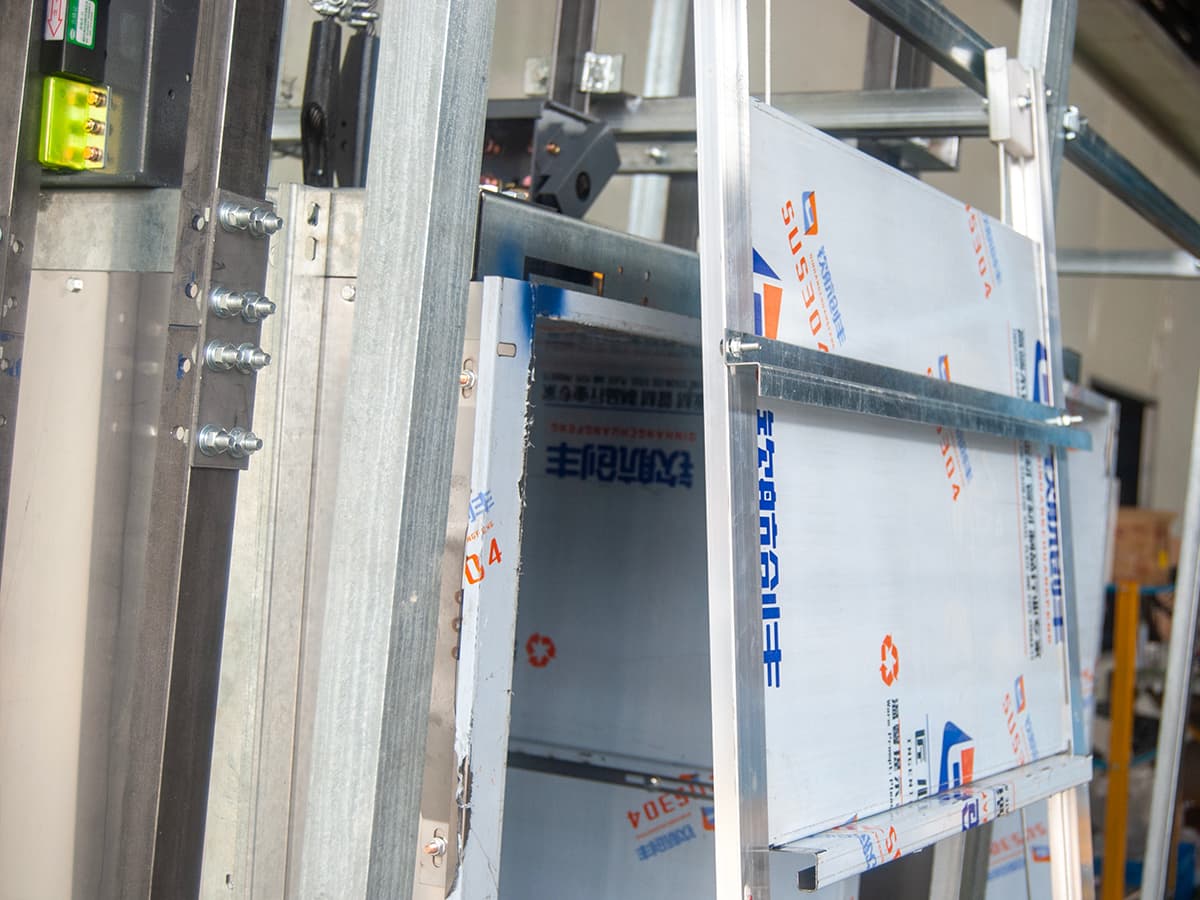
Daily Dumbwaiter Maintenance Checklist
Assign a staff member to perform these checks at the start of each shift. It takes less than 5 minutes and can prevent 90% of breakdowns:
| Check Item | What to Look For | Action if Failed |
|---|---|---|
| Car operation | Smooth start/stop, no jerking | Stop using, call technician |
| Unusual noise | No grinding, squeaking, or rattling | Note sound, schedule inspection |
| Door interlock | Car does not move with door open | Stop using immediately |
| Call buttons | All buttons respond and illuminate | Check wiring connection |
| Landing indicator | Shows correct car position | Reset control panel |
| Car interior | Clean, no debris or liquid spills | Wipe down, dry thoroughly |
| Odor | No burning smell from motor or wires | Cut power, call electrician |
Weekly Dumbwaiter Maintenance Tasks
Guide Rail Cleaning
Dust, grease, and food particles accumulate on the guide rails over time. This buildup causes the guide shoes to stick, leading to jerky movement and accelerated wear. Every week:
- Run the car to the top landing and lock it in place.
- Wipe the guide rails with a clean, dry cloth from top to bottom.
- For greasy buildup, use a cloth lightly dampened with isopropyl alcohol.
- Inspect the guide shoe surfaces for wear. If the Teflon lining is worn through to metal, replace the shoe immediately.
Chain and Rope Inspection
For chain-type dumbwaiters, check the chain for:
- Stretch — A chain that has stretched more than 2% of its original length must be replaced.
- Rust — Surface rust can be cleaned and lubricated. Deep pitting means replacement.
- Stiff links — Flex each link by hand. Stiff links indicate insufficient lubrication or corrosion.
For traction-type dumbwaiters with steel ropes, look for broken wires, kinks, or diameter reduction. Even a single broken wire warrants closer inspection — three or more broken wires in a single strand means immediate replacement. These inspection criteria align with ASME A17.1 wire rope retirement standards for elevator and lift systems.
Monthly Dumbwaiter Maintenance Schedule
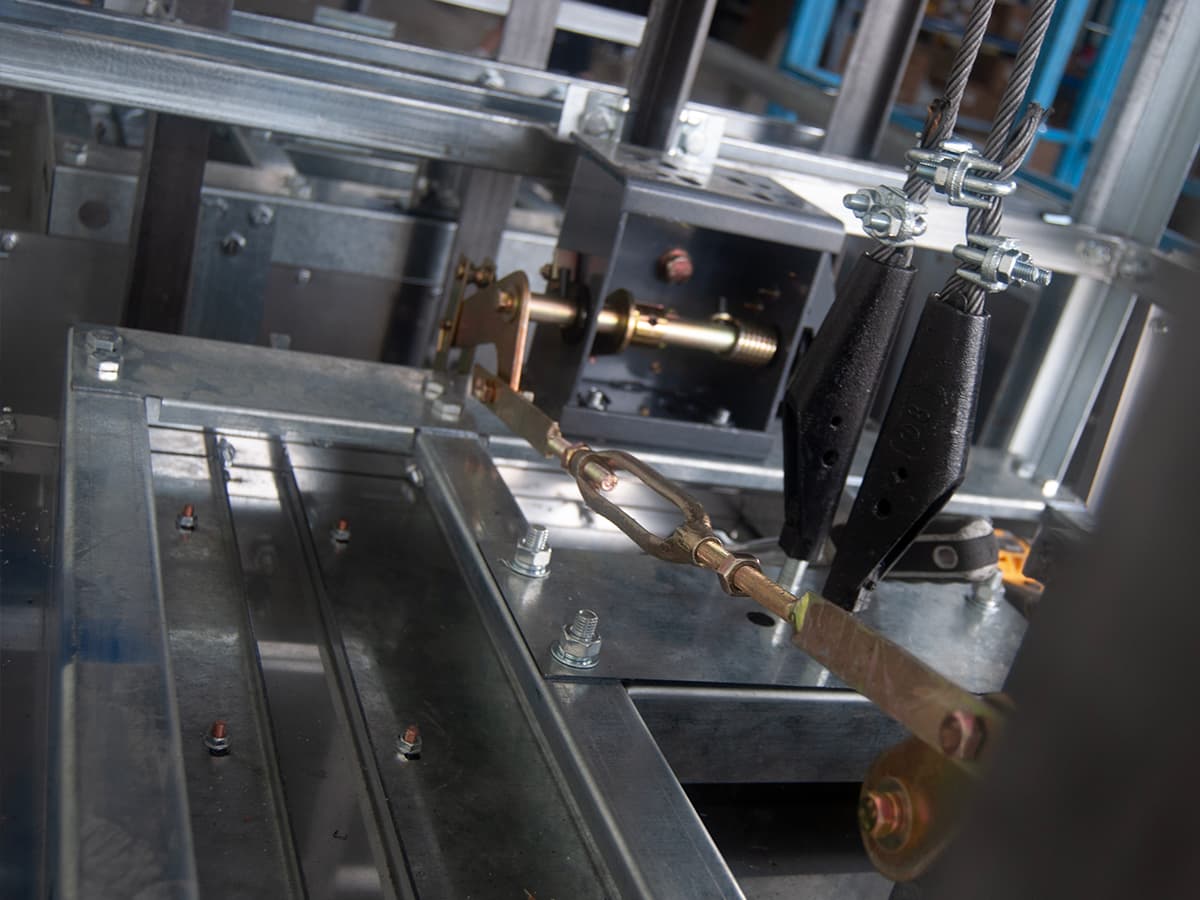
Lubrication Points
Proper lubrication is the single most important factor in dumbwaiter longevity. Use this lubrication chart:
| Component | Lubricant Type | Frequency | Amount |
|---|---|---|---|
| Guide rails | Light machine oil (ISO VG 32) | Monthly | Thin film, wipe excess |
| Traction chain | Chain lubricant spray | Bi-weekly | Until all links are coated |
| Guide shoe liners | Silicone-based grease | Quarterly | Thin layer on contact surface |
| Traction sheave groove | None (keep dry) | — | Clean with solvent only |
| Door hinge pins | Multi-purpose grease | Monthly | One pump per hinge |
| Counterweight guide rails | Light machine oil (ISO VG 32) | Monthly | Thin film |
Important: Never lubricate the traction sheave groove or the brake drum. Oil on these surfaces causes rope slippage and brake failure.
Electrical Component Check
Every month, inspect the following electrical components:
- Control panel — Open the panel and check for loose terminals, burnt contacts, or swollen capacitors. Tighten all terminal screws to 1.2 Nm.
- Limit switches — Manually actuate each limit switch and verify the control panel registers the signal. Clean any dust from the switch mechanism.
- Door interlock switches — Test each landing door interlock by attempting to start the car with the door open. The car must not move.
- Motor windings — Use a multimeter to check winding resistance. Compare with the manufacturer’s specification. A 10% deviation indicates developing insulation failure.
- Earth continuity — Verify the resistance between the frame and earth ground is less than 0.1 ohm.
Common Dumbwaiter Problems and Troubleshooting
| Symptom | Likely Cause | Solution |
|---|---|---|
| Car does not move | Door interlock not engaged; blown fuse; tripped breaker | Close all doors firmly; check breaker panel; replace fuse |
| Car stops mid-travel | Dirty limit switch; loose wiring connection; overheated motor | Clean limit switch; check terminal connections; let motor cool 15 min |
| Loud grinding noise | Worn guide shoes; dry chain; misaligned guide rails | Replace guide shoes; lubricate chain; check rail alignment |
| Car jerks or stutters | Guide rail buildup; uneven rope tension; failing bearing | Clean rails; equalize rope tension; replace bearing |
| Motor runs but car doesn’t move | Broken traction rope; sheave slip; brake stuck engaged | Do not use — call technician immediately |
| Burning smell | Overloaded motor; shorted wiring; brake dragging | Cut power immediately — call electrician |
| Car drifts downward when stopped | Worn brake lining; oil on brake drum | Replace brake lining; clean brake drum with solvent |
When to Call a Professional
Some jobs go beyond routine dumbwaiter maintenance: controller faults, unusual motor noise or repeated door errors need a qualified technician.
While daily and weekly checks can be handled by trained kitchen staff, certain situations require a qualified technician:
- Any brake-related issue — The brake is the most critical safety component. Never attempt to adjust or repair it yourself.
- Traction rope replacement — Replacing ropes requires specialized tools and tension calibration.
- Control board failure — Diagnosing and replacing control boards requires manufacturer-specific knowledge.
- Guide rail realignment — If rails shift due to building settlement, realignment requires laser measurement and specialized brackets.
- Annual safety inspection — Most jurisdictions require an annual inspection by a certified elevator technician. Keep the inspection certificate on file.
Maintenance support varies by supplier. Buy from a global elevator major such as Otis or Hitachi and servicing usually means their local contract — reliable, but priced for passenger-elevator scale. With a specialized dumbwaiter manufacturer, the same technical expertise is reachable directly from the factory, often with remote diagnostics and faster spare parts.
ServLifts offers remote technical support and ships spare parts worldwide. If you encounter a problem beyond your maintenance scope, contact your installer or reach out to our technical team.
Dumbwaiter Maintenance Spare Parts to Keep on Hand
Minimize downtime by stocking these commonly replaced parts:
| Part | Replacement Frequency | Why It Fails |
|---|---|---|
| Guide shoe liners (Teflon) | 6–12 months | Friction wear |
| Traction chain | 2–3 years | Stretch and corrosion |
| Limit switch | 2–3 years | Mechanical wear, dust ingress |
| Door interlock switch | 1–2 years | Daily use, moisture |
| Call button microswitch | 1–2 years | Repeated pressing |
| Brake lining | 3–5 years | Friction wear |
| Fuses (various ratings) | As needed | Overload, short circuit |
Having these parts on site means a technician can complete most repairs in a single visit, rather than waiting days for parts to ship. If you are planning a new dumbwaiter installation, ask your supplier to include a starter spare parts kit with the order.
Frequently Asked Questions
How often should I lubricate my dumbwaiter?
Guide rails and door hinges should be lubricated monthly. Traction chains need lubrication every two weeks in high-use environments. Never lubricate the brake drum or traction sheave groove.
What is the lifespan of a dumbwaiter?
With proper maintenance, a quality dumbwaiter lasts 10–15 years. The traction chain typically needs replacement every 2–3 years, and guide shoe liners every 6–12 months. The motor and control panel can last the full lifespan if protected from voltage fluctuations.
Can I use WD-40 on my dumbwaiter chain?
No. WD-40 is a solvent, not a lubricant. It will remove existing lubricant and attract dust. Use a dedicated chain lubricant spray designed for elevator or conveyor chains. For guidance on selecting the correct industrial lubricant, refer to machinery lubrication best practices from industry experts.
How do I know if my guide shoes need replacement?
Inspect the Teflon liner. If you can see metal through the liner, or if the liner thickness is less than 1 mm, replace immediately. Worn guide shoes cause jerky movement and damage the guide rails.
What should I do if my dumbwaiter stops working during service?
Stop using it immediately. Check the breaker panel for tripped breakers. If the breaker is fine, check for obvious issues like a door not fully closed. If the problem persists, call a qualified technician. Never attempt to bypass safety switches to get the car moving.
[…] lubrication of moving parts; and annual professional servicing. ServLifts provides comprehensive maintenance guidance and supplies all necessary spare parts to keep your equipment in peak […]
[…] inspection of motor, control system, safety devices, and rope tension. ServLifts provides ongoing maintenance support and stocks all replacement parts for long-term […]
[…] affect the operation stability of mini freight elevators. Regular inspection, as outlined in our maintenance guide, can effectively extend the service life of the equipment and reduce failure […]
[…] the right lift to site conditions, daily throughput and long-term maintenance budgets. See our maintenance guide for cost […]
[…] and other administrative penalties to eliminate hidden safety hazards from the source. See our maintenance guide for inspection […]
[…] For the full checklist, read the dumbwaiter maintenance guide. […]
[…] what to check, how often, and what a technician should verify — the maintenance specialists at ServLifts have a practical guide that covers the same […]
[…] what to check, how often, and what a technician should verify — the maintenance specialists at ServLifts have a practical guide that covers the same […]
[…] Two things follow from the way British dumbwaiter regulations handle the examination report. First, the report is tied to a specific unit, so it cannot be reused across a site or transferred to replacement equipment. Second, the defects and deadlines it lists are obligations, not suggestions; an operator who ignores a stated deadline loses the protection the examination was supposed to provide. This is a different model from the American certificate-of-inspection approach, and it is why British buyers often need more paperwork per unit than their counterparts in the United States. The routine work behind that report is set out in this dumbwaiter maintenance guide. […]
[…] la cabina y las guías limpias, revisa los enclavamientos de puerta y sigue el plan de nuestra guía de mantenimiento (en inglés). El mantenimiento planificado es lo que mantiene un montaplatos fiable durante una […]
[…] Two things follow from the way British dumbwaiter regulations handle the examination report. First, the report is tied to a specific unit, so it cannot be reused across a site or transferred to replacement equipment. Second, the defects and deadlines it lists are obligations, not suggestions; an operator who ignores a stated deadline loses the protection the examination was supposed to provide. This is a different model from the American certificate-of-inspection approach, and it is why British buyers often need more paperwork per unit than their counterparts in the United States. The routine work behind that report is set out in this dumbwaiter maintenance guide. […]