Welcome to ServLifts Official Website

Who Makes Dumbwaiters? 4 Proven Ways to Tell Who Really Built It
Most dumbwaiters carry a brand that never built them. Four identities sit behind one nameplate, and here is how to read each one before you order.

What this page covers:
- Who Makes Dumbwaiters: The Short Answer
- The Four Roles That Share One Dumbwaiter
- Why This Trade Splits Identity More Than Most
- Three Manufacturing Regions, Three Business Models
- What a Nameplate Actually Tells You
- Who Owns the Certificate
- The Serial Number Is the Only Real Thread
- Who Answers the Phone in Year Five
- Four Questions That Settle It, and Where We Fit
- Who Makes Dumbwaiters: Questions Buyers Ask
The Short Answer: Usually Not the Company on the Nameplate
Most dumbwaiters are not built by the company whose name they carry. Ask who makes dumbwaiters and the answer usually starts with a factory you have never heard of. They are built by a factory that sells to that company, often under a brand name the factory never uses in public. This is not a secret and it is not a scandal. It is how a low-volume, high-variation product reaches a global market.
So when a buyer asks who makes dumbwaiters, the honest answer is that one machine usually has two or three company names attached to it, and the name you can see is the one least likely to be the builder. The brand on the nameplate is a sales identity. The builder is a production address. The certificate holder is a legal entity. On a great many units these are three different companies in three different countries.
That single fact changes how you should read a quotation, a certificate or a website, and it is why most answers about who makes dumbwaiters describe a sales channel rather than a workshop. It also explains why two suppliers who appear to be competitors can be selling the same machine with different doors and different paperwork. Both are answering who makes dumbwaiters from a different seat in the same chain.

The Four Roles That Share One Dumbwaiter
Before asking who makes dumbwaiters, separate the four jobs that get merged under the word “manufacturer”. Each one can sit with a different company, and each one answers a different question when something goes wrong. Split them and the question of who makes dumbwaiters stops being a riddle.
| Role | What it actually does | Who usually holds it | How you can see it |
|---|---|---|---|
| Brand owner | Puts a name, model code and catalogue behind the product | Dealer, installer, regional brand, trading house | Nameplate, carton, manual cover |
| Builder | Cuts, welds, wires, tests, crates | Factory with a workshop and a test rig | Only visible on the factory floor or in the test record |
| Legal responsible party | Signs the declaration and accepts the compliance duty | Manufacturer of record, or importer for the destination market | Declaration of conformity, certificate |
| Service provider | Supplies parts and answers faults after installation | Whoever the buyer actually calls, often a third party | Spare parts list, warranty terms, response promise |
Role 1: The Brand Owner Is a Sales Identity
A brand owner can be a competent company with twenty years of installations and no factory at all, and that is the first answer to who makes dumbwaiters: not the name you recognise.
They know the local code, the inspectors, the architects and the service routes. What they do not have is a press brake and a test tower, and they have decided not to buy one.
That decision is usually rational. A brand that sells thirty units a year across four countries cannot amortise a paint line. So it buys from a builder and invests in the part of the business that actually wins repeat orders: service.
Role 2: The Builder Is an Address, Not a Logo
The builder is the entity with the shaft frame jigs, the welding fixtures and the load test rig, and it is the only role that can truthfully answer who makes dumbwaiters.
This is the role that determines whether the car is square, whether the door interlock repeats, and whether the brake holds at 125 percent of rated load.
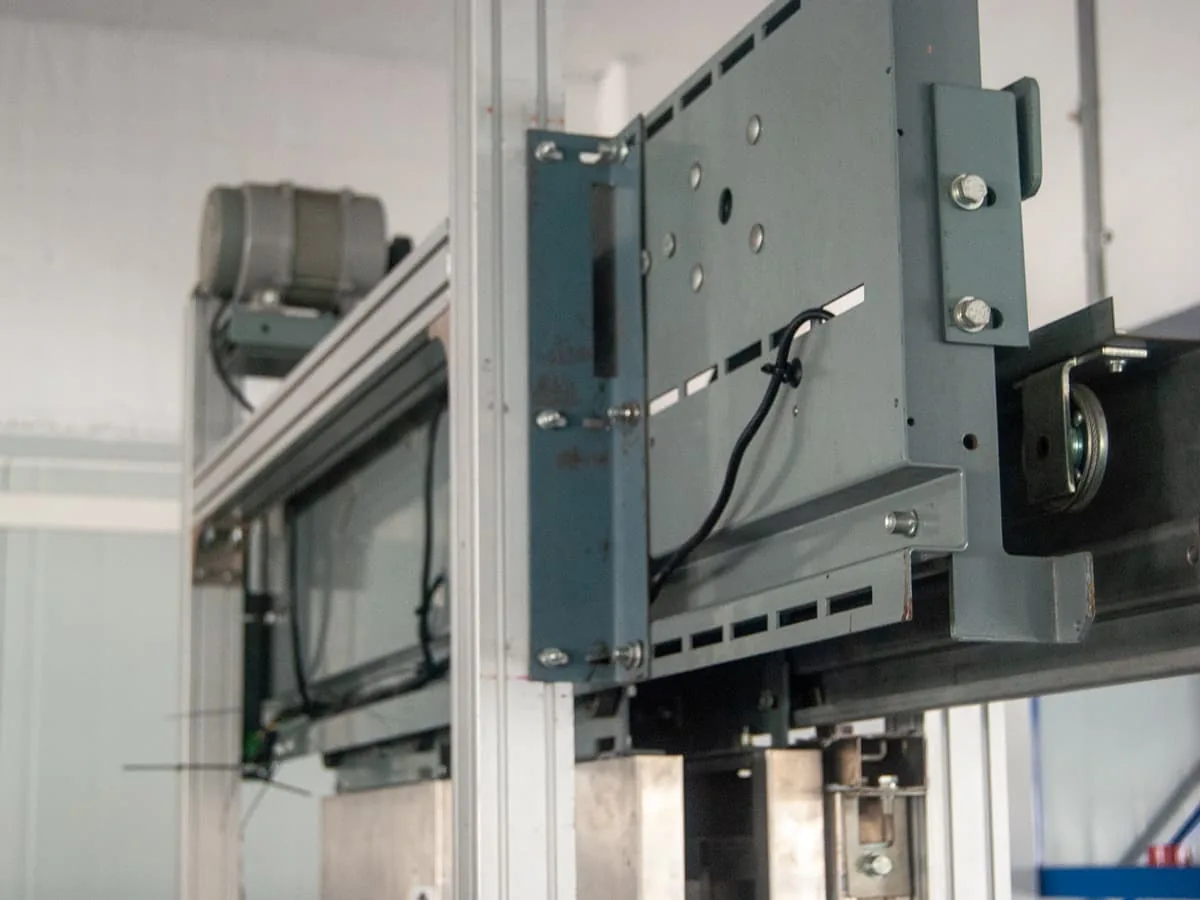
You cannot see this role on a website. You can see its fingerprints: weld quality on the frame, whether guide rail brackets are at consistent intervals, whether the control cabinet wiring is ferruled and numbered, and whether the test record has a serial number on it rather than a date.
Role 3: The Legal Party Is Whoever Signed
Compliance is the role buyers most often misread. In the European Union the declaration of conformity names a responsible party, and that party carries specific duties when the equipment is placed on the market. In North America the duty attaches to the equipment meeting the adopted code, and the authority having jurisdiction enforces it at inspection.
A brand that is not the builder can still be the legal party, and often is, because regulators care about who put the product on the market rather than who welded it. That is legitimate, but it means the paperwork will not tell you who built the machine. It will only tell you who is answerable for it, which is a different question from who makes dumbwaiters.
Answering who makes dumbwaiters, then, means answering four questions in sequence rather than one. Each has a different witness: the nameplate for the brand, the factory floor for the builder, the declaration for the legal party, and the parts list for whoever will still be there in year five.
Why This Trade Splits Identity More Than Most
Four numbers explain the whole structure, and they also explain why the question of who makes dumbwaiters has no single answer. A dumbwaiter carries a car floor area of no more than nine square feet, a compartment height of no more than four feet, and a rated load of no more than 500 pounds under ASME A17.1, the model code most North American jurisdictions adopt. The European equivalent, EN 81-3, works to roughly the same envelope: about one square metre of car floor and 1.2 metres of height.
Those limits are what keep a dumbwaiter cheap and its shaft under a square metre, and they are also why the category is defined by a standard rather than by a marketing department. Cross any one of the three limits and the product stops being a dumbwaiter in the eyes of the code. It becomes a material lift or a freight elevator, with different testing, different doors and a different price.
Now add the commercial side. A single unit is worth a few thousand dollars, and almost every order changes something: shaft dimensions, number of stops, loading height, door type, finish, voltage, destination code. High variation, low volume, low ticket. Fixed costs for shearing, bending, welding, painting and a test rig have to be spread across very few units.
The arithmetic pushes in one direction, and it is the reason who makes dumbwaiters is rarely a single company. A factory that wants steady volume serves several brand names instead of chasing one; a brand that wants a full catalogue finds a factory instead of building one. Both sides gain, and the visible result is one machine with more than one owner of its identity.
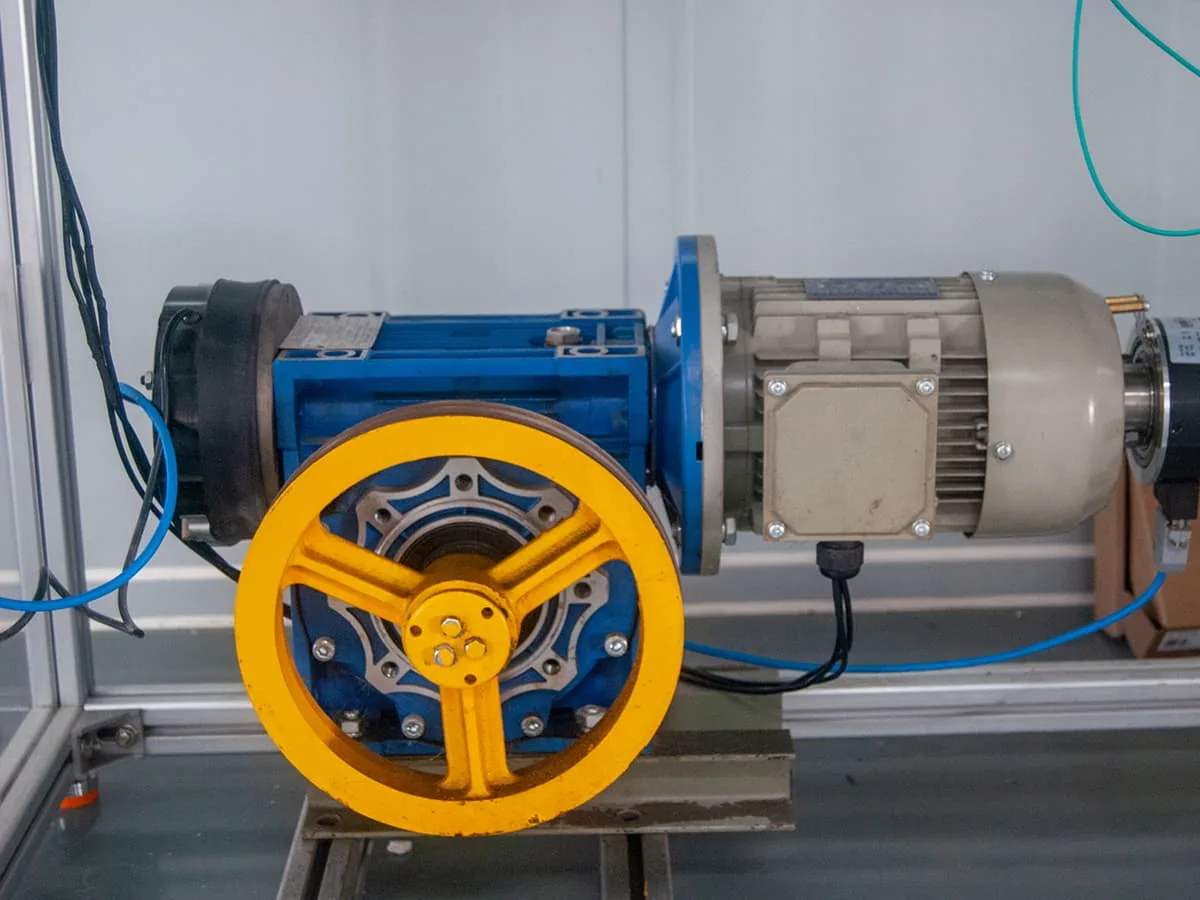
There is also a technical reason the split survives. Most of the critical components are bought in by everyone, including the largest names: the traction machine, the wire rope, the controller board, the door lock. A 0.75 kW worm-reduction machine with a self-locking gear stage, two 6 mm ropes with a safety factor above eight, a counterweight trimmed to the car plus half the rated load, and rail brackets at roughly 1.5 metre centres is a specification, not a signature.
Two factories building to it will produce machines that behave alike, which is why who makes dumbwaiters often matters less than who tested it.
Three Manufacturing Regions, Three Business Models
Ask who makes dumbwaiters and the answer depends on which region you are buying into, because the three main supply regions organise the same product in three different ways.
| Region | Typical profile | How it sells | What it means for a buyer |
|---|---|---|---|
| North America | Regional family firms, many founded between the 1880s and the 1970s, staff measured in tens | Direct, through dealers, with strong local installation and code knowledge | Best support, highest unit price, limited customisation of shaft envelope |
| Europe | Full-line lift manufacturers that treat the dumbwaiter as one product line among many | Through distributors and project channels, machine-room-less traction designs | Documentation is strong, lead times are long, small quantity orders are unwelcome |
| China | Complete-lift factories with in-house sheet metal, welding, painting and test rigs | Direct export, dealer supply, own brand plus OEM and ODM under the buyer’s name | Widest specification range and lowest landed cost, but you must verify who is building |
The North American pattern explains a lot of what buyers see online. A company that has been building dumbwaiters since before the second world war usually has a small catalogue, a regional service network and a price that reflects a domestic cost base. It is a real manufacturer, and its nameplate is truthful, so this is the one region where who makes dumbwaiters and who sells the unit are usually the same company. It is also the pattern people generalise from, and then get confused by.
The European pattern is a product-line story. A large lift maker adds a dumbwaiter to its range because hotel and hospital projects ask for one, and the unit inherits the group’s documentation culture. Capacity and geometry are usually narrower than a specialist would offer, because it has to fit a shared platform. The nameplate is honest, but it names a group rather than a workshop, so who makes dumbwaiters becomes a question about a division.
The Chinese pattern is where the question of who makes dumbwaiters gets sharp. A complete-lift factory already owns the sheet metal line, the welding bays, the paint shop and the test tower, so adding a dumbwaiter to the range costs very little. That is why so many units on the international market carry a brand that belongs to a dealer in one country and a build record that belongs to a factory in another.
Publicly listed prices from Chinese suppliers for a standard unit commonly sit in the low thousands of US dollars, which tells you something about where the fixed cost landed.
None of the three is better in the abstract. What matters is that you know which one you are buying from, because the trade-offs are not the same, and because only one of them can answer who makes dumbwaiters for the unit in your quotation. If you want the sourcing mechanics of the Chinese route specifically, that is a separate subject and we cover it in our guide to sourcing from a dumbwaiter manufacturer in China.
What a Nameplate Actually Tells You
For anyone asking who makes dumbwaiters, the nameplate is the only part of the machine designed to be read by someone who was not in the sales conversation. It is also the part most buyers photograph badly, or not at all, which is why the question of who makes dumbwaiters stays unanswered for years after installation.
| Field | What it establishes | If it is missing |
|---|---|---|
| Brand and model code | Who sold it and which catalogue version it belongs to | You cannot match it to a manual or a parts list |
| Rated load | The legal capacity, not the practical one | Load tests and inspections become a negotiation |
| Stops or travel | The configuration it was built and tested for | A later stop addition has no baseline to work from |
| Manufacturing year | Which code edition applied when it was built | Retrofit obligations cannot be dated |
| Serial number | The link back to a production record | The builder cannot confirm anything about this unit |
| Standard reference | ASME A17.1, EN 81-3 or the local adoption | The inspector has to establish compliance from scratch |
The Six Fields to Photograph on Day One
Photograph all six before the crate leaves the yard, and keep the photos with the installation address. Anyone asking who makes dumbwaiters a few years later will be asking for exactly these fields. Two minutes of work removes most of the ambiguity that comes up in year three, when a spare part has to be ordered and nobody remembers which version of the car frame was supplied.
The same discipline applies to the control cabinet, where manufacturers commonly reserve a plate position for the buyer’s label. A cabinet door can be relabelled in minutes; the wiring diagram inside it cannot. Photograph both, because neither one alone answers who makes dumbwaiters.

Who Owns the Certificate
Certificates are where the question of who makes dumbwaiters becomes commercial, because a certificate names a party and that party is not always the builder. So who makes dumbwaiters and who certifies it have to be asked as two separate questions. Three arrangements look identical in a PDF attachment and mean three different things in practice.
| Arrangement | Who holds it | What you can do with it | What it does not prove |
|---|---|---|---|
| Certificate in the builder’s name | The factory that made the unit | Cite it as the manufacturer’s evidence | Nothing about your own brand |
| Authorised use by a brand | The brand, by written permission | State that your units are covered by it | That the brand is the manufacturer |
| Importer obligation | Whoever places it on the market | Sign a declaration in your own name as importer | That design responsibility moved with it |
Authorised Use Is Not Ownership
A written authorisation lets a brand tell a customer or an authority that the units supplied to it are covered by the factory’s certificate. It does not transfer the certificate, and it does not survive a change of factory. It is usually tied to a model range and a serial range, and it is normally non-transferable. None of that changes who makes dumbwaiters, and none of it is meant to.
The European framework behind this is public: the EU CE marking rules separate the obligations of the manufacturer from those of the importer, and the machinery rules set out what each has to hold. In the UK the same question is answered under LOLER for equipment in use at work, including the twelve-month thorough examination. Both regimes care about who is responsible, not who is upstairs with a welding torch.
If a supplier cannot say which of the three arrangements applies to your order, that is not a paperwork gap. It is an answer about how the supply chain is organised.
That is also why who makes dumbwaiters is the wrong question to open with. Who certifies the unit, and in what capacity, produces a document; who builds it produces a story.
The Serial Number Is the Only Real Thread
Everything on a nameplate except the serial number can be reproduced, which is why the serial is the real answer to who makes dumbwaiters for any individual unit. Brand plates are printed, model codes are reused, years are approximate. The serial is the only field that should resolve to a single line in somebody’s production record, with a car frame drawing, a wiring version and a test result attached to it.
This is the practical test of who makes dumbwaiters for your specific unit. Send the serial to the brand and ask for the general arrangement drawing that matches it. A brand that owns a production record answers in a day. A brand that bought the unit through an intermediary has to ask someone else, and the delay is the most reliable answer to who makes dumbwaiters you will get.
It is also the test that makes spare parts possible later. The parts that fail first on a dumbwaiter are the controller board, the door lock and the traction machine brake. All three are versioned, and the version is tied to the serial, not to the model name.
For the wider question of what a standards body actually publishes, the ASME codes and standards catalogue is the reference point behind A17.1, and it is worth knowing that the code is adopted state by state rather than applied nationally in one move.
Who Answers the Phone in Year Five
Who makes dumbwaiters matters most when the warranty is over. At that point the brand on the nameplate, the builder and the service company may be three different organisations, and the one you can reach is not always the one that holds the drawings. That is when who makes dumbwaiters stops being an academic question.
| Situation in year five | Parts availability | What to secure at order stage |
|---|---|---|
| Brand and builder still trading | Direct, with a version match | Serial-indexed parts list and two spare door locks |
| Brand gone, builder trading | Good, if you kept the serial | The builder’s contact and the GA drawing in your own file |
| Builder gone, brand trading | Depends on the brand’s stock policy | Written parts commitment with a stated holding period |
| Both gone | Rebuild or replace the controller | Unbranded schematic and a controller that is not proprietary |
The controller is the weak point in every scenario, because electronics go obsolete faster than steel. A board that was current in 2026 may be out of production well before the machine reaches twenty years. That is an argument for asking, at order stage, what the replacement path is, and for keeping an unbranded schematic in the building file where an independent technician can use it.
Door locks and brakes are the opposite case: simple, cheap, and worth holding two of each. Every inspection that fails on a dumbwaiter tends to fail on the same short list, which we set out in the dumbwaiter inspection schedule.
Four Questions That Settle It, and Where We Fit
The question of who makes dumbwaiters resolves faster through four specific questions than through any amount of catalogue reading. None of them is about price.
- Whose name is on the certificate, and in what capacity? Manufacturer, authorised user, or importer. Three answers, three different levels of responsibility.
- Whose record holds this serial number? If the answer is “our supplier’s”, the production knowledge is not with the company you are buying from.
- What happens when the controller board goes obsolete? A named replacement path or a proprietary board is the real answer, and it is decided at order stage.
- Was the drawing made for my shaft, or is it a catalogue drawing? This one separates a builder from a reseller faster than a factory video.
We sit on the builder side of that table, and we also sell under other people’s names, so we answer who makes dumbwaiters with a workshop address rather than a brand story. That is why the identity structure in this article is not a warning about other suppliers: it describes our own business too. Units leave this workshop with our nameplate, and units leave it with a buyer’s nameplate and the same frame, the same rope specification and the same test record behind them.
If your situation is the branded one, the operating detail sits on our private label dumbwaiter page. If it is a straight purchase, the useful comparison is between a factory, a dealer and a project house, which is what supplier verification is for. And if you already know your shaft dimensions, the fastest way to shorten this whole conversation is to send them with a photo of the opening, using the contact form.
Who Makes Dumbwaiters: Questions Buyers Ask
Who makes dumbwaiters? In most cases a specialist factory builds the unit and a separate company sells it under its own brand. The builder handles fabrication, wiring and testing; the brand handles specification, paperwork and service. On a large share of units sold internationally, those are two different companies.
Does the brand on the nameplate have to be the manufacturer? No. A dealer, an installer or a regional brand can be the legal party for the product in its market without owning a factory. What the brand must be able to do is name the builder and produce the record for your serial number. That is the practical form of the answer to who makes dumbwaiters.
How can I tell whether a supplier is a factory? Ask for the serial-indexed drawing, the test record and the name of the person who signs the declaration. Then ask what the general arrangement drawing was dimensioned from. A factory answers from its own records; a reseller forwards the question, which is usually the moment the conversation about who makes dumbwaiters ends.
Are Chinese factories the ones building most dumbwaiters? They build a large share of the internationally traded volume, because a complete-lift factory can add a dumbwaiter to an existing sheet metal, welding and paint operation at low marginal cost. Whether that unit reaches you under a Chinese brand or a local one depends on the channel, not on the factory. In that sense who makes dumbwaiters is always a factory, and the brand is a routing decision.
Is a dumbwaiter defined by size or by marketing? By size. ASME A17.1 limits the car floor to nine square feet, the compartment height to four feet and the rated load to 500 pounds; EN 81-3 uses a comparable envelope. Exceed those and the product becomes a different category with different duties. That is also why who makes dumbwaiters cannot be settled by a brand claim alone.
What should I keep after installation? The nameplate photos, the serial number, the general arrangement drawing, the wiring schematic, the declaration of conformity and the spare parts list. Six documents, one folder, and the identity question stops being a mystery in year five.
If you want the mechanical side of the same machine, our explanation of how a dumbwaiter works covers the drive, the rope path and the interlock chain. If you are sizing a shaft, start with the dimensions guide. If you are planning for the years after handover, the spare parts guide is the one to keep open, and if your market has a specific inspection regime, the regulations overview maps US, UK and EU duties side by side.
For the factory end of this supply chain, see what a China dumbwaiter factory actually does.