Welcome to ServLifts Official Website

Dumbwaiter Supplier Verification: 7 Proven Checks Before You Pay
Seven practical checks to run before you pay a dumbwaiter supplier: factory proof, certificates, drawings, test video, spare parts and deposit safety.

Most buyers start with price. The buyers who never get burned start with dumbwaiter supplier verification.
A dumbwaiter is not an off-the-shelf product. The car, the shaft frame, the doors and the control system are built to fit one specific building, and your deposit usually leaves the account weeks or months before the machine ships. If the supplier cannot deliver, you are left with a shaft opening in the wall and no lift.
Below are the seven checks we would run ourselves if we were the buyer. Together they take a few hours, and they are the difference between a smooth installation and an expensive lesson.
Contents
- Why dumbwaiter supplier verification matters more than price
- Check 1: Real factory or trading company?
- Check 2: Certificates that actually mean something
- Check 3: The construction drawing test
- Check 4: Serial numbers, photos and test video
- Check 5: Spare parts and after-sales reality
- Check 6: Payment terms and deposit safety
- Check 7: Talk to a past buyer
- Red flags to walk away from
- Frequently asked questions
Why Dumbwaiter Supplier Verification Matters More Than Price
Two quotes for the same “100 kg food lift” can differ by 40% and still both be honest. One workshop fits a 1.1 kW traction machine and 3 mm guide rails. Another fits 0.75 kW and thinner steel. On an email, the two offers look identical.
That is where the real risk sits. Not cartoon fraud, but a lift that matches the description on paper and starts failing in year three: a door that sticks, a control board nobody stocks, a supplier who no longer answers the phone.
Dumbwaiter supplier verification is simply how you tell those two cases apart before money moves. A serious factory expects it and answers quickly. If a supplier gets defensive at a video call, that is information too.
Check 1: Is It a Real Factory or a Trading Company?
Start with dumbwaiter supplier verification on the company itself, then compare prices. Both can be legitimate businesses. The difference is where your money and your schedule end up. A trading company adds a margin, then depends on somebody else’s production calendar, quality control and spare parts stock.
Ask for three specific things:
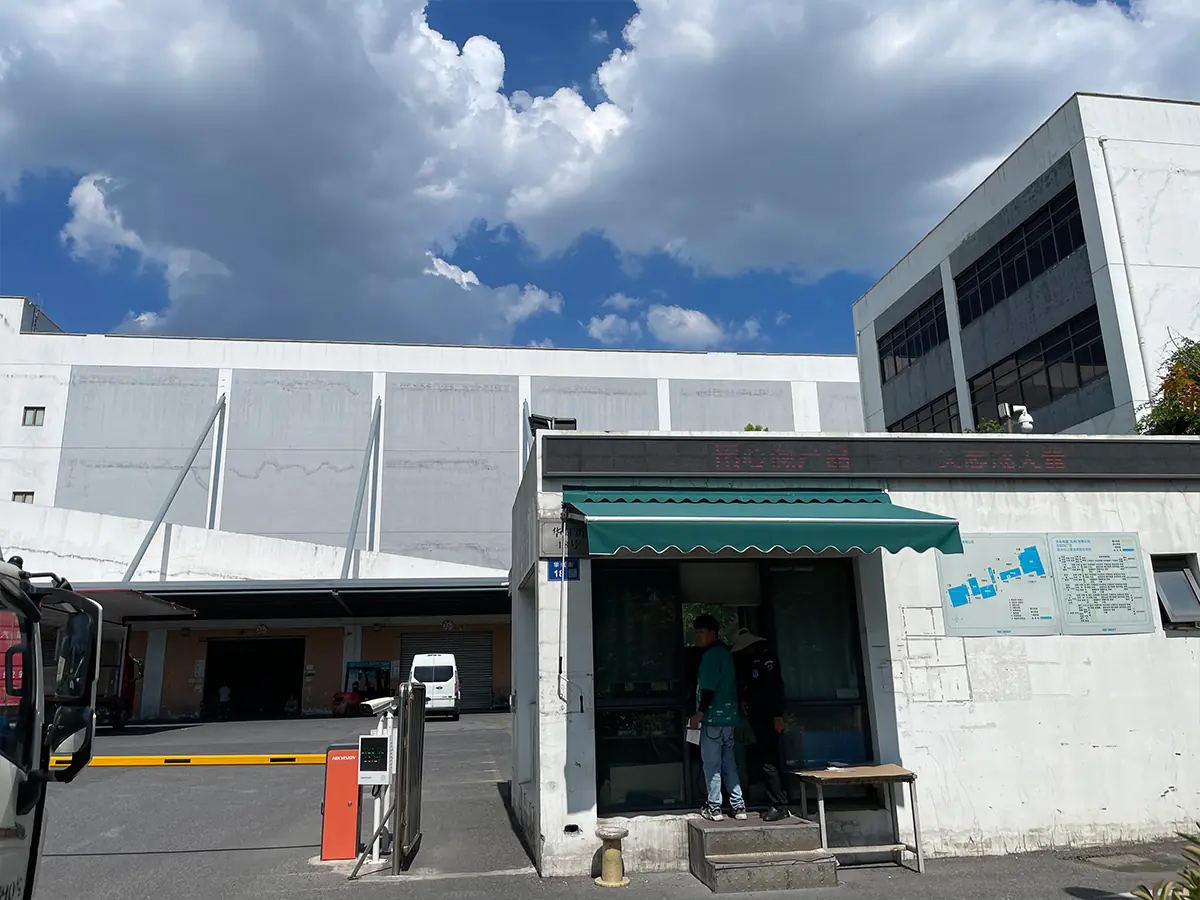
- A live video walkthrough, filmed on a phone, walking from the gate into the assembly area. Old clips are easy to send; a live call is not.
- The legal company name and business scope, plus the exact factory address. Then open that address on a map. Is it an industrial park, or a residential building?
- Who performs each step: laser cutting, bending, welding, painting, wiring. Every “we do it in-house” answer should come with a photo.
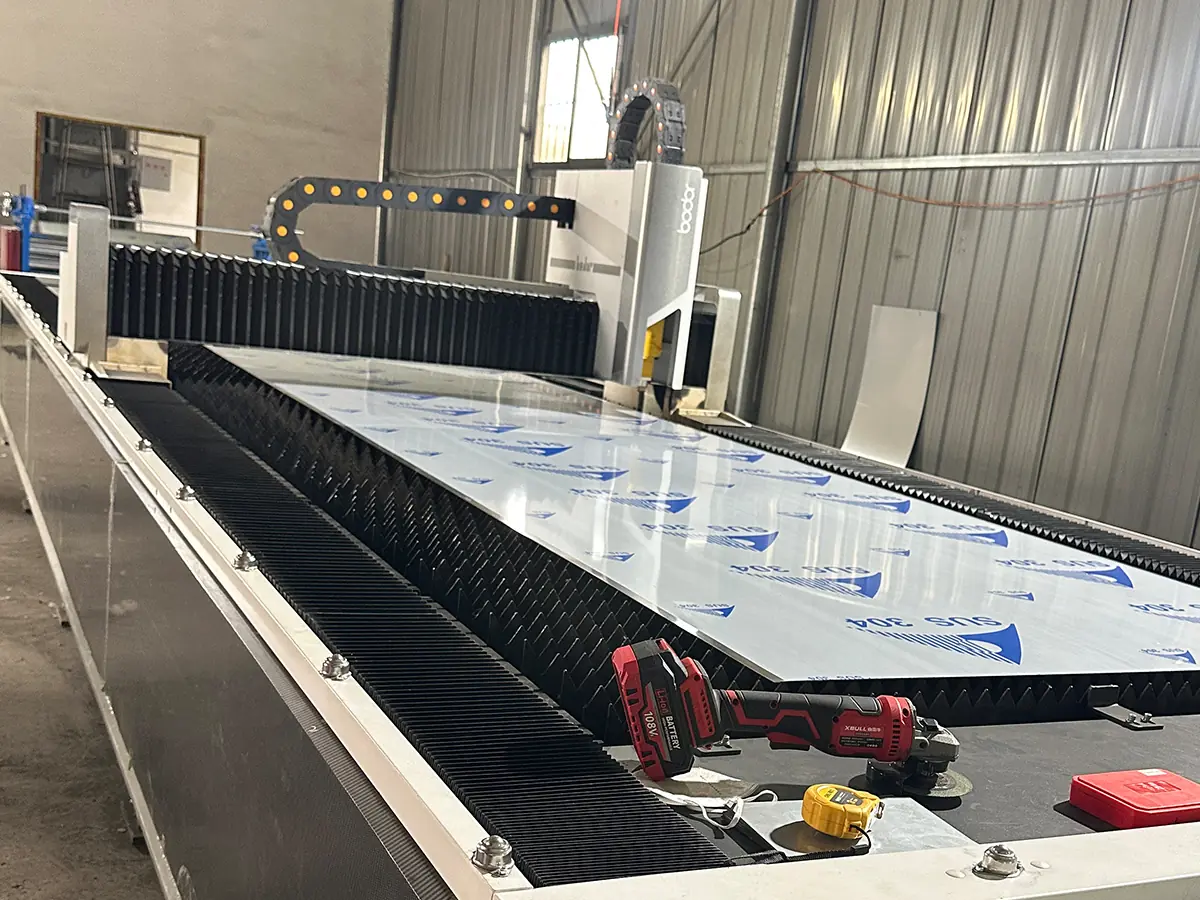
It also helps to know what a Chinese dumbwaiter factory actually looks like from the inside. We describe ours, machine by machine, in this walkthrough of what happens inside a china dumbwaiter factory.
Check 2: Certificates That Actually Mean Something
Certificates are the easiest thing to fake and the easiest thing to verify, which is why they sit at the centre of any dumbwaiter supplier verification. Read them in the right order:
- Test report first, declaration second. A Declaration of Conformity is signed by the manufacturer itself. The test report behind it comes from a laboratory. Ask for both.
- Check the scope line. A certificate that covers “elevator spare parts” does not cover a complete dumbwaiter. Read the product description, not the logo.
- ISO 9001 is about process, not product safety. It is a good sign, but it does not replace a type test on the machine you are buying.
It is worth understanding what CE marking actually requires before a supplier waves a certificate at you, and how ISO standards are structured. Both take five minutes to read and they change the questions you ask.
Check 3: The Construction Drawing Test
This is the most useful single test inside dumbwaiter supplier verification, and it costs you nothing. A real manufacturer cannot quote properly without knowing the building. Before numbers appear, they should ask:
- Shaft width, depth and total travel height
- Floor-to-floor heights for every level
- Door opening size and which side it opens
- Available power: single phase or three phase
- Load and what will be carried (food trays, laundry, documents, supplies)
Then they send a drawing: a shaft plan and an elevation, usually within two or three days, showing the car, the counterweight position, the machine location and the door arrangement. If a “supplier” quotes a price without ever asking about the building, they are copying somebody else’s datasheet. The machine will arrive, and it will not fit. We publish a full dumbwaiter dimensions guide for the same reason: buyers who know the numbers make better decisions.
Check 4: Serial Numbers, Photos and Test Video
Once an order exists, dumbwaiter supplier verification becomes concrete. Ask for three things before the container leaves:
- Nameplate and serial number for your unit, quoted in the contract and visible in the shipment photos.
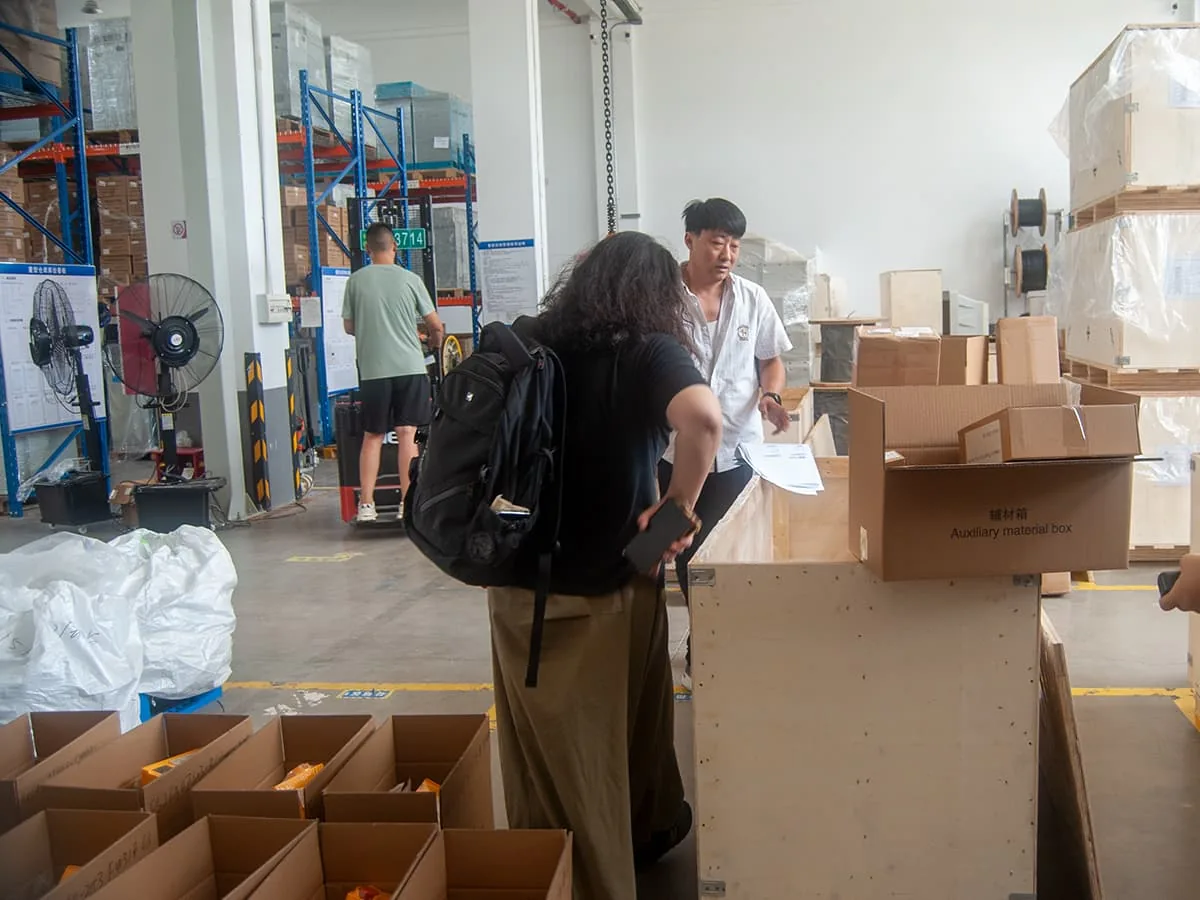
- Photos of your machine, not a stock machine: frame, doors, control cabinet, and the packing.
- A short test video: load test, levelling at each floor, door operation, and the control panel running.
This is standard practice in our own production. Every unit is assembled, wired and run before it is packed, which is why our dumbwaiter manufacturing process lists testing as a separate stage rather than a formality.
Check 5: Spare Parts and After-Sales Reality
A dumbwaiter is a long-term machine, so dumbwaiter supplier verification has to cover year four as well as year one. The interesting question is not the warranty length but what happens when a door interlock or a control board fails.
Ask these five questions and compare the answers:
- What does a replacement control board cost, and do you stock it?
- What is the lead time on a door operator, a traction machine, a set of ropes?
- How long is the warranty, and what exactly does it cover?
- Who walks my technician through the fault by video when something stops?
- Which parts are standard components I can source locally?
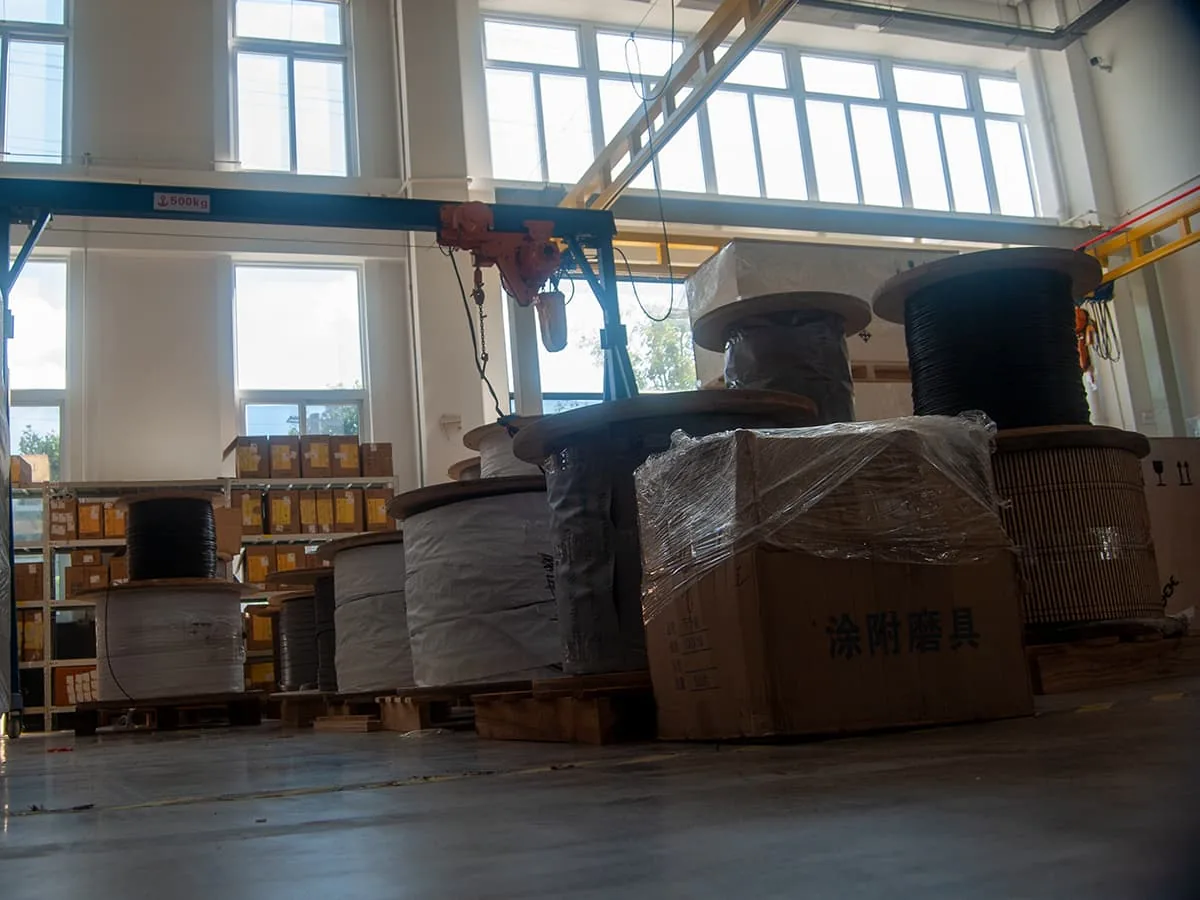
A supplier who stocks parts answers in minutes. A supplier who has to order from another factory quotes 20 to 40 days and hopes you do not notice. We keep a stock of dumbwaiter spare parts precisely because this question decides whether a lift is still running in year five.
Check 6: Payment Terms and Deposit Safety
Payment terms are where dumbwaiter supplier verification protects your money. Most export orders run on a deposit and a balance, commonly 30/70 or 50/50. The percentage matters less than the protection around it.
- Pay the company, never an individual. The bank account name should match the contract and the invoice.
- Write the specification into the contract: model, shaft size, load, speed, power, number of floors, door type, lead time and what happens if the date slips.
- Agree the inspection point in advance, so the balance is released against photos or a video, not against hope.
- Be suspicious of a price that is 30% below everyone else. It is usually thinner steel, a smaller motor, or a control system with no spare parts available.
Deposit structure is worth negotiating carefully, and we explain the normal options in this guide to dumbwaiter payment terms.
Check 7: Talk to a Past Buyer
The last step of dumbwaiter supplier verification is the simplest: talk to someone who already bought. Ask for two or three references you can actually contact, ideally in your region, plus photos of installed units. A factory that ships regularly has no trouble producing this. A company that resells occasionally does.
When you speak to a reference, ask about installation support and the response time when something went wrong. That tells you far more than a praise sentence in an email.
Dumbwaiter Supplier Verification: Red Flags to Walk Away From
After all seven checks, certain answers should stop an order immediately. Here is the short list we would act on. A complete dumbwaiter supplier verification ends with a decision, not with more open questions.
| Red flag | What it usually means |
|---|---|
| Quotes a price without asking your shaft size | Copying another factory’s datasheet; the unit will not fit |
| Refuses a live video call | No production line of its own |
| Cannot issue a construction drawing | No engineering capability behind the sales email |
| Asks for payment to a personal account | No protection if anything goes wrong |
| 30% cheaper than every other quote | Thinner steel, smaller motor, no spare parts pipeline |
| Vague on spare part lead times | After-sales support does not exist |
| No serial number or test video offered | Your unit is not being tracked or tested |
How Verification Looks at ServLifts
We build dumbwaiters in our own workshop in Wujiang, Suzhou. That means dumbwaiter supplier verification is not awkward for us: the checks above are a normal week.
- Video walkthroughs of the workshop, live, whenever a buyer asks.
- Free construction drawings after we receive your shaft dimensions, usually within two working days.
- CE documentation and test reports for the machine, not just a declaration page.
- Photos and a test video of your own unit before the container is loaded.
- Spare parts in stock, plus a direct line to the technician who assembled your lift.
If you would like to run dumbwaiter supplier verification on us, start with the dumbwaiter manufacturer in China page for the details of the company, or simply send your shaft drawing through the contact page and compare what comes back.
Frequently Asked Questions
How long does dumbwaiter supplier verification take?
For most buyers, two to five days. The video call and the certificate check take an afternoon. The drawing test adds two or three days because a real factory needs that long to produce an accurate shaft plan and elevation.
Is an in-person visit required for dumbwaiter supplier verification?
No, but it is the strongest option if your budget allows. A live video call covers most of the same ground: you can ask to see the assembly area, the finished units waiting for packing, and the control cabinets being wired.
What documents should dumbwaiter supplier verification cover?
Business license with the legal name and scope, CE test report and declaration, ISO 9001 certificate if claimed, a construction drawing for your shaft, the quotation with full specifications, and the contract showing model, load, floors, lead time and payment terms.
Is a CE certificate enough on its own?
No. The certificate tells you a product family was assessed. It does not tell you which components are inside the unit you are buying, or whether the supplier stocks the parts. Use it as one input among the seven checks, not as the decision.
Can a trading company pass dumbwaiter supplier verification?
Sometimes, if it is transparent, adds real value such as local installation or logistics, and can produce the factory’s drawings and test reports. The problem is the hidden link: when production slips or a part fails, you are waiting on a company that has no control over either.
Final Thoughts
Dumbwaiter supplier verification is not a test of character. It is a short, practical checklist that protects a purchase you will live with for fifteen years or more.
Run your own dumbwaiter supplier verification with three questions. Ask for the drawing. Ask for the test video. Ask who stocks the control board. The answers arrive fast from a factory, and slowly from everyone else.
[…] eight matters more each month. If you are still at the shortlisting stage, the checks in this supplier verification guide are worth running first. Any project commissioned from 2027 onward sits under the new European […]