Welcome to ServLifts Official Website

Hospital Dumbwaiter Guide: Improve Efficiency, Hygiene & Patient Care (2026)

Table of Contents
Hospitals and clinics run on logistics: patient meals, medications, clean linen, sterile supplies, lab samples, and waste all need to move between floors — constantly, reliably, and hygienically. A hospital dumbwaiter — a compact, non-passenger service lift built for healthcare loads — handles that movement quietly and safely, freeing clinical staff for patient care instead of stair-climbing. This 2026 guide covers what hospital administrators, facilities managers, and architects need to know: what these lifts carry, hygiene requirements, sizing, safety, and how to buy one that meets healthcare standards.
Why Hospitals Install a Dumbwaiter
- Efficiency. Nutrition, pharmacy, laundry, and housekeeping teams move goods between floors dozens of times a day. A dumbwaiter turns those trips into seconds.
- Staff focus. Nurses and orderlies spend their time on patients, not hauling trays and supplies up stairs or waiting on a passenger elevator.
- Separation of flows. Dedicated service lifts keep clean supplies and waste streams physically separated, which supports infection-control protocols.
- Space savings. A compact dumbwaiter fits a small shaft where a full service elevator cannot, ideal for retrofits and tight footprints.
What a Hospital Dumbwaiter Carries
A hospital dumbwaiter belongs to the same family of small service lifts described in our food lift vs service lift vs dumbwaiter guide. The same platform serves several hospital workflows:
- Patient meals from central kitchen to ward floors — the most common hospital use.
- Medications and pharmacy supplies between pharmacy and clinical floors.
- Clean linen and housekeeping supplies from laundry to wards.
- Sterile instruments and medical supplies between central supply and operating suites.
- Lab samples and documents between departments.
- Waste, using a dedicated unit or schedule to keep it separate from clean flows.
Hygiene & Materials for Healthcare
Hygiene is the defining requirement of a hospital dumbwaiter. Look for these features:
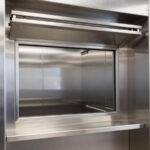
- Stainless steel cars (SS 304) that are easy to wipe down and resistant to cleaning chemicals.
- Sealed or easily removable surfaces with no hard-to-clean crevices.
- Smooth finishes and drip-proof designs that stand up to daily sanitation.
- Door seals to keep dust and odors contained during transit.
Sizing & Capacity
Most hospitals choose a car that fits standard meal trays and linen carts comfortably:
- 60×60 cm / 100–150 kg — ward-level meal and document lifts.
- 80×80 cm / 150–200 kg — linen and supply lifts for busier floors.
- 100×100 cm / 200–250 kg — heavier medical supply and equipment movement.
Confirm the car depth and door opening against your actual trays and carts before finalizing the specification.
Safety & Compliance in Healthcare
In a hospital environment, safety and documentation carry extra weight:
- Interlocked doors — the unit cannot move while a door is open.
- Overload protection and accurate floor-level stopping.
- Quiet, smooth operation so the lift does not disturb patients or staff.
- Certification and documentation. A credible manufacturer builds to recognized safety and design standards and ships the compliance file, wiring diagrams, and manuals with the unit — essential for hospital procurement and inspection.
- Service access. Confirm spare parts and technical support for a long-life asset in a 24/7 building.
Traction vs Hydraulic
For healthcare applications, a traction dumbwaiter is the stronger choice for most hospitals: no hydraulic oil to maintain or leak, lower standby power, quieter operation, and simpler periodic inspection. Hydraulic units still suit very heavy or occasional loads, but the typical 100–250 kg hospital specification is traction territory.
Buying a Hospital Dumbwaiter: What to Check
- Specify clearly — load, car size, stainless finish, and number of stops, so the quote matches the workflow.
- Confirm hygiene features — SS 304 car, sealed surfaces, and cleanable design.
- Verify the manufacturer with a live video call and the compliance file — our China dumbwaiter factory guide covers the full checklist.
- Plan the hoistway early with your architect and the mechanical/electrical team.
- Arrange after-sales — remote commissioning, spare parts, and warranty terms in writing.
Global elevator majors such as Otis and Hitachi build excellent passenger elevators, but a dedicated small service lift is often better served by a specialized manufacturer that builds this category exclusively.
ServLifts: A Specialized Manufacturer
ServLifts is a Suzhou, China-based manufacturer that builds only traction dumbwaiters and small service lifts — the same platform used in restaurants, hotels, and homes, configured for healthcare: stainless-steel cars, export-ready documentation, and builds matched to your market’s voltage and compliance requirements. Our SC-A and RC-B series cover car sizes from 60×60×80 cm to 100×100×120 cm and capacities of 100–250 kg, with FOB pricing in the US$2,265–$2,550 range and a 10% first-order discount for new buyers. A single hospital wing or clinic order gets the same engineering attention as a large project — that is the point of specializing.
Frequently Asked Questions
What is a hospital dumbwaiter used for?
A hospital dumbwaiter moves patient meals, medications, linen, sterile supplies, lab samples, and waste between floors — keeping clinical staff focused on patients and keeping clean and waste flows separate.
What material should a hospital dumbwaiter car be?
Stainless steel (SS 304) is standard for healthcare — easy to clean, resistant to sanitizing chemicals, and appropriate for food and medical contact.
Can a dumbwaiter carry hospital waste?
Yes, but it should be a dedicated unit (or dedicated runs) so waste stays physically separate from clean supplies, supporting infection-control protocols.
What size dumbwaiter does a hospital need?
Most hospitals use 60×60 cm to 80×80 cm cars for meal and linen flows, and up to 100×100 cm for heavier supply movement. Size against your actual trays and carts.
Conclusion
A hospital dumbwaiter is a quiet workhorse that keeps clinical logistics moving: meals, medications, linen, and supplies delivered floor to floor in seconds, with hygiene and safety built in. Specify stainless construction, insist on certification and documentation, and buy from a manufacturer that builds this category exclusively. Browse the ServLifts range or contact us with your load, car size, and stops for a direct-from-factory quote.
[…] matters too — a home dumbwaiter, a hospital dumbwaiter, and a restaurant food lift each have specific sizing and hygiene considerations, but the […]
[…] of the healthcare use case — including hospital-specific layouts and workflows — the team at ServLifts has published a dedicated hospital dumbwaiter […]
[…] of the healthcare use case — including hospital-specific layouts and workflows — the team at ServLifts has published a dedicated hospital dumbwaiter […]
[…] Hospitals and clinics — patient meals, medications, linen, and supplies. See the hospital dumbwaiter guide. […]
[…] Hospitals: 80×80 cm and up for meal and supply carts — see the hospital dumbwaiter guide. […]
[…] same equipment suits restaurants and hospitals too — see our restaurant dumbwaiter guide and hospital dumbwaiter guide for those […]
[…] the application-specific guide: the restaurant dumbwaiter guide, the home dumbwaiter guide, and the hospital dumbwaiter guide each cover sizing, installation, and cost for that […]
[…] features guide lists the must-haves. For a healthcare-specific deployment view, ServLifts’ hospital dumbwaiter guide is a useful companion […]
[…] features guide lists the must-haves. For a healthcare-specific deployment view, ServLifts’ hospital dumbwaiter guide is a useful companion […]
[…] y clínicas — bandejas de pacientes, medicamentos, ropa y suministros. Ver la guía para hospitales (en […]
[…] Hospitals moving meals and supplies while keeping clean flows separate — see the hospital dumbwaiter guide. […]
Keep on writing, great job!