Welcome to ServLifts Official Website

Residential Dumbwaiter: The Complete Guide to Home Food Lifts for Modern Living

Modern multi-story homes are embracing a practical luxury that was once reserved for commercial kitchens: the residential dumbwaiter. Also known as a home food lift or domestic service elevator, this compact vertical transport system is transforming how homeowners manage daily tasks—from hauling groceries from the garage to the kitchen, to delivering meals from the kitchen to an upstairs dining area, to moving laundry between floors. In this complete guide, we cover everything homeowners need to know about residential dumbwaiters: benefits, types, costs, installation, and how to choose the right model for your home.
Unlike commercial models used in hotels or restaurants, residential units are typically smaller (60×60 cm to 80×80 cm car size), lighter (100-200 kg capacity), and designed for quieter operation. They are commonly installed in homes with three or more floors, particularly in kitchens, pantries, laundry rooms, and home office areas.
Table of Contents
- What Is a Residential Dumbwaiter?
- Top Benefits of Installing a Home Dumbwaiter
- Types of Residential Dumbwaiters
- Residential Dumbwaiter Cost: What to Expect
- Installation: What Homeowners Should Know
- Safety Features in Residential Dumbwaiters
- Residential vs. Commercial Dumbwaiter: Key Differences
- Is a Home Dumbwaiter Right for You?
- Maintenance: Keeping Your Home Dumbwaiter in Top Condition
- Why Choose ServLifts for Your Home Dumbwaiter
- Frequently Asked Questions
What Is a Residential Dumbwaiter?
A residential dumbwaiter is a small electric lift designed for transporting goods—not people—between floors of a private home. Typically installed in a dedicated shaft running through the house, it consists of a motorized car that moves vertically along guide rails, controlled by call buttons on each floor. Modern home dumbwaiters are compact, quiet, and can be customized to match your interior design, making them a seamless addition to any luxury or multi-story residence. For a historical perspective on how these devices evolved from manual pulley systems to modern electric lifts, see this Wikipedia overview.
Top Benefits of Installing a Home Dumbwaiter
Why are more homeowners investing in residential dumbwaiters? The benefits extend far beyond simple convenience:
1. Save Time and Physical Effort
Carrying heavy grocery bags, laundry baskets, or cleaning supplies up multiple flights of stairs is both time-consuming and physically demanding. A home food lift eliminates these repetitive trips, freeing up time and energy for what matters most. For families with young children or elderly members, this convenience becomes a significant quality-of-life upgrade.
2. Increase Property Value
A professionally installed residential dumbwaiter is a premium feature that adds tangible value to your home. Real estate professionals note that smart home upgrades—including built-in lifts—can increase property appeal and resale value, especially in the luxury housing market where convenience features are expected.
3. Enhance Accessibility and Aging in Place
For homeowners planning to age in place, a dumbwaiter serves as an essential accessibility tool. It allows easy transport of meals, medications, laundry, and supplies between floors without navigating stairs—supporting independent living for seniors and individuals with mobility challenges. According to the AARP, home modifications that reduce physical strain are among the most impactful investments for long-term independent living.
4. Quiet and Energy Efficient
Modern residential dumbwaiters are engineered for whisper-quiet operation, typically producing less than 50 dB during operation—quieter than a normal conversation. With power consumption comparable to a household appliance (0.75–1.5 kW motors), they add minimal impact to your electricity bill while delivering maximum convenience.
Types of Residential Dumbwaiters
ServLifts offers several configurations suited for home installation:
Window-Type Home Dumbwaiter
The most popular choice for residential applications, window-type dumbwaiters are loaded through wall openings. They integrate cleanly into kitchen walls, pantry spaces, and utility rooms with minimal visual footprint. Available in standard dimensions from 60×60×80 cm, they fit comfortably into most home layouts. Browse window-type options at ServLifts.
Custom Residential Dumbwaiter
Every home is unique. For properties with non-standard shaft dimensions, specific finish requirements, or special usage scenarios, ServLifts offers fully custom residential dumbwaiters. From car size and door configuration to voltage and control panel design, every detail can be tailored to your specifications. The team at ServLifts works with a consultative approach to ensure your home dumbwaiter perfectly matches your needs.
Residential Dumbwaiter Cost: What to Expect
The cost of a residential dumbwaiter depends on several factors including car size, number of floors, door type, and customization requirements. Entry-level home dumbwaiters from ServLifts start at approximately $2,265 for a 100kg window-type model. A fully customized unit with premium finishes and additional stops typically ranges from $2,500 to $3,500. This compares favorably against the long-term convenience and property value benefits.
Additional costs to budget for include shaft construction (if not already present), electrical wiring, and local installation labor. On average, a complete residential dumbwaiter project—including equipment, shaft preparation, and professional installation—falls in the $4,000–$8,000 range depending on complexity. For a detailed breakdown, see our complete dumbwaiter cost guide.
Installation: What Homeowners Should Know
Installing a residential dumbwaiter requires careful planning, but the process is more straightforward than many homeowners expect. Here is what the typical installation involves:
- Shaft Preparation: A vertical shaft (minimum 1200mm × 1200mm for most residential models) must be prepared. This can be constructed from concrete, brick, or a self-supporting steel frame. For existing homes, a steel frame shaft mounted through floor openings is the most common approach.
- Electrical Setup: A dedicated power supply (typically 220V single-phase for residential use) must be routed to the dumbwaiter location.
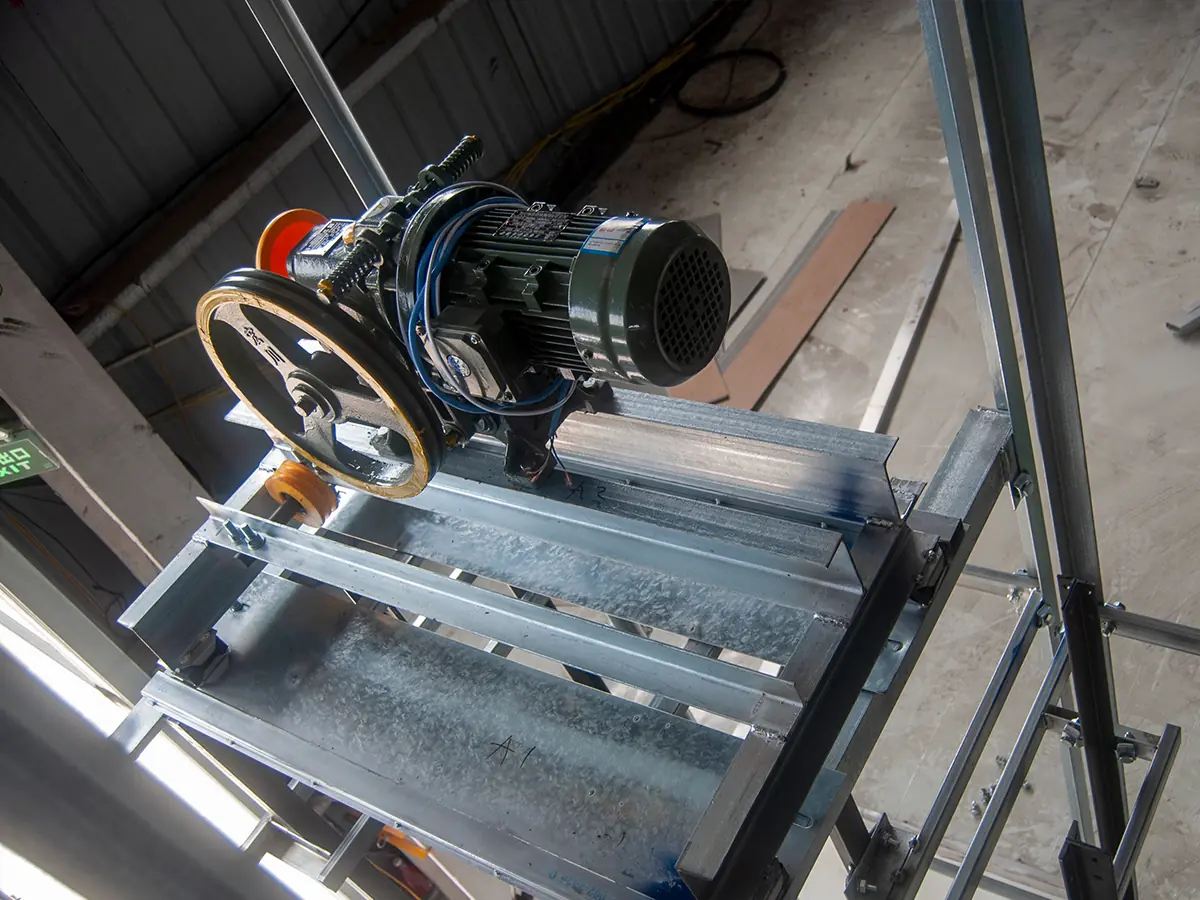
- Equipment Installation: The guide rails, car, motor, and control system are installed by qualified technicians, typically taking 2–5 days.
- Testing and Commissioning: Every ServLifts unit undergoes thorough testing including load tests, door interlock verification, and safety system checks before handover.
For complete guidance, refer to our comprehensive installation guide, which covers shaft preparation, dimensions, and the step-by-step installation process.
Safety Features in Residential Dumbwaiters
Safety is the top priority for any home installation. All ServLifts residential dumbwaiters include these essential safety mechanisms:
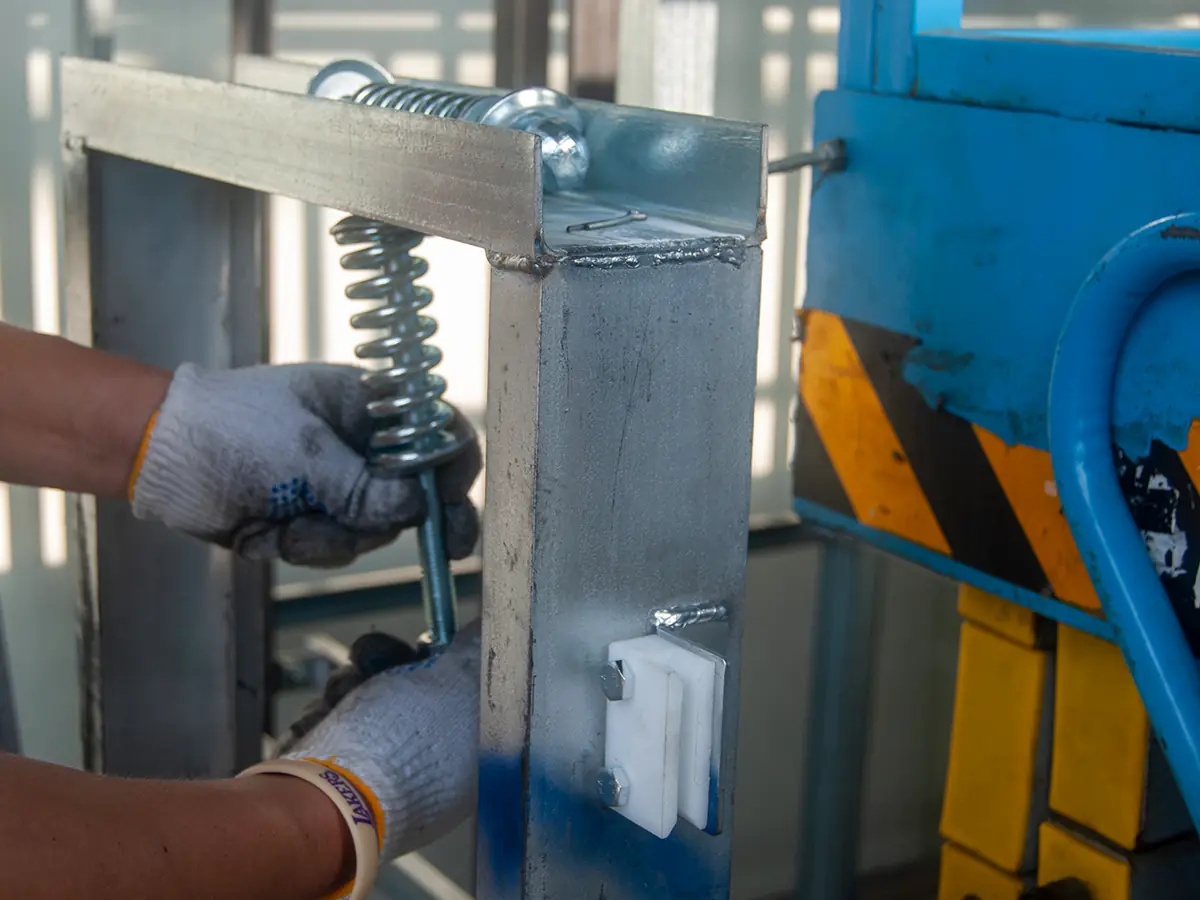
- Door Interlocks: The car cannot operate unless all landing doors are fully closed and locked—preventing accidental access to the moving car.
- Overload Sensor: Automatically prevents operation if the rated weight capacity is exceeded.
- Emergency Stop Button: Allows immediate shutdown from any floor in case of an emergency.
- Slack Rope Detection: Instantly halts operation if suspension ropes lose tension, preventing uncontrolled car movement.
- CE Certification: All units comply with EN 81-3 European safety standards for service lifts, ensuring the highest level of mechanical and electrical safety.
Safety tip: While it may be tempting, never allow anyone to ride a residential dumbwaiter. These devices are designed exclusively for goods transport. Learn more in our article on dumbwaiter passenger safety.
Residential vs. Commercial Dumbwaiter: Key Differences
If you are comparing options, it is helpful to understand how residential dumbwaiters differ from their commercial counterparts:
| Feature | Residential Dumbwaiter | Commercial Dumbwaiter |
|---|---|---|
| Typical Capacity | 100–200 kg | 100–250 kg |
| Car Size | 60×60×80 cm (compact) | 80×80×120 cm (larger) |
| Noise Level | Less than 50 dB (ultra-quiet) | Less than 60 dB |
| Door Style | Manual swing or sliding | Manual or automatic bi-parting |
| Usage Frequency | 20–50 cycles/day | 100–300+ cycles/day |
| Finish Options | Custom colors and materials | Stainless steel standard |
Is a Home Dumbwaiter Right for You?
A residential dumbwaiter is an excellent investment if you answer yes to two or more of the following:
- Your home has 3 or more floors.
- You regularly carry heavy items (groceries, laundry, supplies) between floors.
- You have family members with mobility limitations.
- You plan to age in place and want to future-proof your home.
- You entertain frequently and need efficient food and drink transport between kitchen and living areas.
- You value time-saving home automation and smart home features.
Maintenance: Keeping Your Home Dumbwaiter in Top Condition
A residential dumbwaiter requires minimal maintenance, but a regular care routine ensures decades of trouble-free operation. Key maintenance activities include:
- Monthly: Visual inspection of door seals, guide rails, and cable condition.
- Quarterly: Clean guide rails and lubricate moving parts with manufacturer-recommended lubricant.
- Annually: Professional inspection of motor, control system, safety devices, and rope tension. ServLifts provides ongoing maintenance support and stocks all replacement parts for long-term serviceability.
Why Choose ServLifts for Your Home Dumbwaiter
ServLifts is an integrated dumbwaiter manufacturer based in China largest elevator industrial cluster in Suzhou. Since 2022, we have exported residential and commercial dumbwaiters to over 20 countries. Here is what sets us apart:
- Factory-Direct Value: No middlemen—you get manufacturer pricing and direct communication with our engineering team.
- Fully Customizable: From car dimensions to finishes, every residential dumbwaiter is built to your specifications.
- Global Logistics: We handle export documentation, packaging, and shipping coordination to your doorstep.
- Ongoing Support: Installation drawings, technical documentation, and responsive after-sales service included with every order.
Frequently Asked Questions
How much space does a residential dumbwaiter need?
A standard home dumbwaiter requires a shaft of approximately 1200mm × 1200mm (4ft × 4ft), with landing openings of about 700mm × 800mm on each floor. Compact models are available for tighter spaces—contact ServLifts to discuss your specific dimensions.
Can a dumbwaiter be installed in an existing home?
Absolutely. Most residential dumbwaiters are retrofitted into existing homes using a self-supporting steel shaft structure. The installation requires creating floor openings between levels and routing electrical supply, but typically does not require major structural modifications.
What is the warranty on a ServLifts residential dumbwaiter?
ServLifts provides a standard warranty covering manufacturing defects, with extended coverage options available. Our complete spare parts inventory ensures that replacement components are always accessible for the lifetime of your equipment.
Ready to Transform Your Home with a Dumbwaiter?
A residential dumbwaiter is one of the most practical luxury upgrades you can make to a multi-story home. It saves time, reduces physical strain, increases property value, and supports long-term accessibility—all while operating quietly and efficiently in the background of your daily life.
Whether you are building a new home or retrofitting an existing one, ServLifts has the expertise and product range to deliver the perfect home dumbwaiter solution. Get in touch today for a personalized consultation and quote, or explore our full dumbwaiter product lineup to see what is possible.