Welcome to ServLifts Official Website

Commercial Dumbwaiter Lifts: 7 Applications, Sizing and 2026 Costs
Discover the best commercial dumbwaiter lifts applications for restaurants, hospitals, offices, retail, and warehouses. ServLifts factory-direct units from $2,000.

Table of Contents
- Quick Answer: What Commercial Dumbwaiter Lifts Are
- Commercial vs Industrial Dumbwaiter Lifts: Where the Line Falls
- Seven Applications for Commercial Dumbwaiter Lifts
- Dumbwaiter for Restaurant and Hotel Kitchens
- Dumbwaiter for Hotel Room Service, Housekeeping and Linen
- Dumbwaiter for Hospitals, Clinics and Laboratories
- Dumbwaiter for Offices, Archives and Libraries
- Dumbwaiter for Retail, Spas and Multi-Floor Stores
- Dumbwaiter for Light Industrial Floors and Workshops
- Dumbwaiter for Warehouses, Print Works and Packaging Depots
- Commercial Dumbwaiter Lifts Compared: Load, Stops and Watch-Outs
- Sizing Commercial Dumbwaiter Lifts: Load, Car and Stops
- What Commercial Dumbwaiter Lifts Cost in 2026
- The Compliance Layer: US, EU and UK
- How to Specify Commercial Dumbwaiter Lifts: A Nine-Point Checklist
- Five Mistakes That Cost Money After the Order
- ServLifts for Commercial and Industrial Projects
- Frequently Asked Questions
- Conclusion
Commercial dumbwaiter lifts are small, enclosed goods lifts that move food, linen, medical supplies, documents and light parts between floors of a working building. A unit clears a kitchen pass in under a minute, fits a shaft as small as 90 by 90 cm, and carries between 50 kg and 300 kg without the cost, the paperwork or the floor space of a passenger elevator.
The applications for commercial dumbwaiter lifts have widened. Ten years ago commercial dumbwaiter lifts meant restaurants and hotels. In 2026 they also run in dental clinics, university archives, boutique warehouses, print works and light assembly floors, and a growing share of enquiries arrive from industrial buyers who need vertical movement for parts rather than plates.
This guide covers seven applications in detail, the sizing numbers behind each one, the full cost stack for 2026, and the compliance rules that decide which framework applies in the US, the UK and the EU. Restaurants, hotel groups, hospitals, facility managers and industrial buyers specifying a first unit will all find the specification checklist in section eight useful.
Quick Answer: What Commercial Dumbwaiter Lifts Are
Short version: a commercial dumbwaiter lift is a non-passenger goods lift, usually traction-driven, usually rated between 50 kg and 300 kg, and built to move materials rather than people.
The defining feature of commercial dumbwaiter lifts is not size — it is the absence of any provision for passengers. A dumbwaiter car is not big enough to stand in, is not fitted with the safety gear a passenger car requires, and is locked out of passenger use by design. That single design decision is what keeps a dumbwaiter under a lighter regulatory route than a passenger elevator in every major market.
Commercial dumbwaiter lifts differ from freight elevators most clearly in scale. A freight elevator is built into the structure of a building and rated in tonnes; a dumbwaiter is a compact insert that fits into an existing service shaft or a corner of a kitchen.
| Parameter | Typical range | Notes |
|---|---|---|
| Rated load | 50 / 100 / 200 / 250 / 300 kg | Standard car sizes; heavier ratings available on request |
| Number of stops | 2 to 6 floors | Taller shafts are built to order |
| Rated speed | Typically 0.3 to 0.6 m/s | Speed above 0.15 m/s changes the EU regulatory route |
| Car sizes | Approx. 60×60×80 cm to 100×100×120 cm | Custom sizes are normal |
| Power supply | 220 V single phase or 380 V three phase | Voltage matched to the destination market |
| Drive type | Traction (standard), hydraulic, screw | Traction is the commercial default |
| Warranty | 12 months on the complete machine | Spare parts dispatched in about 3 working days |
Commercial vs Industrial Dumbwaiter Lifts: Where the Line Falls
Buyers searching for an industrial dumbwaiter lift and buyers searching for commercial dumbwaiter lifts are usually looking at the same machine. The difference is in duty cycle, environment and how the unit is specified.
An industrial dumbwaiter works on a shift pattern rather than a meal service. Trips per hour rise, the load per trip is often nearer the top of the rating, and the car carries tote boxes, tooling or components rather than trays. That duty cycle is what makes a heavy duty industrial dumbwaiter a different specification from a restaurant unit rated at the same headline weight.
Beyond that split the machine is still a dumbwaiter – one entry among the different types of elevators, and a small one by payload. The classification page is the quickest way to show a client why a 250 kg commercial unit and a 2,500 kg hospital elevator are not the same purchase.
The three things that decide it
Duty cycle. A restaurant unit might complete 60 to 120 trips in a service day. An industrial unit on three shifts can exceed 400. Higher starts per hour move the specification from a standard traction machine to a heavier duty one with a larger brake and a reinforced door operator.
Load profile. A commercial kitchen rarely loads a 100 kg car with 100 kg. An industrial floor often does, every trip. Specifying at the top of the rating rather than the average is a bigger factor in industry than in catering.
Environment. Flour dust, wash-down hosing, paper dust, metal swarf and ambient heat each rule out different cabin finishes and door types. A stainless steel cabin specified for food hygiene is also the right answer for a wash-down workshop floor, but an untreated mild steel finish that survives a dry office will not survive either.
| Factor | Commercial specification | Industrial specification |
|---|---|---|
| Typical duty cycle | 60 to 120 trips per day | 150 to 400+ trips per day |
| Load factor used for sizing | Average load plus headroom | Maximum load, every trip |
| Cabin finish | Stainless steel or laminate | Stainless steel, durable coating |
| Door opening | Matched to trays and trolleys | Wider, for totes and bins |
| Typical rating | 50 to 200 kg | 100 to 300 kg |
| Maintenance interval | Quarterly service typical | Shorter intervals at high trip counts |
Seven Applications for Commercial Dumbwaiter Lifts
The seven applications below account for most commercial dumbwaiter lifts installed today. Each one changes at least one specification item, and the changes are worth knowing before a quote is requested.
Dumbwaiter for Restaurant and Hotel Kitchens
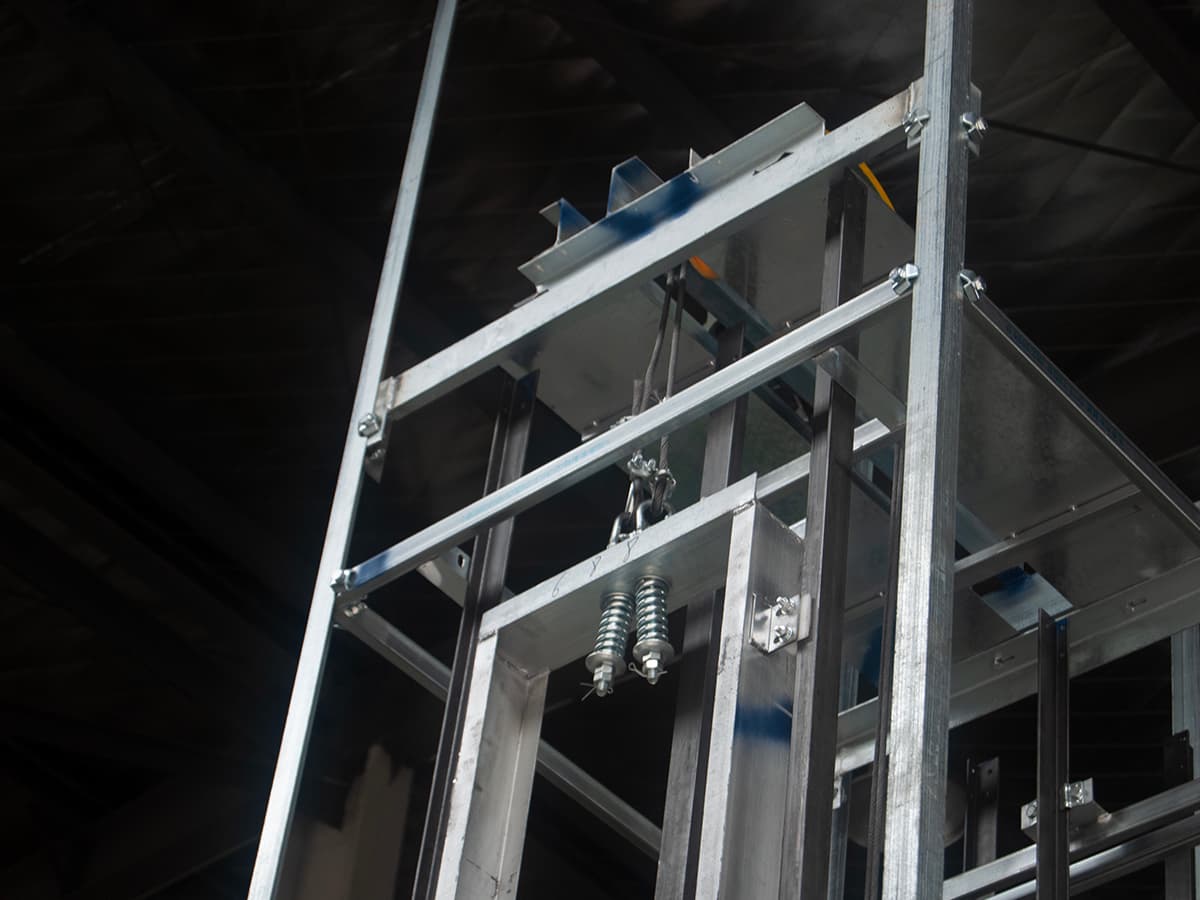
The classic application for commercial dumbwaiter lifts is a multi-floor restaurant where the kitchen sits below or above the dining room. Plated dishes, clean tableware, beverages and dry goods move up; used dishes and waste move down.
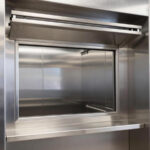
The specifications that matter are a stainless steel car for hygiene, interlocked landing doors so a car cannot move with a door open, and a car size matched to the serving trays and plate stacks in actual use. A full restaurant specification is set out in this restaurant dumbwaiter guide.
Sizing commercial dumbwaiter lifts for a kitchen starts from the busiest hour rather than the average day. A four-floor restaurant serving 120 covers at dinner sends 80 to 150 loads through the shaft in a single service, and a unit sized on the lunch average runs hot by the second week. Two car dimensions decide whether the job works: the internal depth, because a 60 by 40 cm serving tray has to sit flat and slide in without tilting, and the door clear height, because a stacked plate carrier is taller than a single tray.
The kitchen environment adds three requirements no catalogue sheet mentions. A shaft rising through a hot line sits at 35 to 40 °C, so the machine space needs its own ventilation rather than borrowing the kitchen extract. Cooking grease settles on guide rails and door sills, which means a removable sill and a rail lubricant that tolerates fat. And the car interior should be 304 stainless rather than a 201 grade, because chlorinated cleaning agents pit the cheaper alloy within a year or two of daily washdown.
Dumbwaiter for Hotel Room Service, Housekeeping and Linen
Hotels run three separate flows through one vertical route: room service orders from the kitchen, clean linen and amenities from housekeeping, and used linen down to the laundry. Commercial dumbwaiter lifts keep all three flows out of guest corridors and out of the guest elevators.
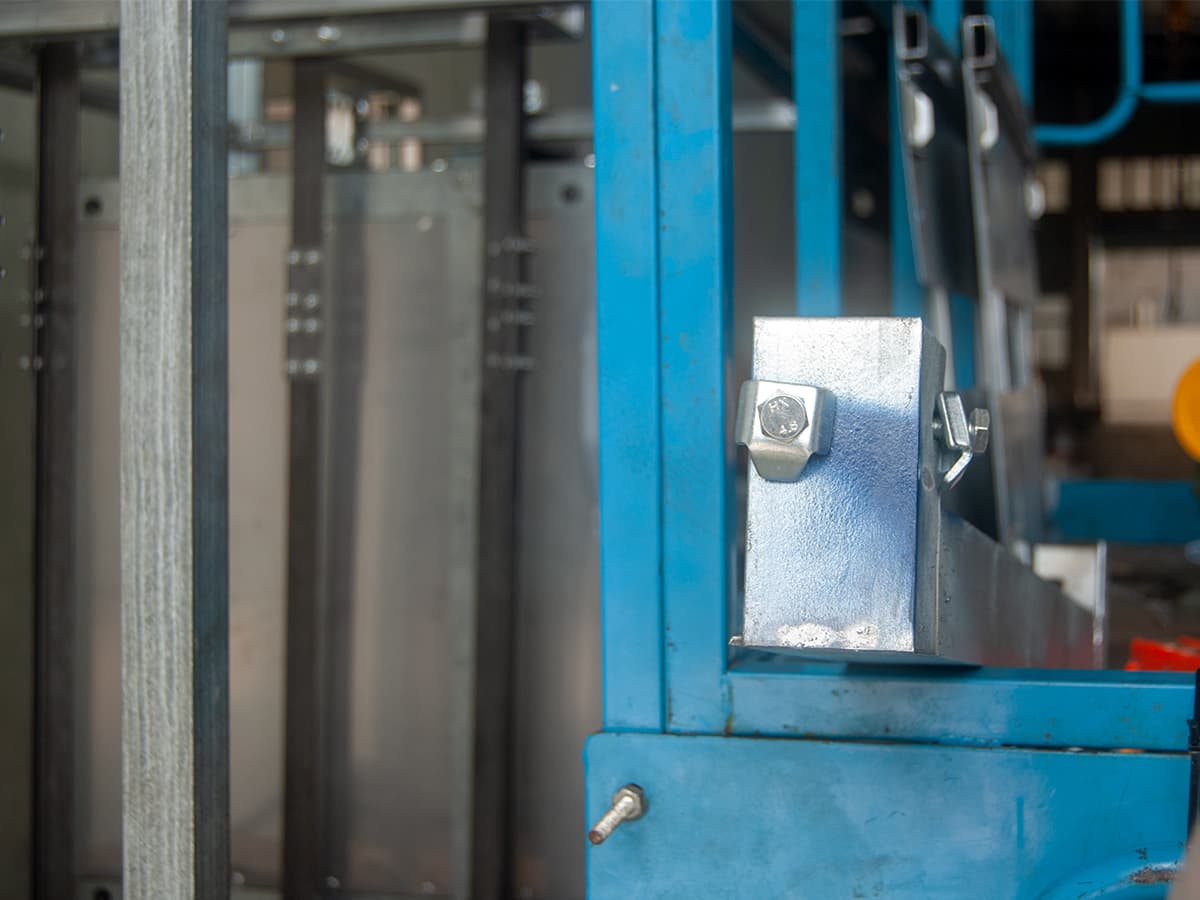
Quiet operation becomes the leading requirement in a hotel, because the shaft often runs against a guest room wall. Hotel specifications add acoustic treatment, soft start and stop, and a motor mounted to isolate vibration. The hotel dumbwaiter guide covers these details, and the dedicated laundry and linen lift guide covers the wet-load side.
The flow most hotel projects get wrong is linen. Clean and soiled linen cannot share a car on alternating trips, because the return journey carries the contamination back to the floor it just left. The workable arrangements are two cars in one shaft with a divider, two separate shafts in a larger property, or a single car that only ever runs clean linen up with a chute handling the soiled side. Deciding this before the shaft is built costs nothing; retrofitting a second shaft into a finished building usually costs more than the dumbwaiter itself.
Acoustic targets on commercial dumbwaiter lifts are worth writing into the quotation. Where the shaft runs against a guest room wall, the usual requirement is 55 dB(A) or lower measured one metre from the landing door, reached through soft start and stop, rubber isolation pads under the machine, and guide shoes rather than rollers. Housekeeping often starts at 06:00, so the noise that matters is not the daytime peak but the first hour of the morning, when a hard start is audible through a partition wall.
Dumbwaiter for Hospitals, Clinics and Laboratories
Healthcare buildings separate clean and dirty flows, and a dumbwaiter makes that separation physical. Sterile supplies, pharmacy deliveries, laboratory samples and clean linen travel on dedicated routes; soiled linen, waste and catering trolleys travel on others.
Healthcare specifications call for smooth acceleration, surfaces that tolerate repeated disinfection, and door interlocks that prevent unauthorised opening on patient floors. Small clinics with two or three floors use the same logic at a smaller scale, and a single 100 kg unit is often enough.
Separating clean from dirty is an equipment decision, not a procedure. A single car carrying sterile supplies up and soiled linen down is the same route in both directions, and no cleaning regime changes that. The options are a divided car with two compartments opening on opposite faces, two shafts, or one shaft serving clean flows only with a separate chute for waste. On commercial dumbwaiter lifts in healthcare the divided car is the usual compromise, because it fits a shaft that already exists.
Laboratories add two constraints a clinic does not have. Blood and urine samples haemolyse under abrupt acceleration, so the unit should be specified at 0.5 m/s² or below with a controlled deceleration ramp rather than a mechanical stop. And laboratory disinfectants are usually chlorine-based, which pits a 304 grade car; a 316L interior or a coated finish is the specification that survives a daily wipe-down over ten years. Where a landing opens into a clean corridor, the door also needs an interlock that holds the shaft at neutral pressure.
Dumbwaiter for Offices, Archives and Libraries
Office buildings, records centres, law firms, universities and public libraries move boxes, files, mail and stationery between floors on a predictable daily rhythm. Commercial dumbwaiter lifts remove that traffic from passenger elevators and from staff stairs.
Two requirements lead here. The first is a compact shaft, because these buildings are usually retrofits with no spare floor area. The second is quiet, low-vibration operation, because the shaft is usually fitted within earshot of desks or reading rooms. Security-rated doors are a common third addition for records and archives.
Archive loads are heavier than they look. A shelf metre of boxed paper runs 60 to 80 kg, and archive boxes in a compact mobile shelving system can put 1,200 kg per square metre on the floor, often beyond what a 1990s office slab was designed for. The dumbwaiter is rarely the problem; the floor around the archive-level landing is. It is worth having a structural engineer confirm that figure before the shaft position is fixed.
Sizing commercial dumbwaiter lifts here follows the box, not the shelf. A standard A4 archive box stands 25 to 30 cm tall and 40 cm deep, so a 60 by 60 cm car takes four boxes per trip and an 80 by 80 cm car takes six. Quiet matters more than in any other application on this list: reading room background noise sits around 40 to 45 dB(A), and a unit running at 55 will be heard through a stud partition, so the shaft belongs against a corridor wall rather than a reading room wall.
Dumbwaiter for Retail, Spas and Multi-Floor Stores
Multi-floor boutiques, pharmacies, spas and salons use a dumbwaiter for stock replenishment, cleaning equipment and treatment supplies. A basement stockroom feeding two sales floors is the most common layout.
Retail specifications prioritise a small footprint and a finish that disappears into the interior. A dumbwaiter car finished in brushed stainless steel or matched to the shopfit reads as part of the building rather than as plant equipment, which matters when the landing door sits on a sales floor.
Installation timing decides cost in retail. A store cannot close a sales floor for two weeks, so the work runs in night shifts and the contractor is paid for the hours, not the days. That changes the plan: the shaft is built and the rails set behind a temporary hoarding, the car and doors go in during a single overnight window, and commissioning finishes before the next opening. A project that assumes daytime access will slip by a week.
Two compliance items on commercial dumbwaiter lifts are specific to retail. A landing door opening onto a sales floor normally needs a fire rating matched to the floor it serves, which means a proprietary frame rather than a standard door set, and that has to be settled before the shopfit closes around it. The landing door also needs a lock or an access control reader, because a waist-height dumbwaiter door is an opening into the stockroom. Spas and salons add a third: a chemical store needs the shaft ventilated to the outside rather than into the treatment area.
Dumbwaiter for Light Industrial Floors and Workshops
This is the fastest-growing application for commercial dumbwaiter lifts. Light manufacturing uses mezzanine levels heavily, and moving parts or assemblies between a production floor and a mezzanine by hand costs time on every cycle.
An industrial dumbwaiter lift on a mezzanine line moves raw components up and finished assemblies down without interrupting the flow of work, and it occupies a fraction of the floor area a goods lift would need. The trade-off is duty cycle: these units run far more trips per shift than a catering installation.
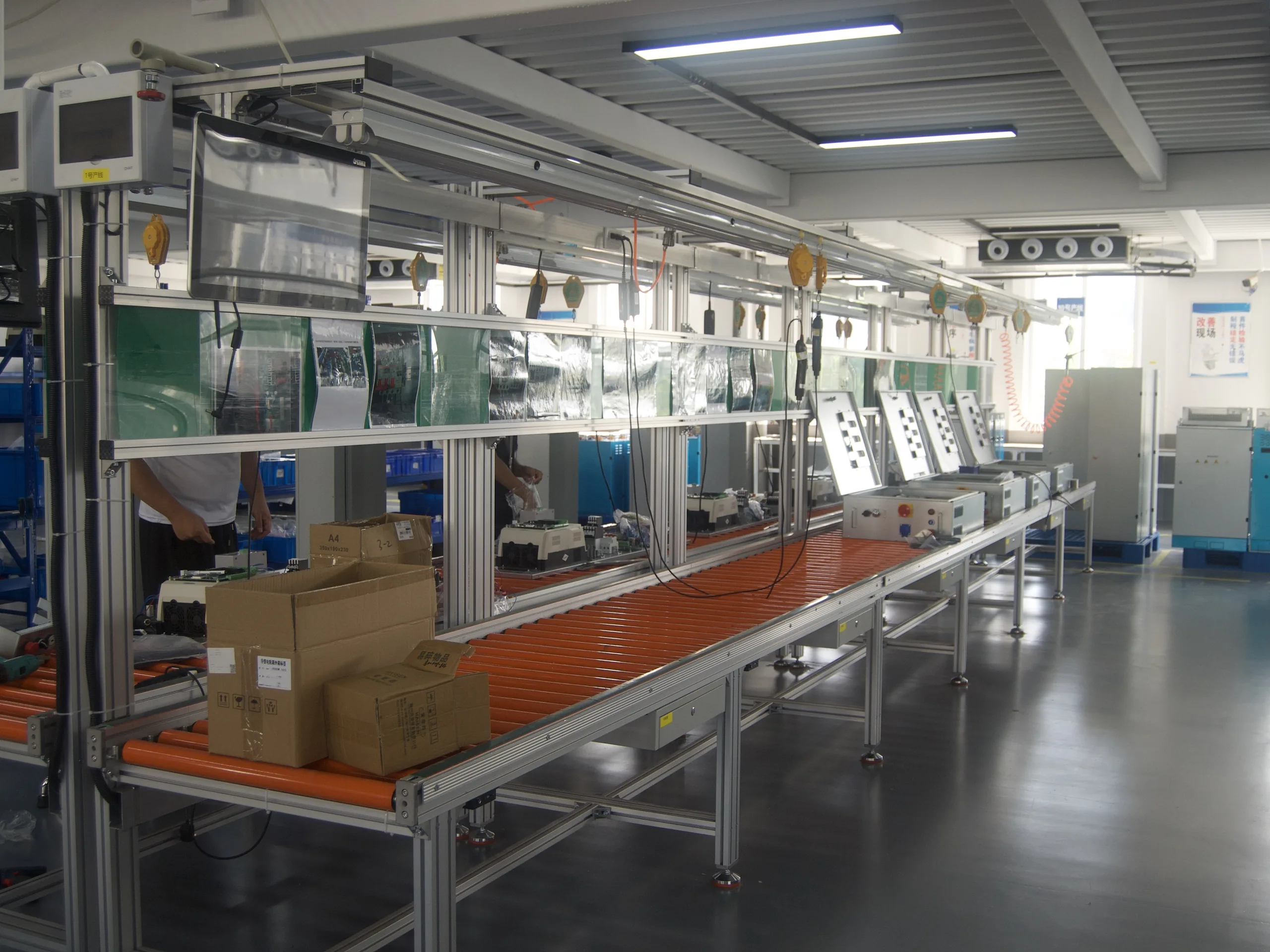
Industrial specifications for commercial dumbwaiter lifts favour higher ratings within the dumbwaiter envelope, reinforced door operators, and a car sized for tote boxes rather than trays. Door openings are usually wider than a kitchen unit at the same rating.
Duty cycle is where an industrial enquiry differs most from a catering one. A mezzanine line running two shifts can send 200 to 400 trips through the shaft in a day, three to four times a restaurant installation. That number, not the load, selects the motor: a unit rated for intermittent duty completes the trips and then trips on thermal overload every afternoon, and the fix is a higher duty rating specified at order, because it cannot be added afterwards.
The working environment on commercial dumbwaiter lifts decides the rest. Machining floors put fine swarf and coolant mist into the air, so guide rails need a lubrication method that does not collect grit, and the control cabinet belongs outside the shaft with an IP rating to match. Where parts arrive on a pallet and are pushed in rather than lifted, the car floor and door threshold carry the wear and should be specified as a replaceable wear plate. Totes are the usual unit of load, and a 600 by 400 mm euro container sets a minimum internal car width of about 70 cm.
Dumbwaiter for Warehouses, Print Works and Packaging Depots
Small warehouses with a mezzanine pick face, print works moving paper stock between a store and a press floor, and packaging depots feeding a dispatch level all use a heavy duty industrial dumbwaiter rather than a full goods lift.
A heavy duty industrial dumbwaiter is specified at the top of the range, commonly 200 kg or 300 kg, and the car is built to take a pallet truck-fed load or a stack of board rather than loose items. Where loads are pushed in rather than carried in, car floor construction and the door threshold take the wear, and both are worth specifying explicitly.
Warehouses frequently ask whether a dumbwaiter can replace a goods lift entirely. The honest answer is that a dumbwaiter covers the light-load, high-frequency case, and a goods lift remains the right choice when loads reach a tonne or a pallet truck must ride with the load.
Print and packaging work is heavier per trip than the rating suggests. A ream of A4 at 80 gsm weighs about 2.5 kg, a box of five reams is 12.5 kg, and a full pallet of paper runs 500 kg to a tonne, well past any dumbwaiter. The realistic pattern is a pallet broken down at the store and fed up in box loads of 25 to 50 kg, which is why commercial dumbwaiter lifts in a print works are specified at 250 to 300 kg with margin rather than at the arithmetic total of one box.
Paper also reacts to the shaft environment. Unwrapped stock takes on moisture from a damp shaft and jams a press feeder, so a warehouse installation benefits from a sealed shaft rather than a mesh enclosure, and from keeping the shaft outside the wash-down zone. Where a pallet truck reaches the landing, the sill should be a bolted steel section rather than a folded lip, because a truck wheel striking a folded sill deforms it within months, and a deformed sill is a door that will not close squarely.
Commercial Dumbwaiter Lifts Compared: Load, Stops and Watch-Outs
The table below summarises how the seven applications differ on the specification items that carry the most weight in a quote.
| Commercial dumbwaiter lifts application | Typical load | Stops | Specification emphasis | Most common mistake |
|---|---|---|---|---|
| Restaurant and hotel kitchens | 50 to 150 kg | 2 to 4 | Stainless steel car, hygiene, interlocked doors | Car sized from a catalogue rather than from actual trays |
| Hotel room service and linen | 50 to 150 kg | 3 to 6 | Low noise, soft start and stop, vibration isolation | Ignoring the shaft’s position against a guest room |
| Hospitals and clinics | 100 to 250 kg | 2 to 6 | Smooth motion, cleanable surfaces, access control | One route shared by clean and dirty flows |
| Offices and archives | 50 to 150 kg | 2 to 6 | Compact shaft, quiet motor, security doors | Assuming a retrofit shaft will accept a standard car |
| Retail, spas and salons | 50 to 150 kg | 2 to 4 | Small footprint, interior-matched finish | Landing door finish left as an afterthought |
| Light industrial floors | 100 to 200 kg | 2 to 3 | High trip count, reinforced door operator | Sizing on average load instead of maximum load |
| Warehouses and print works | 200 to 300 kg | 2 to 4 | Top of range rating, wear-resistant floor and sill | Expecting a dumbwaiter to replace a goods lift |
Two rows in this comparison drive most commercial dumbwaiter lifts specification errors. Industrial buyers who size on the average load find that the unit is at its limit on the heaviest product of the week, and restaurant buyers who specify a car from a catalogue rather than from the trays in the kitchen end up with a car that will not take a loaded serving tray flat.
Sizing Commercial Dumbwaiter Lifts: Load, Car and Stops
Sizing commercial dumbwaiter lifts is a sequence of four decisions made in a fixed order: what the heaviest load will be, what must fit inside the car, how many floor levels the unit serves, and what power supply the building can provide. Deciding the drive system before those four are settled is the most common reason a specification has to be redrawn.
| Application of commercial dumbwaiter lifts | Load to specify | Car size to plan around | Stops |
|---|---|---|---|
| Restaurant kitchen | 100 kg | 80×80×100 cm | 2 to 3 |
| Hotel service and linen | 100 to 200 kg | 80×80×120 cm | 3 to 6 |
| Hospital and clinic | 200 kg | 100×100×120 cm | 2 to 6 |
| Office and archive | 100 kg | 80×80×100 cm | 2 to 6 |
| Retail and salon | 50 to 100 kg | 60×60×80 cm | 2 to 3 |
| Light industrial mezzanine | 200 kg | 100×100×120 cm | 2 |
| Warehouse and print | 250 to 300 kg | 100×100×120 cm or larger | 2 to 4 |
Car dimensions are the constraint that most often forces a change when commercial dumbwaiter lifts are specified. A shopper drawing a shaft will usually start from the car, and the shaft, pit and headroom figures follow from it. The dimensions that govern a shaft, including the minimum figures for each car size, are set out in the dumbwaiter dimensions and shaft guide.
A free dimensional drawing is the fastest way to settle the question on commercial dumbwaiter lifts. ServLifts supplies a CAD shaft drawing at no cost once the car size and floor levels are known, and the drawing can be handed straight to a builder or a shopfitter.
What Commercial Dumbwaiter Lifts Cost in 2026
Commercial dumbwaiter lifts are usually quoted as a delivered equipment price, and the project cost is that figure plus everything needed to put the unit into service. The gap between the two numbers is where most commercial dumbwaiter lifts budgets go wrong.
For a standard traction unit in the 50 kg to 200 kg range, equipment prices from a factory-direct specialist start around US$2,265 to US$2,550 FOB, and a first-order discount is commonly in the region of 10 percent. That figure covers the car, rails, traction machine, control cabinet and landing doors.
| Cost component | Typical share of project cost | What drives the figure |
|---|---|---|
| Equipment | 35 to 50 percent | Rating, car size, door type, number of stops |
| Ocean freight and insurance | 5 to 12 percent | Route, volume, destination port |
| Import duties and clearance | 5 to 15 percent | Destination country tariff and local charges |
| Shaft preparation | 0 to 40 percent | Retrofit into an existing shaft versus new masonry |
| Installation labour | 10 to 25 percent | Regional labour rates, access, building occupancy |
| Electrical connection | 3 to 8 percent | Distance to the distribution board, supply type |
Installed cost for a typical two-floor unit commonly lands between US$4,500 and US$8,500 depending on market, with the equipment forming only about half of the total for most commercial dumbwaiter lifts. Retrofits into an existing shaft avoid most of the shaft cost and are the single largest lever on the budget.
The price side of the equation is covered in more depth in the 2026 dumbwaiter price guide, and the installation side, including a realistic budget example, is broken down in the dumbwaiter installation cost guide.
The Compliance Layer: US, EU and UK
Compliance is the part of commercial dumbwaiter lifts most often left to the end, and it is the part that cannot be retrofitted cheaply. Three markets account for most enquiries, and each routes a dumbwaiter differently.

United States. Dumbwaiters sit inside ASME A17.1, the Safety Code for Elevators and Escalators, which sets the definition threshold that separates a dumbwaiter from a passenger elevator. Most states require an annual periodic inspection of units in commercial use, and some large cities require two per year.
European Union. Two objective gates decide the route. A car that a person can enter falls under the lift framework regardless of speed, and a unit whose rated speed exceeds 0.15 m/s is also a candidate. A unit that cannot be entered and runs at or below 0.15 m/s is assessed under the general machinery framework instead. The European Commission’s lifts framework page sets out the scope of the Lifts Directive that produces those two gates.
European Union, from 20 January 2027. Two changes take effect on the same date. The Machinery Regulation (EU) 2023/1230 replaces the Machinery Directive 2006/42/EC, and the presumption of conformity for EN 81-31:2010 ends, moving the reference to EN 81-31:2024. Buyers taking delivery in late 2026 or 2027 should confirm in writing which document set the technical file will follow.
United Kingdom. Supply rules and in-service rules are separate. A unit placed on the market needs UKCA marking, and once in service it falls under LOLER 1998, which requires a thorough examination every 12 months for a goods-only lift and every 6 months if a person can ride it.
| Market | Main framework | Access and speed gate | In-service examination |
|---|---|---|---|
| United States | ASME A17.1 | Definition threshold separates dumbwaiter from passenger elevator | Annual in most states; twice yearly in some cities |
| European Union | Lift framework or machinery framework | Enterable car, or speed above 0.15 m/s, routes to the lift framework | Set by national implementing rules |
| United Kingdom | UKCA for supply, LOLER 1998 in service | Goods-only lift, no passenger provision | Every 12 months; every 6 months if a person can ride |
The full regulation picture, including the four most common US violations and the 2027 standard change in detail, is covered in the dumbwaiter regulations guide. The inspection side — frequency, who is legally allowed to inspect, and what records to keep — is set out in the dumbwaiter inspection schedule.
How to Specify Commercial Dumbwaiter Lifts: A Nine-Point Checklist
Nine items cover almost everything a supplier needs in order to quote commercial dumbwaiter lifts accurately. Buyers who supply all nine in the first email typically receive a firm price instead of a range.
- Rated load. The heaviest load the car will ever carry, not the average, expressed in kilograms.
- Number of stops and travel height. Floor-to-floor distances, plus overall travel from the lowest to the highest landing.
- Car dimensions. The internal car size needed to take the largest tray, tote, box or trolley in flat.
- Shaft arrangement. Existing shaft or new build, internal clear dimensions, and whether the shaft is enclosed on all four sides.
- Door type on each landing. Hinged or sliding, and whether a counter-level or floor-level arrangement is required.
- Power supply. Single phase 220 V or three phase 380 V, and the distance from the shaft to the distribution board.
- Environment. Wet, dusty, hot or clean, because this decides cabin finish, door sealing and ingress protection.
- Destination and delivery terms. Country and port, and whether the order will be FOB, CIF or DDP.
- Compliance route. Which market the unit is being placed on, so the correct certificate and documentation set ships with it.
Sending the nine items for commercial dumbwaiter lifts also settles the drive system, because a specified load, travel and stop count points to traction or hydraulic without further discussion. The wider comparison of drive options and selection sequence is covered in the dumbwaiter selection guide.
Five Mistakes That Cost Money After the Order
Nearly every expensive change order on commercial dumbwaiter lifts traces back to one of five decisions taken before the order was placed.
- Sizing on the average load. A unit specified for the routine load sits at its limit on the heaviest day of the week, and the trade-off shows up as shortened component life rather than an immediate failure.
- Choosing the car before measuring the space. A car that fits the trays but not the available shaft turns a two-week installation into a building project.
- Assuming a retrofit shaft will accept a standard unit. Shaft clear dimensions, pit depth and headroom decide what can be installed, and they are worth measuring before a model is chosen.
- Leaving the compliance route to the end. The certificate, the declaration and the technical file follow from the market the unit is placed on, and re-documenting a delivered unit is far more expensive than specifying it correctly at the start.
- Skipping the maintenance plan. Commercial dumbwaiter lifts that are never serviced lose door alignment, brake adjustment and rope condition first — the three items an inspector is most likely to flag. The routine is set out in the dumbwaiter maintenance guide.
ServLifts for Commercial and Industrial Projects
ServLifts manufactures dumbwaiter lifts, food lifts and service lifts at a factory in Wujiang, Suzhou, in the Yangtze River Delta elevator manufacturing belt. The company builds its own cars and assembles complete units rather than acting as a trading office, and every unit ships with certification for the destination market.
For commercial dumbwaiter lifts, ServLifts supplies:
- Ratings from 50 kg to 300 kg, with custom car sizes for trays, totes and trolleys
- Standard car sizes from approximately 60×60×80 cm to 100×100×120 cm
- Traction drive as standard, with hydraulic and screw options for specific cases
- CE-certified construction with documentation for the destination market
- A free CAD shaft drawing issued once car size and floor levels are confirmed
- Delivery on FOB, CIF or DDP terms, shipping from Shanghai or Ningbo
- Installation support on site across Asia, Africa, South America and Mexico, and video-guided commissioning for North America and Europe
- A 12-month warranty on the complete machine, with spare parts dispatched in about 3 working days
Standard commercial dumbwaiter lifts are produced in 15 to 25 working days, with custom specifications and peak-season slots running 25 to 45 days. Buyers comparing configurations and looking for a firm quotation can send the nine specification items to the ServLifts engineering team and receive a written specification and price in return.
Frequently Asked Questions
What is the difference between commercial dumbwaiter lifts and an industrial unit?
Commercial dumbwaiter lifts and industrial units are the same class of equipment; the duty cycle and environment differ. A commercial unit in a restaurant completes roughly 60 to 120 trips a day and carries trays and linen. An industrial dumbwaiter lift works a shift pattern, can exceed 400 trips a day, and is specified at the top of its rating with reinforced doors and a wear-resistant car floor.
What load capacity do I need for commercial dumbwaiter lifts?
When specifying commercial dumbwaiter lifts, use the heaviest load the car will ever carry rather than the average. Most restaurant installations are covered by 100 kg, hotel service and linen by 100 to 200 kg, hospitals by 200 kg, and light industrial or warehouse applications by 200 to 300 kg. Standard ratings run across 50, 100, 200, 250 and 300 kg.
Can a commercial dumbwaiter lift carry people?
No. Commercial dumbwaiter lifts are built and certified as goods-only lifts, and they are not fitted with the safety gear a passenger car requires. In the UK, a goods-only unit requires a thorough examination every 12 months, and that interval shortens to every 6 months if the car can be entered by a person.
How much does a commercial dumbwaiter lift cost?
Standard commercial dumbwaiter lifts from a factory-direct specialist start around US$2,265 to US$2,550 FOB, with a first-order discount commonly around 10 percent. Installed project cost for a typical two-floor unit usually lands between US$4,500 and US$8,500 depending on market, since shaft work, freight, duties and labour add roughly 30 to 60 percent on top of the equipment price.
How long does delivery and installation take?
Standard commercial dumbwaiter lifts take 15 to 25 working days to produce, and custom specifications or peak-season slots run 25 to 45 days, plus 20 to 45 days of ocean freight depending on the route. On-site installation is typically measured in days for a two-floor retrofit and longer where a new shaft has to be built.
Do I need a certified dumbwaiter for a commercial building?
Yes. Commercial dumbwaiter lifts fall under the inspection regime of the market in which they operate. Dumbwaiters fall under ASME A17.1 in the United States, the lift or machinery framework in the European Union depending on access and speed, and LOLER 1998 in the United Kingdom once the unit is in service.
Conclusion
Commercial dumbwaiter lifts have moved well beyond the restaurant pass. The same equipment now runs hotel linen routes, hospital clean-and-dirty flows, office document movement, shop floor replenishment and industrial mezzanine transport, and each application shifts the specification in a predictable direction.
Get four things right and the project stays simple: size the load at its maximum, plan the car around what actually has to fit inside it, settle the shaft dimensions before choosing a model, and confirm the compliance route for the destination market. Everything else follows from those four decisions. Where the starting point is the load rather than the building, the goods lift guide works the same four decisions in reverse order, across twelve commercial loads.