Welcome to ServLifts Official Website

Dumbwaiter Market 2026: Size, Regional Demand and What Buyers Should Specify
Dumbwaiter market 2026: four independent forecasts, record hotel pipeline growth in India and Asia, and the specifications buyers should confirm before ordering.

What this page covers
- Dumbwaiter Market Size in 2026: Four Estimates, One Direction
- Why Hotels Still Drive Most of the Demand
- Regional Growth: Where the Dumbwaiter Market Is Moving
- Healthcare and Institutional Demand: The Second Engine
- Retrofit and Replacement: Where Small Lifts Win
- What Growth Changes About Dumbwaiter Specifications
- How Market Pressure Shows Up in Price and Lead Time
- How to Read a Supplier Against the Market
- What Buyers Should Do Before Ordering in 2027
- Dumbwaiter Market: Questions Buyers Ask
Dumbwaiter Market Size in 2026: Four Estimates, One Direction
The global dumbwaiter market is growing steadily rather than spectacularly. Independent research houses put the core restaurant and hospitality segment at roughly US$240–250 million in 2026 and forecast mid-single-digit annual growth through 2032. For a project team, the useful signal is not the headline size of the dumbwaiter market but its direction and its mix, because that is what converts into actual orders on actual buildings.
Four separate dumbwaiter market estimates circulated during 2026 are summarised below. They do not agree on the absolute number, and the reason is scope rather than disagreement about direction. Two track only restaurant dumbwaiters; two track the wider dumbwaiter lifts category, which includes residential, healthcare and industrial units.
| Source | What it measures | 2025 | 2026 | Forecast | CAGR |
|---|---|---|---|---|---|
| QY Research | Restaurant dumbwaiter | US$227M | US$240M | US$344M by 2032 | 6.2% |
| GII (Market Research) | Restaurant dumbwaiter | US$234.43M | US$250.63M | US$345.43M by 2032 | 5.69% |
| Future Market Insights | Dumbwaiter lifts (all types) | US$18.20B | US$18.8B | US$25.46B by 2036 | 3.1% |
| Reed Intelligence | Dumbwaiter lifts (all types) | — | US$1.84B | US$3.62B by 2034 | 8.8% |
Read together, the four datasets agree on four things about the dumbwaiter market that matter more than the totals. First, every forecast points up. Second, electric and traction drive is the dominant product type, at 61.4% of the dumbwaiter market by value. Third, hospitality is the largest end-use group, holding between 39.6% and 41.2% of demand depending on which definition is used. Fourth, the smallest capacity band — units up to roughly 45 kg — is the largest single capacity segment at 36.8%, which tells you that most buyers are moving trays, not pallets.
Two figures are worth quoting precisely because they are the ones most often cited. QY Research values the global restaurant dumbwaiter segment at US$227 million in 2025, rising to US$240 million in 2026 and US$344 million by 2032 at a compound annual growth rate of 6.2%. Future Market Insights measures the wider dumbwaiter lifts category at US$18.2 billion in 2025, reaching US$25.46 billion by 2036 at 3.1% a year.
A note on how to use dumbwaiter market figures. Market-size numbers are useful for framing a business case and for understanding which regions are capacity-constrained; they are not useful for forecasting what a single lift will cost. A 200 kg dumbwaiter with a 1,200 mm car, installed in an existing hotel shaft, is priced by steel, drive type, door count, freight and site labour — not by the CAGR of the segment it sits in.
Why Hotels Still Drive Most of the Demand
Hospitality is the engine of the dumbwaiter market, and the reason is structural. A hotel with food and beverage service on more than one level has to move trays, glassware, linen and room-service covers vertically several hundred times a day. That is precisely the job a dumbwaiter is built for, and it is the reason hospitality accounts for close to 40% of end-use demand.
The load profile behind that demand is not uniform. A hotel moving linen runs heavier and less often than a hotel moving room-service trays, and the hotel dumbwaiter guide breaks the two patterns down floor by floor. The commercial side is broader still: the commercial dumbwaiter applications guide covers canteens, hospitals, retail and the rest of the non-hospitality demand.
The construction pipeline confirms that dumbwaiter market demand is not theoretical. Lodging Econometrics reported that the Asia Pacific hotel construction pipeline, excluding China, reached a record 2,506 projects and 452,972 rooms at the close of the second quarter of 2026 — up 17% by projects and 11% by rooms year over year. Of that total, 989 projects and 199,362 rooms were already under construction, and the early planning stage hit a record 1,119 projects, up 26% year over year.
One line item in that dataset deserves particular attention from anyone buying into the dumbwaiter market. Combined hotel renovations and brand conversions reached a record 346 projects and 58,429 rooms, up 36% by projects and 25% by rooms. Renovation work matters disproportionately here because retrofits are exactly where compact, machine-room-less lifts fit best: the shaft or pantry opening already exists, and the constraint is headroom and pit depth rather than a green field.
By chain scale, the pipeline is weighted toward the tiers that build full-service kitchens, which is where most dumbwaiter market growth is concentrated. Upscale projects reached 658, upper upscale 435 and luxury 432. Those three tiers together account for the majority of new food-and-beverage floors, and therefore for most new dumbwaiter positions.
Beyond hotels, global hotel construction reached 15,976 projects and 2.43 million rooms in the same quarter, with the Middle East at a record 724 projects and Africa at 343 projects and 52,526 rooms. Those are the two regions where new hospitality capacity is being added fastest relative to the existing stock, and both are growing well ahead of the global dumbwaiter market average. They are also regions where buyers rarely have a local dumbwaiter manufacturer.
Regional Growth: Where the Dumbwaiter Market Is Moving
The dumbwaiter market is not growing uniformly. Growth is concentrated in a small number of countries, and the concentration is strong enough that a supplier strategy built on one region will miss most of it. The table below uses the same pipeline dataset, broken down by country.
| Country / region | Pipeline (projects) | Pipeline (rooms) | Year-on-year change |
|---|---|---|---|
| India | 1,033 (record) | 137,601 | +36% projects / +39% rooms |
| Vietnam | 265 | 81,848 | +7% projects |
| Japan | 207 | 31,360 | +17% projects / +9% rooms |
| Indonesia | 189 | 31,772 | +12% projects / +8% rooms |
| Thailand | 167 | 42,069 | record quarter |
| Middle East (region) | 724 (record) | — | record level |
| Africa (region) | 343 | 52,526 | record level |
India is the single clearest dumbwaiter market data point. Its hotel construction pipeline reached a record 1,033 projects and 137,601 rooms, up 36% by projects and 39% by rooms year over year, and India alone is the fastest-growing national market for dumbwaiter lifts at a 3.88% compound annual rate. At city level the pattern repeats: Bengaluru recorded 51 projects, up 42% by projects and 44% by rooms, followed by Mumbai with 49 and Jakarta with 47.
At the regional level, Asia Pacific is forecast to grow faster than any other part of the dumbwaiter market, at an 11.2% compound annual rate through 2034, even though North America still holds the largest share of installed value at 34.2%. The gap between the two numbers is the whole story of this category: the installed base is in mature markets, and the additions are not.
For buyers in high-growth dumbwaiter market regions the practical consequence is delivery distance and after-sales cover. A dumbwaiter shipped from the Yangtze Delta to Nairobi or Jakarta spends several weeks in transit and then depends on spare parts that must cross the same distance again. That is a supply-chain question, not a price question, and it is worth settling before the order rather than after.
Regional guides cover the operating specifics for each market: South Asia, Southeast Asia and Nigeria and West Africa.
Healthcare and Institutional Demand: The Second Engine
Hotels get the attention, but healthcare and institutional buildings are the fastest-growing application group inside the dumbwaiter market. Healthcare facilities are forecast to expand at a 10.8% compound annual rate, well ahead of the market average, and residential applications at 11.5%. Both are growing from a smaller base, which means the absolute numbers stay modest for now, but the direction is unambiguous.
The clinical dumbwaiter market differs from the hospitality one in ways that change the specification. Hospitals and clinics move medicines, laboratory samples, sterile supplies and linen between floors. That places weight on three things a hotel kitchen cares about less: hygiene and cleanability of the car interior, the number and reliability of door interlocks, and documented evidence that the lift passed its load test. Stainless steel grade becomes a real decision rather than a cosmetic one, with 304 and 316 covering almost every food-service and clinical requirement.
Outside healthcare, institutional demand forms the third layer of the dumbwaiter market: school canteens, staff restaurants, central kitchens and institutional catering. These projects tend to be smaller in unit value but are frequently tendered in groups, which makes repeatability of specification more valuable than a one-off custom build. A hospital dumbwaiter and a staff canteen lift can use the same car geometry and differ only in door finish and control schedule.
Retrofit and Replacement: Where Small Lifts Win
The renovation and brand-conversion pipeline — 346 projects and 58,429 rooms in Asia Pacific alone, up 36% by projects — is the clearest evidence of where retrofit demand sits in the dumbwaiter market. Each of those projects is a building that already has floors, already has a kitchen and does not have a shaft sized for a conventional lift. That is the natural territory of a dumbwaiter.
Retrofit projects in the dumbwaiter market fail on three constraints, in this order of frequency: available headroom above the top landing, pit depth at the lowest level, and the clear opening available for the car and its doors. A machine-room-less traction unit removes the first constraint entirely because the drive sits on top of the car rather than in a separate plant room, and it removes the oil-handling requirement that a hydraulic unit would otherwise impose on an occupied building.
The counterweight arrangement is the second decision a retrofit in this part of the dumbwaiter market forces. A side-counterweight design needs a narrower shaft but a taller footprint, while a rear-counterweight design is the opposite. On a building where the only available space is a former service duct, that single choice often determines whether a dumbwaiter fits at all. The two configurations are compared in detail in side counterweight vs rear counterweight.
Replacement demand is the quieter half of the dumbwaiter market. A dumbwaiter installed fifteen years ago in a hotel that has since been rebranded is usually replaced rather than repaired, because the control system and door interlock standards have moved on. Buyers in this position should confirm two things before ordering: that the new car will physically pass through the existing landing openings, and that spare parts for the new model will still be available when the replacement cycle next comes round. See the spare parts and after-sales guide for how that availability is typically structured.
What Growth Changes About Dumbwaiter Specifications
A growing dumbwaiter market changes specifications in two directions at once. Regulation tightens at the top end, while cost pressure pushes buyers toward standardised units at the bottom. The practical result is that the specification list a buyer should confirm in 2026 is longer than it was five years ago, even for a small unit.
On the regulatory side, EN 81-30:2025 is the current European standard for service lifts, and it sets the ceiling on what a unit can be while still being classified as a service lift rather than a passenger or goods lift: a rated load of no more than 300 kg, a car floor area of no more than 1.0 m², a car depth of no more than 1.0 m and a rated speed of no more than 1 m/s. Knowing those four limits before design starts prevents a project from being reclassified halfway through. The compliance picture by dumbwaiter market is set out in the dumbwaiter regulations guide.
| Item | Was often assumed | What 2026 specifications expect |
|---|---|---|
| Capacity | One size fits most projects | Confirm against 50 / 100 / 200 / 250 / 300 kg bands |
| Car size | Decided on site | Car and opening fixed before the shaft is built |
| Travel | Whatever the building needs | Two to six floors is the standard supported range |
| Power supply | Assumed single phase | Confirm 220 V or 380 V at the design stage |
| Drive | Hydraulic by default | Traction with machine-room-less layout for most retrofits |
| Interior | Plain steel acceptable | 304 or 316 stainless for food and clinical use |
| Documentation | Requested at handover | CE file and load test records requested at quotation |
The specification list that should be fixed before any quotation request is straightforward, and it is the same list regardless of which part of the dumbwaiter market the project sits in. The full breakdown, including how to write it so that two suppliers are quoting the same thing, is in the dumbwaiter specification guide.
How Market Pressure Shows Up in Price and Lead Time
When the dumbwaiter market grows at 5–6% a year, the pressure does not usually appear as a price increase. It appears as lead time. Steel prices, drive unit availability and freight capacity move independently of demand, so the visible effect of a busy market is a longer queue rather than a higher list price.
For planning purposes, the benchmark to use is a standard traction dumbwaiter delivered in 15 to 25 working days, with custom configurations and peak-season orders running to 25 to 45 working days. Those are the two numbers a project schedule should be built on, and they are worth writing into the purchase order as a dated commitment rather than an estimate.
Cost itself is driven by four variables, none of which is the overall growth rate: the rated load and therefore the drive size; the car dimensions and interior finish; the number of landings, since each stop adds a door, interlocks and wiring; and the trade term selected. On the third point, the difference between a two-stop and a six-stop lift on otherwise identical equipment commonly reaches the equivalent of two to four thousand US dollars, so the stop count should be fixed before quotes are requested. Cost drivers and worked examples are set out in the dumbwaiter price guide and the installation cost breakdown.
Trade terms matter more than they look. FOB places the freight and insurance decision with the buyer; CIF bundles it into the quotation; DDP puts the whole landed cost on the supplier but makes the supplier the importer of record, which is not always what the buyer wants. ServLifts quotes all three from the Shanghai and Ningbo ports, and the choice is usually settled by who holds the importing licence rather than by who wants the lower number.
How to Read a Supplier Against the Market
A growing dumbwaiter market attracts new suppliers, and not all of them can support what they quote. The checklist below is the one that separates a supplier who can deliver a working lift from one who can produce a quotation. It works in any region, and it takes about an hour to complete.
| Check | How to verify | Warning sign |
|---|---|---|
| Manufacturing base | Ask for the factory address and a recent production photo or video | Only a trading-office address, no production evidence |
| CE conformity | Request the CE file and the declared standard, e.g. EN 81-30:2025 | A certificate image with no standard number or issuing body |
| Load test records | Ask for a load test report from a comparable unit already shipped | Willingness to test only after the balance is paid |
| Shaft drawing | Request a CAD shaft layout for your actual dimensions before ordering | Sizing deferred until after the deposit |
| Spare parts | Ask which parts are consumable and how fast they ship | No stated spare parts lead time |
| Reference projects | Ask for two installations in a comparable building type | References that cannot be named or dated |
| Payment structure | Confirm deposit, balance and inspection point in writing | Full payment required before production starts |
This is the part of the dumbwaiter market where the messaging is loudest and the evidence is thinnest. The verifiable signal is not a claim about quality; it is a document, a date and a name. A CE file with a declared standard, a load test report from a unit of comparable capacity, and a CAD drawing of your own shaft are all checkable. A statement that a product matches a larger brand is not, and it should be treated as marketing rather than specification. The supplier verification guide walks through each document in turn.
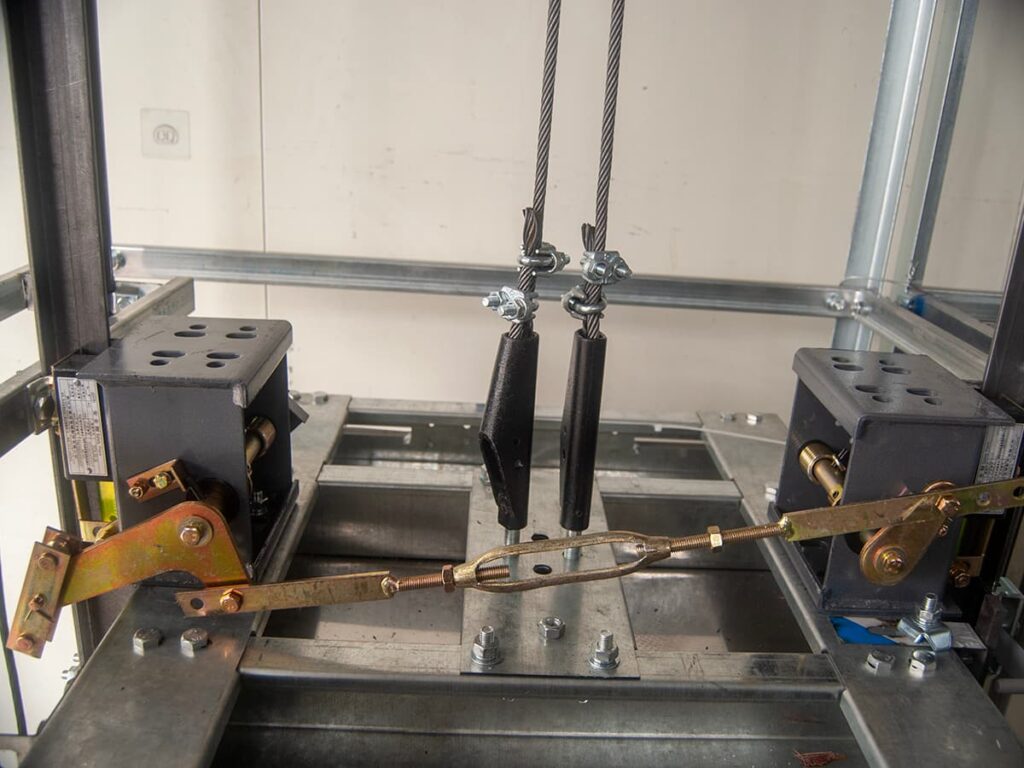
Two structural features of the dumbwaiter market are worth knowing before weighing a supplier. First, there is a tier of established global brands whose pricing reflects brand premium, distributor margin and, on smaller projects, a queue position that can push delivery well past the date a small project needs. Second, the tier of specialist factories that build dumbwaiters as their main product line rather than as one item in a large catalogue. When a project has a standard shaft, complete documents and no requirement for a passenger-carrying unit, the specialist tier is often the better fit — not because the equipment is equivalent, but because the project gets engineering attention and a schedule that a large organisation will not prioritise.
What Buyers Should Do Before Ordering in 2027
The practical reading of all this dumbwaiter market data is a short sequence of decisions, and the sequence matters more than any single number in the forecasts above. Steps taken out of order are what turn a straightforward installation into a delayed one.
- Fix the load, car dimensions and number of stops before requesting any quotation, because all three change the drive size and therefore the price.
- Confirm the shaft or opening dimensions on site, and ask for a CAD layout drawing against those actual measurements rather than a catalogue drawing.
- Decide the drive type and counterweight arrangement while the shaft is still a drawing, not after the walls go up.
- Confirm the power supply available at the machine position, since a 380 V three-phase supply cannot be assumed in a retrofit.
- Ask for the CE file, a comparable load test report and the spare parts lead time as part of the quotation, not after the order.
- Agree the trade term against the importing licence, not against the lowest quoted figure.
- Build the schedule on 15 to 25 working days for a standard unit and allow 25 to 45 working days for custom or peak-season orders.
If a retrofit project has a constrained shaft, no machine room and a firm opening date, then a machine-room-less traction dumbwaiter at the 100–200 kg band is usually the configuration that fits all three constraints at once, because it removes the plant room, keeps the pit shallow and still moves a full tray load. If instead the requirement is a passenger-carrying unit or a load above 300 kg, the project has left the dumbwaiter category and should be specified as a goods or passenger lift.
ServLifts manufactures dumbwaiters in Wujiang, Suzhou, in the Yangtze Delta manufacturing cluster, and ships to Southeast Asia, South Asia, the Middle East, Africa, Mexico, South America and Eastern Europe — the regions where the dumbwaiter market is expanding fastest. Standard builds run to 15 to 25 working days with spare parts despatched in three working days, every unit is CE marked and supplied with a free CAD shaft drawing, and the machine carries a 12-month warranty. To check a specification against your own building, send the shaft measurements through the contact page.
Dumbwaiter Market: Questions Buyers Ask
Is the dumbwaiter market growing or flat?
It is growing. The restaurant and hospitality sub-segment of the dumbwaiter market is forecast at 5.69% to 6.2% a year to 2032, and the wider dumbwaiter lifts category at 3.1% to 8.8% depending on the definition used. No published 2026 dumbwaiter market forecast projects a decline in any region covered by the major research houses.
Which region is growing fastest for dumbwaiters?
India is the fastest-growing national market for dumbwaiters, with its hotel construction pipeline up 36% by projects in a single year, and Asia Pacific is the fastest-growing region at an 11.2% compound annual rate through 2034. The Middle East and Africa both reached record pipeline levels in the same quarter.
Does a growing market mean dumbwaiters cost more?
Not directly. Growth in the dumbwaiter market does not set equipment cost. Cost is driven by rated load, car dimensions, number of landings and trade term rather than by demand. The pressure a busy dumbwaiter market creates shows up first in lead time: standard orders run 15 to 25 working days, and custom or peak-season orders can extend to 25 to 45 working days.
Are dumbwaiters still worth buying instead of a small freight elevator?
It depends on the load and the building. Below 300 kg with two to six stops and no requirement to carry people, the dumbwaiter is usually the smaller, cheaper and easier-to-retrofit option in this part of the dumbwaiter market. Above 300 kg, or where the lift must carry passengers, the project belongs in the freight or passenger elevator category instead.
What is the biggest risk when the market is busy?
Lead-time slippage and component substitution. Both are addressed by the same three documents: a dated delivery commitment in the purchase order, a CE file naming the declared standard, and a load test report from a comparable unit that has already been shipped.
ServLifts publishes dumbwaiter market and specification data for buyers sourcing dumbwaiters internationally. Fourth-quarter pipeline figures for 2026 are expected from the same sources in early 2027, and this page is updated when they are released.