Welcome to ServLifts Official Website

Is Dumbwaiter The Same Equipment As Mini Small Freight Elevator
Are dumbwaiters the same as mini freight elevators? This comprehensive comparison explains why these two terms describe identical equipment, with key installation and selection guidelines.

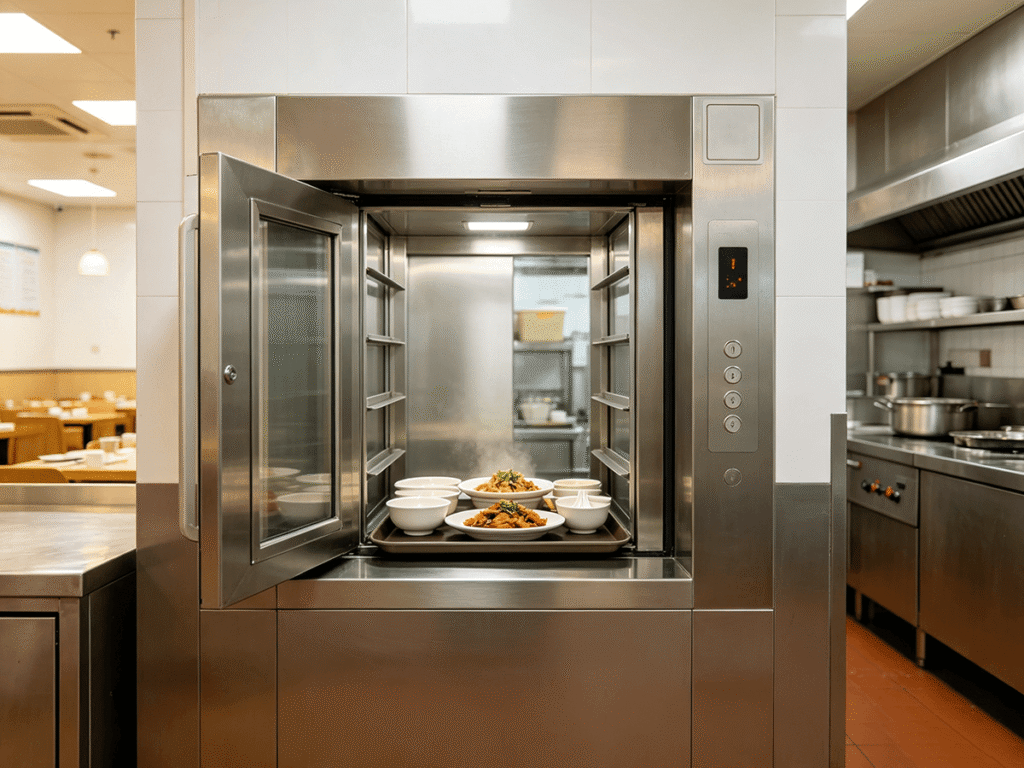
Table of Contents
- 1. Are Dumbwaiters and Mini Small Freight Elevators the Same Equipment?
- 2. Key Installation Notes
- 3. Final Summary
1. Are Dumbwaiters and Mini Small Freight Elevators the Same Equipment?
This article explains whether a dumbwaiter and a mini freight elevator are the same equipment. When you hear the terms dumbwaiter freight elevator comparison, it refers to understanding how these two names describe identical equipment. To answer the question objectively from professional industry standards, structural design, functional positioning, and application scenarios:A dumbwaiter is exactly the same equipment as a mini small freight elevator. The two terms are just different naming conventions in the global elevator industry, with no essential difference in product attributes, core functions, and industry definitions.
In the international vertical transportation industry, the term “mini small freight elevator” is a general and formal industry definition, referring to small-sized vertical lifting equipment specially designed for cargo transportation, strictly prohibited for passenger carrying. Meanwhile, “dumbwaiter” is the most widely used common name and commercial term for such small cargo elevators, which has been universally recognized in commercial, residential, and industrial fields worldwide. Both comply with the same international manufacturing and safety standards such as ASME A17.1, featuring compact size, limited load capacity, and exclusive material transportation positioning, distinguishing them from large industrial freight elevators and passenger elevators. For a complete classification of elevator types, refer to industry resources such as Elevator World.
In terms of core parameters, application purposes, and structural principles, the two are completely consistent. Their typical load capacity ranges from 50kg to 340kg, the car size is designed for small goods rather than human passage, and they are widely used in restaurants, hotels, office buildings, villas, hospitals, and retail stores to transport meals, documents, laundry, and small supplies. The only difference lies in terminology usage: “mini small freight elevator” is more formal in engineering and bidding scenarios, while “dumbwaiter” is more popular in daily sales, after-sales, and end-user communication.
2. Key Installation Notes for High-Quality Dumbwaiter/Mini Small Freight Elevator
Although dumbwaiters are small vertical transportation equipment, their installation quality directly determines operational safety, service life, and daily stability. Unlike large passenger elevators, mini freight elevators have higher requirements for space matching and customized installation. To ensure long-term stable operation, safety compliance, and low maintenance costs, the following core installation and selection guidelines must be strictly followed.
2.1 Professional Brand Selection (Core Priority)
Brand selection is the primary factor determining the overall quality, safety, and after-sales service of dumbwaiters. At present, the market is divided into two mainstream brand camps, with distinct advantages and disadvantages, suitable for different budget and scenario demands.
First Category: International Top Elevator Brands (OTIS, Mitsubishi)
As global leading elevator manufacturers, OTIS and Mitsubishi cover full-series elevator products including dumbwaiters and mini small freight elevators, with extremely high industry recognition and market credibility.
Advantages: First, they adopt mature global unified production standards and strict quality control systems, with ultra-high product stability, low failure rate, and strong operational safety, fully compliant with international safety codes. Second, the overall structural design, drive system, and safety protection devices are more sophisticated, supporting long-term high-frequency operation, and suitable for high-standard commercial scenarios such as star hotels and high-end shopping malls. Third, they have perfect global after-sales systems and standardized maintenance processes, with reliable long-term equipment guarantee.
Disadvantages: The brand premium is high, resulting in extremely high overall procurement and installation costs. The product design is more generalized, lacking targeted customized optimization for small dumbwaiter scenarios. Meanwhile, the after-sales response process is relatively cumbersome, and the maintenance cost in the later stage is much higher than professional specialized brands.
Second Category: Professional Dumbwaiter Specialized Small Brands (ServLifts, Powerlift)
Brands such as ServLifts and Powerlift focus 100% on the R&D, production, and installation of dumbwaiters and mini small freight elevators, without involving large passenger elevators or industrial heavy-duty freight elevators. They are the optimal choice for users who pursue balanced quality and cost performance.
Advantages: First, highly specialized positioning, all product designs are tailored for small cargo transportation scenarios, with more reasonable space utilization, more flexible customized size, and better adaptation to villa renovation, small catering stores, and office narrow shaft environments. Second, there is no excessive brand premium, the procurement and installation prices are more affordable, and the cost performance is far higher than international top brands under the same quality standard. Third, the professional team is more focused, with faster after-sales response, more targeted maintenance services, and lower later operating costs.
Disadvantages: The global brand popularity is lower than OTIS and Mitsubishi, and the scale of enterprise operation is smaller. In ultra-high-standard large commercial projects, the brand endorsement power is slightly insufficient. In addition, the global after-sales network coverage is not as comprehensive as international big brands.
2.2 On-Site Shaft and Space Matching Inspection
Before installation, it is necessary to accurately measure the on-site shaft size, floor height, and wall bearing capacity, and match the dumbwaiter model and installation scheme according to the actual space. Mini freight elevators have high requirements for shaft regularity. Irregular shaft space will lead to installation deviation, affect operational smoothness, and even cause safety hazards. For old building renovation scenarios, non-standard customized installation is required to ensure the equipment fits the building structure perfectly.
2.3 Safety Configuration and Standard Compliance
Qualified dumbwaiters must be equipped with complete safety devices including overload protection, emergency stop device, door interlock protection, and anti-fall protection. All installation processes must comply with local building codes and elevator safety standards. Guidance from organizations like ISO/TC 178 provides internationally recognized benchmarks for lift installation safety. It is forbidden to simplify safety configurations for cost saving, so as to avoid equipment failure and safety accidents during long-term operation.
2.4 Professional Construction and Acceptance
Dumbwaiter installation must be undertaken by professional certified construction teams, with standardized operation in wiring, fixing, debugging, and other links. After installation, professional safety debugging and acceptance inspection are required to ensure the lifting speed, load capacity, door opening and closing system, and safety protection functions all meet the standard requirements before formal operation.
2.5 Daily Maintenance Reservation
After the completion of installation and acceptance, a regular maintenance plan should be formulated. Long-term dust accumulation, wire aging, and part wear will affect the operation stability of mini freight elevators. Regular inspection, as outlined in our maintenance guide, can effectively extend the service life of the equipment and reduce failure rates.
3. Final Summary
In conclusion, dumbwaiters and mini small freight elevators are the same kind of vertical cargo lifting equipment, with only different names in industry scenarios, and no essential difference in product performance, structure, and use. When purchasing and installing such equipment, users need to select brands according to their own scenario demands and budget: if pursuing ultra-high stability, strong brand endorsement, and suitable for high-end commercial scenarios, OTIS, Mitsubishi and other international top brands are the first choice; if balancing quality and cost performance, pursuing targeted customization and affordable later maintenance, professional dumbwaiter specialized brands such as ServLifts and Powerlift are more cost-effective options.
At the same time, standardized installation, strict safety compliance, and regular daily maintenance are key prerequisites to ensure the long-term safe and stable operation of dumbwaiters. Scientific selection and standardized construction can maximize the use value of mini small freight elevators and avoid potential safety and cost risks.