Welcome to ServLifts Official Website

Hotel Dumbwaiter Solutions: Complete Guide to Boosting Room Service Efficiency

In the competitive hospitality industry, room service efficiency can make or break guest satisfaction. A hotel dumbwaiter—also known as a hotel food lift or service elevator—is one of the most impactful yet often overlooked investments a hotel can make. Whether you operate a boutique inn, a luxury resort, or a large conference hotel, a well-designed dumbwaiter system transforms back-of-house operations, reduces staff fatigue, and ensures that meals arrive hot and fresh every time.
In this comprehensive guide, we will explore everything you need to know about hotel dumbwaiters: from their types and benefits to key specifications, installation considerations, and how to choose the right model for your property. By the end, you will have a clear roadmap to selecting a dumbwaiter that elevates your hotel service standards while maximizing ROI. According to American Hotel & Lodging Association research, operational efficiency improvements are among the highest-impact investments for guest satisfaction scores.
Why Every Hotel Needs a Dedicated Dumbwaiter
Imagine a busy Saturday morning breakfast service. Your kitchen is on the ground floor, and the executive lounge is on the fifth. Without a hotel dumbwaiter, waitstaff must navigate corridors, wait for passenger elevators, and carry heavy trays up and down multiple floors—wasting time, risking spills, and compromising food quality. A dedicated food lift eliminates these bottlenecks entirely.
Hotels that install dumbwaiters typically see measurable improvements across several dimensions:
- Faster Room Service Delivery: Food travels directly from kitchen to floor pantry in seconds, cutting delivery time by 40-60%.
- Reduced Labor Costs: Staff spend less time walking between floors and more time attending to guests.
- Better Food Quality: Meals maintain proper temperature and presentation when transported in an enclosed lift rather than carried through hallways.
- Enhanced Staff Safety: Eliminates the risk of carrying heavy trays up stairs or through busy corridors, reducing workplace injuries.
- Improved Guest Satisfaction: Faster, hotter food and more attentive service lead to better reviews and repeat bookings.
How Room Service Actually Moves Through a Hotel
A hotel dumbwaiter does not cook faster, and it does not make staff more attentive. What it removes is the part of the journey that ruins food: the walk. Understanding that journey is the quickest way to decide where the unit should stand, how many stops it needs, and how large the car has to be.
In a property without a service lift, a room service order travels like this. The order lands in the kitchen. The tray is assembled at the pass. A runner carries it to the passenger elevator lobby, waits for a car, rides up alongside guests, walks the corridor, and knocks. Every minute of that route is a minute the food is cooling and a minute the runner is not clearing another order. In a 200-room hotel with a busy breakfast service, the same runner may make that trip thirty times before ten in the morning.
With a hotel dumbwaiter, the route changes at step three. The tray is loaded at the kitchen-side landing, the car rises directly to the floor pantry, and a floor attendant takes it the last twenty metres to the door. The runner never enters the guest elevator lobby, and the food never leaves a heated cabinet until it reaches the guest floor.
| Stage | Without a service lift | With a hotel dumbwaiter |
|---|---|---|
| Order to pass | Unchanged | Unchanged |
| Kitchen to guest floor | Carried through public areas, waits for a passenger car | Loaded at the kitchen landing, travels in a closed car |
| Floor landing to door | Long corridor walk from the elevator lobby | Short walk from the floor pantry |
| Peak-hour constraint | Passenger elevator availability | Car capacity and door cycle |
| Food temperature | Falls during the walk and the wait | Held until the pantry |
Three variables decide how much throughput a hotel dumbwaiter actually delivers. The first is where the pantry sits. A pantry two corridors away from the guest rooms gives back most of the time the lift just saved. The second is car size relative to tray count. A 60×60 cm car takes one banquet tray comfortably; a 100×100 cm car takes a loaded tray trolley. The third is travel speed, and this is where buyers over-specify most often. At 0.4 m/s a six-floor trip takes roughly twelve seconds of travel, while loading and unloading take far longer than the ride itself.
That last point matters when you compare quotations. Two suppliers can offer the same speed and the same load rating on paper while delivering very different real-world output, because door type, sill height and car depth decide how fast a tray goes in and comes out. A hotel dumbwaiter specified around the loading motion will outperform a faster unit specified around the datasheet.
Types of Hotel Dumbwaiters
Not all dumbwaiters are created equal. The right type for your hotel depends on your building layout, service volume, and operational needs. Here are the main configurations used in hospitality settings:
1. Window-Type Dumbwaiter
The window-type dumbwaiter is the most common choice for hotels. Loaded and unloaded through wall openings on each floor, it integrates seamlessly into existing floor plans. This design is ideal for transporting room service trays between a central kitchen and satellite pantries on guest floors. ServLifts offers window-type dumbwaiters with customizable car sizes and load capacities up to 250kg.
2. Floor-Type Dumbwaiter
For hotels that need to transport larger items—such as linen carts, cleaning supplies, or banquet equipment—a floor-type dumbwaiter with ground-level access is the optimal solution. The car sits flush with the floor on the loading side, making it easy to roll trolleys directly into the lift. This type is particularly popular in resort hotels and convention centers where housekeeping and event logistics are critical. Explore floor-type dumbwaiter models at ServLifts.
3. Side Counterweight vs. Rear Counterweight
The counterweight configuration affects both installation requirements and maintenance access. Side counterweight models are easier to install in buildings with limited shaft depth, while rear counterweight designs offer better weight distribution for heavier loads. For a detailed comparison, refer to our guide on side counterweight vs rear counterweight dumbwaiters.
Key Specifications to Consider
When selecting a hotel dumbwaiter, focus on these critical specifications:
| Specification | Typical Hotel Requirement | ServLifts Range |
|---|---|---|
| Load Capacity | 100–250 kg | 50–300 kg |
| Car Dimensions | 60×60×80 cm to 100×100×120 cm | Customizable |
| Number of Stops | 2–6 floors | Up to 8 stops |
| Speed | 0.3–0.4 m/s | 0.4 m/s standard |
| Door Type | Manual or automatic bi-parting | Both available |
| Power Supply | 380V/220V (varies by region) | Customizable voltage |
Matching Car Size and Capacity to Hotel Traffic
Most sizing mistakes in a hotel dumbwaiter project come from measuring the tray instead of the service. A standard room service tray is roughly 45×60 cm, a banquet tray is larger, and a linen trolley is around 90×60 cm and close to a metre tall. A car sized to the tray alone produces a hotel dumbwaiter that moves one order at a time and cannot support housekeeping at all.
The practical way to size a hotel dumbwaiter is to work backwards from the busiest thirty minutes of the day. Count the orders that leave the kitchen in that window, multiply by the average tray footprint, and add a margin for the delivery that always arrives together with another one. That gives the number of trays a single trip has to carry — and that number, not the room count, sets the car size.
| Property profile | Rooms | Typical load | Car size | Stops |
|---|---|---|---|---|
| Boutique hotel or guesthouse | 20–50 | 50–100 kg | 60×60×80 cm | 2–3 |
| City business hotel | 80–150 | 100–150 kg | 80×80×100 cm | 4–6 |
| Resort with banquet space | 150–300 | 150–250 kg | 100×100×120 cm | 3–5 |
| Conference or convention hotel | 300+ | 200–300 kg | 120×120×140 cm | 5–8 |
Door configuration follows the same logic, but it is judged on cycle time rather than size. A manual bi-parting door is inexpensive and reliable, and it is entirely adequate where a floor attendant is always present to open and close it. An automatic door pays for itself where the same person is covering several floors at once, or where the landing is in a public corridor and must never be left open. For a hotel dumbwaiter serving a single kitchen to a single pantry, manual doors are usually the sensible choice; for a multi-stop tower unit, automatic doors keep the cycle predictable.
Two specifications are worth settling before you request quotations. First, confirm whether the property will ever need to move linen or banquet equipment in the same unit — if yes, size for the trolley, not the tray. Second, confirm the landing sill height on each floor. A hotel dumbwaiter that sits 40 mm above the finished floor is easy to load from a trolley; one that sits 100 mm high forces staff to lift every tray, and that lift is what causes the injuries the lift was meant to prevent.
Finally, remember that capacity ratings are not interchangeable between suppliers. A 150 kg hotel dumbwaiter from one factory may use a lighter guide shoe and a smaller counterweight than a 150 kg unit from another. Ask for the car internal dimensions, the guide-rail size and the rope diameter together with the load rating, and the comparison becomes meaningful.
Installation Planning for Hotel Dumbwaiters
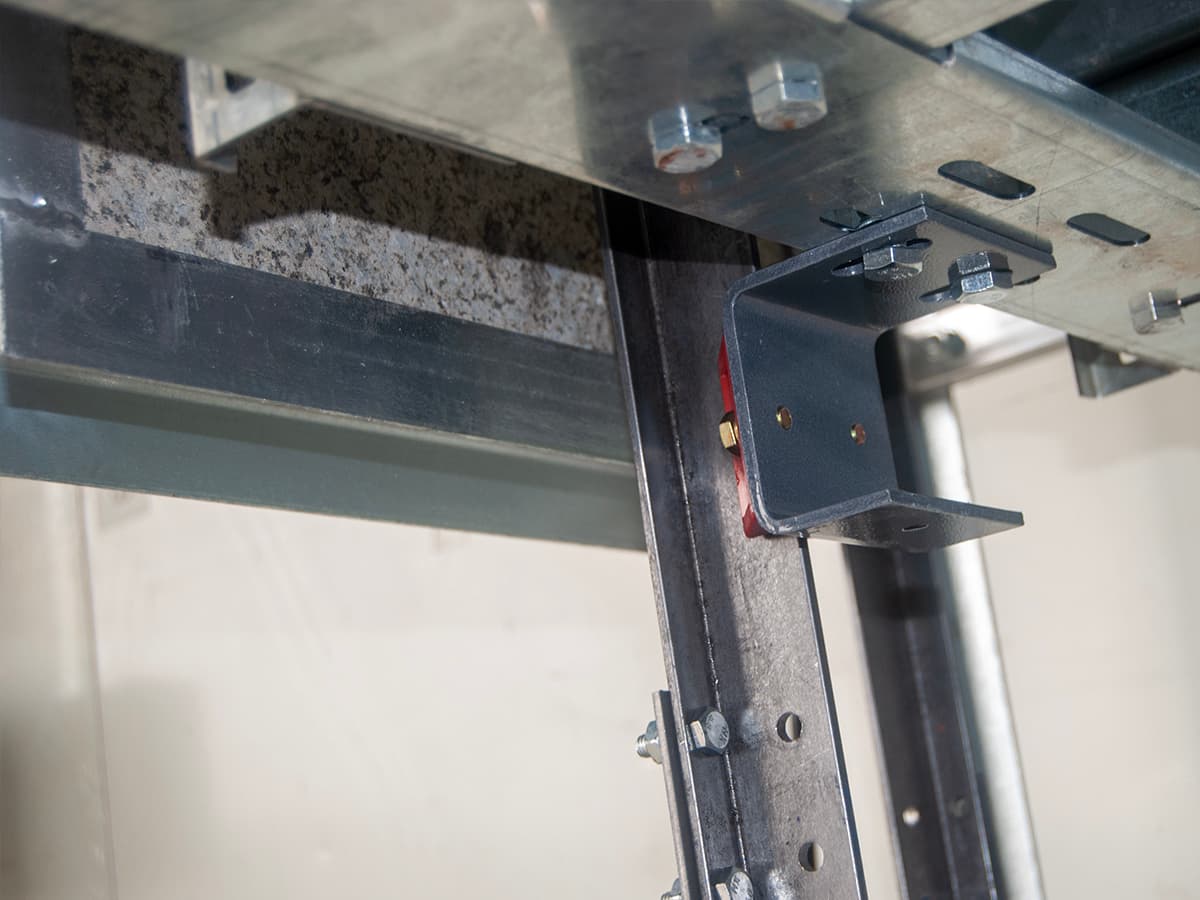
Proper planning is essential for a smooth installation. The shaft can be constructed from brick, concrete, or steel frame with fire-rated enclosure, and must comply with local building codes. A shaft size of at least 1500mm × 1500mm is recommended for most standard models. For step-by-step guidance, see our detailed dumbwaiter installation guide covering shaft preparation, dimensions, and the full installation process.
Retrofit or New Build: Two Very Different Hotel Projects
Roughly half of the hotel dumbwaiter projects we quote are retrofits into buildings that were never designed for a service lift. The equipment is similar; the project is not. Treating a retrofit as a new-build job is the most common cause of a schedule that slips by months.
In a new build, the dumbwaiter is a line item in the structural drawings from the beginning. The hoistway is cast or framed to the lift manufacturer’s layout, the pit is formed before the slab is finished, and the electrical contractor pulls a dedicated supply to the machine space while the walls are still open. The lift arrives into a prepared shaft, and installation is measured in days.
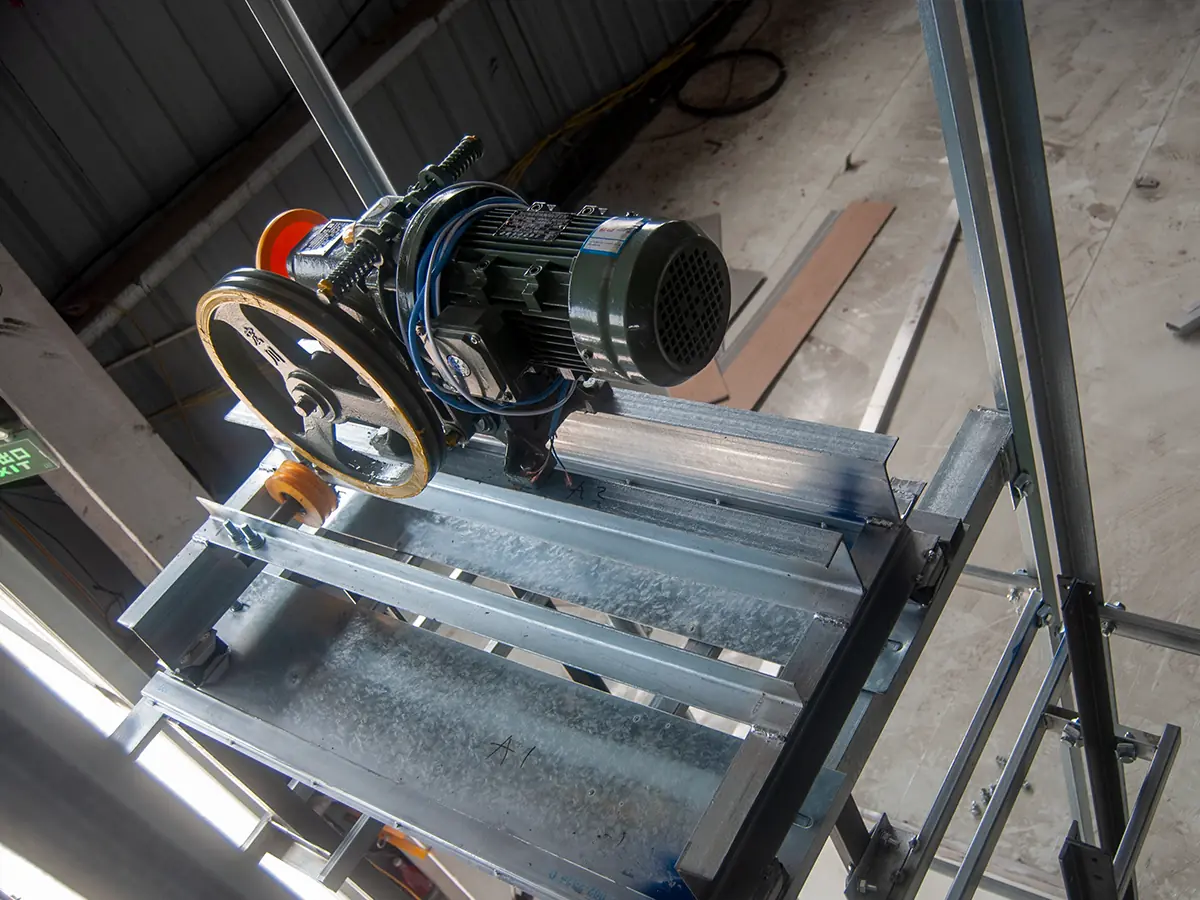
In a retrofit, every one of those assumptions has to be re-established. There may be no vertical void where the pantry needs one. The most workable solution is usually a self-supporting steel hoistway erected inside an existing room or service shaft, clad to the required fire rating, with the machine mounted at the top of that structure rather than in a separate machine room. It takes more steel and more coordination, and it does not require cutting the building’s structural frame.
| Factor | New build | Retrofit |
|---|---|---|
| Hoistway | Formed to the lift layout during construction | Self-supporting steel structure inside existing space |
| Pit | Cast with the slab | Often a shallow surface-mounted base or a small local break-out |
| Fire strategy | Integrated into the building envelope | Independent rated enclosure around the new shaft |
| Working window | Any time before fit-out | Night shifts or phased floor-by-floor access |
| Guest impact | None | Noise and corridor closures must be planned |
| Typical duration | Installation measured in days | Structure plus installation, measured in weeks |
Three retrofit constraints come up repeatedly. The first is headroom: a traction hotel dumbwaiter needs space above the top landing for the machine and the rope travel, and older buildings sometimes have a low ceiling in exactly the room where the pantry should go. The second is floor loading: the new shaft and its loads have to be carried by the existing slab, which is a structural question, not an equipment question. The third is the route from the kitchen: if the only place a shaft fits is three doors away from the pass, the operational gain shrinks accordingly.
None of these makes a retrofit a bad idea. They simply mean the survey has to happen before the purchase order, not after. Send photographs of the proposed shaft location, the ceiling height above it, and the kitchen-to-shaft route, and a manufacturer can tell you within a day whether the project is straightforward or needs a structural solution.
Hotel Dumbwaiter Cost and ROI Analysis
One of the most common questions from hotel owners is about pricing. A hotel dumbwaiter from ServLifts typically ranges from $2,265 to $2,550 for standard models, with custom configurations available at competitive factory-direct pricing. When evaluating cost, consider both the upfront investment and the long-term operational savings:
- A hotel with 200 rooms serving 100+ room service orders daily could save 2-3 staff hours per shift with an efficient dumbwaiter system.
- At an average hourly wage of $15, that translates to $22,500–$33,750 in annual labor savings.
- The typical payback period for a hotel dumbwaiter is 6-12 months-making it one of the fastest-ROI capital improvements in hotel operations, as noted by hospitality industry analysts.
- For a complete cost breakdown, see our dumbwaiter cost guide for 2026.
Safety Standards and Compliance
Safety is paramount in hospitality environments. All ServLifts dumbwaiters are CE certified and comply with international safety standards including EN 81-3 (European standard for service lifts) and relevant hospitality safety regulations. Key safety features include:
- Overload protection: Prevents operation when the rated capacity is exceeded.
- Door interlock system: Ensures the car cannot move unless all landing doors are securely closed.
- Emergency stop and alarm: Allows trapped items or maintenance personnel to signal for assistance.
- Slack rope safety device: Automatically stops the car if suspension ropes lose tension.
Maintenance: Keeping Your Hotel Food Lift Running Smoothly
Regular maintenance is essential for ensuring the longevity and reliability of your hotel dumbwaiter. We recommend a maintenance schedule that includes monthly visual inspections of ropes, guides, and door interlocks; quarterly lubrication of moving parts; and annual professional servicing. ServLifts provides comprehensive maintenance guidance and supplies all necessary spare parts to keep your equipment in peak condition.
Housekeeping and Linen: The Second Workload
Room service gets the attention, but in most hotels the heavier daily workload on a service lift is housekeeping. Linen, towels, amenities, minibar restocking and waste all move vertically, several times a day, on every floor. A hotel dumbwaiter sized only for trays will be avoided by the housekeeping team within a month, and then the property has paid for a lift that serves one department.
The two workloads also collide in time. Linen and cleaning rounds typically run from early morning until mid-afternoon, while breakfast, lunch and dinner service spike at fixed hours. On a single unit, that overlap produces queuing at exactly the moment when neither department can afford to wait.
There are three workable answers, in ascending order of cost. The first is scheduling: agree fixed windows for housekeeping rounds and protect them, and accept that the lift is a shared resource. The second is sizing for the trolley: a car of 100×100 cm or larger takes a standard linen trolley, which turns three tray trips into one trolley trip and removes most of the queue. The third is two units: a food lift serving the kitchen-to-pantry route and a second unit serving the housekeeping route, which is what larger resorts end up doing anyway.
Hygiene is the other reason to think about housekeeping early. A hotel dumbwaiter carries food on one trip and refuse on the next, so the car interior should be smooth stainless steel with coved corners and no exposed fixings where debris can collect. Confirm that the car floor is a single pressed pan rather than a folded sheet with seams, and that the landing sills can be wiped down without trapping water. These details cost very little at the factory and are impractical to add later.
If the hotel dumbwaiter will serve both departments, say so in the enquiry. A hotel dumbwaiter specified for dual use usually gets a slightly larger car, a heavier door closer and a washable interior — three changes that are cheap to make during production and expensive to retrofit on site.
Why Choose ServLifts for Your Hotel Dumbwaiter
As an integrated manufacturer and global trader based in China’s largest elevator industrial base in Suzhou, ServLifts offers distinct advantages for hotel properties worldwide:
- Factory-Direct Pricing: No dealer markups—you purchase directly from the source.
- Global Export Experience: Products exported to 20+ countries across four continents since 2022.
- Customizable Solutions: Voltage, dimensions, door configurations, and finishes tailored to your hotel.
- Complete Spare Parts Supply: Full range of parts available for long-term maintenance.
- Technical Support: Installation drawings, construction sketches, and ongoing engineering support provided.
Frequently Asked Questions
What is the ideal load capacity for a hotel dumbwaiter?
For most hotels, a 100-200kg capacity is sufficient for room service trays and linens. Larger resort hotels or convention centers may opt for 250kg models to handle banquet equipment and bulk supplies. Read our load capacity selection guide for personalized recommendations.
Can a dumbwaiter be retrofitted into an existing hotel building?
Yes. Many hotel dumbwaiters are installed in existing buildings using a self-supporting steel shaft structure that requires minimal structural modification. ServLifts provides detailed installation drawings and can recommend local installation partners.
How long does hotel dumbwaiter installation take?
Typical installation takes 3-7 days depending on the number of floors and shaft complexity, assuming the shaft and power supply are prepared in advance.
How much shaft space does a hotel dumbwaiter need?
The hoistway for a hotel dumbwaiter has to be larger than the car on every side to accommodate the guide rails and the counterweight, so the figure depends on the model rather than on a single rule. As a planning starting point, a 60×60 cm car needs a shaft in the region of 1.1×1.1 m and a 100×100 cm car needs roughly 1.5×1.5 m, with a pit and top clearance set by the number of stops. The exact dimensions come from the manufacturer’s layout drawing, and that drawing is what your architect should work from.
Can one dumbwaiter handle both room service and housekeeping?
Yes, provided the car is sized for the larger of the two loads and the two departments agree on time windows. A 100×100 cm car or larger takes a standard linen trolley, which is the practical threshold. Below that size, a hotel dumbwaiter remains a tray lift and housekeeping will keep using the passenger elevators.
Will a dumbwaiter be noisy for nearby guest rooms?
A traction hotel dumbwaiter is quiet in normal operation — the dominant sound is the door, not the machine. Noise complaints almost always trace back to installation rather than design: guide rails fixed directly to a lightweight partition, or a machine mounted on an unisolated steel frame, will transmit vibration into the structure. Rubber-isolated machine mounts and rails tied into mass walls solve it, and they are far easier to specify before the unit is installed.
Conclusion: Elevate Your Hotel Service with the Right Dumbwaiter
A hotel dumbwaiter is more than just a convenience—it is a strategic investment in operational efficiency, staff wellbeing, and guest satisfaction. By choosing the right type, capacity, and configuration for your property, you create a foundation for faster service, lower labor costs, and consistently excellent guest experiences.
Ready to explore hotel dumbwaiter solutions for your property? Contact ServLifts today for a customized quote, or browse our complete dumbwaiter product range to find the perfect fit for your hotel.